Claude Blue: All of Silicon Valley Is Depressed

Claude Blue is a term I coined, but it names something real: the AI depression now spreading through Silicon Valley.
A conversation with a senior AI engineer at Meta, and with a Silicon Valley founder.
In 2025, AI hit the coding world. Two camps argued fiercely: hand coding entirely to AI, or keep a system where humans review everything. By March 2026, when this was written, the debate had effectively lost its meaning. The volume of code AI produces has already passed what humans can review. The transition period arrived head on.
I personally expected this wave to reach office workers in 2026. The precedent existed in coding, so a similar shock seemed due for non-developers who live in documents and data analysis. But when I actually asked around 15 people in various professions in the US and Korea, not one of them was feeling a bottleneck or real harm from AI. Everything, they said, was still at a level humans could control and manage.
Inside our own company the debate ran hot too. Everyone agreed that an era in which AI fundamentally changes office work is coming; the disagreement was about when. I thought it was still early. Embarrassingly, I had never personally felt an AI-induced bottleneck in my work, and neither had the people around me. A colleague disagreed: office work had already changed, and the harm of losing the context behind AI-generated documents and decisions had already begun. Not anyone's personal failing, he argued, but the transitional cost of this era.
Then one day I had a video call with a university senior of mine who works as a senior AI engineer at Meta, and conviction hit hard. At the far end of the trend, in Silicon Valley, this situation was already reality, and hearing the concrete use cases made it vivid. Within weeks, months at most, office workers will also be forced to become AI-native. Nobody will hand-write documents or take notes site by site. Working in a terminal, commanding individual agents, whether Claude Code or Cowork, will be the default. And the transitional harm the coding world went through will hit office work the same way.
What struck me more: even this senior engineer, standing at the very front line of AI at Meta, was in an existential crisis over its progress. He told me he now feels compelled to develop entrepreneurial instincts and eventually run his own business. This is a person who had never imagined founding anything. Even his side projects, he said, are no longer for pure fun but driven by the anxiety that a day will come when he has to build a business.
The same day, I had a coffee chat with a friend my age who runs a startup in Silicon Valley, and heard almost the same story in the same tone. A big tech senior engineer and a startup founder, in completely different positions, feeling the identical mix of existential dread and the inability to stop.
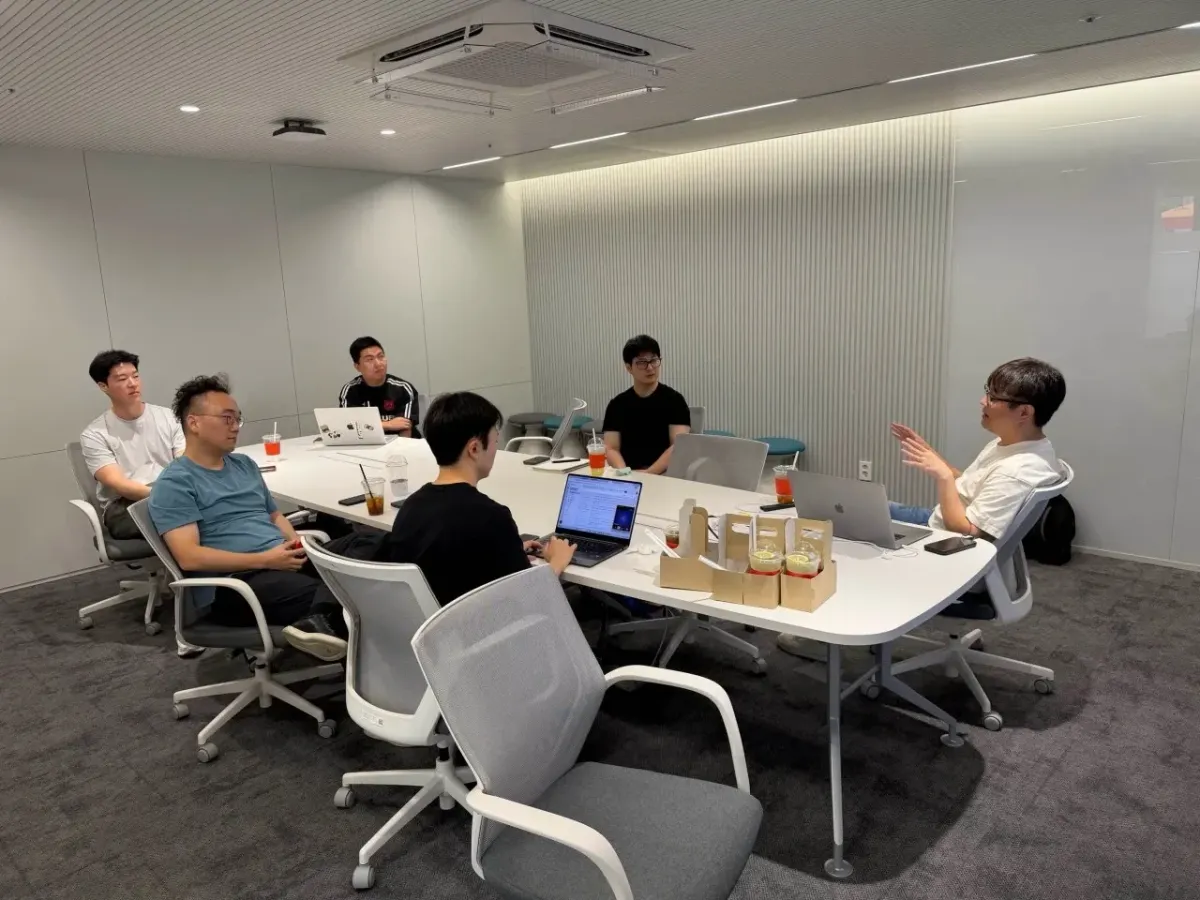
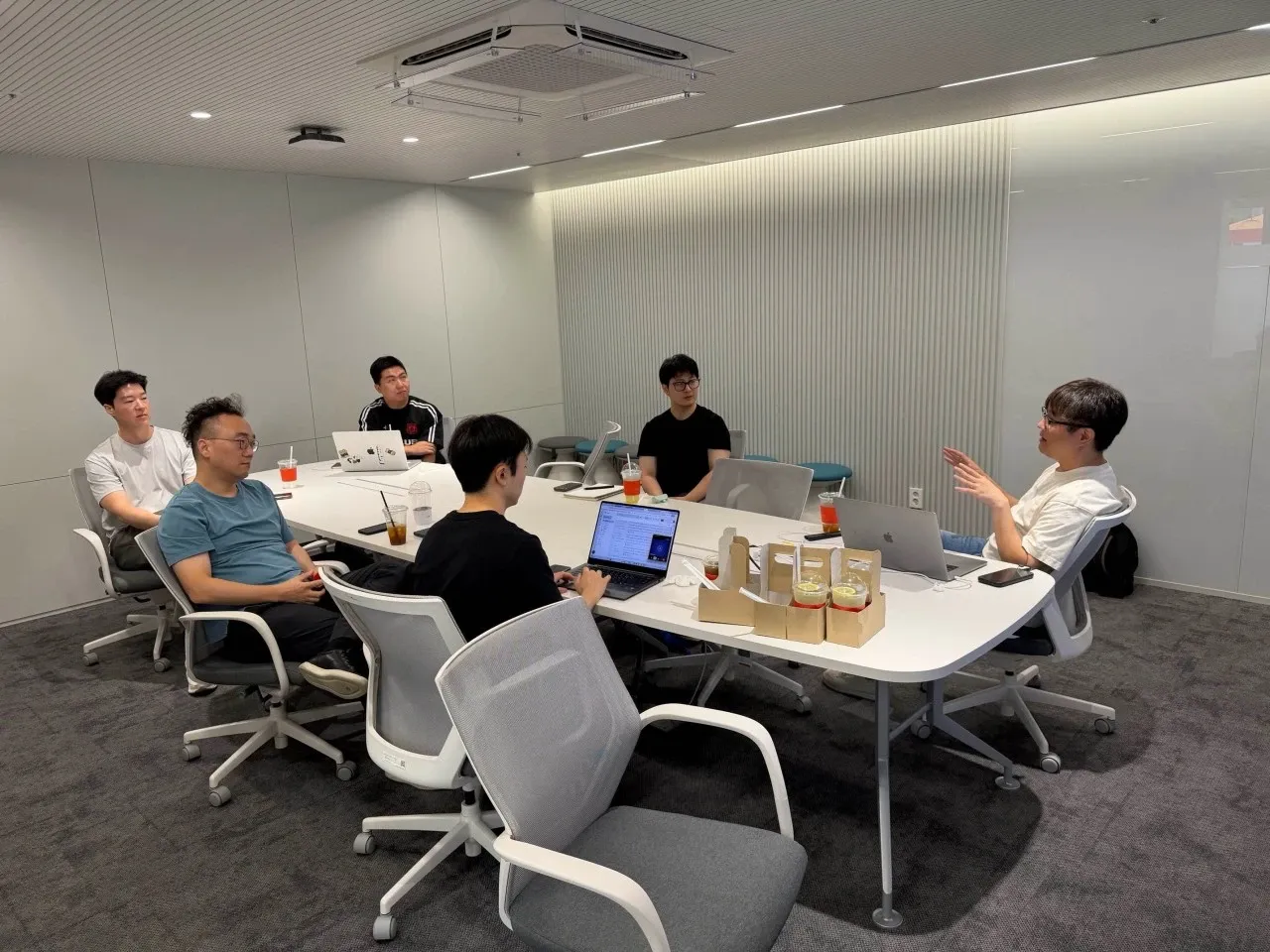
Here is the conversation, organized by theme.
1. AI-native daily life at Meta: working only with agents
My senior works at Meta as a senior AI engineer. At work he uses Claude Code; at home, OpenAI's Codex. The reasons are simple. At work the only choices are Claude Code and Gemini, and for coding Claude is overwhelmingly better. At home his personal projects need image generation, which Claude Code does not support, and above all Codex Pro gives effectively unlimited tokens for 200 dollars. Claude Code Max is also 200 dollars but bills extra beyond a threshold, and at work he burns about 2,000 dollars of tokens a month on Claude Code. No individual absorbs that personally.
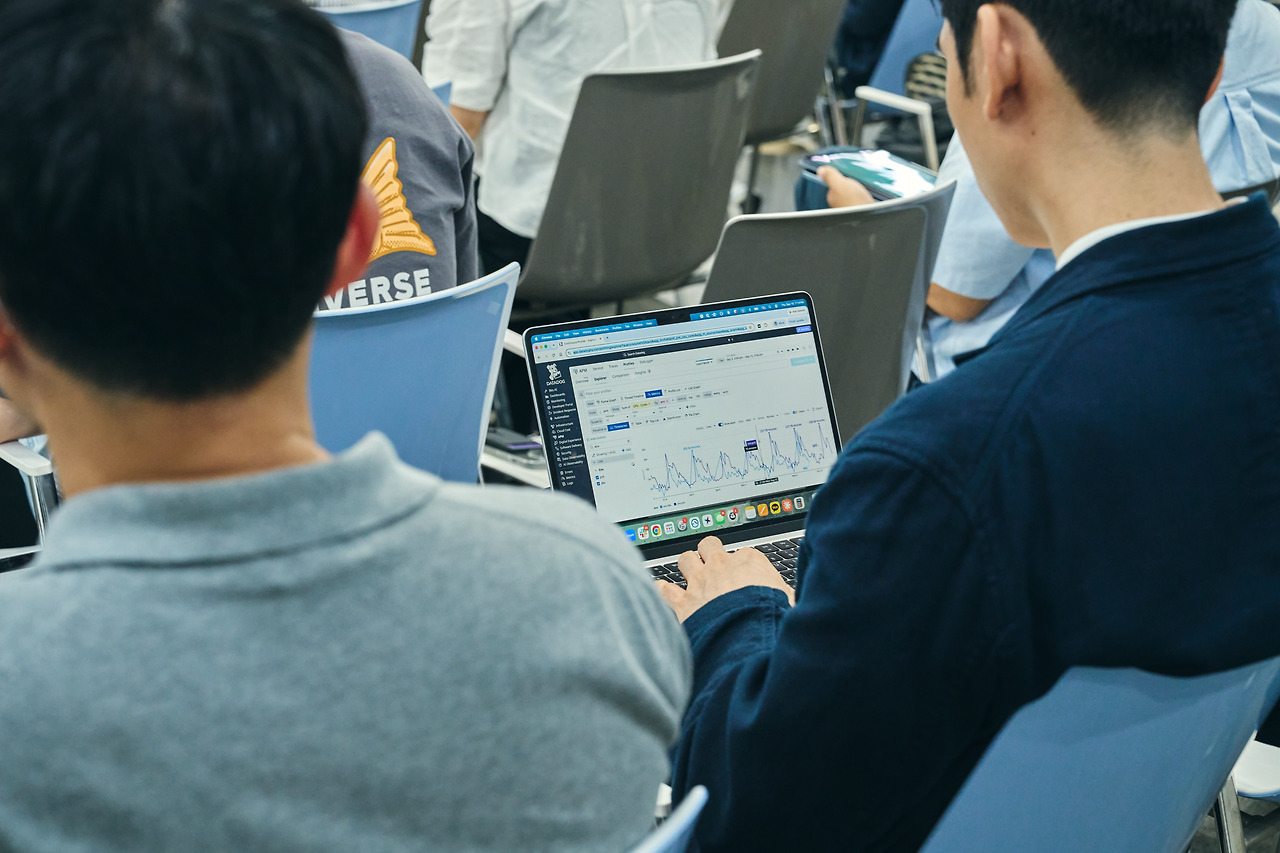
His setup was fascinating. He built his own VS Code extension that automatically grows a knowledge graph in Obsidian, his personal note app. Every AI conversation becomes an Obsidian document, links itself to existing notes, and the graph grows. Obsidian was originally a tool where you wrote and linked notes by hand; in the AI era, the conversations themselves become the source of notes, and the barrier to entry collapses. Meta has around 70,000 employees, and over 10,000 of them have joined the internal Obsidian user group.
More surprising: inside Meta, every productivity tool is wired for agent access. Google Drive, Docs, Sheets, email, Jira, Confluence, wikis, whiteboards, all of it. As he put it: I work only with agents, and the results accumulate in each tool in whatever form I wanted. No need to open the spreadsheet or Jira. Stay in the terminal, and the databases fill themselves.
One example shows how mature this environment is. In January, facing his first year-end review, he asked the internal AI review tool to organize everything he had done since joining. It summarized every report and document he had written into a vast list. All he added was his own reflection, and the self-review was done.
2. The infrastructure is wrecked: the AI code crisis up close
AI at Meta has not brought convenience alone. His workflow shows both faces.
Given a new task, he spins up two agents at once. One is an execution agent: he throws the goal at it and tells it to just start, before he himself even fully understands the task. The other is a learning agent that explains the task to him. After a day or two the execution agent has produced close to ten thousand lines of code. Meanwhile he has learned the domain from the learning agent, and he analyzes the generated code with yet another agent. Most problems he finds are minor revisions, and applying the fixes is also done by an agent.
The problem is what happens when people cannot keep up with this speed. He put it bluntly: our infrastructure is wrecked right now. Too many people push code without reading it. Committing AI-generated code without sufficient review is causing serious stability problems, the transitional harm of the vibe coding era in its raw form.
He predicts the same pattern for non-development work. Take a 100-person non-software company: first, a three-person company using agents to do the same work will undercut it on price, and the incumbent dies. Then, within those three people, the crisis of not being able to keep up with what the agents produce becomes the problem. Companies that cannot cope die too, and only the ones with three people capable of orchestrating agents survive.
3. From vibe coding to agent orchestration
According to him, Silicon Valley barely says vibe coding anymore. The term is agent orchestration. Vibe coding is throwing a rough request like make me a game. Now the approach is far more structured. For a game, you write an extremely detailed spec: genre, character progression ranges, how enemy levels scale. You bundle recurring requests into shared specs, skills, and tools, and how well you feed those to the agents decides the quality of the output.
Who gets the result they want out of AI has simply become the definition of skill. Unpacking his explanation: the human core of work is now the beginning and the end. Knowing by instinct what should be built, and judging whether the result is good. Those two remain human. On top of that, the people who succeed are the ones who can articulate precisely which part of an unsatisfying result is unsatisfying, and how. At the company level it gets far more complex: break big work into pieces, then design exactly which parts AI may verify on its own, which parts a human must see, and which parts the agent may push forward autonomously. Agents cost tokens, so optimizing the allocation of human and agent resources becomes the core competency itself.
4. No exemption for non-developers
AI at Meta is not an engineers-only story. Program managers, HR, sales, effectively every function is running on it.
At his child's birthday party he met a father who works at Apple managing sales data. The man had converted his entire team to agent-based work. It is a data science group that turns managed data into insight for executive decisions, and all of it is now agents. The slack that created was reinvested into a wider scope of work.
On Meta's internal Facebook, non-engineers from HR and People teams regularly post things like: I am not an engineer, but I built this program, try it. The HR team built an agent that pulls data from every software toolchain engineers touch, to understand what people are working on and to build its own scoring system for evaluation.
The same goes for meeting-heavy roles like sales. Add key messages to a spreadsheet, throw it over, and slides generate themselves. He no longer builds slides by hand either: hand over the paragraphs and charts you want, say make it, then iterate a few rounds of make this table bigger until it looks right.
His conclusion: right now at Meta, I do not think there is anyone not doing AI.
5. Wow, this will replace me: an engineer at the frontier
He earned a PhD in physics and engineering and honed his craft through a major Korean conglomerate and then Meta. When someone like that hits the wall, the weight is different.
I had my own way of structuring writing, my own methodology for visualization, he said. That was my edge. Then I ask AI to organize it and it writes too well. A polished draft, instantly. Decades of accumulated know-how, replaced in a moment.
He could date the moment precisely. Through early February he was still in a state of excitement, delighted by every new AI capability. Then Claude Code Opus 4.6 and Codex 5.4 landed, and the mood flipped. That 0.1 difference was exactly the boundary where I started feeling threatened. Using the mid-January models in earnest from February, the thought arrived: wait, I do not have long left.
He described his own psychology honestly: denial, frustration, anger, and in the last few days the beginning of acceptance. That this cycle runs so short is itself the measure of how fast the technology is moving. In the old days you had to use a technology thoroughly before you could evaluate it. Now you watch two hours of YouTube, try it once, and think: wow, this will replace me. Ruined. It happens in a day.
The thing he prides himself on most is his ability to learn, confident he would lose to no one. But to what the agents pour out, he said, he is losing.
6. The base model war ends, the big tech occupation begins
The conversation moved naturally to industry structure. His view was clear: the base model fight is winding down, and it is already decided.
The companies with base models productive enough to seriously replace people number four or five: Claude at Anthropic, GPT at OpenAI, Gemini at Google, Grok at xAI, and Meta if you count it. Chinese models like DeepSeek and Kimi get played with as toys, but pushing real work productivity to replacement level, that is these four or five alone.
What matters in this structure: only these companies get the license to engineer for agent orchestration. Owning the model, they can build the layers of inter-agent communication and domain-specific value without margin anxiety. A wrapper company without a base model has a ceiling, always one Google-adds-AI-to-search away from being threatened.
Meta's strategy differs from the rest of big tech. Meta's AI is built for its customers to use, strong and cheap enough for Instagram users flicking through high-definition video. It is not a B2B productivity tool like Claude or GPT. Which is why Meta feels no hesitation about pulling in external AI tools: the AI we build is for customers to use, not for us to use.
7. Organizations that do not change get eaten
He previously worked at the headquarters of a Korean conglomerate. Same job title, completely different life. The core difference: the depth of permission required to do anything. At the conglomerate, you get your manager's approval, who gets their manager's approval, then a contract, then preparation, then reports on the preparation. At Meta you just build it. Build, post, tag the relevant people, ask is this okay, and one approval ships it.
Partly Korean culture versus American culture, but more fundamentally manufacturing conglomerate culture versus software startup culture. That combination makes the same job a different life.
On organizations not using AI, he was blunt: if they are not using it now, there is a reason, and they will keep not using it. Behind the surface reason of security sits a structure of interests: an affiliate exists to build and supply the internal AI tools, the relationship is established, and adopting external tools would collapse it. The people at the top will not accept that.
His analogy stuck with me: a game company that hired AI talent at scale and invested heavily, yet the business model of selling expensive items never changed, and the AI features got wedged where nobody uses them. The success formula that carried you here is exactly what stops you from changing when something new arrives.
In the end, he told me, companies like yours are the ones that will eat these conglomerates.
He also reflected on his own move: I timed the move to Meta really well. With the era shifting like this, if I were still there, I would still be unable to use AI. At the conglomerate he worked by copy-pasting code next to an internal chatbot. Against writing directly with a code agent, the productivity gap is five times. What took three months at the conglomerate, I can now do in a week.
8. The only weapon for the next generation: entrepreneurship
The conversation drifted to raising children. He has a young child. He expects the enormous changes to settle within five years; by the time his child reaches middle school, the world will have been reorganized and the examples to design a future from will be visible. In that sense, he thinks the timing of the birth was lucky.
With one precondition. The next generation runs on entrepreneurship, unconditionally. Children without an operator's mindset will not find a place. So his single parenting principle is to never crush the child's spirit. Scold too hard and the spirit shrinks; a shrunken spirit grows into an exam-optimized child; and an exam-optimized child may find no answers at all in the next era. Confidence, and the room to grow founder instincts, is the entire policy.
For the next five years, though, he sees turbulence. People in occupations with high replacement scores must do something, anything, now. This year is genuinely important, he said. A tremendously important year.
9. The two faces of Silicon Valley: depression and big dreams
By coincidence, the same day, I met a friend my age founding in Silicon Valley. A Stanford MBA who started in San Francisco in 2024 and has built and killed more than forty products since. He was briefly in Korea, and he told a story remarkably close to my senior's.
Silicon Valley right now is honestly very depressed, he said. Depressed enough that people talk about wanting to leave. There is even a phrase, Claude depression. Everyone feels, in their bones, that AI will eventually take every job and every role. Meta laying off 16,000 developers and freezing all junior hiring is not abstract news there; it happens next door.
His company's vision was to give everyone the power to build software, closing the gap between developers and non-developers. In 2024 that was the right direction, so he hired every employee except himself as a software engineer. Now he worries the company is over-concentrated, short on every other capability, and he discusses this openly with his team.
The line that stayed with me: you sell today to customers and ten years to investors, and we all know perfectly well that in ten years we will all be lying in bed. Everyone around him feels it, and a strange melancholy has settled over the whole Valley.
And yet he stays. He originally left for the US wanting diversity, suffocated by Korean uniformity. Looking around now, he finds the Valley racially diverse but monocultural: everyone is startups and AI. Still, in Korea it is hard to dream big, and the Valley has crazy people and huge dreams. That inspiration is why he wants to stay in America for good.
The funny thing is where his imagination goes amid the gloom: away from AI software entirely. If he were investing, he would invest in K-food. Netflix always has Korean content on the front page now, Americans are following K-culture into K-food, and Korean food in the US still carries an image problem: not young. Transplant the sensibility of Gangnam or Seongsu directly, he argued, and it competes easily in a market whose only incumbents are aging franchises like Chipotle and McDonald's. A person at the very front line of AI software seeing a thirty-year opportunity in the industry farthest from tech: that felt like the symbol of the Valley's current mood.
There was a darker story too. AI will shrink employment at scale, and historically, when a state needed jobs fast, the biggest event was war. So a half-joke, half-serious line circulates in parts of the Valley: long defense, short AI startups. The romantic reading says displaced people flow into entertainment like VR; the tragic reading says states start wars. And with several wars having started earlier than anyone expected, the joke no longer sounds entirely like a joke.
A senior AI engineer at Meta and a startup founder in Silicon Valley. Completely different seats, and an almost identical texture of feeling: existential dread about what AI brings, the inability to stop anyway, and the conviction that entrepreneurship is the only answer. That was the air of Silicon Valley in the spring of 2026.
10. Relationships remain beyond AI
In the AI era everyone wants to go global, and the question that follows is whether you still need to be there in person. I asked both of them.
My senior's answer was crisp: business still runs on relationships. Just the day before, a VC had asked him for an advisory call over Zoom. He thought he had spoken freely, but talking with me in person, he realized the depth was different. Building relationships matters enormously. But can you build one over Zoom? Do you not have to share a meal? Faces across a table, he meant, do not get replaced by AI.
The founder said the same in his own way. He calls himself an introvert who cannot sell, yet his early customers came through the Stanford alumni network, people perennially curious about startups who joined partly to learn. Even his trip to Korea was about seeing old friends and family time, a recharge from the Valley's AI depression. However global the software and however remote the work, some things only fill up in person.
For me, being able to call a senior at Meta and have a conversation of this depth is itself an invisible asset. Other people pay money to interview big tech employees in the US. Relationship capital like this, business or not, compounds into real impact.
After a day of talking with a big tech engineer and a startup founder, one thing became clear. At the start of this essay I wrote that none of the 15 people around me felt an AI bottleneck, and I had wondered if it was simply too early. The conversations changed my mind. If we feel no bottleneck, it is probably not because we are working well with AI, but because we are not yet using it enough. The workers of Silicon Valley are all feeling Claude Blue already. Who are we to feel fine?
Maybe the right move is the opposite of comfort: push AI agents to the limit the way Silicon Valley workers do, all the way to the bottleneck, until it hurts. An era in which, if three agents are not running while your eyes are open, your life is quietly burning down. I finished the day feeling, urgently, that I should go start one more.
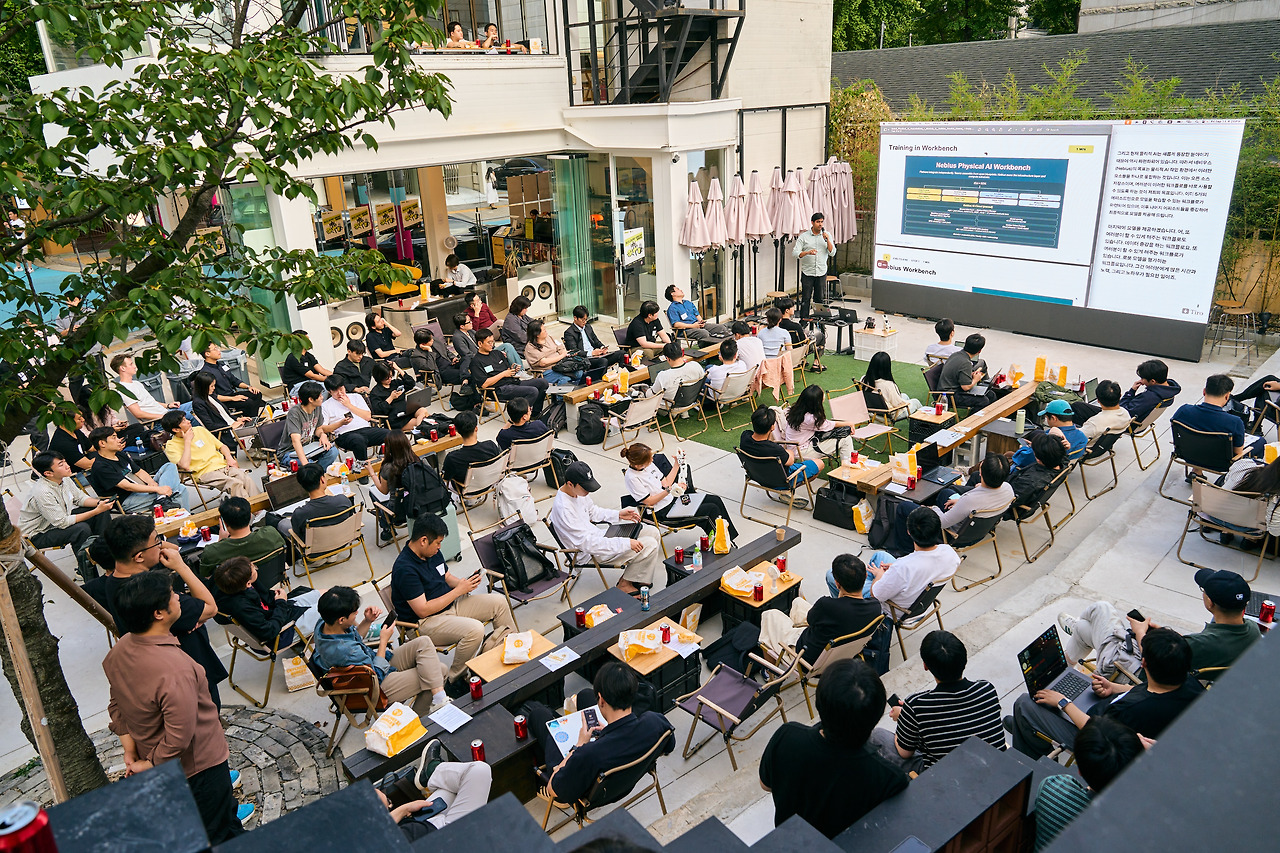
This essay was written in March 2026. It spread further than expected, and people who shared the same anxiety began to gather. What started as Claude Blue became Bloom, a community where practitioners and founders who use AI first now meet every week.
From the anxiety of the AI era, Blue, to blooming together, Bloom. The name of our community began with this essay.
Join Bloom
Bloom builds offline rooms where people and technology meet. We run them in Seoul, and now beyond it.
- 💬 Discord community, where events are announced first
- ▶️ YouTube, full talks from past events
- 📸 Instagram, photos from our events
- 🎟️ Upcoming events