
What Founders Should Avoid

🤝 Bloom
🎤 Brian Jin (engineer and founder, Antler Canada alum)
🎟️ Event page
I recently stumbled on an Instagram channel that collects startup failure stories, where once high-flying founders share their rise and fall in the open. I found it admirable: telling your own failure honestly takes far more courage and self-respect than talking about success. It made me want Bloom to be a community where these topics can be shared honestly, even when the stories are not grand.
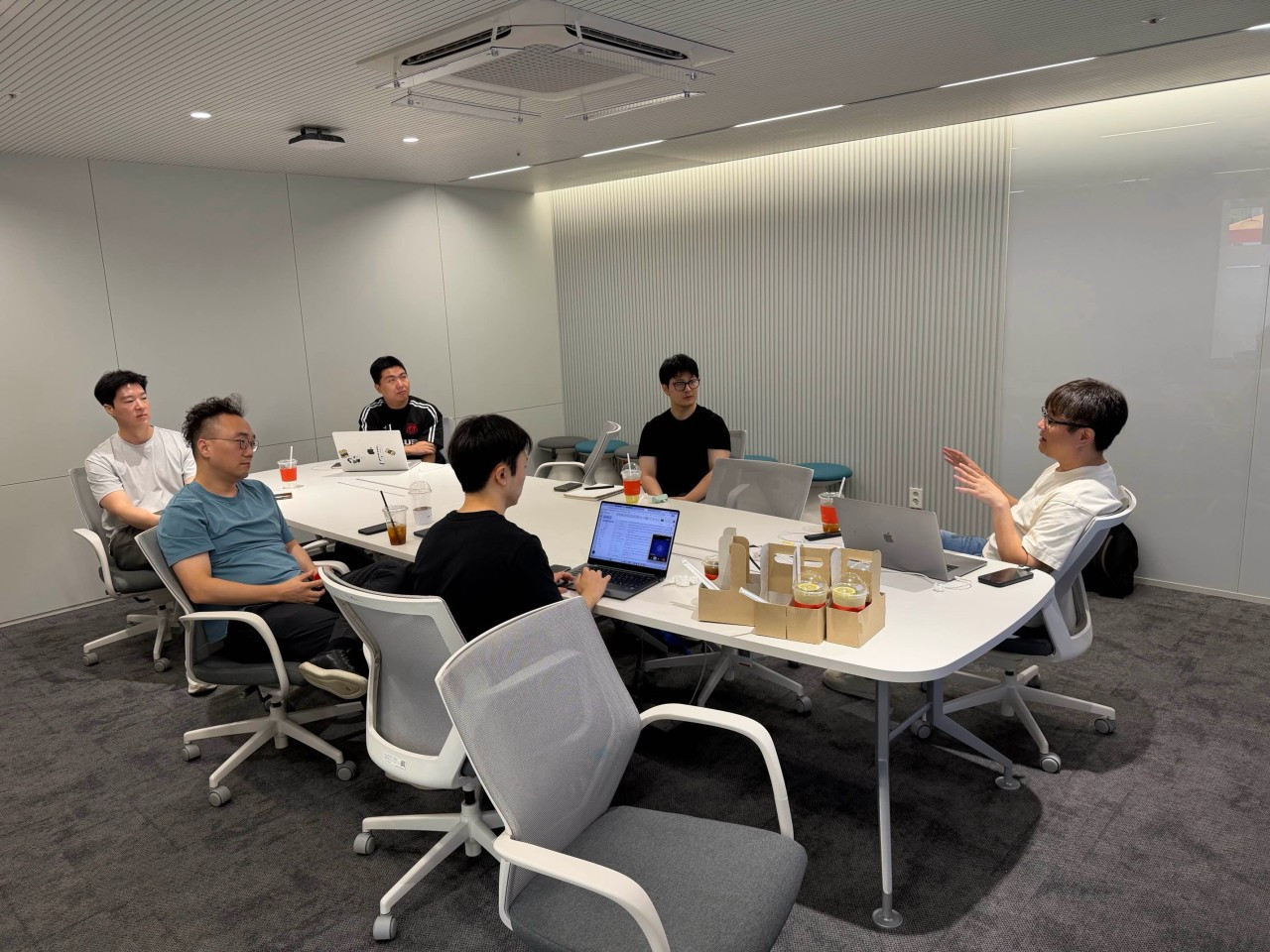
Right then, Brian Jin, a Korean Canadian engineer and founder who had joined our last meetup as a speaker, reached out first. Brian wanted to share what early founders should avoid, drawn from a startup failure of their own. The original plan was an online webinar, but the story felt too good for that, so we offered the venue and the promotion. And so, on a Friday at 10 AM, the room opened at d.camp Seolleung.
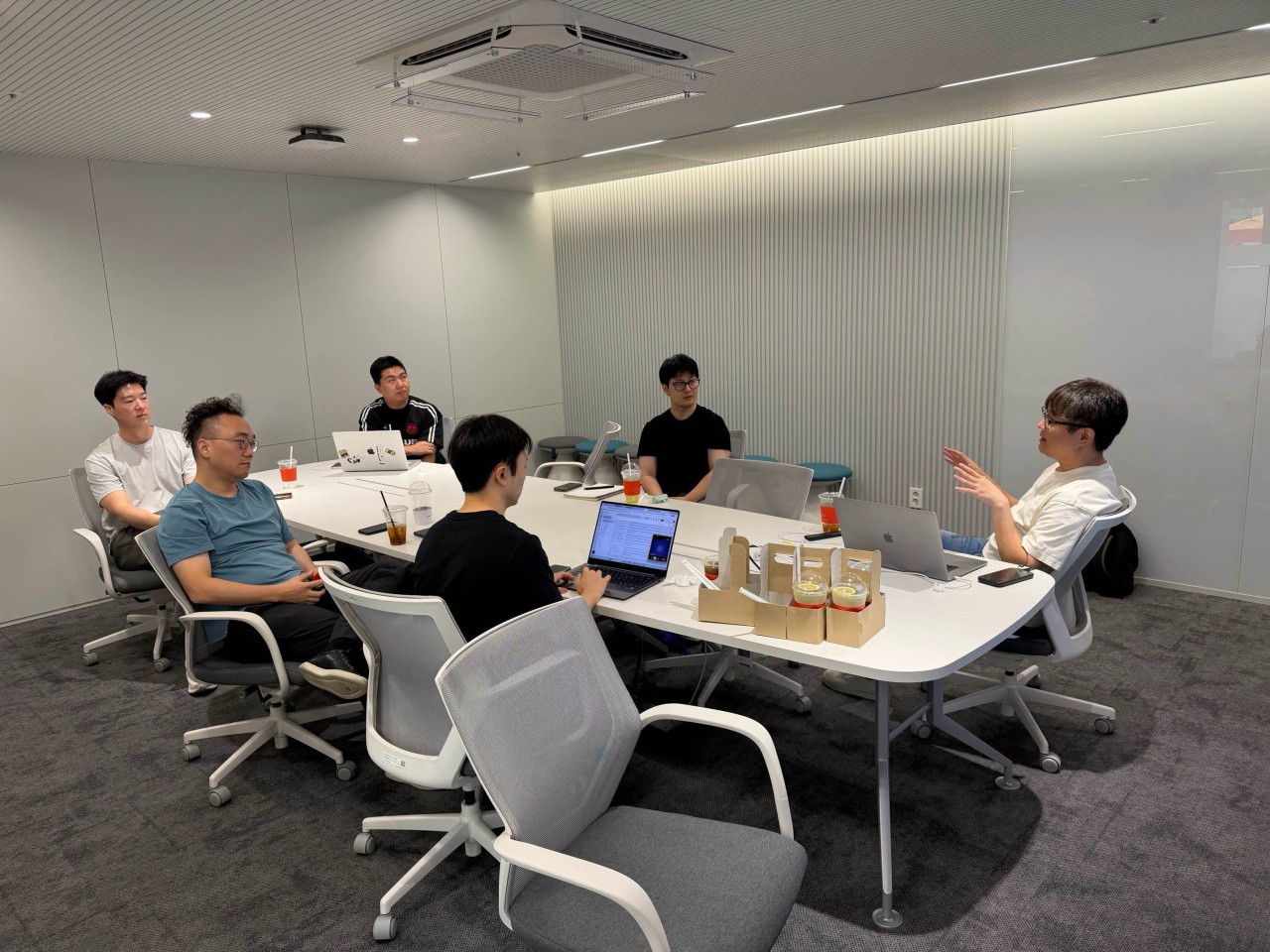
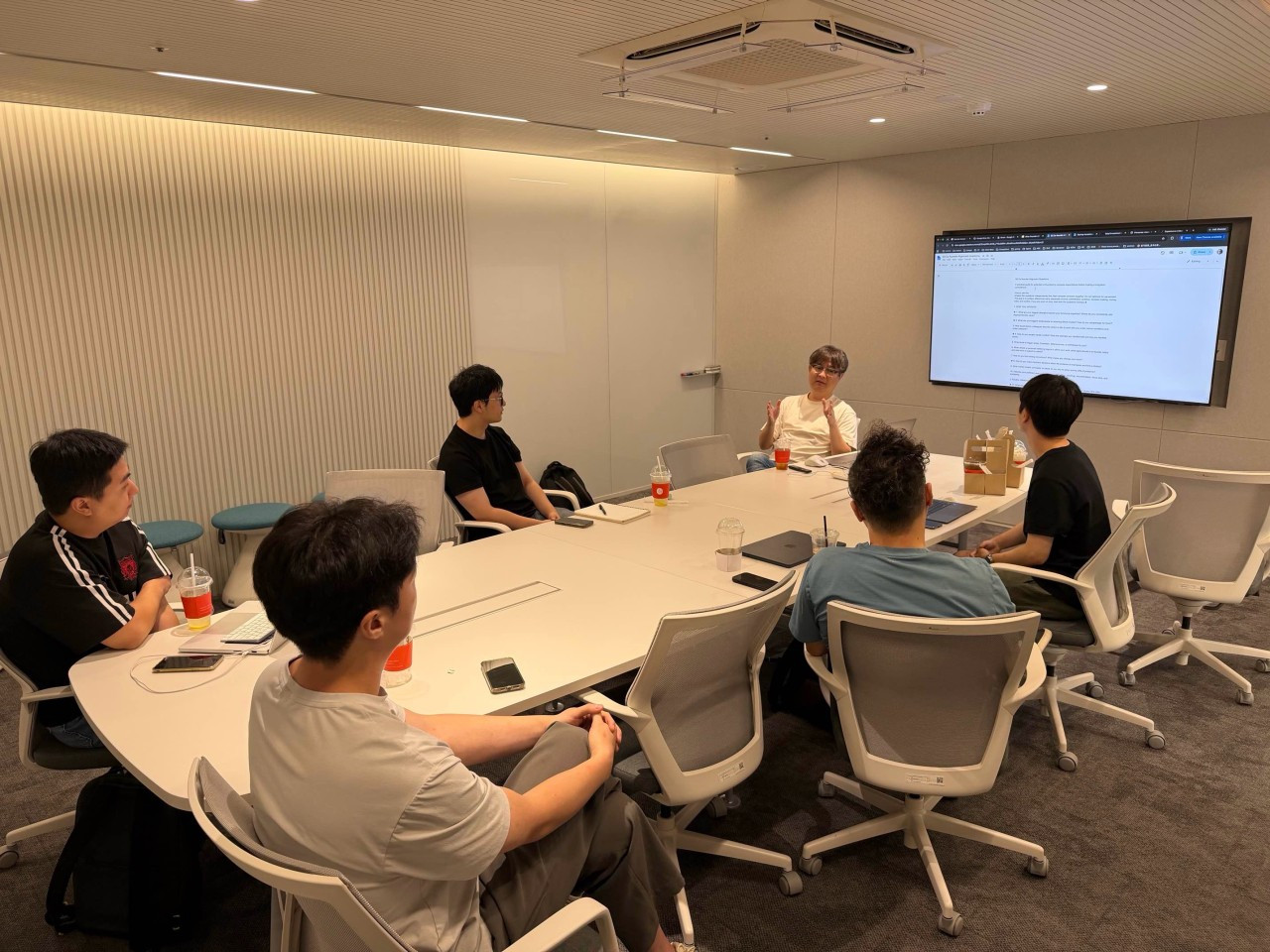
Not what to do, but what to avoid
Brian started an engineering career in Toronto before founding a startup. At our last meetup fireside, Brian told the story of an accelerator cohort where a market judgment flipped right before investment and eighteen teams stalled at once. This session distilled that experience. The deck title:
What Founders Should Avoid. Five mistakes that get expensive fast.
How to find a problem, validate it, build, and raise. The internet is full of what you should do, Brian said, so this session exists to share what you should not.
First: do not play the wrong game
Bad advice is often good advice applied to the wrong company.
The first slide ran through the entire day. B2B differs from B2C, and taking VC money differs from bootstrapping. Cross the two axes and you get four boxes, and each box defines good differently. B2B bootstrapped means revenue first and a narrow ICP. B2B with VC means a large market and a repeatable go-to-market. B2C bootstrapped means monetization and retention; B2C with VC means distribution, engagement, and scale.
Financing model changes what good looks like. Bootstrap and you must make money, because there is no personal runway. But survive long enough and the VC temptation arrives, and with VCs the question itself changes: how long until my money returns ten, fifty, a hundred times over? A company collecting a steady ten thousand dollars a month in subscriptions is a great company to a bootstrapper, and a company a VC cannot even begin to analyze.
Is it backable?
At Antler, the partners kept asking one question: is it backable? And here came a line I loved for its honesty: we did not know the answer either, and we still do not. It cannot be defined with numbers. The conclusion Brian personally reached was speed: how fast can I take the market? If you are not deep tech, physical AI, robotics, defense, or space, you are basically SaaS, and there are so many of those that no matter how big the market is, it is a complete red ocean.
Founder-market fit comes first
Pre-seed money is an investment in the founder, so at that stage even PMF is not required; their position is that you will find it later. The interesting part came next: even if you skip VCs and bootstrap, founder-market fit still matters. The reason is simple: startups are hard. Surviving takes obsession, consistency, and resilience, and that only holds if the problem is one you lived yourself or tied to a personal mission. B2C can run on mission alone; B2B demands a problem you experienced and domain knowledge of the industry.
An attendee preparing a healthcare startup raised a sharp counterpoint: playing in your own domain can make quitting impossible. Everyone around you knows you are doing this, and going back to your old seat means facing the whispers. A problem born of a very small world. Domain knowledge is a weapon, and a double-edged one.
Can you explain it without the product?
Can you explain the game without mentioning the product?
VCs demanded this constantly: explain it to me like I am ten years old, in one line, so anyone can understand. It is harder than it sounds. There was also a good take on tools like ICP and the lean canvas. At first they feel pointless, built from nothing but your own judgment, so Brian made one and quit. Later it became clear this is not a deliverable but a process: do ten interviews, update it, do more, update again, and you keep doing it through Series B and C.
One remark stuck with me. Brian used to build these from memory, replaying meetings from notes. Now there are AI meeting transcripts, so those get used instead. And yet the old way felt better, because the insight that emerged from that replaying is something AI does not hand you.
Second: do not build what customers say they want
Avoid building what customers say they want.
What customers say is a hypothesis; what they do is evidence. The slide put two columns side by side. What customers say: can you automate this? add this feature? I would definitely use this. What customers do: work around it in Excel, get approvals over Slack or email, copy-paste and ask someone. So the order is: interviews, job shadowing, prototype, pilot. There was a warning about design partners too: because they want to help, they can accidentally over-validate your hypothesis or pull you down the path of features built just for them.
Replace "Would you use this?" with "Show me how you do this today."
Our competitor was not Excel, it was ChatGPT
Someone asked what job shadowing means, and it produced the best example of the day. Put simply, it is like joining the company and watching how a senior colleague works. Brian shared a personal case: tagging along to a design partner's meeting with their client, then watching how that person wrote up the meeting afterward. We always thought we were competing with Excel, Brian said. It turned out we were competing with ChatGPT. The person was dropping the spreadsheet into ChatGPT along with a previous file and asking for the same format. An interview would never have surfaced this, because in interviews everyone talks about Excel.
A thread followed naturally: how close your business sits to the language model determines how fast it becomes a declining industry. The healthcare attendee echoed it: even among doctors, vibe coding is now common enough that some build their own tools instead of buying a solution.
Third: do not build too much before you know enough
The flow was crisp: assumption, smallest test, behavior, evidence. What must be true? What can you test right now? What did users actually do? What changed? Signals got split into weak and strong. Weak B2B signals: meetings, letters of intent, free pilots, logos on a deck. Strong: budget, repeated use, workflow change, expansion. Weak B2C signals: downloads, launch spikes, likes. Strong: retention, referrals, repeated behavior, willingness to pay.
Every build should retire a risk.
Do not build more; learn more. Founders respond to uncertainty by building: one more integration, a bit more infrastructure, one more feature, or a whole platform. Instead, ask what your riskiest assumption is and what the cheapest test is that could prove it wrong.
Do not even build the landing page
The strongest advice of the day came from a VC, quoted directly: do not develop this. Do not even build a landing page. Go meet customers, because you will need them anyway. As an engineer, building felt comfortable, Brian admitted. It is visible and satisfying. But building does not make a business. A startup builds a business, not a product.
The LinkedIn detail was fun: a profile stuck in stealth mode for over six months stops getting looked at by VCs. So skip the LinkedIn page, skip the profile updates; right now, talking to customers should run from nine in the morning to nine at night. And do not sell to enterprise: the cycles are so long you can wait a year, and Brian got as far as a design partnership that simply would not close. Go mid-market, customers who can move fast without approval chains, because you will pivot eventually and cannot afford to wait a month at a time.
The best signal there is
How far should you validate before shipping? The answer was clean. There is one textbook answer: someone pays you before the product exists. Hey, I will pay you, build it. One person doing that does not settle it, but that is the textbook answer. Failing that, interviews, and interviews depend on good questions; Brian recommended The Mom Test. And a distinction that mattered: interviews only make your hypothesis more hypothesis-like. They are not demand, and they are not traction.
Without a moat, distribution is all that is left
Antler partners pushed on two things about Brian's business. One: can you survive if Claude ships a new version tomorrow? Two: Claude has gotten so good at coding that a hundred companies doing the same thing appeared overnight. The heavier one was the second. The first is your own problem; the second is a market-wide problem where no winner emerges no matter how well you execute.
Distribution turns product into a company.
If technology cannot be your moat, what remains is distribution. One distribution story from the day still sticks with me. A founder who started in Korea and now operates in the US once put on a full mascot costume at a huge COEX event and handed out bags to foreign visitors. With a mask on, there was no face to lose and no awkwardness, so conversations came easily. One of them turned into the connection that eventually took them to the US. Brian's comment was the good part: the door opened not because the idea was good, but because this was a person willing to go that far.
Fourth: do not treat fundraising like a loan
Choose investors like partners, not ATMs.
Do not play games with people you might spend seven to ten years with. The lived version was rawer. In the three months before the Antler program began, Brian met the partners for interviews and progress updates roughly every two weeks, and until joining, those people did not even know what Brian was building. It was numbers all the way down. How many design partners? Any letters of intent? The phrase that lingered: they are relentlessly thorough.
Find your champion
You pitch the investor, then that investor has to pitch you internally.
The most practical part of the day was how a fund moves inside. If one member of the investment committee backs you, that person defends you in the room on your behalf. That is your champion. The fun twist: the person who championed Brian held the most junior title on the committee. Influence matters more than rank. Then came the investment memo: the champion writes it, every partner decides from it, and, more importantly, it gets shared beyond the fund. A pre-seed investor already has to prepare your next round, so the memo goes out early to seed investors in their network. Know what goes into that memo, and you know what information to hand a VC and how.
Where the 250 thousand dollars goes
When to raise? When you hit a bottleneck, whether that is engineering or people. But pre-seed is different. Antler Canada invests 250 thousand dollars for nine percent, and when planning how to spend it there were two rules: no founder salary, and no hiring. So where does it go? All of it into sales and marketing. In Brian's case, the plan was budgeted around attending North American conferences, because that is where the partner companies gather.
One Antler-backed team came up: three people, still no product, yet they have customers and have been paid. A team with no CTO, where the product person does all the development with AI. The technical share of a founding team used to be fifty-fifty, Brian said. Now it is trending toward eighty-twenty, even a hundred-zero.
Reference-check your investors
Reference-check investors, especially founders who struggled.
That was the deck version. The live version was blunter: in San Francisco or New York, vet almost everyone you meet before you trust them. Two patterns: the advisor who offers to help in exchange for five percent equity, and the broker who offers introductions for a commission. Meeting many VCs is good, but at the earliest stage it is not worth clinging to.
Verticals are done. Sell the jeans
How do you know what VCs want to fund? There is such a thing as a Request for Startups, a public list of areas a fund wants to back. But Brian added the caveat immediately: if you start preparing after reading it, you are already late. You have to predict the flow. This line stayed with me longest: AI is going to boom, the gold vein is going to burst, so you should be selling jeans. What are the jeans? It is the old gold rush story: the money went to the ones selling jeans, not digging gold.
Brian's own answer was infrastructure. Verticals that dig deep into one domain looked hopeless. The example was LangChain: spread the framework as open source, then earn with LangSmith, the observability and management layer, which is not tied to any domain. Robotics came up too: the biggest bottleneck is the lack of training data, which makes collecting that data an infrastructure play in itself.
That sparked one of the best exchanges of the day, with an attendee working on surgical robotics. Brian asked whether capturing surgeon motion data could itself be an intermediate product. The answer was grounded: factory workers will wear a glove and a camera if you pay them, but surgery is different. The act has to carry medical benefit for the patient to be justified, so data collection carries one extra layer. Same infrastructure logic, different thresholds per industry.
After ten YC rejections
Brian applied to YC ten times and was rejected ten times. After finishing Antler, for the first time, Brian skipped the application and sent a LinkedIn message instead, and got a reply. The reply said it still seemed a bit early, but one message earned more of a response than ten applications. As for the folklore that YC invests in ideas: not true, Brian said. YC demands a launch, full stop.
Fifth: do not outsource judgment
Everyone gives you a signal. Nobody else owns the decision.
The final mistake was the conclusion of the session. Five lines sat on the slide. Customers know the pain but not the solution. Design partners give depth but can drag you down a customization rabbit hole. Investors see patterns, but the pattern matching is imperfect. Advisors bring real experience, from a different company in a different era. Metrics give evidence, but only about what you chose to measure.
So the order is: Listen, Observe, Test, Decide. And one question to keep asking yourself: what evidence would change my mind?
A founder operating system
Then what should you actually do? The last slide was concrete. Keep a hypothesis log: write down what you believe and why. Review evidence separately: do not mix customer evidence, product metrics, financial metrics, and investor feedback. Leave decision memos: the decision, the trade-offs, the owner, the expected result. Run a retro loop: compare what happened with what you expected. And repeat three questions. What do I believe? What would prove me wrong? What is the cheapest way to learn it?
The founder's job is to get less wrong, faster.
That closed the deck. Brian added that salespeople are the best at this, and that technical people like Brian find it genuinely hard. Separating signal from noise is the hardest part, and with time, things once judged as noise can turn into signal. Keep running the loop and it ends one of three ways: keep building, quit, or change. Choose change and you return to the very beginning. That is why it is a loop.
Roundtable: bringing out our own failures
After the seminar we spent an hour sharing our own failures. The story from the attendee preparing a healthcare startup was heavy. Before founding anything, they had already spent years building products inside the system, long enough to wrestle with whether startups and medicine can coexist at all. The part that struck me: the moment you take investment, a point arrives where you feel the steering shifting toward the investor. So for now they are not even taking angel money, afraid of ending up unable to quit even when they want to. Brian related: the reason for joining Antler was never the investment, it was to find a co-founder.
Government grants came up too, and this take was good. Once grant money starts hitting, the DNA of the company drifts toward it. A business ultimately exists to earn revenue, but chasing grants means writing reports and fitting requirements until the company changes constitution. Brian compared the Canadian structure: plenty of grants there too, but built as tax credits that refund part of R&D payroll after you have already spent it, with larger amounts requiring matching private investment. Private money validates first, and the government follows.
Why does everyone want to go to America?
The last topic of the day was a question Brian threw back at the room: since arriving in Korea, why does everyone here want to found in the US? Several answers came. One attendee said talent and capital are simply concentrated there, having watched companies with the same product raise rounds that differed by an order of magnitude. And yet Korean investors keep telling founders to go to America. The healthcare answer was heavier: the conclusion had been reached from inside the system, before the startup even began, and the answer was already the US.
Brian described the opposite impression from Canada: plenty of events inviting founders to Korea, plenty of support programs advertised. Then, operating here, the barriers turned out to be many. One cold observation, though: people who have lived in Korea their whole lives almost never succeed by starting or expanding in the US. Immigrants and international students are a different story.
Companies collapse when co-founders break
Co-founders came last. Brian asked a VC friend in San Francisco who invests from Series C onward what the biggest problem at that stage is now. The answer: co-founder dynamics. Founding teams souring and splitting is extremely common, and at that stage there is real revenue, which makes the failures hurt more. The best co-founder, Brian said, is a friend or colleague, someone you have already been through ups and downs with.
Antler hands out a fifty-question template for co-founder alignment. Brian did all fifty in one day: each person writes answers in advance, then you swap laptops, reading the other person's answers aloud one question at a time and talking them through. What mattered was not reading and understanding the answers, but the process of reading them to each other and adjusting.
If I keep one line
Bad advice is often good advice applied to the wrong company.
If I take one thing from the day, it is the first sentence. We hear an enormous amount of startup advice; the internet overflows with it, and so do events. I build such rooms every week myself. Here was the reason the advice keeps contradicting itself: B2B differs from B2C, VC differs from bootstrap, and each of the four boxes defines good differently. So before taking advice, decide which box you are in. And the sentence that follows is really the same sentence: do not outsource judgment. Everyone gives you a signal, but the only person who owns the decision is you.
Thank you
The venue was sponsored by d.camp Seolleung. And above all, thank you to Brian, who reached out first and arrived with a personal failure fully organized into lessons. Rooms for success stories are everywhere; rooms for failure stories are rare. We intend to keep making more of them.
Join Bloom
Bloom builds offline rooms where people and technology meet. We run them in Seoul, and now beyond it.
- 💬 Discord community, where events are announced first
- ▶️ YouTube, full talks from past events
- 📸 Instagram, photos from our events
- 🎟️ Upcoming events