Why Engineers Felt It First
Two engineers explained why software felt the shock before any other field, and why that is a delay for everyone else rather than an exemption.

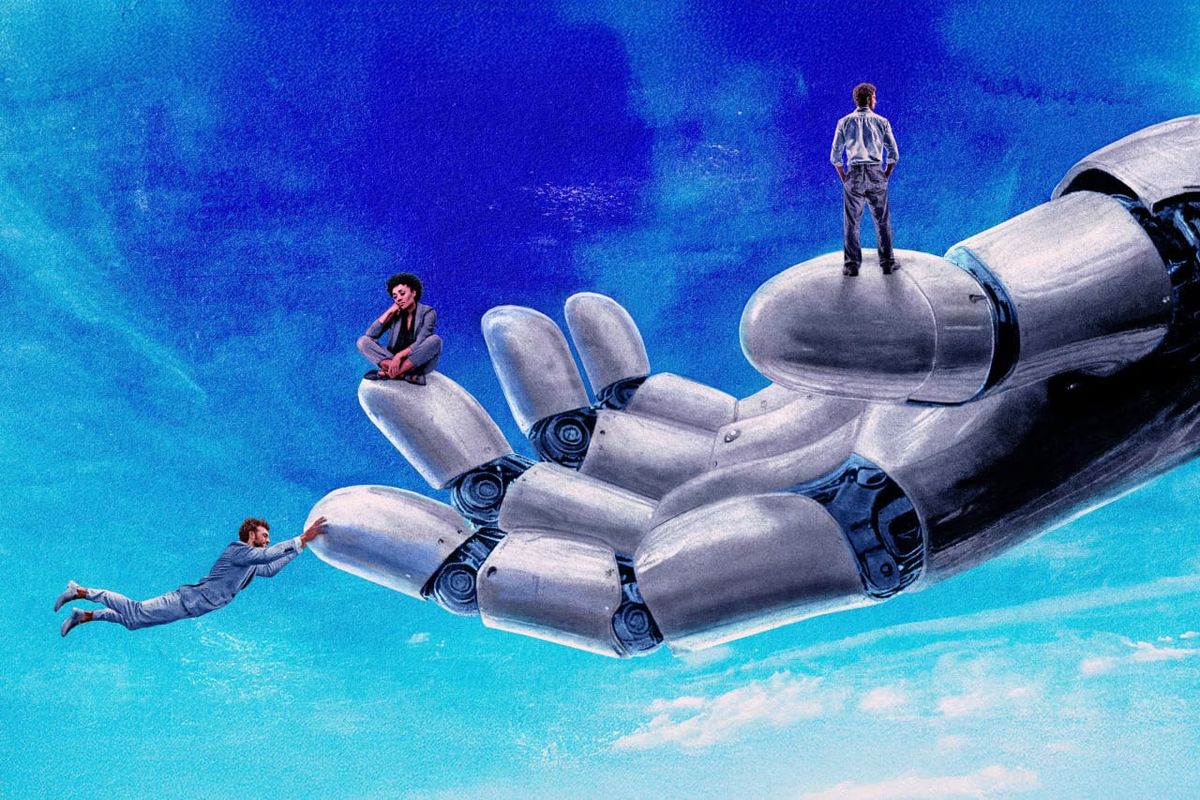
"The news exaggerates. But strip that away and some of it is true. Things will change. The only question is how fast."
"Software got hit first, sure. But other fields will get hit harder, not softer."
"Sharp people will get sharper. Lazy people will get lazier."
Based on interviews with a six year and a three year engineer at a Korean AI startup, plus a solo business owner of fifteen years.
Is it just a buzzword
We asked the senior engineer first whether Claude Blue was overblown.
"The news exaggerates. But strip that away and some of it is true. Things will change. The only question is how fast."
What followed was not light, because he described a rolling depression, fine most of the time and then sliding into it on the way home after conversations like this one.
The younger engineer was more raw. In 2023 AI was still exciting to her, and then something turned after a work trip last summer. She thought she would need to start a business to survive, or move into a licensed profession, and suspected both were already too late, so now she exercises daily and takes it one day at a time. Looking far ahead is exhausting, there is no clear answer, and there is no spark.
Asked whether she was looking forward to the future, the answer was short.
"Not really. I'm a little scared right now."
What stayed with me was that she has these conversations at home, where her father's reaction was that our generation got lucky and does not have to live through this. A retiring generation calling itself fortunate says something about the weight of this.
Why software went first
Both landed on the same explanation, which is that the way engineers work resembles the way the model works. Take a problem, structure it, execute, verify.
"Verification is easy. It runs or it doesn't. The button is there or it isn't. It takes ten seconds and it needs to take three. The bar is unambiguous."
So engineers adopted first and felt threatened first, while non-engineering work is less structured and takes longer to figure out where the model fits. That is a delay, not an exemption.
"Software got hit first, sure. But other fields will get hit harder, not softer."
One accelerant is cultural, in that most professions guard their methods while engineers publish theirs, and publishing makes you look stronger rather than weaker. So when someone with reach shares a technique, it propagates faster than it would anywhere else.
The tool that built an ecosystem
The senior engineer summarized the recent shift with one name: Claude Code.
Earlier tools got a reaction, but the reaction was novelty and usefulness rather than the sense of an ecosystem forming. This one was different, since it focused on developers and shipped skills, agents, and MCP quickly. Things that did not exist at launch kept arriving, and the surrounding ecosystem grew fast.
When someone builds a harness now, they do not guard it but tell other people to try it, and copying is easy.
"Sharp people will get sharper. Lazy people will get lazier."
He places himself somewhere in the middle, and says the people ahead are pulling away faster than before.
Harnesses
One concept came up repeatedly, and it is that a harness is the saddle and the reins. You do not ride the model bareback, you build a system on top of it and steer.
Organizations already had a development flow, plan, divide, assemble, QA, ship, and rebuilding that flow on top of AI is what the word means.
He thinks the shape has largely converged, since new things keep appearing but nothing fundamental is changing. The younger engineer agreed from a different angle, because she wired a new capability into a messenger and then realized she had nothing she actually wanted to send through it.
"You end up doing something in order to use the tool, instead of borrowing the tool to do the thing you care about."
Convergence has an upside, which is that starting now is not too late.
Who adapts first
The same day, we spoke with someone running a one person business for fifteen years, where expectations were low and the conversation turned out to be the most forward-looking of the three.
Transformation reaches these people first, because while large companies are still circulating reports and weighing options, startups, engineers, and independent operators with income on the line simply start.
The temperature gap is the striking part, since a friend in graduate school hears about AI and says it sounds convenient while for engineers it is existential. When that gap finally closes, the second group may feel it more sharply, not less.
Keep reading
Join Bloom
Bloom builds offline rooms where people and technology meet. We run them in Seoul, and now beyond it.
- 💬 Discord community, where events are announced first
- ▶️ YouTube, full talks from past events
- 📸 Instagram, photos from the floor
- 🎟️ Upcoming events