In the AI Era, Trust Is the Bottleneck

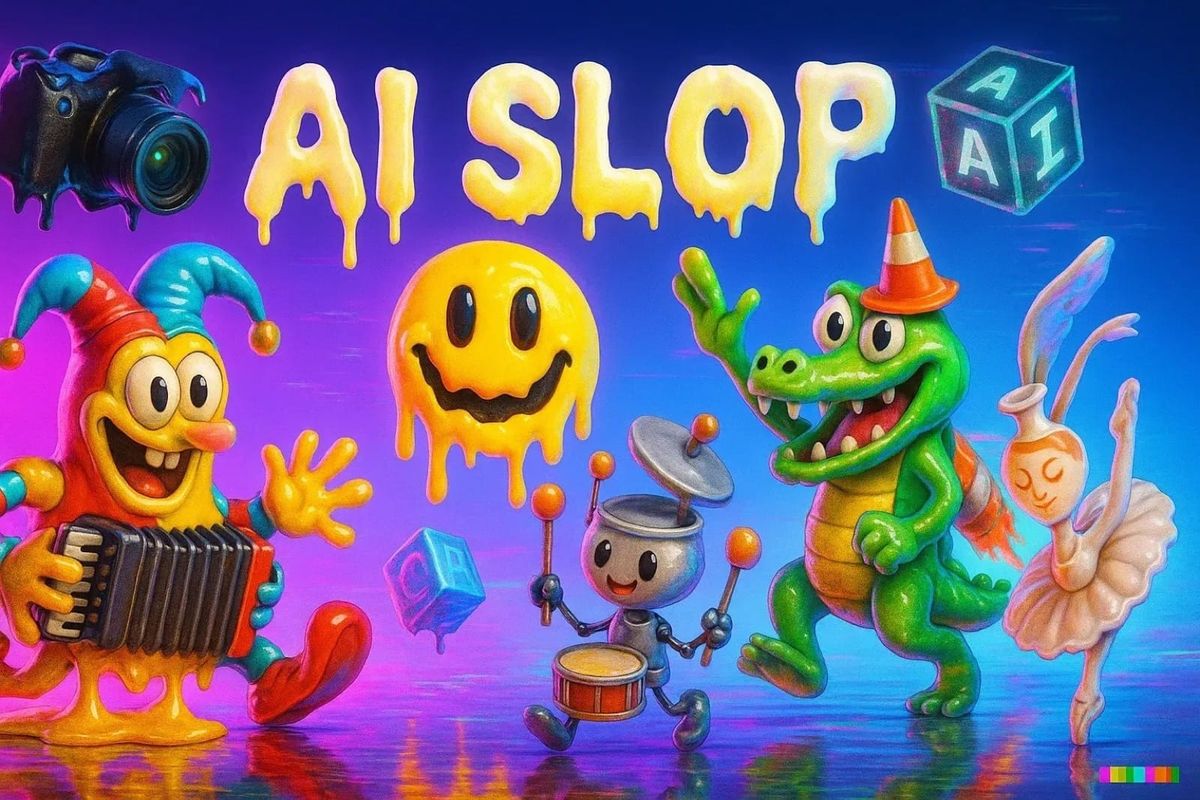
I had lunch with a founder just back from the US who's growing tired of things AI makes. Startups often slap together PR materials with AI and blast them out these days, and the founder's view was that stuff like that ends up performing terribly.
The moment something feels even a little like AI slop, I just stop looking.
AI-sounding writing kills trust fast, the founder said. I said good writing comes down to the ideas and philosophy inside it more than the grammar, and that for people who write that kind of thing well, the writing itself is fun, so they naturally keep at it. The founder once ran an AI agent to buy a pair of shoes, got angry when the recommendations missed, and ended up not buying anything. After thinking hard about what lasts in the AI era, the founder landed on taste and trust.
In an age when anything can be made to look convincing, people learn to spot that ‘convincing’ quality first and steer clear of it. The people I met that week said the same thing in the end: what they leaned on were people they could trust and brands they could trust.
AI produces the average
Someone I met at the lunch Mixer said what AI produces can only ever be the average, so experts have to teach AI their own instincts. We also talked about how AI, handed a long novel, can't carry the emotional thread it set up early all the way through, and I've heard it said that AI will only be truly finished once it can write a full-length novel. Work built on what already exists has gotten easy, but a novel is still about inventing something the world doesn't have yet.
AI is faster and more accurate than anyone at gathering and organizing what already exists, but it can't bring in stories the world doesn't have yet. At Friday's Mixer, someone said that difference is hard even to teach. You can give feedback like “This reads like AI, redo it,” but people who can't see the difference never manage to fix it. The talk drifted to NewJeans, and the point was that a hit like that came from one person's strong taste rather than data analysis.
I brought up Netflix. Netflix always says it plans its originals with big data, but not everything made that way becomes a hit. The person from the lunch Mixer said aesthetic sense comes down to whether it sells: whether you can make people want to pay is the real test of taste.
Lee Soo-man launching a new girl group with a big display of AI and VR technology, while stressing that the most important starting point is still the song, fits the same picture. The more content AI pours out, the more the thing that lasts for people may be an eye for choosing and judging well. Entertainment agencies have prepared for a day when AI can handle taste too, but they still can't put AI idols front and center. The moment they did, they'd be competing with the idols they raised themselves, their own IP.
People open their wallets the moment they trust
The founder from lunch expects trust-based products to be loved all the more in the AI era, and pointed to Costco. Because it sets the margin it keeps and sticks to that rule, people buy without second-guessing every item. As the founder sees it, only two kinds of business will survive: ones that grow explosively by using AI agents to supercharge user acquisition, and ones that build trust very slowly and later take the whole market. Most businesses in between will disappear. The founder also expects that the better AI gets, the more people will drift back toward the human touch.
The founder also thinks introducing people can make money if someone trustworthy does it. In dating or work, when a friend who knows them well says “this person's good,” it usually works out, and now AI could gather what a person has written and left behind so you can preview their reputation to some degree.
A developer friend I met that afternoon explained how a brand builds up. The moments you give up an easy, certain gain are the moments you keep faith with your principles, and a brand is what forms when people see those moments again and again. Costco setting the share it keeps and holding to it is really the result of turning down that temptation at countless moments when it could have kept more.
The decision gets made in one phone call
A colleague who runs Bloom with me put this more funnily. When you reach out to collaborate on an event, the venue and the partner companies alike all ask for a proposal, and afterward they want a results report. But the important decision has already been made in a single phone call, and the documents get generated with one AI click on our end and received with one click on theirs. It's like pro wrestling, where both sides know it's scripted and play along anyway.
You're WWE, I'm WWE, okay. Let's just agree we're doing pro wrestling.
AI can write documents now as much as you like, but what makes people believe those documents is still the trust between people that passes over a single phone call. The person from the lunch Mixer said that even if you automate everything, at least one person always has to remain. When an audit comes and someone asks “Who's responsible for this?”, AI can't answer, so you need one or two people to take responsibility and oversee things. If that one person ends up carrying all the work and all the responsibility, it occurred to me that someday each of us might become a business of one.
At Friday's Mixer I brought up Luma. As far as features go, Luma, which makes event pages, is nothing special, and similar services have been around in Korea and abroad for ages. Yet now people even say “You've got to host on Luma to be cool.” In the end, what matters more than any tech or feature is trust in the brand.
Doors open through introductions
The founder from lunch said cold emails in the US were all ignored, and the only way a door opened was through an introduction. You win over the smallest person in the industry first, get introduced to someone mid-level through them, and climb one rung at a time. The surest path is to get close first to the CEO of a company your target investor has already backed. What a place like Bloom sells, in the founder's words, is ultimately the same thing.
Honestly, just meeting good people is the product.
Good people recognize each other, and a good community grows by word of mouth without ads, as the founder put it. The founder also brought up a line passed around at Y Combinator for years: “Do things that don't scale.” Few things scale less than meeting people in person and building trust.
A story someone told at Friday's Mixer went the same way. Whenever a Bloom main event broke into small groups, they'd always slip out. But after coming to one Mixer and getting to know a few friendly faces, at the next main event they were able to stay for the small groups.
Now that AI makes press materials, documents and content endlessly convincing, what customers question to the very end is “Can I really trust this?” AI can't build that trust for you. It only builds up in the time you spend meeting someone one more time and talking one more time.
Keep reading
Join Bloom
Bloom builds offline rooms where people and technology meet. We run them in Seoul, and now beyond it.
- 💬 Discord community, where events are announced first
- ▶️ YouTube, full talks from past events
- 📸 Instagram, photos from our events
- 🎟️ Bloom app, upcoming events and Mixers