AI Gave Back the Joy of Making


AI that edits genes
In Boston we met a researcher who builds AI tools for biology research at a life sciences institute, with published work related to gene editing, someone who lives daily at the intersection of biology and AI. Asked about the potential of AI in bio, the answer was firm.
Life science is a field we understand maybe 30 percent of.
In software, it is questionable how much opportunity remains; bio and space are the fields where AI will accelerate research and development, with endless territory left for humans to explore. He will soon move to a new bio AI company, one building its own models to cure the diseases that still elude humanity.
After work, a prediction market bot
More interesting was the side project: a betting bot for a prediction market platform. Bio AI research by day, financial prediction bot by night. The combination became possible for one reason: coding speed that feels three times faster. He is not a pure developer; he came up as a researcher with domain knowledge and analytical skill, and coding was never the main job. Now that person builds a working bot alone. The ability to read data and form hypotheses was already there; the tools became the bridge that turns that ability into running code.
The manual-work outsourcing teams are disappearing
We also met a ten-year data engineering team lead at a global financial data company in New York, who started at an ad agency, joined as a senior analyst, switched to engineering, and rose to lead. Finance is conservative; strict security rules delayed external AI tools. But once adoption started, change came fast, especially for life as a manager: the hours spent summarizing team output, documenting, and communicating dropped visibly.
Most financial firms now build their own models. The data is decades of accumulated know-how they refuse to hand to external tools, and financial data is structured in complex ways with accuracy standards too high for general-purpose models. The most striking story was about outsourcing. Financial data is messier than people think, often shared in unfriendly formats, so humans used to read, extract, and transfer it by hand, and that work went to overseas teams. Disappearing is the precise word: not gone at once, but shrinking steadily. As AI covers more of the volume, the contracts shrink with it. Finance still runs on Excel culture, but who does the work inside the spreadsheet is changing.
Tips, and lease contracts too
The funniest part was daily life. New Yorkers now use a chatbot, not a calculator, to split restaurant tips. He recently dropped his apartment lease into AI for review: New York leases run dozens of pages of legal language, and where he once signed on faith or paid a lawyer, the AI now summarizes key clauses and flags what to watch.
It does not fully replace a lawyer, but at least now I know what to ask.
Five hundred dollars a month, out of pocket
A product designer with ten years in a big tech R&D org spends 500 dollars a month on AI tools out of personal money, even though the company provides none officially. Asked why go that far, the answer was unexpected: because making things became fun again. The joy of escaping a ten-year routine and wanting to stay up all night polishing something.
The same technology, three different gifts: for the researcher, a change of speed; for the manager, the power to reshape a team; for the designer, the return of a joy that had gone missing.
Join Bloom
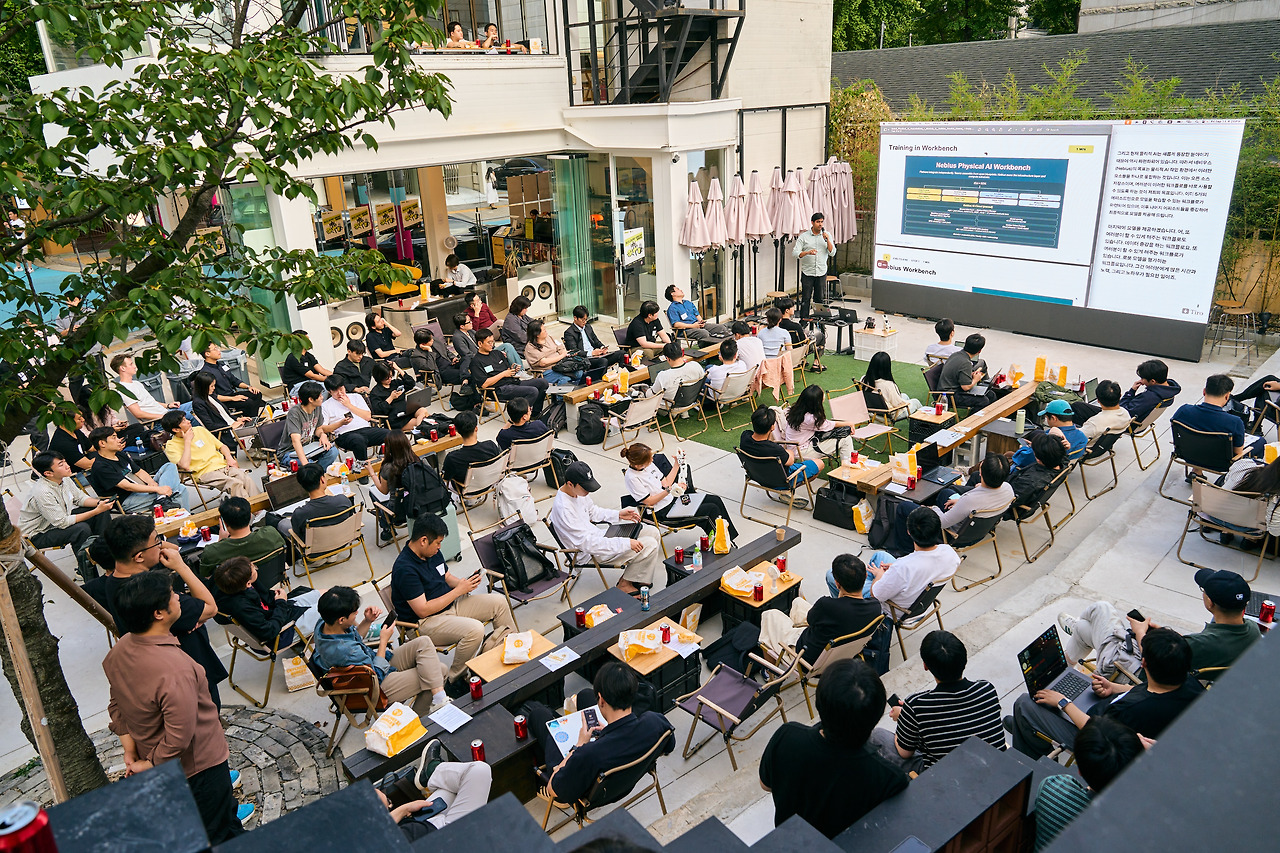
Bloom builds offline rooms where people and technology meet. We run them in Seoul, and now beyond it.
- 💬 Discord community, where events are announced first
- ▶️ YouTube, full talks from past events
- 📸 Instagram, photos from our events
- 🎟️ Upcoming events