We're Open-Sourcing Ambition for Korea

We've open-sourced the way we ran the Ambition for Korea hackathon. It's all on GitHub.
https://github.com/patrickhan-coder/bloom-hackathon-kit
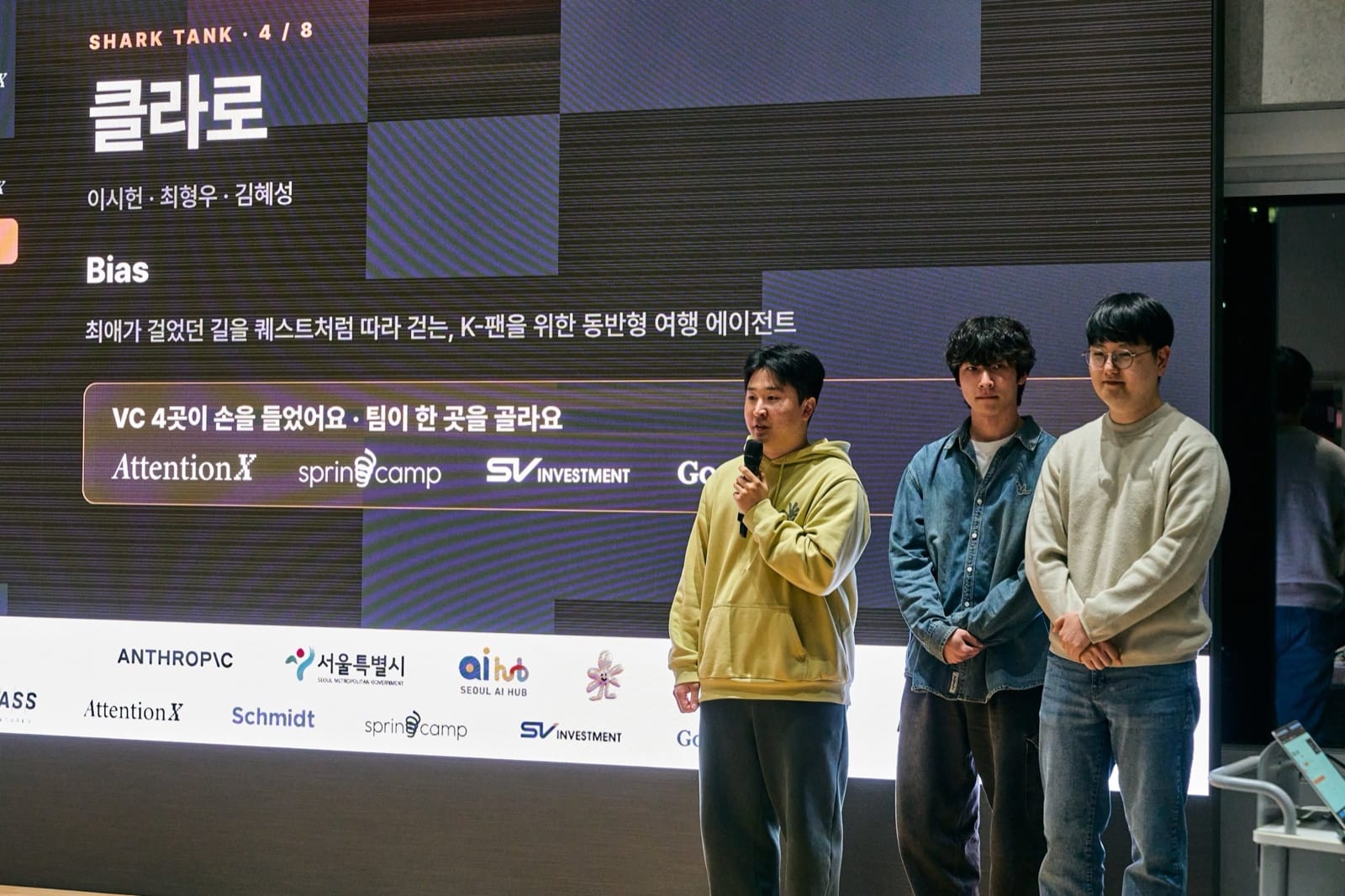
At the venue I kept hearing the same thing: the way we ran it felt new. Here's the truth, though. I'd never been to a hackathon myself. Bloom has run plenty of hands-on sessions, but those were closer to buildathons. This time every one of the eight finalist teams was playing for $5,000 in Claude credits, and VCs had carved hours out of their week to judge. I couldn't wing it. Sloppy operations or one bad mishap would've raised fairness questions, let our partners down, and killed the energy in the room.
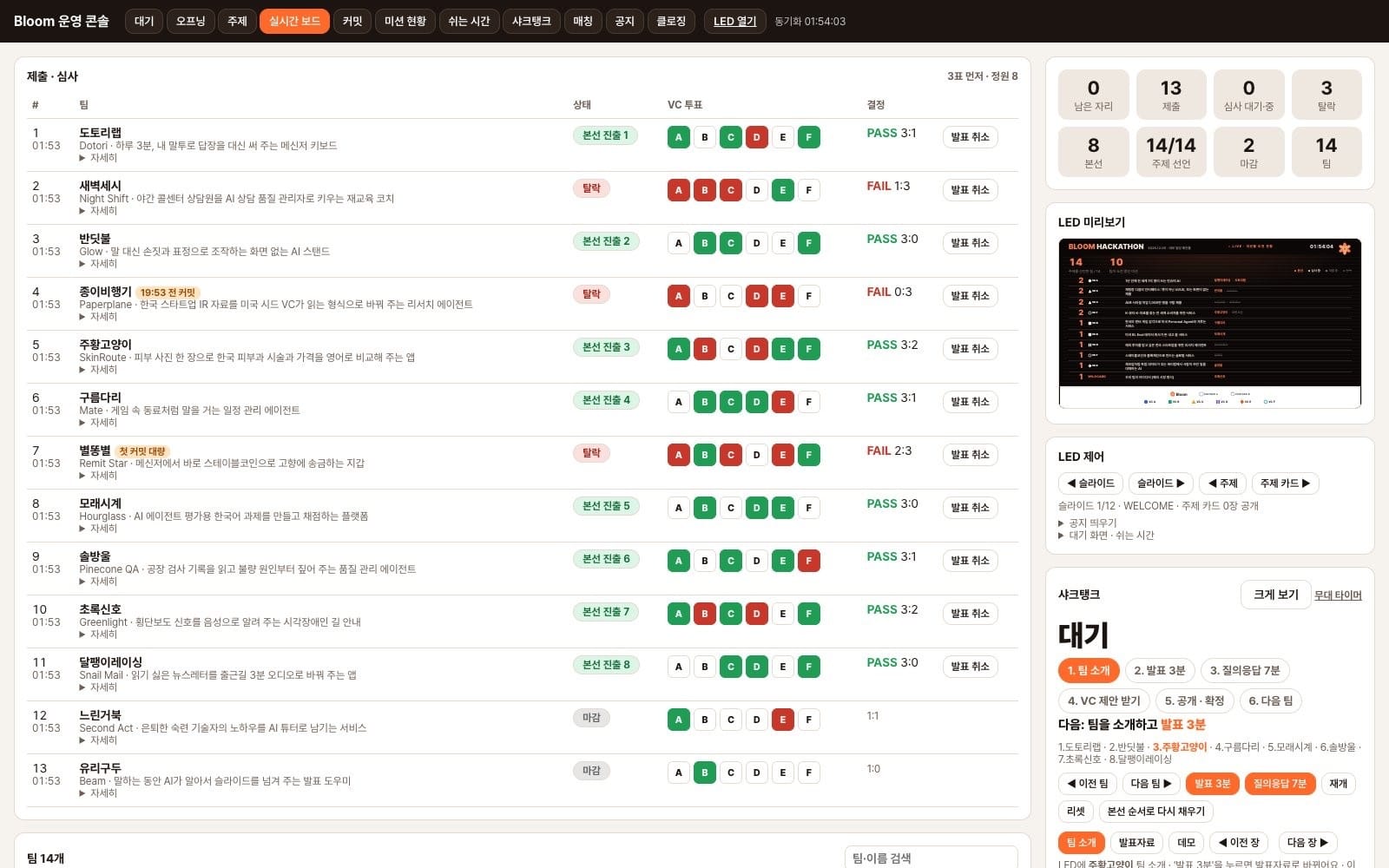
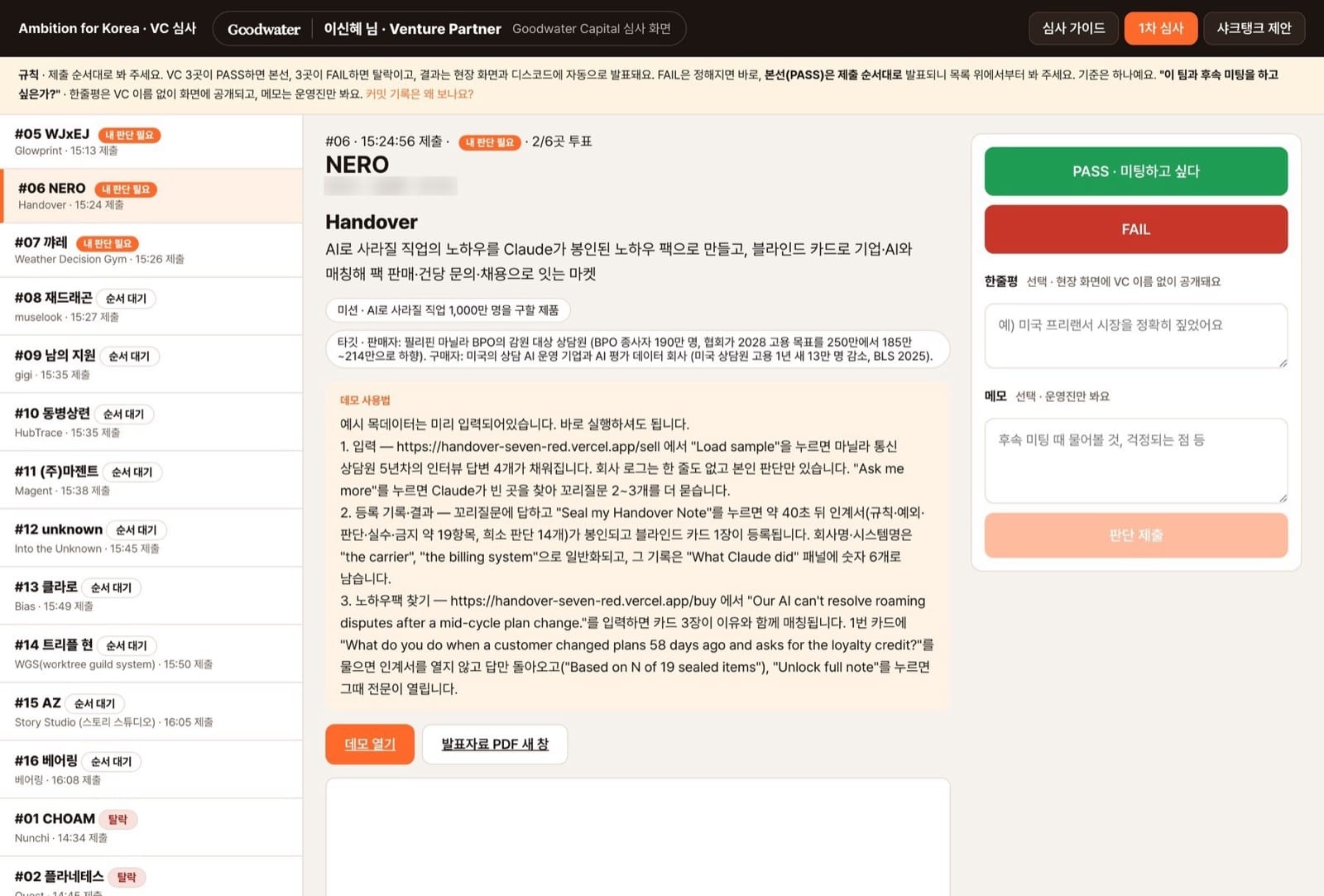
So the day before, I unloaded every worry and half-formed plan on Claude and we built it together. The ops console, the live LED leaderboard, the VC judging screen and the participant submission form were all made with AI. I had no idea we'd need that many screens. I trusted the AI and let it run.
It was a survival format, so the real job was keeping the rules simple while making people hungry to win.
1/ The clock starts at 10. Building ahead of time would wreck fairness. So the VCs' nine missions were revealed that morning, and each team picked one. We kept the themes broad on purpose, yet every one was a problem a VC actually cared about. Resources were identical too: $500 in Claude credits per person.
2/ Everything gets built in a fresh public repo. Code and commit history are out in the open. Some people worried their idea would get stolen. I told them not to bother kicking away the ladder. Ideas become common property fast anyway, and what wins is execution, persuasion and speed. That's also why a commit before 10 a.m., or a first commit over 3,000 lines, put a warning on the VC judging screen along with the reason.
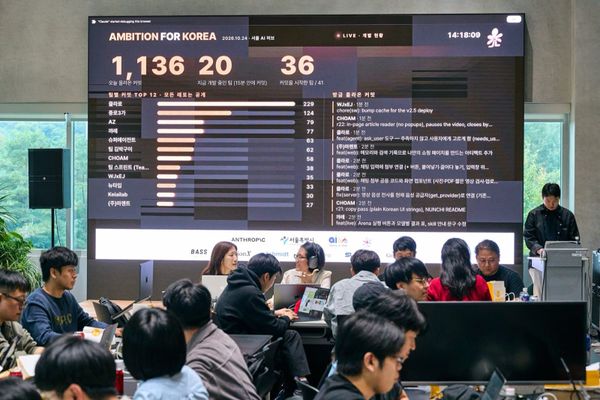
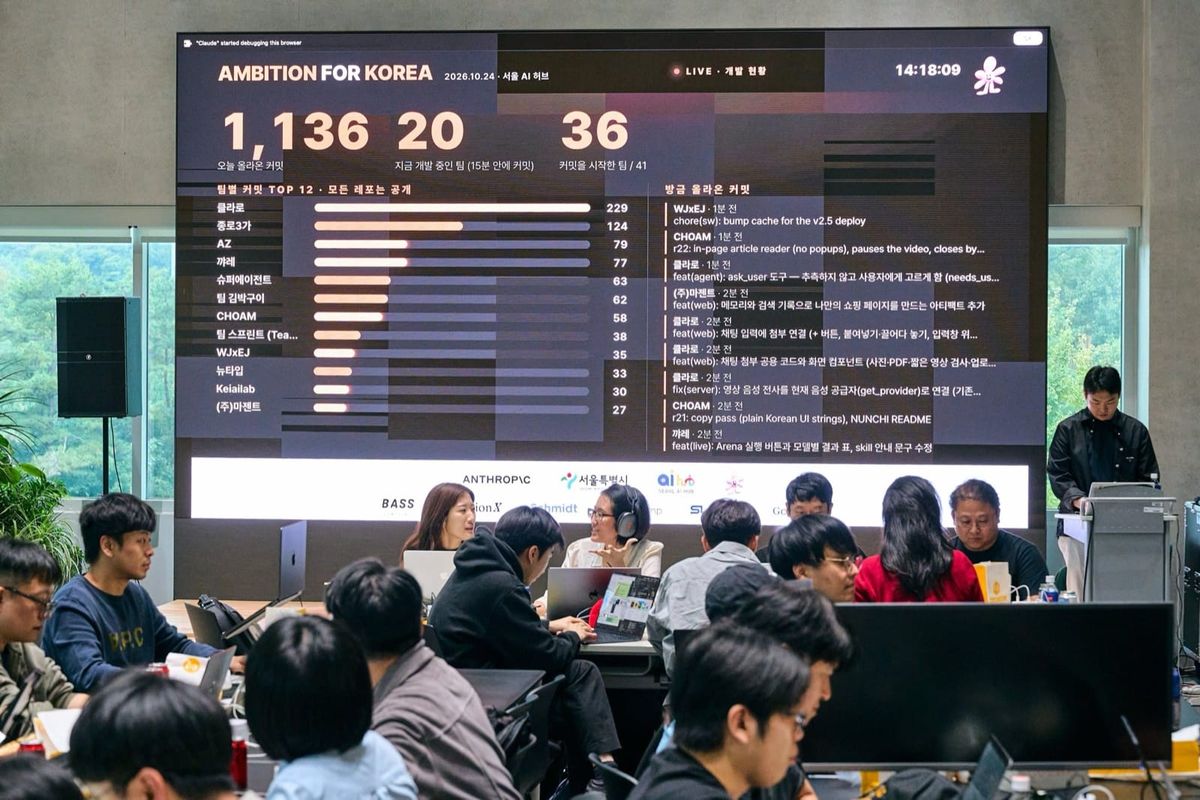
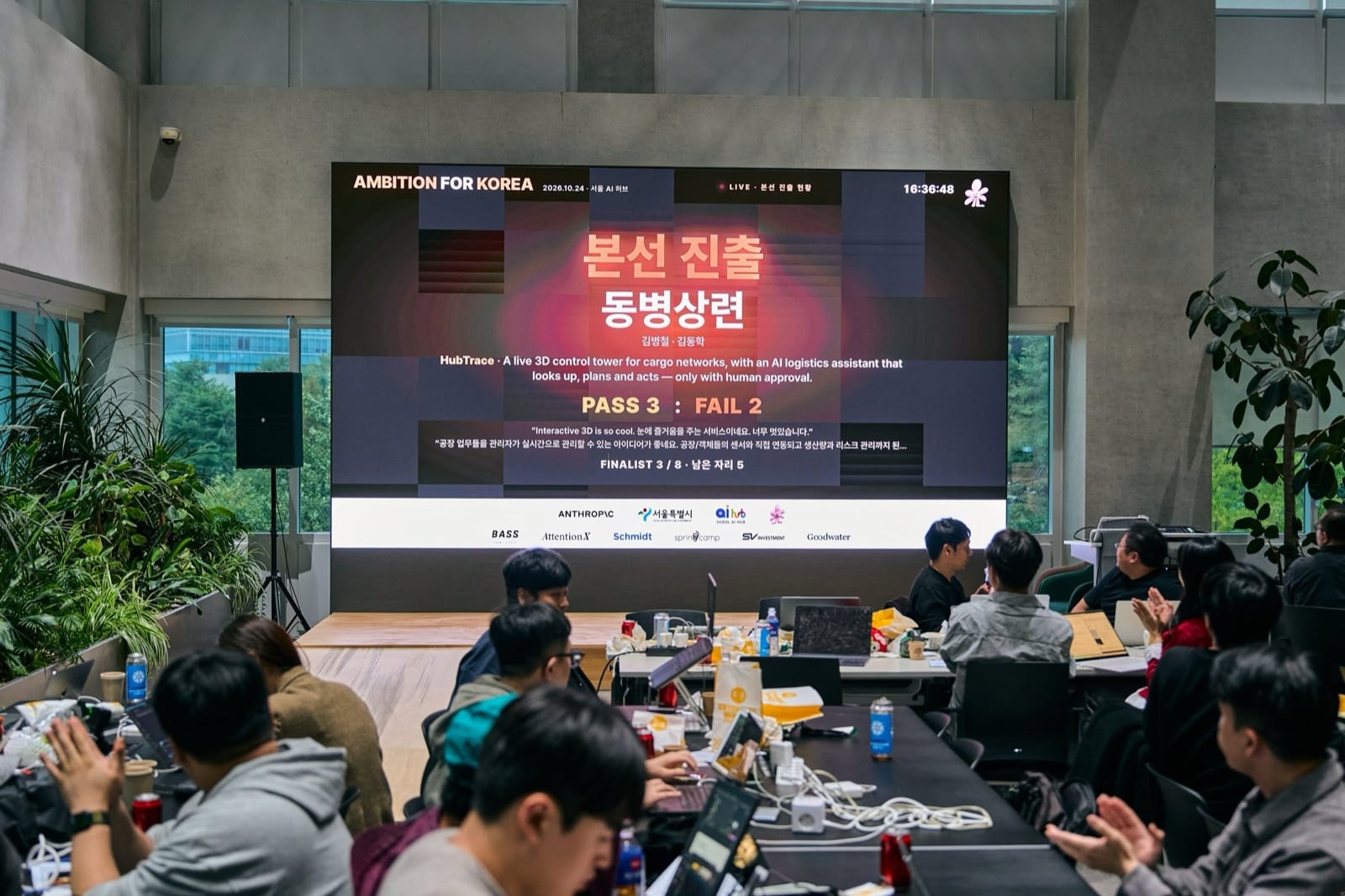
3/ Each team's topic, the most popular missions and per-team commit counts went up live on the LED wall. None of it counted toward scoring. Whenever a verdict came in, it flashed huge on the LED with a sound effect, and the room jolted every single time.
4/ There are eight finalist seats, first come, first served. The moment all eight fill, every later submission is out, even before the 5 p.m. deadline. Rush in, though, and your quality might not hold up. The first submission didn't arrive until 2:34 p.m., later than I expected. Once one or two teams went in, it turned into a sprint. Some teams never got an entry in before the seats were gone. Others made the finals by a hair, thanks to when they'd submitted.
5/ The verdict isn't a majority vote. It's the first three votes. PASS, PASS, FAIL, FAIL, FAIL means you're out. The rule was there to keep judging from piling up and delaying announcements. Early on we lost so many teams that I briefly considered waiting for all six votes. Then I watched the eight teams that broke through anyway. I came away convinced the rule was well designed.
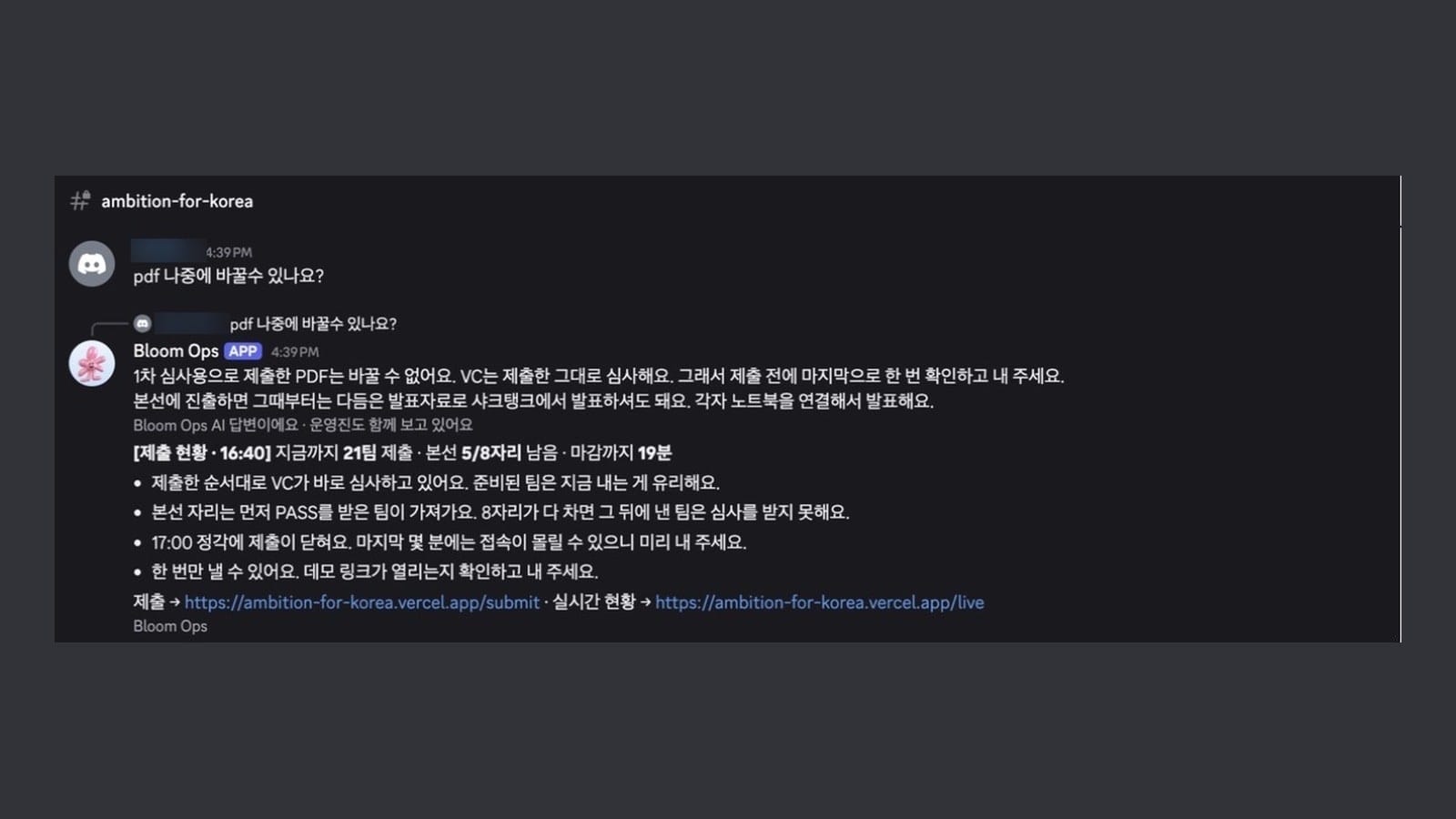
6/ AI ran on-site operations and communication through Discord. It answered all 65 questions from participants and VCs as they came in, with a median first reply of 31 seconds. By my standards the answers were sound. Where I'd left a rule a little fuzzy, the AI explained it more even-handedly than I would have. It tagged me first only on the genuinely ambiguous calls. I'd talk those through with it briefly, then decide.
Here's one example. As questions came in on Discord, the AI proposed a standard on its own and answered with it: no AI models other than Claude; image and video tools like Higgsfield are fine; open source is allowed, but bring it into a new repo instead of forking (a fork drags in pre-10 a.m. commits and trips the warning), and credit the source in the README. It handled the lunch call and rule reminders too, and it suggested what to announce and when. The humans only had to set up desks and meals and make announcements on the mic.
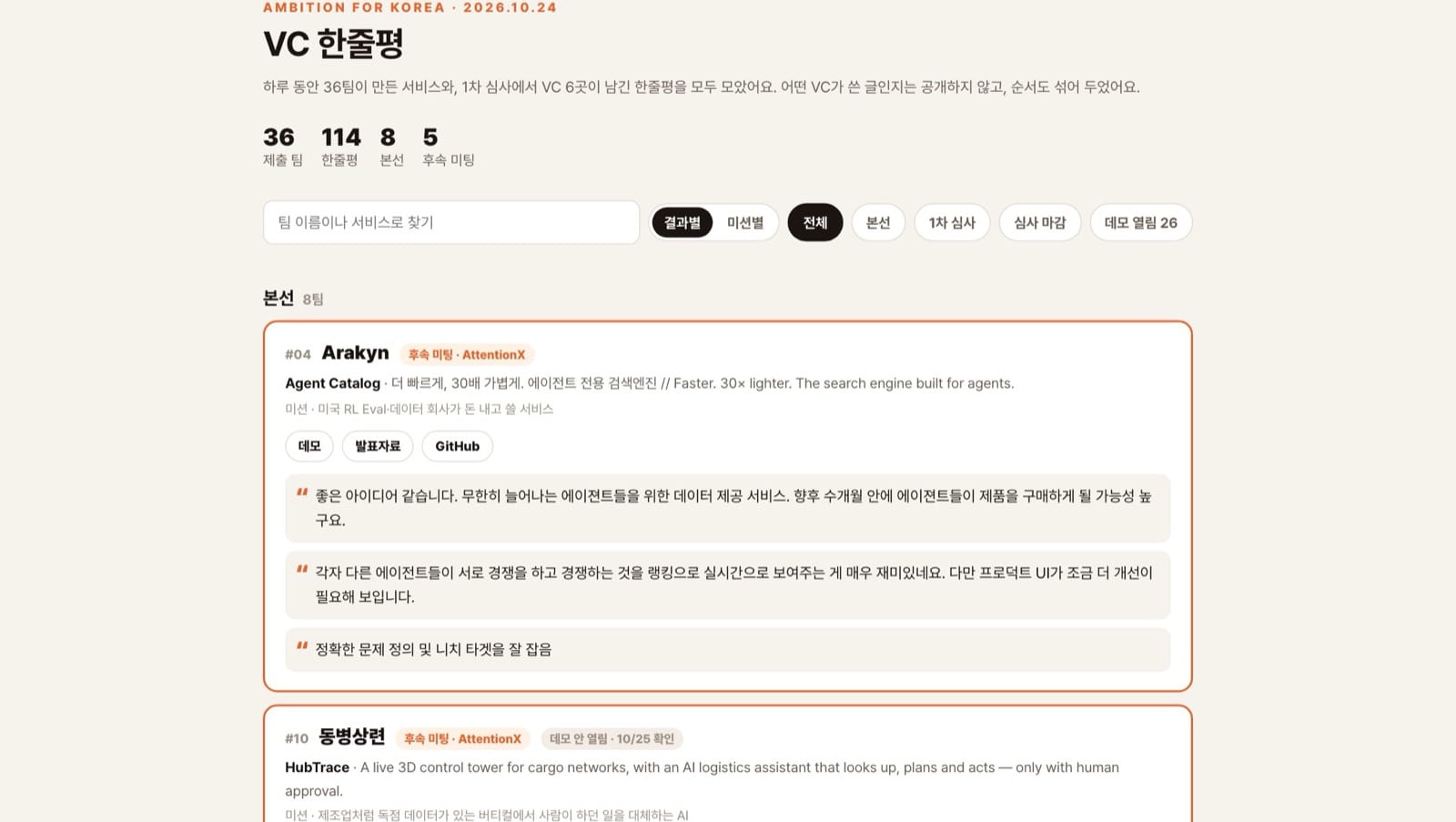
7/ After the event we put the demos and pitch decks from all 36 teams, plus the VCs' anonymous one-line reviews, on a single page. The repos were public anyway, so it pushes everyone forward. It also gives the VCs an easy way to look back and weigh follow-ups. Since the event, VCs have kept asking for more meetings.
8/ That same night, the Seoul Metropolitan Government, the six VCs, Anthropic and our sponsors each got a results report built for them. Our photographer sent more than 1,000 photos. The AI picked the ones that fit each report, and as always, a recap went up on this blog right after the event.
I'd sweated over how to bring the tension I loved in Show Me the Money and Culinary Class Wars into one day. The room really did feel close to that, and I'm personally happy about it. Had we filmed it, it would've made a pretty fun survival show. For everyone who couldn't make it, I've put the whole playbook on GitHub so you can feel that air too.
One click on the Deploy button in the README sets up the site and the database. For your own event, you only change one config file. If anything's confusing, just have an AI read it and customize away. The rulebook, the ops checklist and the AI operations setup we used that day are all in there. Try it out, and ask me anything.
The full story of the day is in Ambition for Korea x Anthropic.
Keep reading
Join Bloom
Bloom builds offline rooms where people and technology meet. We run them in Seoul, and now beyond it.
- 💬 Discord community, where events are announced first
- ▶️ YouTube, full talks from past events
- 📸 Instagram, photos from our events
- 🎟️ Bloom app, upcoming events and Mixers