1,500 Signups, Sold Out in 24 Hours: Our Night in Singapore
More than 1,500 people applied and the seats were gone in a day. The night turned on a single reframe: stop asking which business is safe from AI, start asking which business grows because of it.

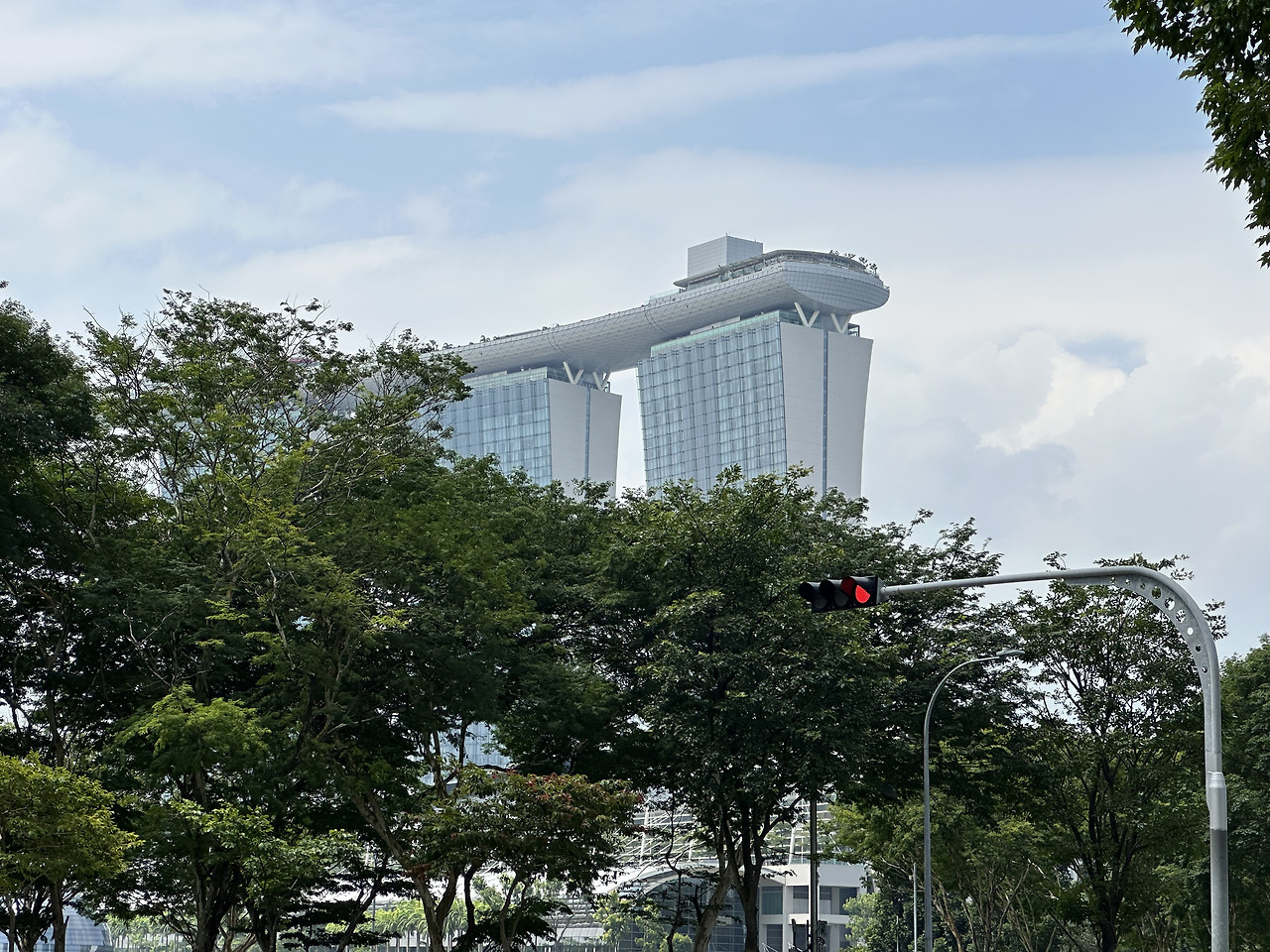
Bloom's first meetup outside Korea took place in Singapore. More than 1,500 people applied and the room closed within 24 hours, and the night confirmed that the Claude Blue to Bloom story, which grew up in Korea, also carries across a border.
This post is based on the first global meetup Bloom ran in Singapore.
📅 14 July 2026 | 🤝 Bloom × Singtel × the Singapore Claude community
Our first meetup outside Korea
Bloom held a meetup outside Korea for the first time. The Seoul edition in April drew 2,000 applications, and Singapore drew more than 1,500, with every seat gone within 24 hours of the announcement. The room came from Singtel, the largest telecom operator in Southeast Asia and a company that carries roughly the name recognition AWS has elsewhere. Nobody introduced us to them, and the partnership came out of cold DMs sent on LinkedIn.
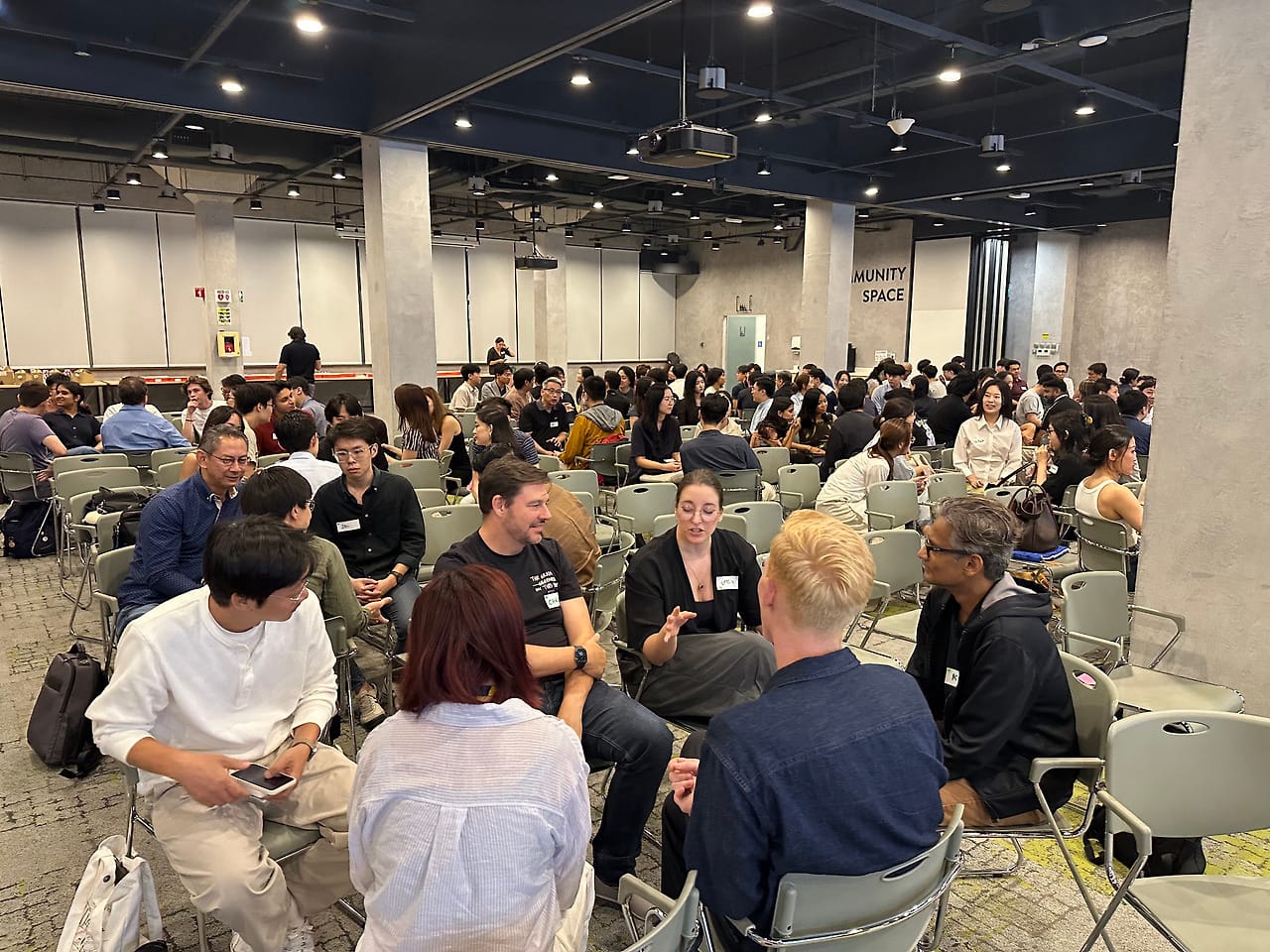
What stood out was that Singtel asked for a conversation rather than a technology demo, and they asked for it first. They were in the middle of a workforce transformation, redesigning how people work, how leaders lead and how the business itself is shaped around AI. Plenty of large companies put money into AI infrastructure, and very few put it into AI culture.
The partnership with the Singapore Claude community also started on LinkedIn, with Max, the local ambassador, and Yier, a Googler who helps him run it. A local community where only Koreans gather has a low ceiling. A Discord where people from Korea, Japan, Singapore, Australia, the US and the UK sit together is worth something on its own, and that was the whole thinking behind going.
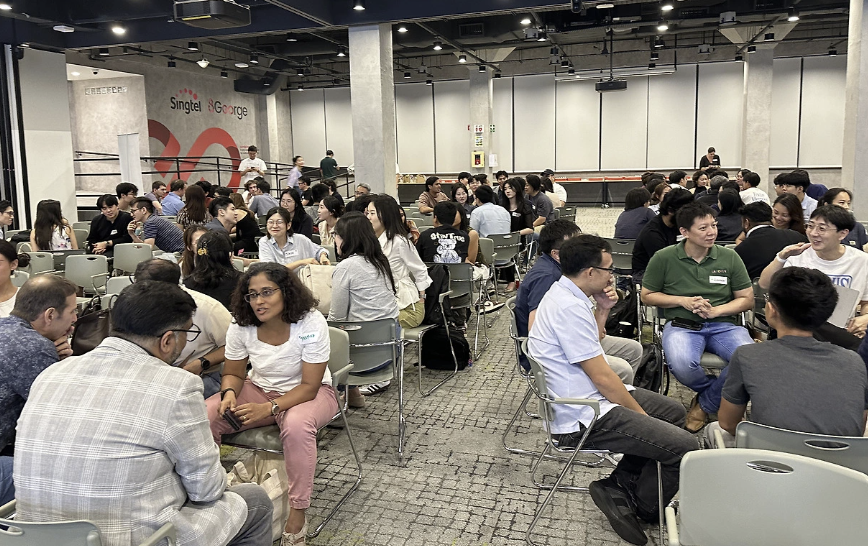
I had worried about the cultural difference, because plenty of people warned me that Singaporeans are careful and slow to say what they actually think. We pushed the fireside chat and the small group sessions exactly the way we always run them, and the small groups got as loud as any room in Korea. The person from AWS said he would sponsor the next one, and one attendee asked us to do Vietnam.
Claude Blue to Bloom, across a border
On stage we started with how this community began, and it began with the anxiety of one software company, Cliwant. What happens if AI swallows our software and users simply build what they need without our tool. I kept having coffee chats about that fear, and an AI engineer friend at Meta in Silicon Valley told me the more he used AI the more depressed he got. He had a machine learning PhD and 20 years behind him, and he was in an identity crisis. I borrowed from the Korean phrase corona blue, called it Claude Blue and wrote it up on the blog, and the post spread much further than I expected.
That is where the arc of AI Excitement, then Blue, then Bloom came from. The first stretch of using AI is exciting, and the more you use it the more the FOMO, the job anxiety and the identity questions pull you into Blue. Nobody wants to stay there, so we added Bloom, which means to flower. That very human subject lowered the door on AI events that had belonged to developers, and the community now draws people from Samsung and Hyundai as well as law firms, financial companies and government agencies. Cumulative applications sit around 6,000 and the Discord holds 2,600. We took a community that grew organically to Singapore to test whether the idea works outside Korea.
Change the question and the answer shows up
The best of the fireside came from Cliwant's CEO, who spent over 10 years in Singapore's bidding industry before noticing it had not changed in 15 years. He founded an AI solution for government bids, and this year he kept asking which business is safe from AI until the answer came back as none, which is how he went Blue. Then he changed the question to which business can grow because of AI, and the same reality produced answers. His answer was a redesign of the model, and he dropped the SaaS subscription for revenue sharing, where the company earns only when the customer wins. "So today I am Bloom-ing," he said, and the room nodded at the present tense.
How he came to trust offline was just as good a story. Before he founded the company he was bidding for a mall in Orchard and could not work out why the RFP asked for system integration. The document gave him nothing, so he went to the site, and every small display mounted in every toilet in that mall was switched off. The answer sat outside the document rather than inside it. He was the only foreign company in the running and quoted the highest price, and he won anyway, because he knew the customer's hidden need. "The real insight comes after the fireside ends," he said. "This is only the appetiser, and the main dish comes next."
Build cost goes to 0, empathy stays
The story people repeated most was his 10 year old son. The boy was deep into games, so his father told him to try making one if he was the best at playing them. He built 10 games with Claude in a few hours, and the real insight came after that. Of the first game the boy said, "Dad, my friends say this is not fun at all." He told the model he wanted a 3D game and fixed it over and over on friends' feedback. "AI knocked the cost of building down to 0. But AI does not know what users really want or where it hurts. My kid the gamer knows that." Empathy is the part that stays.
Yier Cao, an AI architect at Google Cloud, went through every stage over the past year. Coding with AI excited her until she saw that excitement came from ignorance, and building more only exposed more gaps. She has made peace with never mastering every tool, and learns one project at a time. She compared a career to an exploration game where the map opens as you clear quests in the dark, and AI opens it faster. Product, consulting and finance led to this jump into AI architecture, her biggest, and value compounds where domains cross. Everyone laughed at the meme about a wasted morning without hitting your Claude limit by noon, and she said skipping token maxing is no sin.
A new drug, burnout, and that is why we do community
Max, the Singapore ambassador and the founder of an AI native startup, said his team of three does what would have taken fifteen people a few years ago. None of them come from a technical background, and all of them do everything with AI tools. He said the name Claude Blue finally gave a name to a feeling he had carried for a long time, the pressure to be efficient at all times and the endless stream of input. "I told a friend this is the new drug. It is really addictive." He is a builder of 27 years, and even he said it is genuinely hard to keep up with the latest and feel no FOMO.
That fatigue turns up in the numbers as well. A recent survey of tech workers found that AI clearly lifted productivity and that burnout climbed with it, from 45% to 56%. That is exactly why we run a community.
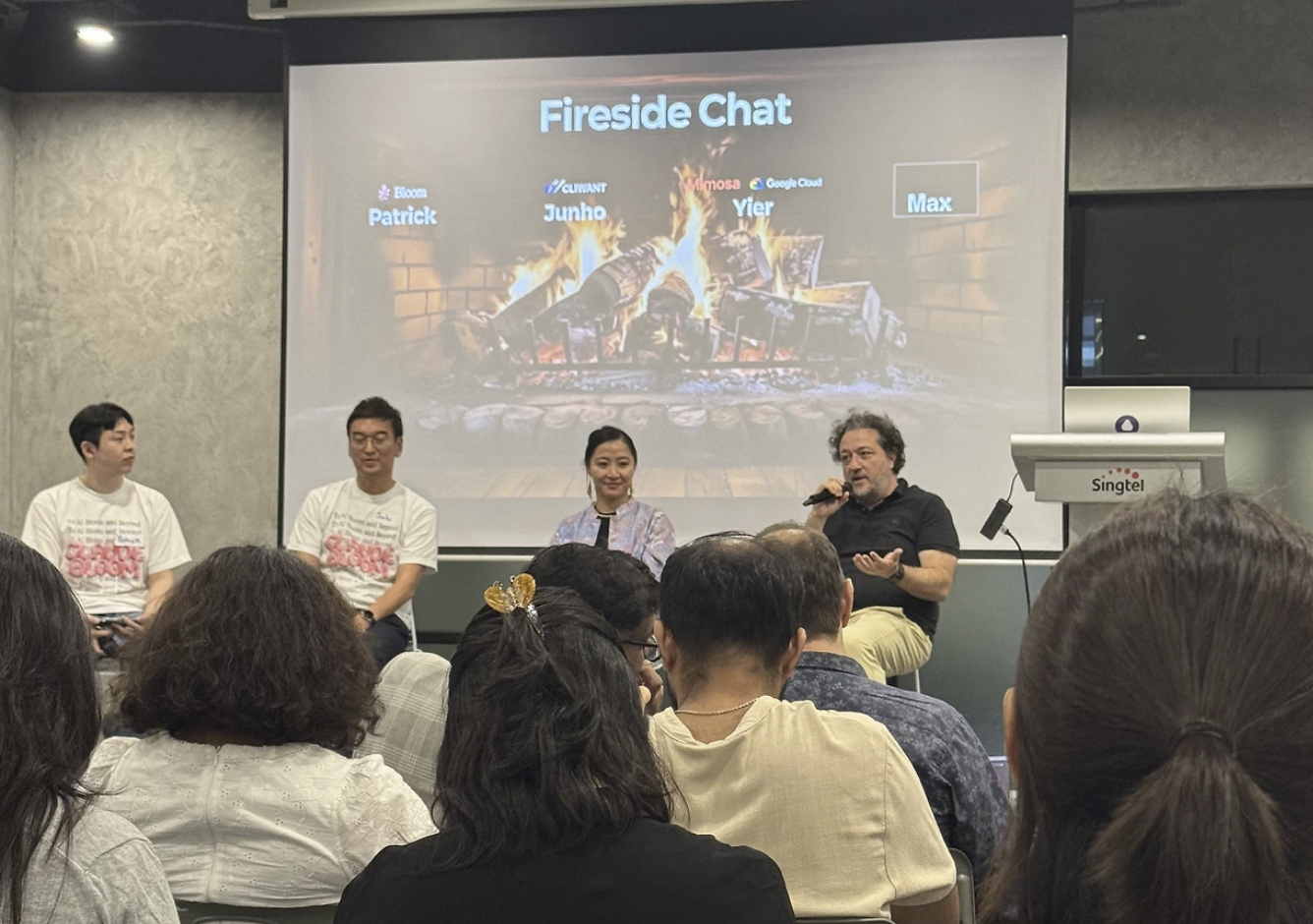
Yier said that interacting with AI every day is fairly stressful and can be lonely, and that meeting somebody with a similar experience is support on its own. The line Max threw out was the symbol of the night. "Anthropic will never run an online event. Not even with 1,500 people signed up. They want people to meet face to face." The connection built when people look at each other is a different thing, which is why the room stays full after the programme ends and everybody keeps talking about what they are making.
Small groups and demos: simplify, purpose, mindfulness
The main dish was the small groups. We made instant tables of eight out of the rows in front and behind, and everyone shared their Claude Blue moment and the routine that gets them to Bloom. One veteran said he felt FOMO on Twitter every day about some new framework, burned out after five months, and eventually made peace by keeping exactly two tools at each layer of his stack.
Rather than chase whatever shipped that week, he asks as a first principle where this fits in the kit he already has. Someone running AI adoption inside a bank said the pressure of a baseline that keeps moving is the same in every organisation, and that his Bloom is the search for purpose. One CTO confessed he had agents running on his laptop through the entire fireside and said he calls this AI-induced Psychosis rather than Bloom, which brought the house down. His real definition of Bloom was heavier. The satisfaction of delivery, he said, when something complicated simply works, and when one person finishes what used to need a big team.
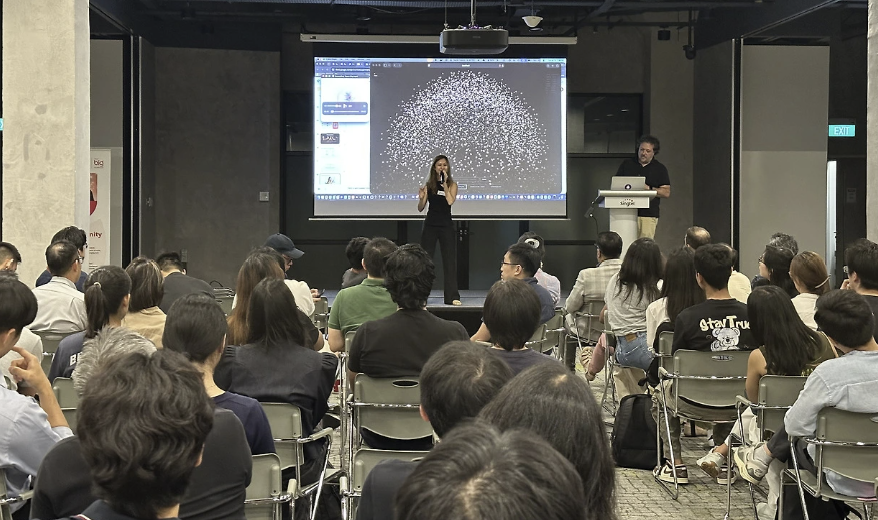
What cooled the room down was a meditation session from Keziah, an EY consultant and mindfulness coach. She knows nothing about coding or particle physics, and she built The Cave with Claude Code and Gemini out of 5 years of meditation scripts and the attitude behind them. Rumination and worry are the practice of living somewhere other than here, she said, and she talked about presence as a muscle you train.
The three community demos that followed looked like the same spirit. A quiet invite-only social platform that does not manufacture outrage or FOMO to get participation. A perfume bottle generator that turns anyone into a perfumer. The third demo was Pendulum Type. It writes letterforms out of the chaos of a double pendulum. All of them hand back the process to play with instead of handing over a finished result to watch. On the closing stage we announced Bloom Seoul, a global conference for 1,000 people in Korea at the end of October. Filling a room that size needs people from outside Korea, which is the honest reason we hope this first global meetup is not the last one.
What a company can take from this
Put the night into working language and four things remain.
- Change the question to open the opportunity. Swap "which business is safe from AI" for "which business can grow because of AI" and a path appears to redesign the business model itself, moving from subscription to revenue sharing for example.
- Hold on to the empathy AI cannot reach. The closer the cost of building gets to 0, the more the domain, the site and the empathy to know what a user really wants and where it hurts become the core of any difference.
- Simplify the toolkit hard. Chasing every new technology ends in burnout, so keep a few per layer and choose by asking where this fits in my kit, which is what keeps the pace sustainable.
- Treat offline connection as an asset. In an era where burnout rises alongside adoption, a community that meets face to face cushions the isolation and produces real support and a real global network.
Frequently asked questions (FAQ)
Q: What does "Claude Blue to Bloom" mean?
- It describes the run from the excitement of using AI for the first time into the slump of FOMO, job anxiety and the identity questions that arrive the more you use it. Nobody wants to stay in that feeling, so Bloom was added for the flowering that comes after standing on it.
Q: Is there really no business that is safe in the age of AI?
- Hunting for the safe business tends to end in a slump, because there is no answer. Change the question to which business can actually grow because of AI and the chance to redesign the model appears, the way a move from subscription to revenue sharing does.
Q: What is left for people when AI makes everything?
- Empathy. AI removed the cost of building, and it still does not know what a user really wants or where it hurts. Domain experience, time on the actual site and the empathy to read how people feel stay with people to the end.
Q: How do you handle AI tool fatigue and burnout?
- Simplify by keeping only a few tools at each layer of the stack rather than chasing every new technology, and judge anything new by where it fits in your own kit. An offline community of people with similar experience also cushions the loneliness and the burnout.
Q: Why does an offline community matter in the age of AI?
- Working with AI every day is stressful and it can be lonely. The connection built face to face is different from the online version, and it turns into practical advice, real support and a global network. That is also why Anthropic does not run online events.
Watch it back
The video from this event is in production. Subscribe to the YouTube channel and you will get a notification when it goes up.
Keep reading
Join Bloom
Bloom builds offline rooms where people and technology meet. We run them in Seoul, and now beyond it.
- 💬 Discord community, where events are announced first
- ▶️ YouTube, full talks from past events
- 📸 Instagram, photos from the floor
- 🎟️ Bloom app, upcoming events and Mixers
Based on Bloom's first meetup outside Korea, held in Singapore with Singtel and the Singapore Claude community.