Building a Community That Gets Taken Seriously
We opened twenty seats with no agenda and thirty-five people came. Four months of members told us, honestly, where this community should go.

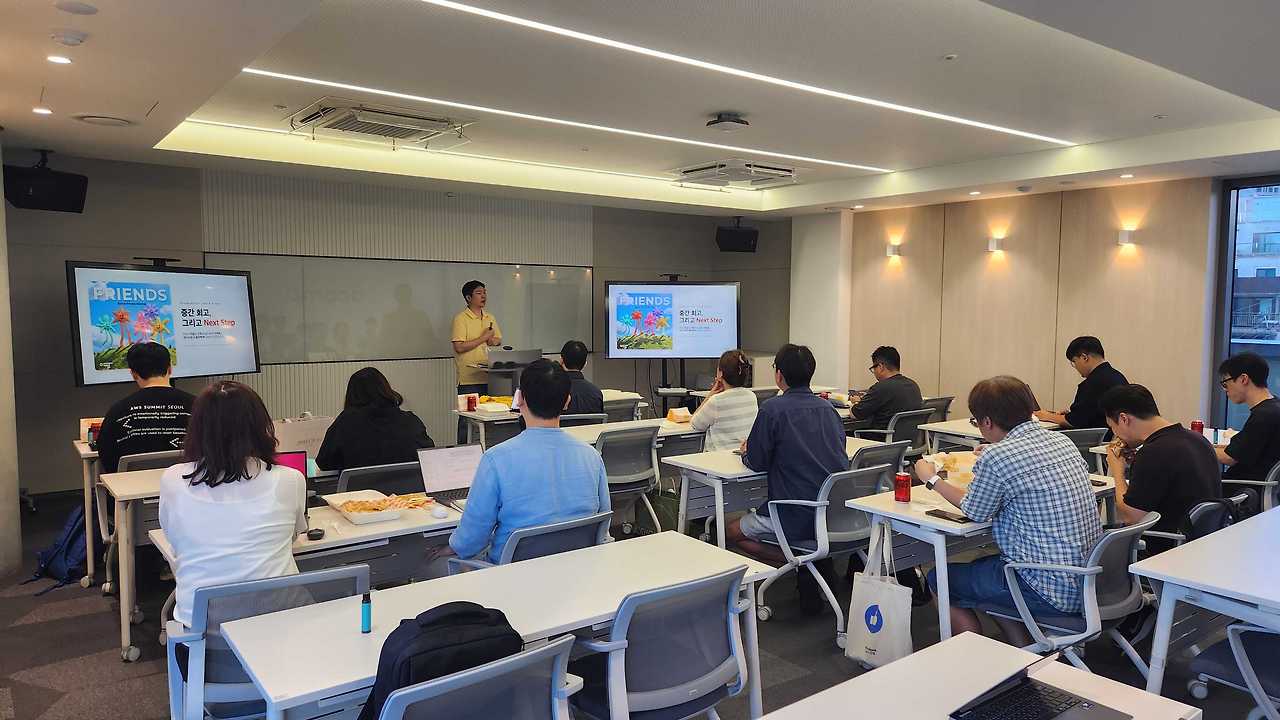
Bloom has always run on invited company speakers, and we did it that way twenty-six times. This time we announced a meetup with no speaker and no agenda, because I wanted to ask the members who had spent four months with us where this community should go next.
We planned for twenty people and thirty-five showed up.
🎤 No speakers. A members roundtable
🎟️ FRIENDS, Bloom Private Meetup
The conversation started the moment the invitation went up
Replies started landing the same day I posted the announcement in Discord, before anyone had set foot in the room.
One member could not attend but wanted to leave an opinion anyway, and the point was that a retrospective like this should cover belonging as much as program satisfaction. They cited research on sports fandom, where fans connect deeply not because they consume the match or the team, but because the match becomes a medium for building relationships with other people, sharing collective emotion, and feeling that they belong to that community themselves.
Then the next question may be not only what kind of events members want, but when people start to feel that they are part of Bloom.
They asked whether there is a path where an audience member becomes a participant and a participant becomes a contributor, and whether members have any role in setting the direction of the community. The line that stayed with me was about what success should mean. It is not enough for people to leave thinking they attended a good event. They should leave feeling that they made something together with people they belong to.
Another member who has been with us since the early days offered to contribute before I asked. The suggestion was to leave the door open so that experts in each field could pitch in the way an open source project works, without needing a company behind them. The reason they gave is the part that stuck with me. They had once run a community alone, burned out, and shut it down, so they believe the only sustainable version is the one built together.
A few days later they came back with a worked example. It was HITRECORD, the collaborative creative community started by the actor Joseph Gordon-Levitt. A large project opens, gets broken into small challenges anyone can join immediately, and people contribute writing, images and music, but also curation and producing. Someone picks up another person's output, remixes it, and the shared result grows from there. Contributors are credited on the final work, and when something is commercialized there is a principle for splitting the revenue.
Their real point was not that we should copy the model. It was that before asking people the vague question of what they could contribute, we have to show them the projects already running and the unit of contribution we actually need.
Introductions took up half the evening
The room was small enough that we went around one by one with a name, an affiliation and a fun fact. That round of introductions turned out to be half of the night.
One member is job hunting, has been coming since the early events, and has been to more than ten of them this year alone. They said they wanted to brag about one thing, which was that through someone they met at this meetup they heard about an AX developer talent competition, entered it, and made the finals.
Someone who builds SaaS inside a US law firm said that in the end you are alone. Working on projects with AI, at some point they noticed they were working by themselves, and they had to finish early to get here that evening. Working alongside another person, they said, had started to feel like the bigger hassle.
The observation from a member at a large company was the one I enjoyed most. They like this kind of event and go to a lot of them, but they normally attend once and never return, and they had assumed this would be the same. Instead they kept coming back, so they analyzed their own behavior and landed here.
It is a category of topics I care about, and the people I meet stack up every time. Somehow I keep meeting good people here.
The highlight of the night came from someone who spent 5 years at a big tech company and now works at a US startup. They had moved to the US through a community. Communities had given them a lot of comfort early on, and that carried them into sharing a lot, speaking and organizing at other communities as well. People started to think well of them, and a fair number of speaking, teaching and consulting opportunities followed. They introduced themselves as a person who had given a great deal to communities and taken even more back.
One attendee had come from Malaysia, and since they do not speak Korean they introduced themselves in English, and they run a company that sells enterprise software to banks.
Four months on the record
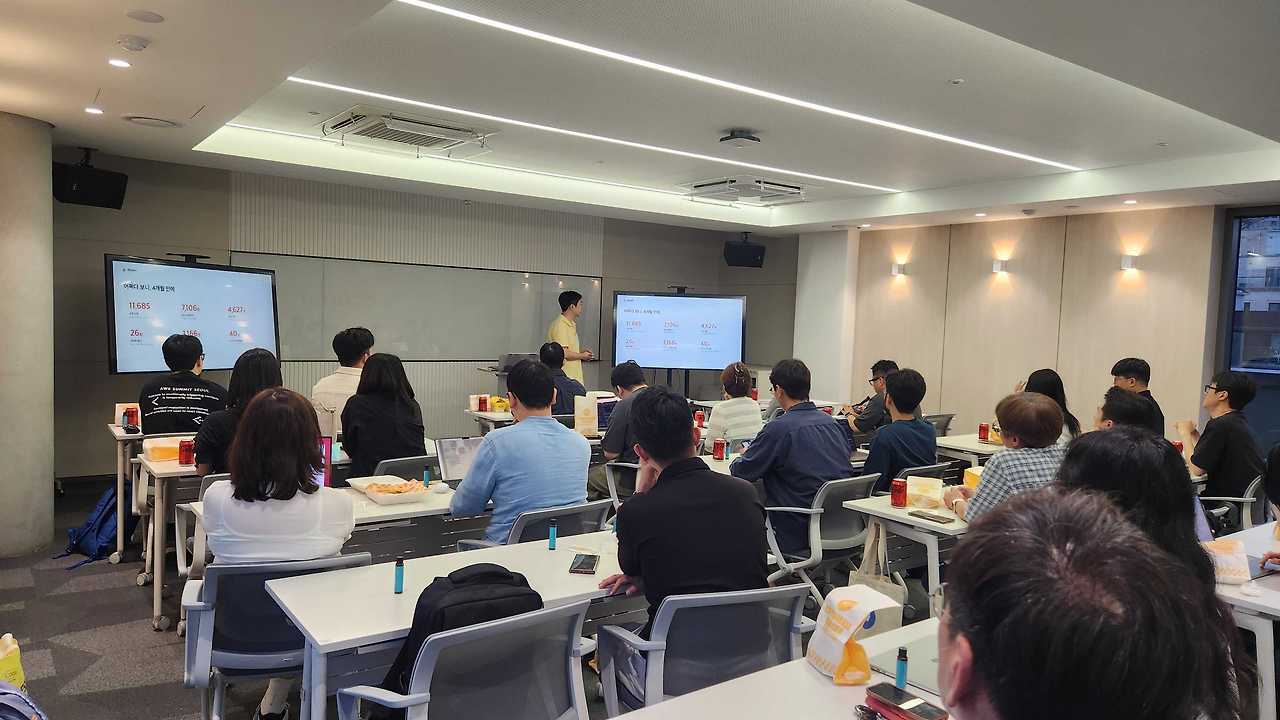
Once the introductions were done I opened the slides, though there was no grand presentation in them. We simply looked back over the four months we had come through together.
We started in April and it was now August, so a little over four months, and in that time we had run twenty-six events. Month by month it went three in April, five in May, then eight, then ten, climbing the whole way. None of that was planned, because a chance to collaborate would come up, or a topic would appear that felt worth doing, and that is how we got here.
I pulled out a few of the scenes that stayed with me.
2,057 people applied to the first event. We could not host them all, so we approved 170 and then the messages poured in asking why they had been left out. Honestly, that first event was a bit of a disaster. I had never been to a community event myself, so I assumed the job was to line up good speakers and fill two hours with talks. The people who come here were not coming to listen to lectures. They come to network, to connect, to put their own thinking in front of someone. The group chats filled up and the word going around was that we had blown it.
Sungpil Nam, the CEO of AB180, heard what had happened and told us his company had just moved into a new office, so we should use the space as much as we wanted. That help is what let us carry on into the next event.
People come because there is nowhere else for them to go
The interesting thing in our attendance data was not that global big tech showed up, it was the names sitting underneath them. Partners at large law firms come. People from entertainment companies come, and we have had people from the public sector too.
What makes that strange is that an engineer already has a decent number of AI communities to choose from, since open source culture and community culture were there long before this wave. For someone on the business side, a community usually means a place to sell. In a lot of cases the whole exercise is handing out business cards, collecting them, and then pestering people with cold email.
So it means there is no room like this on the AI side, and people come to us because there is nowhere else to go.
What four months taught us
I shared a few of the things I had written down while running these events.
Claude Blue was never only about FOMO. If FOMO had been the point, we would have named it that way. We do not run marketing that pokes at anxiety, the kind that tells you that you will fall behind if you miss this one. Once you have poked at somebody's anxiety, the question that follows is what they actually walk away with. The real reason is to come, connect, pick up an insight, and grow out of it.
I expected the people who run developer communities to dislike me. An AI community that talks more about business than about engineering looks like a heretic. When I actually meet them they like it, and there is a reason. Developers are no longer that interested in how to use AI well, because the frontier models handle most of it. What they want to know is what business outcome AI produces inside their own domain, and that is not what a developer community is mainly built to answer.
The weapons of the AI era come down to three things. Communication that reads what the other side needs. The speed at which you learn, with enough humility to keep learning. And the willingness to share what you know. You can see it in the people who come to speak. They do not treat their know-how as something too precious to lose, because you have to give first before you can take, and giving is how it accumulates.
The gap between the 1 percent and the 99 percent is widening. The people who come here use AI constantly, and the people around them mostly do not. Korea sits near the top of the world in AI adoption, which also means every other country uses it far less than we assume. That is part of why more foreign companies are putting their Asia Pacific base in Korea.
Mindset matters more than the technology does. An event for a thousand people would have been out of reach for me before, and now, with AI in hand, I catch myself thinking it might be doable. The Excel story is the same, since nobody said Excel came out 10 years ago so let us go start a business with Excel. Excel helped the business that was already running.
In the end dopamine wins, and the example I used was a cake company that got famous in Silicon Valley. Cold email is all written by AI now, so nobody reads it. This company writes the contents of the cold email on an actual edible cake and delivers it to the target company. The person who receives it reads the message, if only to work out what kind of person would do such a thing. It is a bakery, and apparently the revenue is serious.
Communities get dismissed because of the organizers, not the members
Saying you run a community in Korea gets you a fair amount of condescension. I understand it, because the word community covers such an enormous range.
When I think about why the perception is poor, it comes down to whether there is money in it. The answer is usually no, and the reason people give is that the quality of the audience is low. That is not the fault of the members.
If a company wants to meet AI engineers and you throw your entire pool at it, bring in marketers and designers, and then announce that you gathered a thousand people, of course they will say it was poor. That is not the designer's fault or the marketer's fault. It is the fault of whoever brought them in. And however impressive the chairman you put on stage, I may not want to talk to a chairman at all, I may want to meet someone with energy.
So the thing I care about most is the members, not the partner companies. Without members you cannot bring a speaker. The whole thing only works if you can honestly say there are a lot of good people here, so come and talk to them.
They told us they do not care about the speakers
This is where the real business of the evening started. We split into groups and talked, and the honest thing I had been hoping to hear came out straight away.
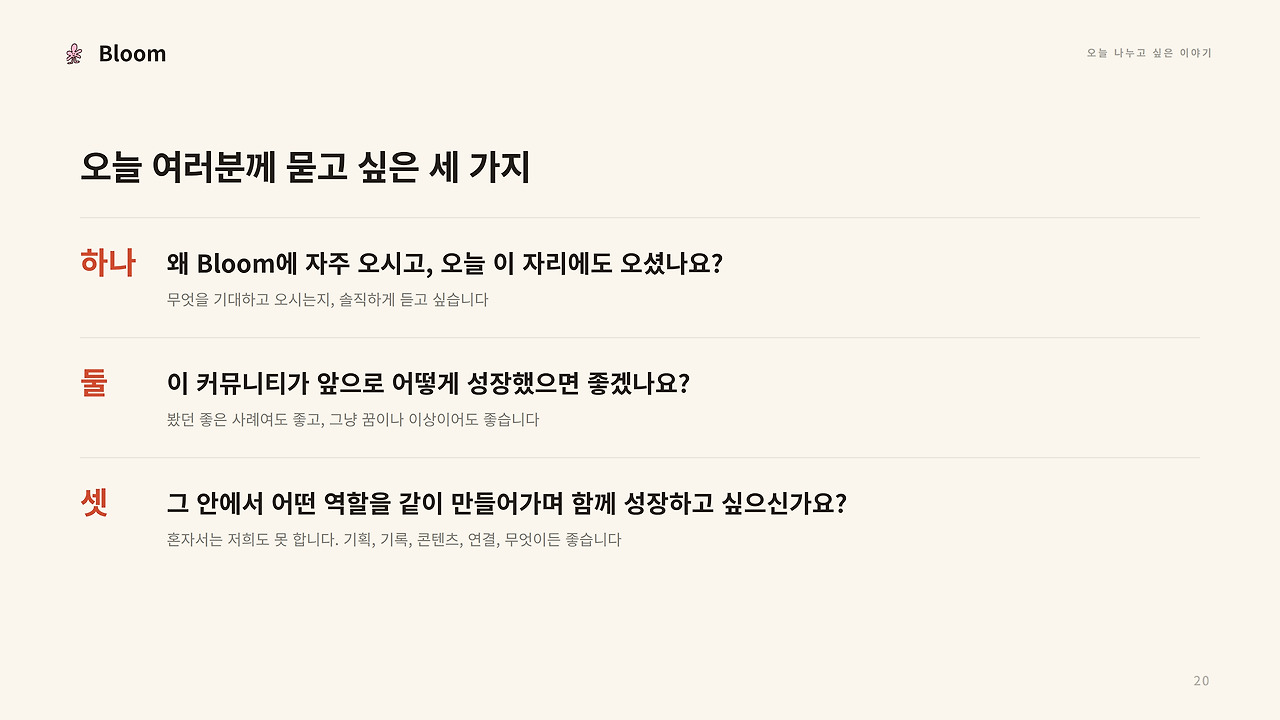
I have no interest in the speakers and no interest in the content of the talks. The format I look forward to most is the roundtable. Would it not be better to focus there?
I had felt this from the beginning, because however well a session is run, it splits the room into people who like it and people who do not. The argument was that people come here to be connected, so the roundtable is the part that should grow. Alongside that came a diagnosis of why growing it is hard.
To carry a session and networking in one evening you have to push the speaker into the networking, and that rarely works. The reason is obvious enough, since we invite people whose time is valuable, and from where they stand there is no reason to talk to attendees. There has to be something that meets their needs, and when there is nothing, there is no reason for them to stay, on top of which they are busy people.
Communities split apart because of this, and the ones that go session first keep chasing better speakers and better venues, start charging admission, and get more expensive over time. The ones that go networking first run on nothing more than the venue fee and the catering. It was persuasive because the person saying it had lived through both.
The point about time hurt as well, since an evening that runs from 7 to 9 is simply too short in absolute terms. If a few more questions land on the speaker, there is no room for the host to take them, and cutting it off tidily leaves people wanting more. Run long and the networking time disappears.
Who is Bloom
The question that stayed with me longest was this one.
Before we even define who Bloom is, am I Bloom? If I join the Discord, am I a member? If I came to one event, am I a member? By what standard does activity accumulate until I become Bloom?
What they said next was exact, and it went like this. In any organization, once 1 year has passed, the people who keep turning up become a community among themselves, and nobody has to decide it. Someone walking in for the first time reads the room and sees that these people already know each other. Can I introduce myself as a new member, do I have a badge, do I have a role as a proper member, or am I just someone who dropped by. They said 6 months is enough for that to set in, and that every community works the same way, so the line has to exist before it draws itself.
What we will do next
We had already reached the conclusion that operations have to be shared with members. Where we were stuck was how to share them, and that is the answer I came to this room for.
The methodology we got starts with selection, because putting just anyone in front of a room from day one can hurt them. You place a handful of people under the organizers, call them crew or facilitators, and let them run something first. Then you look at what got a response and what did not, which formats drew people and which did not, review it, and widen from there.
There was also advice that now is not the moment. We are four months old and still building the thing, so it is better to do this after the running routine has settled.
I learned how to gather a crew too. You message a few people who stand out in the community and tell them to come on a given day. I also heard about a notice with no pretext at all. Someone posted asking who wanted a drink, twenty people came, and those people are still active.
Format ideas poured out, starting with lightning talks so that anyone who wants to present can stand up. Another was a gathering for parents on the subject of raising children and AI. In a house with a small child, one parent going out means the other one gets to rest, and that alone is reason enough, which was a joke with something real inside it.
Then came the most practical proposal of the night. Next time, make it a beer with no presentations. I had wanted that for a while, but I always assumed nobody would come to a meetup that was just drinking, so I kept asking myself what we should present instead. After twenty-six events I think we can afford one night whose only purpose is getting to know each other.
The conversation did not end
The thing that stayed with me was not what was said, it was that the conversation refused to end.
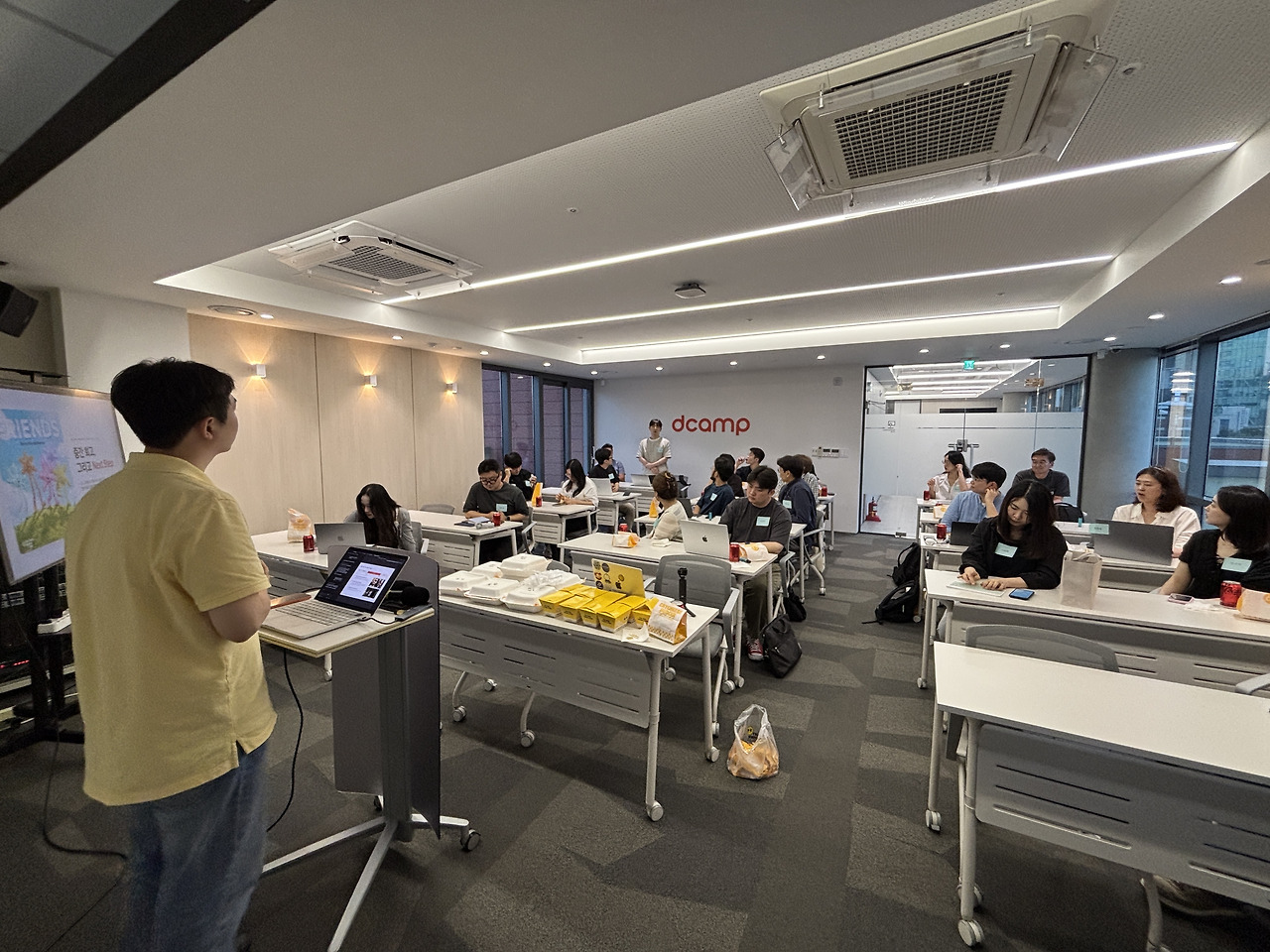
We asked people to gather with no agenda and thirty-five of them came, and when I threw out an odd question I had invented on the spot, everyone took it seriously and brought ideas back. The conversation started on the 6th floor, moved down to the 4th, and then carried on down to the 1st.
Dinner was on Crycheeseburger
One more thing is worth adding, because someone read the post announcing this meetup on their commute and reached out to us first, and that was Crycheeseburger.
Getting a brand attached to a community meetup is harder than it sounds. Normally it means a booth, a logo on the wall and a slot on the program. This time the call came a day before the event, and they covered dinner with no conditions attached. All they said was that they hoped the members would enjoy the food.

That is exactly the shape of sponsorship we want to build, and it made the whole evening much easier to run. The same thanks go to d.camp for giving us the space.
If a community does not want to be dismissed, who gathers is the whole story, and that depends on what the person doing the gathering set out to do. What I confirmed that night is that the answer is not inside us, it is already inside the people who came.
Keep reading
Join Bloom
Bloom builds offline rooms where people and technology meet. We run them in Seoul, and now beyond it.
- 💬 Discord community, where events are announced first
- ▶️ YouTube, full talks from past events
- 📸 Instagram, photos from our events
- 🎟️ Upcoming events