Don't Set Up a US Entity Before You Have Revenue
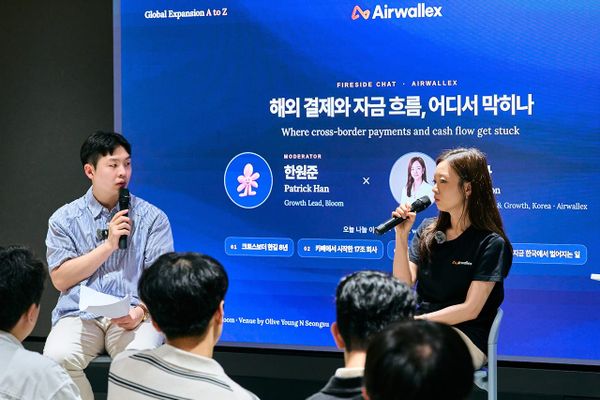
Yuna Kwon of Airwallex and Peter Shin of Outsome on what order to go abroad in, and the bottlenecks that surfaced when 181 people talked it through.

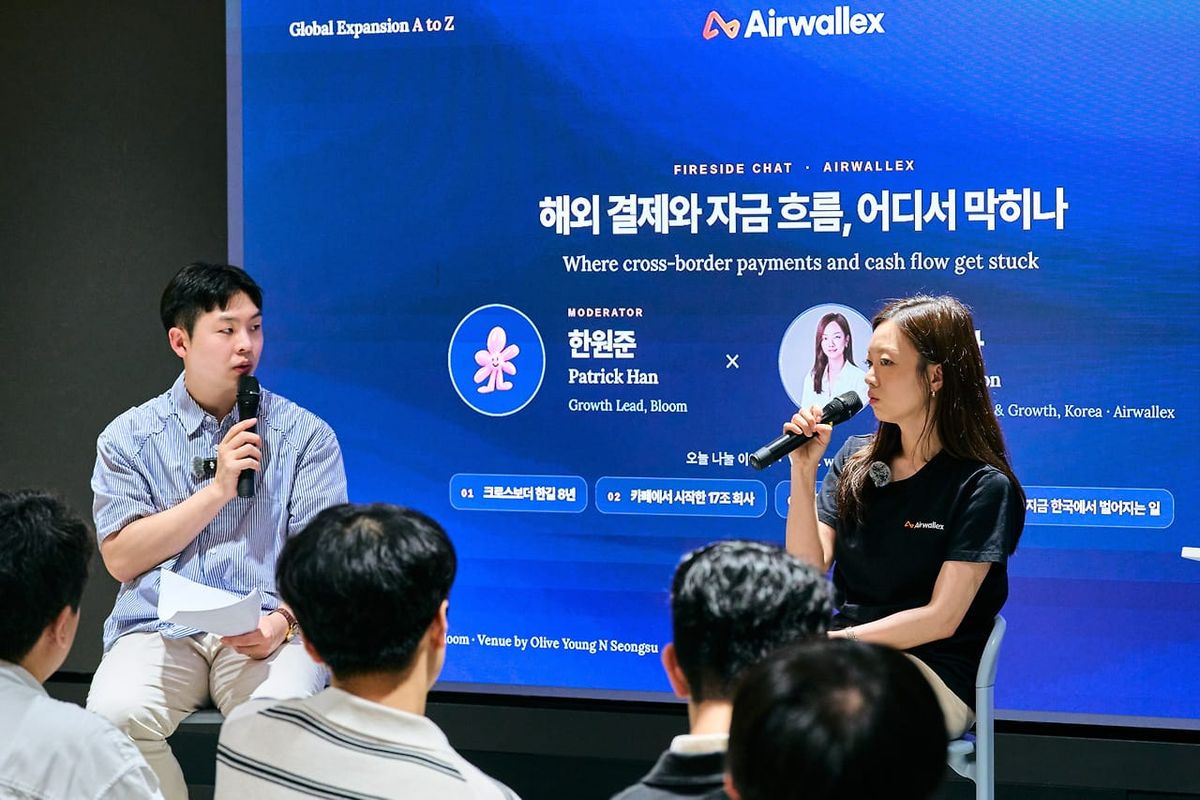
We spent an evening in Seongsu with Yuna Kwon of Airwallex and Peter Shin of Outsome, talking about what it actually takes for Korean startups and SMEs to go abroad.
Yuna's numbers stuck with me most. In her Shopee years, cross-border revenue from Korean sellers went up forty times in five years. What unlocked it wasn't demand. It was that the logistics and payment plumbing finally became legible to ordinary sellers, and once people understood it, they went out on their own.
Japan mostly exports through trading houses, conglomerates and local distributors. Korea doesn't. Korean companies go direct, and that gap is bigger than you'd guess: roughly 5% of Japanese SMEs sell across borders themselves, against 20% in Korea. Global payment infrastructure like Airwallex is built for exactly those companies. Anyone who has tried to open accounts and stand up entities country by country knows how much time and money that eats.
Peter is close to everyone's mentor in the Korean startup scene at this point. What makes his writing worth reading is that none of it is borrowed theory. He has run into these walls himself, so the advice is specific enough to use the same week. His message kept circling one idea: hack the system. Things that feel like a legal grey zone in Korea get counted as traction by a YC-style American investor, and YC itself is an outlier in the US market, which is why it keeps looking for Korean founders with a vision that won't bend.
The session ran long, then a roundtable ran another forty minutes on top of it. At the end, each table lead came up and summed up what their group had landed on, and no two tables had found the same thing. Thanks to Gain Choi at Olive Young for the space, and to everyone from the Bloom community who stayed to the end.
181 people signed up. More than half of them, 51%, were founders, C-level or partners. 36% said they were already earning revenue abroad, and when asked to pick one market first, 56% chose the US and North America. Asked to name the single place cross-border payments break down, 30 picked regulation, paperwork and tax, 26 picked opening foreign accounts and entities at all, and 23 picked fees and FX losses.
Series A in Korea means you already cleared Series D in the US
Peter Shin co-founded QueryPie and went through YC as part of W20. He ran the Korea program at 500 Global for four years after that, then left last July to start his own accelerator, Outsome. Thirty-nine companies have come through so far, and they're all over the map: college students with an idea, founders doing 20 billion won a year who want to start over in the US without their name attached.
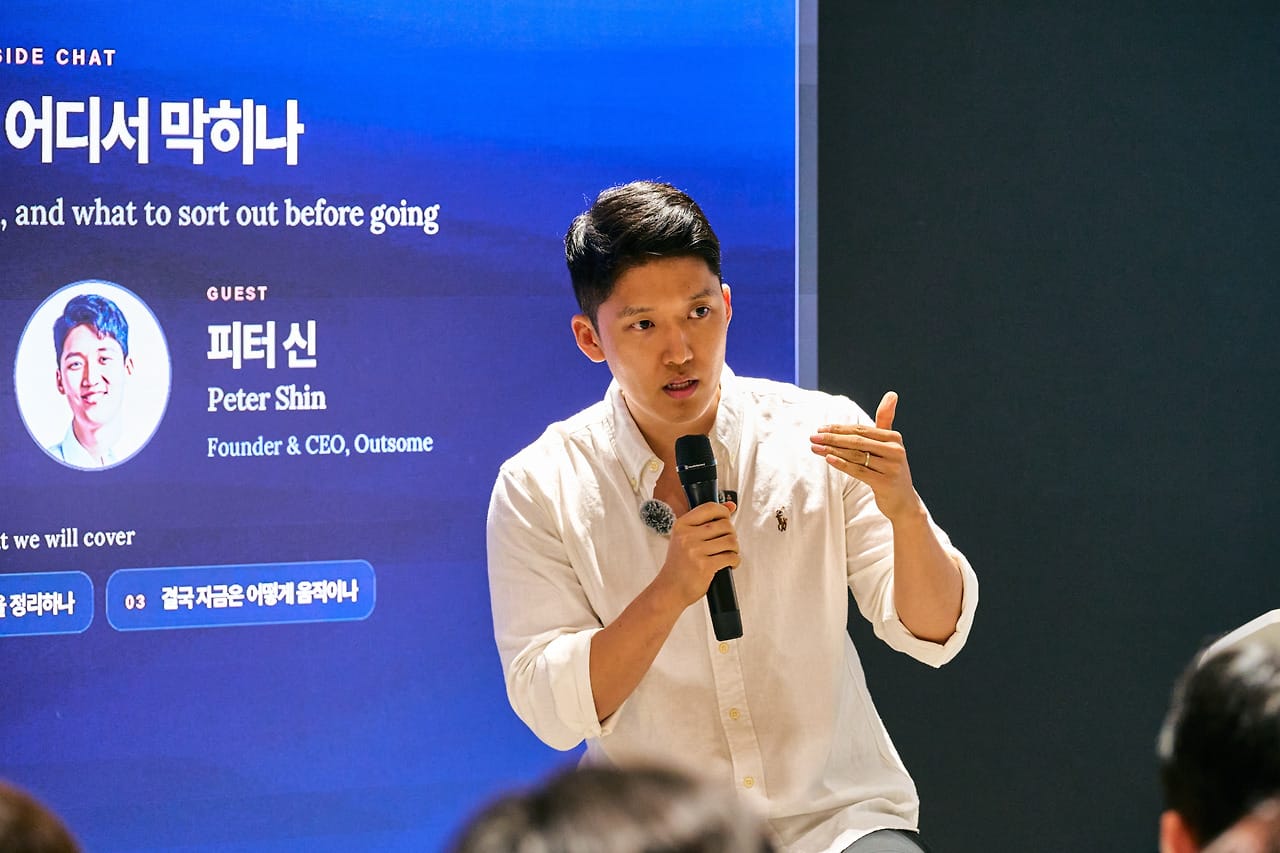
I got a mild scolding from him over a video call earlier this year. I had plenty of ambition about going abroad and no clear answer about what I was selling, and he pointed out that the US is enormous, so you have to pick a coast, maybe even a city. One line from that call had stuck with me, and I asked him to unpack it. Sell the purpose, not the instrument.
Say you make pajamas. Now say those pajamas have IoT in them that collects biometric data, and it's a different thing. We all buy the iPhone Pro, the iPhone Max, but you're not buying a lump of CPU in a titanium chassis.
The first wall he sees Korean founders hit isn't technical. It's self-censorship. If you got to Series A in Korea, you've already cleared something closer to Series D or an IPO by US standards, and you still won't leave because the product isn't perfect yet. He compared it to the national archery championships being harder than the Olympics. Carrying that difficulty straight to Silicon Valley is the arbitrage we get to run.
The problem is founders who cross over without letting go of the perfectionism. They burn through a government grant plus their own money to get there, and then spend the night before meeting local VCs doing code review and QA. So he gives teams heading to the Valley exactly one metric.
Go make one friend at Stanford or somewhere. Dye your hair pink or yellow, do something that makes people remember you.
He wasn't against government money as such. His own team flew to TechCrunch on a grant and met YC there. His point was narrower: that money might not be what turns you into an operator. In the US, even people leaving FAANG need a salary right away, so the pressure around founding is different. Nobody there has six months of unemployment benefits and a pre-founder support package to sit on.
Outliers write the textbook
The name Outsome comes from Outliers build something. The people he looks for and the people who find him are outliers either way, and he speaks from experience. Before YC took him, every investor in Korea passed. Once YC signed off, sales conversations with major Korean fintechs opened up and well-known VCs got in line. He grew up in Singapore, didn't go Ivy League, didn't come out of Samsung, and he counts all of that as qualifying.
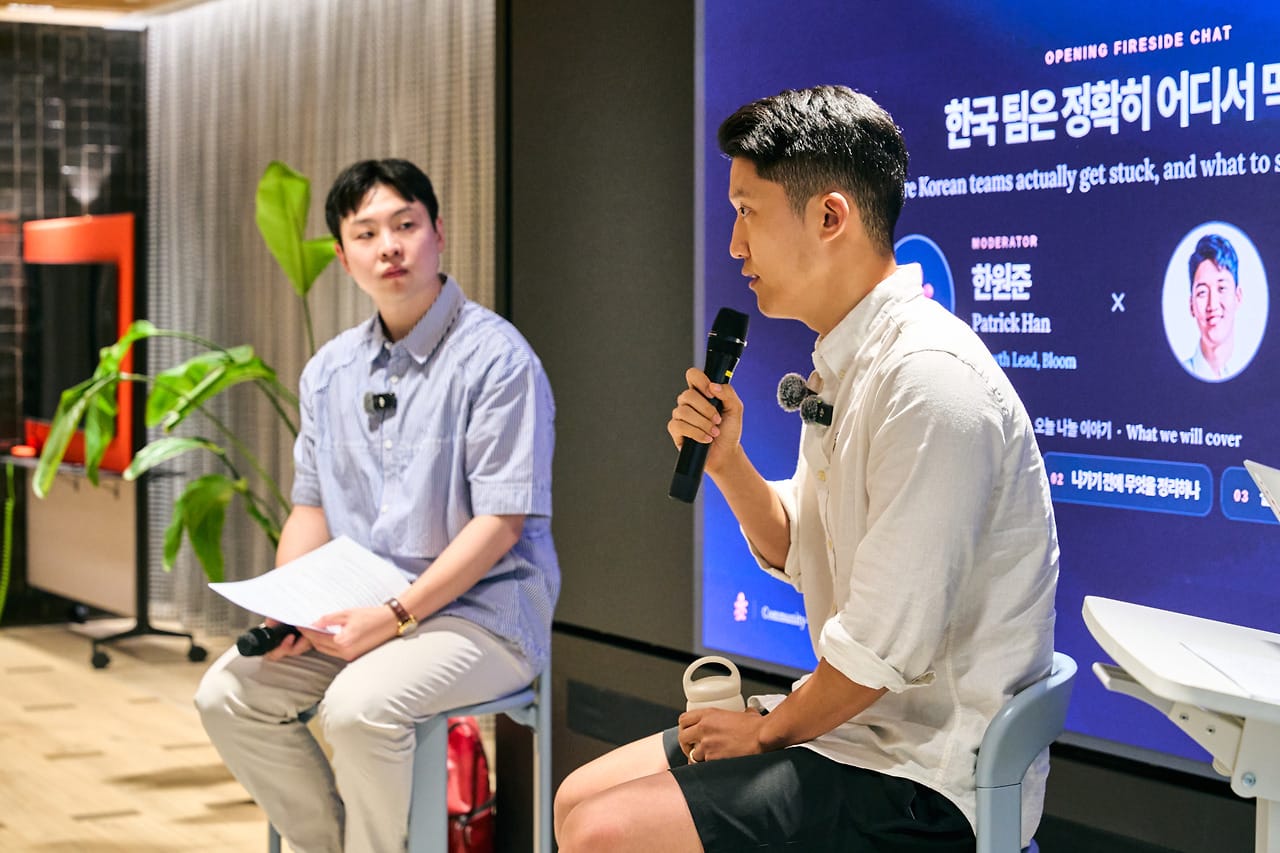
YC was an outlier too. When it launched the Continuity Fund to do follow-on rounds, Sequoia and the rest of the Valley pushed back openly, because if one firm owns both the seed and the follow-on there's no room left for anyone else. On top of that, the person who built YC wasn't from the endowment world that usually supplies this capital. He was an exited founder, and the funding came from outside the Valley.
Silicon Valley is where outliers build things and then write the textbook. So if you're the odd one out in Korea, the Valley is home.
I asked how you spot an outlier. The first thing he named was the ability to be alone. Surviving three or four months in the Valley without so much as a bowl of doenjang jjigae takes more than ordinary stubbornness. The other is a bias toward doing. The Valley collects frameworks, and the people who turn a framework into action the moment they receive it are the ones worth backing.
I answered with the bottle cap. Korean companies have no shortage of good ideas, but hear enough people ask whether that could possibly work and you start jumping with the lid on. Take the lid away and you still only jump that high. An outlier is the one who keeps going up once it's gone.
The best survey is money in the bank
He kept coming back to it: stop running surveys and watching reactions, and watch whether money arrives. I asked what a company without a product is supposed to do about that. One in six companies in this year's YC batch is a services company, he said. Consulting or SI, in our terms. Now that writing code is cheap, somebody with real industry insight running the interviews and closing the contract is itself the evidence that the product works.

You're selling a product that doesn't exist, in a space that sits between legal and illegal. By the standard of Korean self-censorship you'd call it a scam.
So how do you sell it once it's built? Grow a thick skin first, he said. The choice between cold email and LinkedIn matters less than whether you've built the muscle for putting your own insight in front of other people. You don't have that muscle by default. It comes from writing on LinkedIn, giving talks, running your own events when you have nothing to run them with.
I asked how narrow the targeting should get. Don't stop at the company, he said. Go down to the job title. Not healthcare in the US, but the hospitals selling a diabetes drug, or the insurer setting the reimbursement rate for it, and then one level deeper into which role inside that company is actually your customer.
He was blunt about B2B requiring you to physically show up. Not CES and the other famous ones, but a construction conference in New York, or something only dentists attend, the places that prove America is a country of obsessives. AI has dropped the barrier to entry, so while everyone else runs agent-driven calls and two Zooms, showing your face once more is worth more than it used to be. His evidence was his own mentor, Minsoo Suh of Taewoong Medical, which sold to Olympus for around 500 billion won. The hospital generating the most revenue turned out to be the one closest to where the sales rep lived.
You don't have to lead with being Korean
I asked whether being a foreigner becomes a trust problem. He flipped the premise. Korea is homogeneous enough that someone from Vietnam stands out immediately. In the US, nobody can tell whether the person speaking English with a Vietnamese accent is a citizen or not.
If nobody asks, don't tell them. Don't say you're from Korea and you're here from November 2nd to November 7th. Don't say it.
The moment you volunteer your return date, the other side has no reason to open up about their problem. So skip the business cards and use a website, and don't print a Bongeunsa-ro address in Korean at the bottom of it. Translate it or drop it. He doesn't recommend leading with BTS and kimchi either, since locals meet that person every day and stop taking them seriously.
On when to incorporate, his bar was clear. A contract is signed, three or five thousand dollars has actually landed in your Korean account, and it looks like that purchase will happen somewhere else too. The day you open a Delaware entity you start filing Delaware franchise tax, state tax and a few other things, and local accounting alone runs two to three million won a year. There's no reason to burn that with no revenue coming in.
Never set up a US entity when you have no revenue. Never.
Two questions from the floor landed on the same thread. A founder who also runs a US accounting firm issuing SOC 2 reports asked whether big tech buyers genuinely require the certification. For a software company working on contracts in the hundreds of thousands of dollars, SOC 2 Type 2 is effectively a precondition. Another attendee had bolted on agent commerce fast enough to show traction, then found that the proxy-purchase structure violated the payment provider's terms, and asked whether it's fine to operate that close to the line.
One of the frameworks Silicon Valley VCs really love is hacking the system.
He didn't leave it there. You can't run that way forever, so the far more important work is interviewing the people who pushed through the barrier and bought again, and finding out why they bought. Two questions stayed with me after the session. Can we write down what we sell at the level of a job title rather than a company name? And are we still delaying the first payment while we try to finish a perfect product?
From a Melbourne cafe to a 17 trillion won company
The main session was with Yuna Kwon of Airwallex. Four years and ten months at BCG between Seoul and Melbourne, seven years and nine months at Shopee running cross-border for Korea and Japan, and since May of this year at Airwallex, where she handles the Korean business and financial institution partnerships.
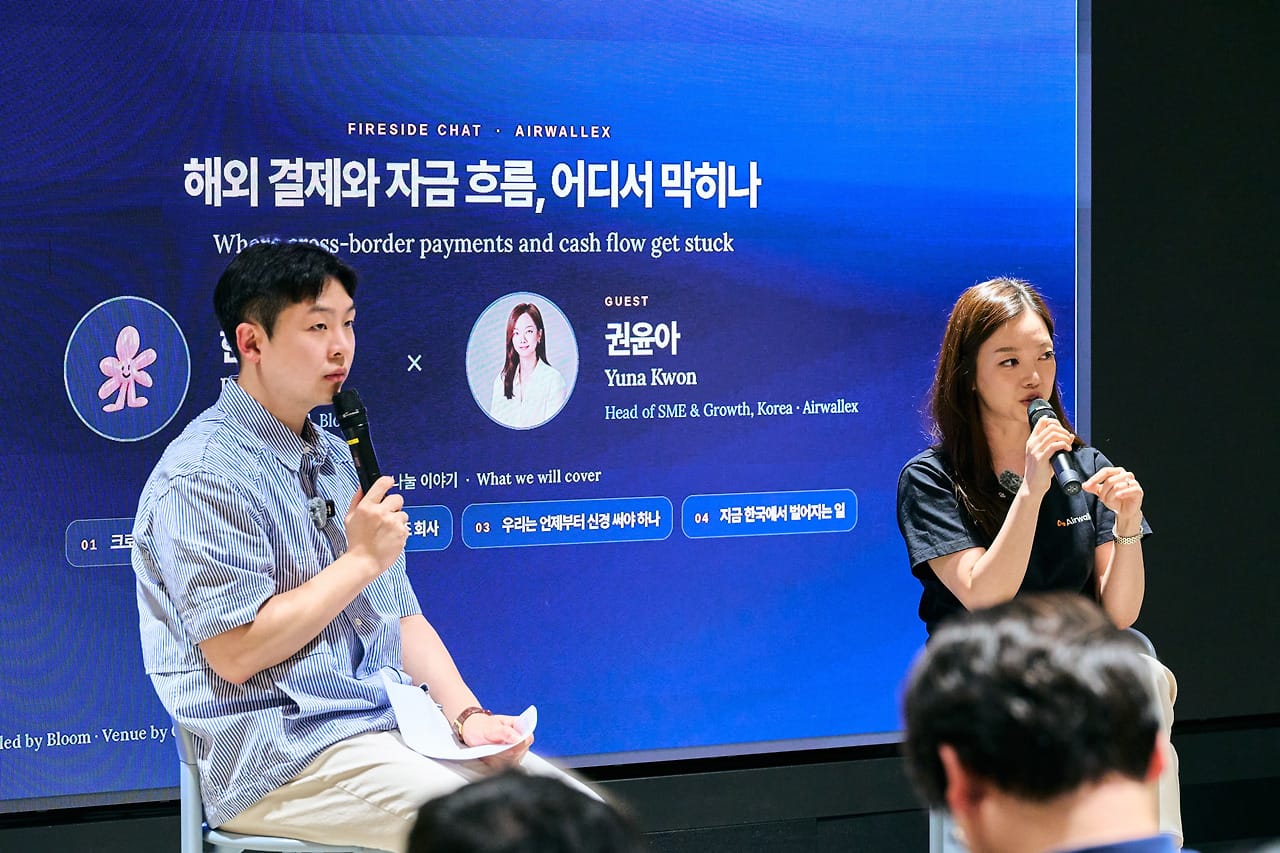
What stood out was how consistent her criteria have been. Around graduation she didn't have a clear answer about what she wanted, so she picked consulting as the thing that would help most with whatever came next. After an MBA made the answer clear, she changed the criteria.
I wanted to build zero to one the way you would with your own company, but I didn't want my finances or my survival on the line. So I wanted to find a business unit that was just getting started, inside a company with money.
Shopee fit exactly. So did Airwallex. The company has money, the Korean business hasn't started yet, and you begin with nothing in front of you. Airwallex is valued at 17 trillion won and processes 440 trillion won a year, with APAC as its largest revenue region. This year it secured payment gateway, prepaid instrument and FX licenses in Korea, and it's preparing to incorporate by year end. That night was the first time the Korean team met the community.
The company started in a Melbourne cafe in 2015. They were buying coffee beans from overseas, and SWIFT transfers moved slower than the beans ran out. Lining up orders against transfer timing got painful enough that the founders went and built the infrastructure themselves. I asked her to describe what the company does in one line.
In finance, we cover everything except investment and investment brokerage.
In Japan, not being bad matters more than being good
Her years covering Korea and Japan at the same time made for the most interesting stretch. What the two sets of sellers share is a strong work ethic and a relative conservatism, which earns them high trust ratings on the platform. The differences start after that.
It feels less like a market where being much better matters, and more like one where not being bad matters.
Japanese sellers focus on avoiding mistakes and returns, and stay conservative about spending to grow revenue. They manufacture well and market less well than Koreans do. The domestic market is large enough that small and mid-sized companies rarely export directly, going out through trading houses and local distributors instead. In exchange, they trust third-party specialists, so logistics and marketing vendors there are far more varied and specialized than in Korea. Strong ecosystem, comparatively weaker individual sellers.

The numbers say the same thing. SMEs account for about 5% of Japan's cross-border trade. In Korea it's 20%. That gap is why Airwallex spent more than five years wanting into Korea, and why it insisted on entering directly rather than through a third party, which would have hurt both the cost structure and its competitiveness. Getting there took more than a year and ended in the acquisition of a Korean company earlier this year.
I asked what was behind the forty-fold growth from Korean sellers in five years. Demand for Korean products was there, good supply was there, and logistics in the middle was the scary part that blocked everything. Until then it was one extreme or the other: twenty to thirty thousand won per parcel through postal EMS, or shipping 500 million won of inventory to an Amazon warehouse by sea. Once a middle option appeared, where a small company could ship for one or two thousand won and stage only 50 million won of inventory, the numbers jumped all at once.
Convert currency when you want to, not when you have to
I asked the naive version of the question: is opening an account really that hard? The answer was precise enough to repeat back. The moment you become a foreign business in the eyes of the financial system you take a penalty, and the penalty is FX cost plus the time a transfer takes. One 100,000 won transfer a month and you won't feel it. Raise the frequency and your suppliers start moving on your transfer schedule, and that's where it becomes the bottleneck.
Asked to pick one, she named fees and currency conversion.

You should convert when you want to convert. Right now most people convert because they have no choice.
Her example ran like this. A Vietnamese buyer purchases a Korean product on Shopee, pays in dong, and Shopee converts it to USD. If the only account on the receiving end is a won account in Korea, it gets converted a second time whether you like it or not. The US tariff refunds this spring made it starker. You needed a local account to receive the refund, and they wouldn't send to a foreign account at all. When the party paying sets the conditions, the party receiving doesn't get to choose the currency.
On when you actually need this, she had the arithmetic ready. Opening an account and getting it running takes about two days. Price those two days at a few hundred thousand won, then add the savings from not being force-converted, roughly 4% to 5% round trip. Run it backwards and the break-even sits at five or six million won of monthly volume. Setting it up after you hit five million costs you switching friction, though, so she'd do it before. I ran the numbers on myself while she talked. Is more than five million won a month crossing borders for us, and are we already leaking 4% to 5% round trip on conversions nobody asked for?
Someone asked whether you need a foreign entity to use it at all. Today the range is wider with a Singapore, Hong Kong or US entity, and a Korean entity alone runs into limits. Closing that gap is what this year's acquisition was for, and it isn't live yet. From next year they're preparing for Korean entities to receive payments directly from abroad. Which lands in the same place Peter Shin did.
If you can get away with not setting up a foreign entity, don't.
One question from the floor was about the difference from Stripe. Stripe is a gateway for receiving overseas payments; Airwallex has that plus global accounts as its main product, so the scope differs. Then came the specific case. Klarna holds high buy-now-pay-later share in the US and Europe, and if a French customer pays in euros and something in the middle converts it into the storefront's currency, Klarna cancels the payment. Whether the currency the customer sees, the settlement currency and the currency the Korean business receives all stay the same is the fork in the road.
I asked what looks different from the inside versus the outside. Her answer pulled together into one thing. Korea runs unusually hard on meeting face to face, and Koreans are most comfortable doing that with other Koreans. It isn't only language, which is why foreign teams find the Korean market so difficult. So what should we do on the way out?
I'd rather you didn't think of yourself as a foreign business. Just act like a local one. Don't advertise that you're foreign, not unnecessarily.
Six to a table, and the bottlenecks came out
The roundtable is the best part of a Bloom event. Six people to a group, names and companies and why you came tonight, and whoever traveled abroad most recently leads the table and presents at the end.
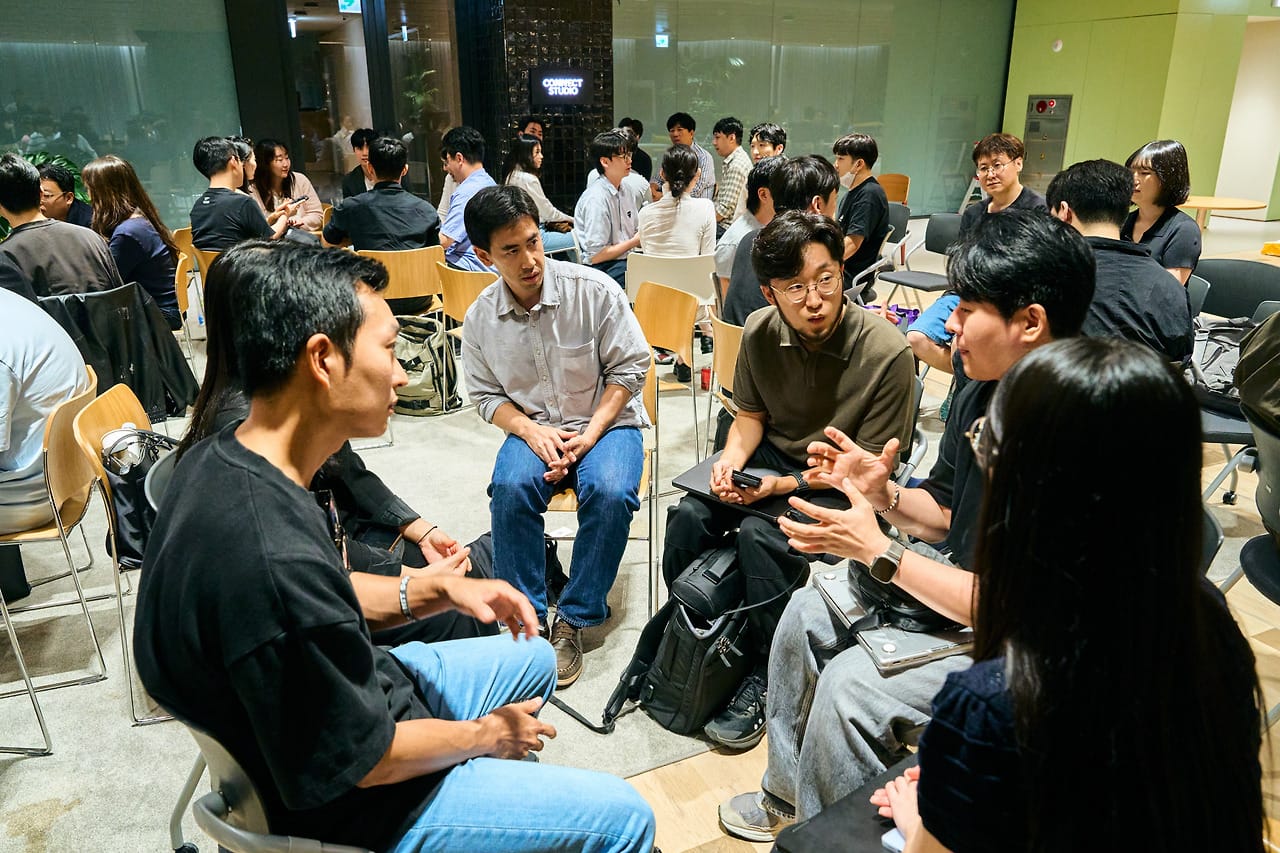
The first group up had converged on the bottleneck being customer acquisition, full stop. Someone at that table also floated that so many people are founding companies now that founding itself is turning into a red ocean. Two high school students were sitting at that table, there to absorb founder energy because they want to start something in the US.
The payments people went straight to specifics, starting with a marketer at a distribution company who had dealt with enough fraudulent overseas payments that they deliberately added friction back in, passport checks and the like, instead of removing it. And a sole proprietor who can't attach Stripe without a US account described stitching together a vendor that fronts the seller-of-record.
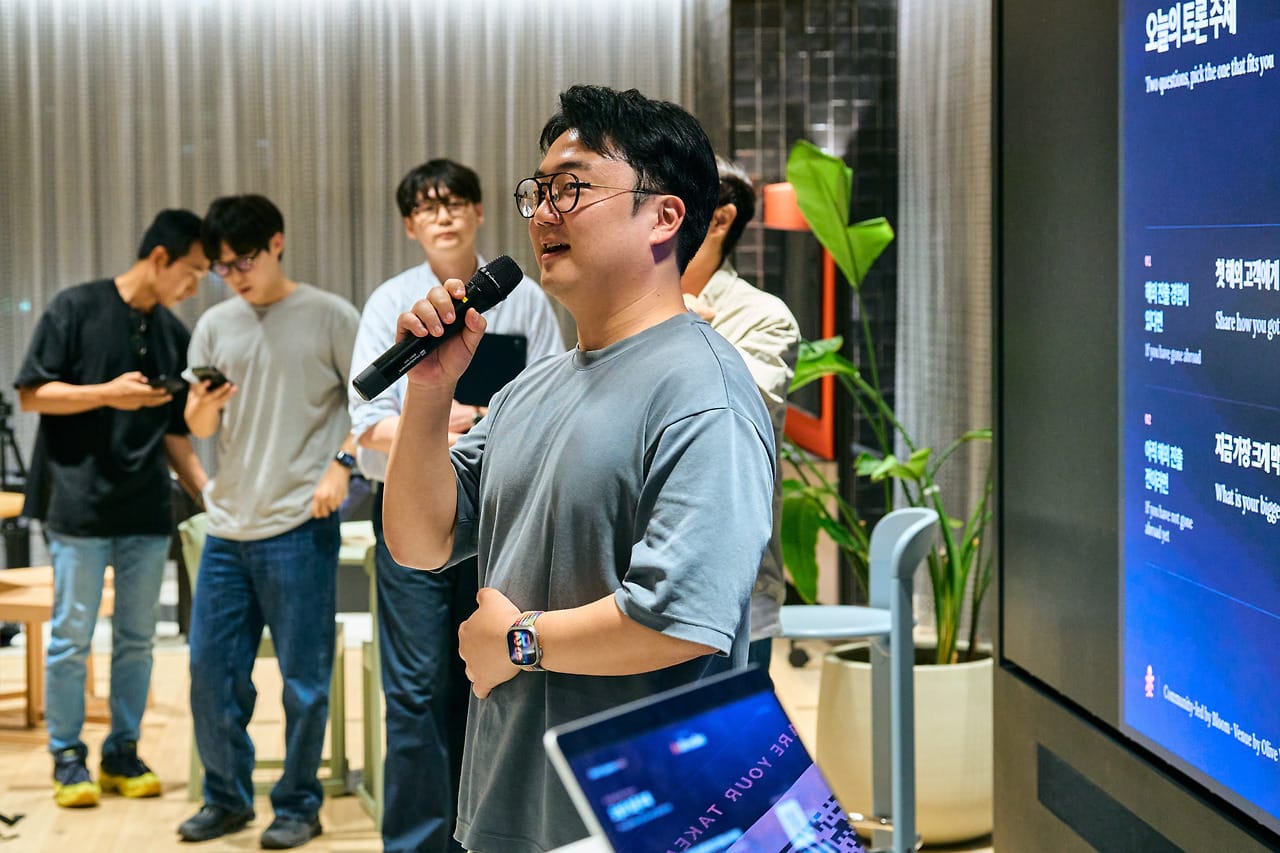
Deals not closing came up at several tables at once. One group landed on Korean politeness working against you in business: nobody tells you to your face that it probably won't happen, so everyone says it all sounds good and the contract never finishes. Americans just say no, went the comparison. A more senior person at that table described a deal that had been stuck for ages closing on the spot over dinner and wine at a hotel, and wrapped up by asking whether business sometimes requires putting down the habit of thinking in numbers, and putting down your ego with it.
The clearest summary of the night was about how trust gets bought. The table lead building a service that automates immigration paperwork for international students had flown back the day before from Uzbekistan, where he'd signed with seven universities. Not because they trusted him, he said, but because of an introduction from a local vice-governor he'd first met in Korea. Selling into Korean universities worked the same way, closing only after he brought a university president onto the team. On a contract worth tens of millions of won, what people actually bought was the person they trusted, not the product.
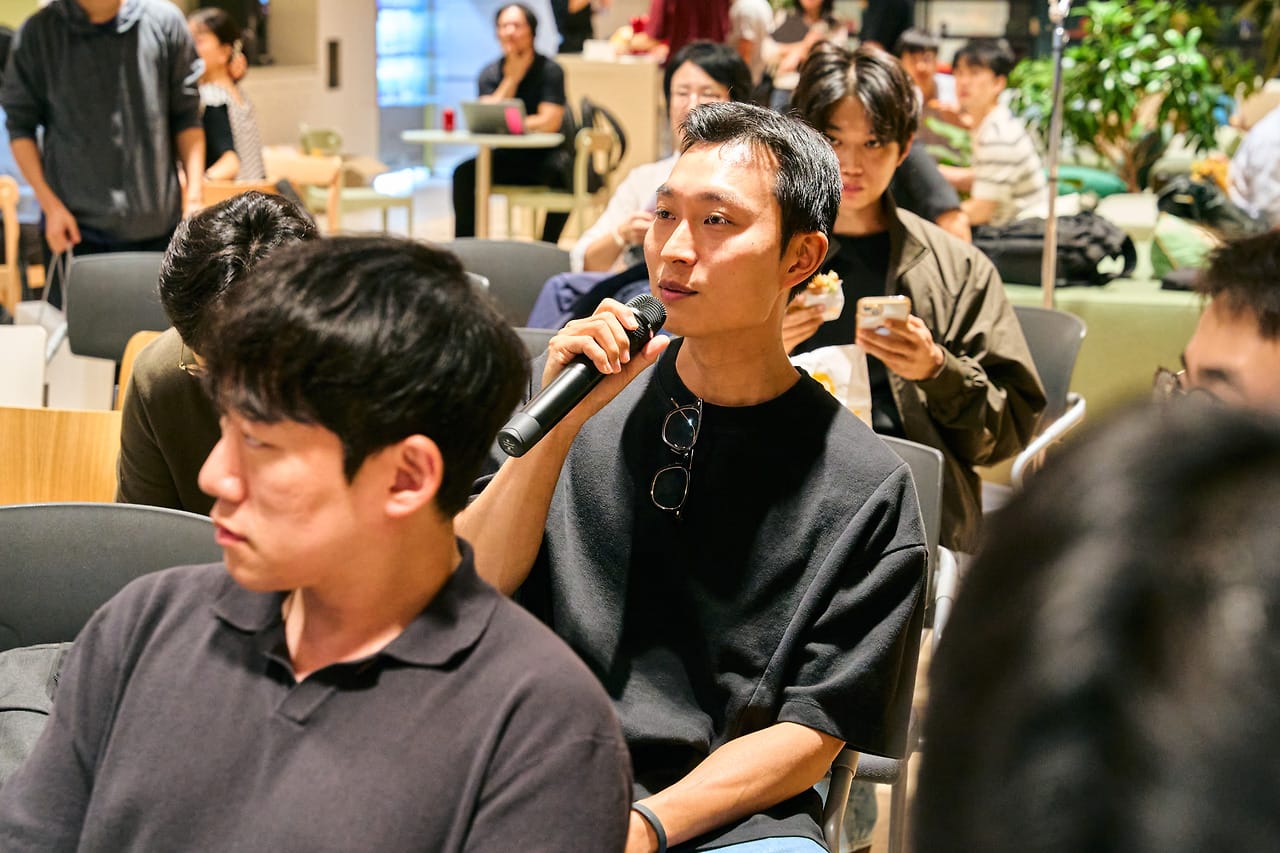
The B2C version from the same table: a Spanish launch where the long, detailed Korean-style landing page converted worse, and the video didn't even load properly because of local internet speeds.
One table had collected country-by-country differences. China has no concept of pre-registration, so you get asked why anyone would sign up for something that hasn't launched, and marketing is effectively all content, with traffic only showing up for video. Japan delivers at a fixed time and takes the parcel back if nobody receives it, which puts the condition of the goods ahead of the convenience of the buyer. Miss the cultural code and commerce breaks.
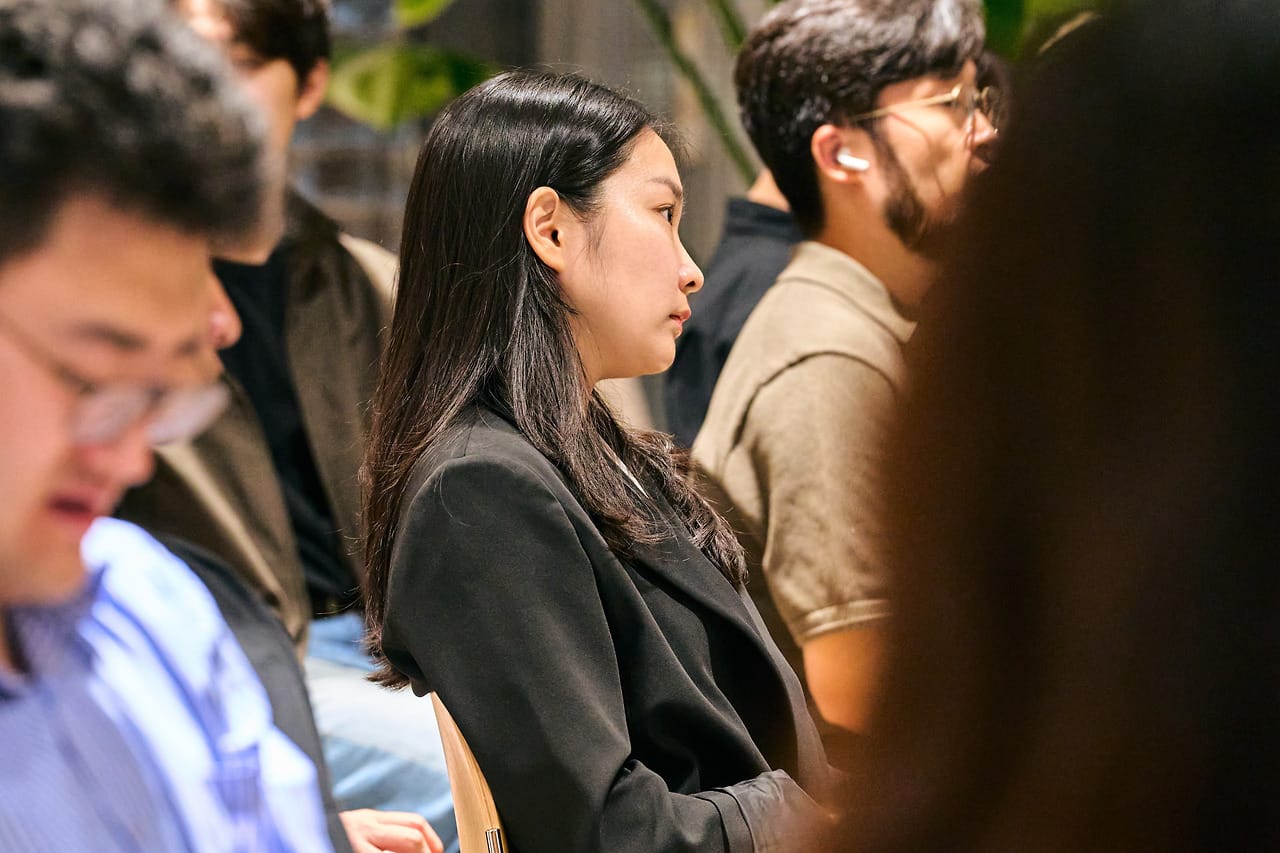
The language table stuck with me too. Koreans speak better English than they think, so speaking slowly or saying up front that your English isn't great lowers expectations enough that people come away impressed. And if you don't have a local network, you build one, which for one attendee meant deciding to go to Singapore himself.
The table debating when to incorporate arrived right back at both sessions. Not before revenue. Once revenue is coming in and collecting it requires an entity for some specific step, that's the moment. Someone at the same table added that a founder's vision and values aren't there at the start. They form through experience and mistakes.
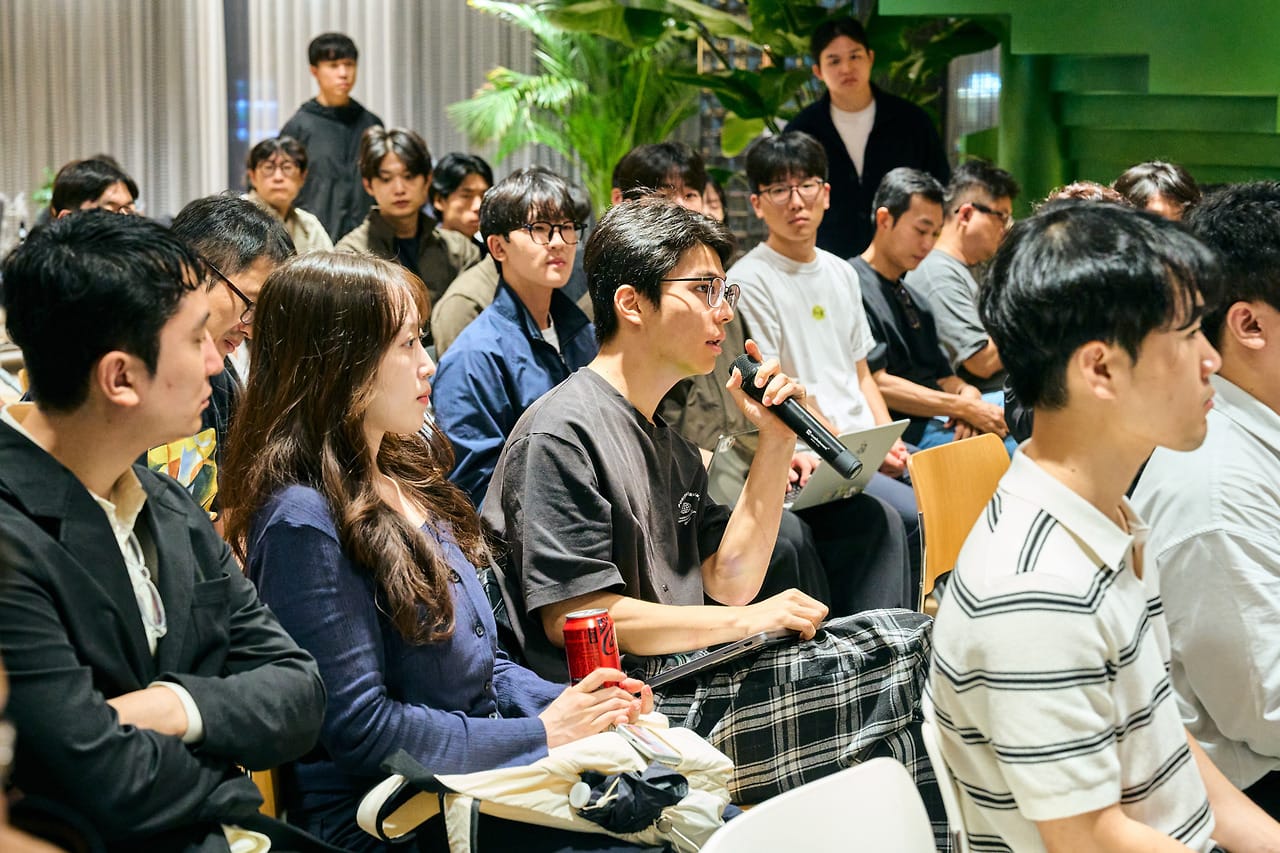
One table had heard about using stablecoins instead of fiat to move money around tax and regulation. Another had found that checking whether a security certification is real is a decent way to tell which vendors are frauds. One table lead closed with this: he'd learned that a bottleneck existing means a way through it exists.
That's close to what Bloom is trying to do. Keep making rooms where people can put the things that are still stuck on the table, not just the things that worked. Going global isn't a subject you finish in one night, so we'll come at it again from another angle.
Keep reading
Join Bloom
Bloom builds offline rooms where people and technology meet. We run them in Seoul, and now beyond it.
- 💬 Discord community, where events are announced first
- ▶️ YouTube, full talks from past events
- 📸 Instagram, photos from our events
- 🎟️ Upcoming events