
FDE May Not Be the Answer
Forward deployed engineering is having a moment. An engineer who worked at a frontier lab thinks it is structurally inefficient, and pointed at what US firms and private equity are doing instead.

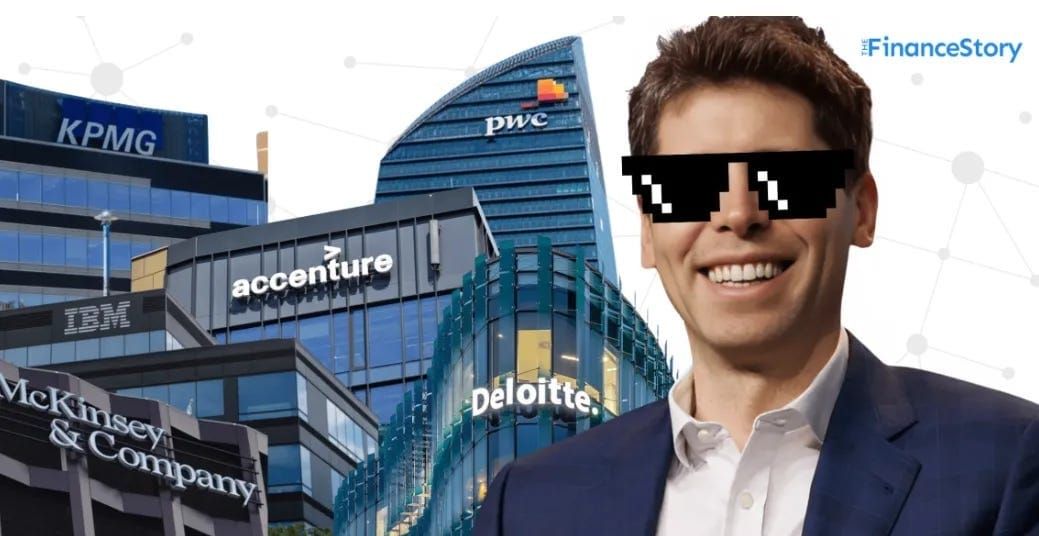
Telling a client to change everything is extremely hard to sell, no matter how much executive backing you have.
In the US the move is to buy the company outright, run the transformation, and sell it or take the margin.
What you read online has already been picked over in the Valley. It is effectively public domain.
Based on a pre-event conversation with an engineer who worked at Google DeepMind and xAI and later joined a frontier lab, speaking only from public information and personal views.
Why the offline conversation matters
Domestic news travels fast in Korea. What is hard to get is what circulates offline in Silicon Valley's inner circles.
What you read on social platforms or in the press has already been picked over there, effectively public domain by the time it lands. The interesting question is what those people are actually worried about.
A non-linear career
His path is not a straight line: he built a predecessor of a major model at DeepMind and then moved to an autonomous driving company.
The reason is unusual, because he wanted to relocate ahead of his wedding and the self-driving company was the one that allowed remote work.
One or two months in, the parent company cut funding and the company effectively closed, which is how he ended up moving again.
Looking back, he says the collapse was lucky, because without it he would not have gone into post-training at all.
The FDE problem
Forward deployed engineering is the concept getting the most attention in Korea right now, where a product manager and an engineer embed at a large company and improve on-site problems with AI.
He does not think it is as efficient as it looks.
Set aside the economics for a moment, because the deeper issue is that telling a client to change wholesale is extremely difficult to communicate and sell. Even with strong executive backing it usually means changing the work of existing staff or removing them, and regulation adds friction on top of that.
So the engineer suffers, the executive who commissioned it suffers, and the people inside experience an outsider arriving to disrupt them, which leaves everyone with a reason not to cooperate.
Buy the company instead
What interested him instead was AI roll-ups.
Private capital acquires companies in outdated industries, runs a hard AI transformation, and either resells or takes the improved margin as cash.
The difference from FDE is decisive, because it is not a client, it is yours, so you can run it however you want, though that obviously requires capital.
This is already happening in the US, where frontier labs form joint ventures alongside global private equity and top consulting firms. Similar concepts existed before, and the new part is that frontier labs are entering directly.
They will target enterprise first, so everyone else either partners downstream or works a different layer, and in Korea that could mean mid-sized regional manufacturers, given the manufacturing base and the number of factories outside the capital.
The difficulty is finding capital that shares the thesis, and there are no domestic success cases yet, so it is an aggressive playbook.
The gap in ambition
Conversations like this make the difference in scope and execution visible, and what frontier labs say about the future of humanity is startling, with the business layer not far behind.
It raises an uncomfortable question about why bigger swings are harder here, and what exactly is in the way.
Keep reading
Join Bloom
Bloom builds offline rooms where people and technology meet. We run them in Seoul, and now beyond it.
- 💬 Discord community, where events are announced first
- ▶️ YouTube, full talks from past events
- 📸 Instagram, photos from the floor
- 🎟️ Upcoming events