Hong Kong Cannot Use Claude, ChatGPT, or Gemini
A founder building alone inside that constraint explained how China compounds differently, where its ceiling is, and why Hong Kong companies now incorporate in Seoul and Tokyo first.

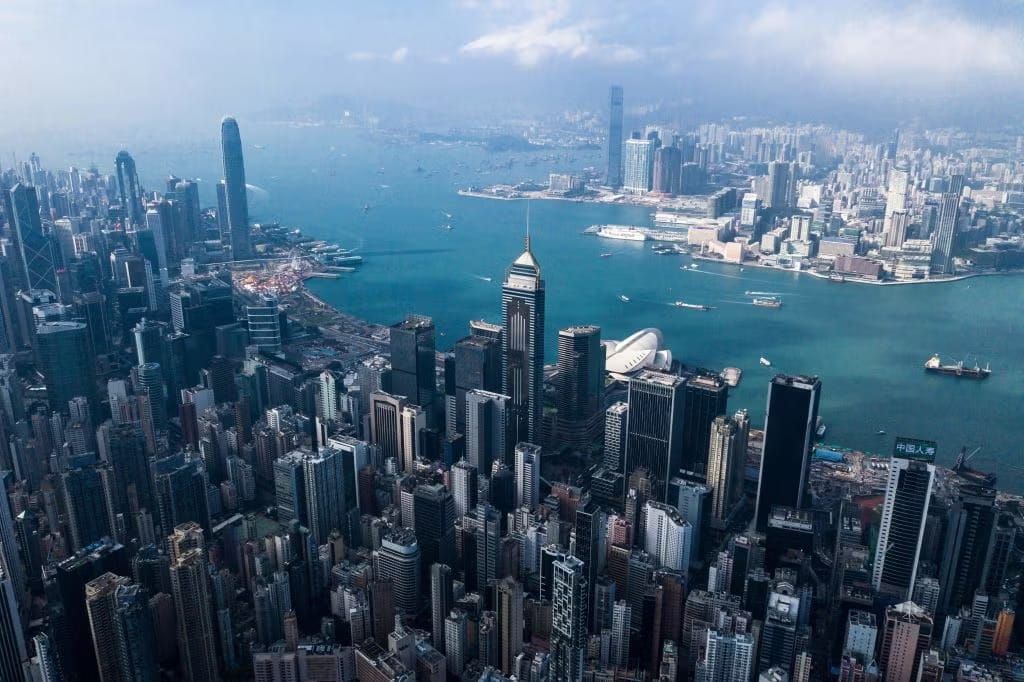
Claude, ChatGPT and Gemini are all blocked in Hong Kong. There's a cottage industry of services that buy US cards for you so you can get around it.
An AI Galapagos
Claude, ChatGPT and Gemini are all still blocked in Hong Kong. A VPN gets you there, but you need a US credit card, which is why a whole set of services exists to buy one for you.
Most people don't bother with a VPN and route through proxy platforms instead. They can't reach the US models and sit awkwardly with the Chinese ones, which is why he calls it an AI Galapagos.
The Chinese models are reachable, and on Asia-specific research they often come back with sharper answers than the Western ones.
A non-engineer building the whole thing
What stopped me was that he isn't an engineer and builds all of it himself.
He left a crypto company last November with about eight thousand dollars of government support, which covers more than a year of AI spend. On that he runs marketing automation, product development and investor decks by himself, turning out presentations in five minutes and prototypes on his own.
People around him noticed, and he now runs AI training classes off the back of it. There's consulting lined up with a Chinese manufacturer on their internal operations.
He built a maritime intelligence tool for a friend at a law firm, and their reaction is the whole shift in one line. We looked at hiring an engineer and the cost was too high, and you've already built it, so we'll license it.
Buying enterprise AI or hiring a developer can now be slower than a domain expert just building the thing.
Outside tech circles almost nobody has caught up, which is exactly why he thinks the window is open. Most people still have no idea how easy these tools got.
How China grows differently
He had four reasons for why the mainland grows the way it does.
The first is state money that never stopped, which is why the Hong Kong and Shenzhen corridor now leads the world in patent volume and robotics research after a decade and more of government funding.
Second is competition that's genuinely brutal. Build something novel in Hong Kong and a mainland company copies it and pushes harder, faster, bigger. Local food delivery is the case study. A Chinese-operated service came in, offered free delivery to every neighborhood shop, and had displaced the incumbent inside a year.
"There are three ways to win. Faster, cheaper, or more end to end. Storytelling and branding are what Americans think about."
Third, the sheer density of hustle. Out of 1.4 billion people an enormous number are doing whatever it takes, so the streets are full of delivery riders and everyone is grinding.
The last one is being smartphone-native from the start. Twelve years ago grandparents in rural provinces were already paying by phone and making video calls. Credit cards arrived late and the country skipped that stage entirely. So when news breaks that the government is putting AI tools in farmers' hands, the access layer was already there.
The soft power ceiling
The weakness is obvious and locals know it. The technology leads, and trust and branding don't cross the border with it. Even the interface conventions read as distinctly local, and that alone puts foreign consumers off.
In consumer products, Korean and Japanese brands still carry a premium; Korean-style bakeries draw lines in Shenzhen and French-style bakeries do well in Hong Kong. Coming from somewhere else is itself the premium.
That produces a workaround worth noting. Hong Kong companies now set up an entity or a trademark in Korea, Japan, Singapore or Taiwan first, then enter Hong Kong from there. It reads as not-Chinese to foreign investors while borrowing Korean or Japanese brand premium in the mainland market.
Europe is not looking at Asia
The reverse came up as well, since British brands are fixated on the US. Cover home first, then go to America; Asia does not make the list at all.
But trends that saturated in the West are often still wide open in Asia, and purchasing power keeps climbing. He's recommended Asia to several of them and most didn't listen. Too fragmented, too many languages, historically weaker spending. That last part is changing and they haven't noticed.
Which is why Hong Kong and the region are full of European-run marketing agencies helping European brands get into Asia. That market looks ready to be taken apart too.
What only a person can make
The conversation ended where these always do. However far the model lifts the quality of what you produce, what people consume is the person behind it as much as the output.
He landed in the same place. Going from crypto to AI taught him that execution belongs to the model while IP and brand still only come from a person, so he's building his own IP out of what he knows. The code came out of AI; the idea and the story are his, and in this era that's the difference.
Keep reading
Join Bloom
Bloom builds offline rooms where people and technology meet. We run them in Seoul, and now beyond it.
- 💬 Discord community, where events are announced first
- ▶️ YouTube, full talks from past events
- 📸 Instagram, photos from the floor
- 🎟️ Upcoming events