Someone's Complaint Became an App in an Hour and a Half

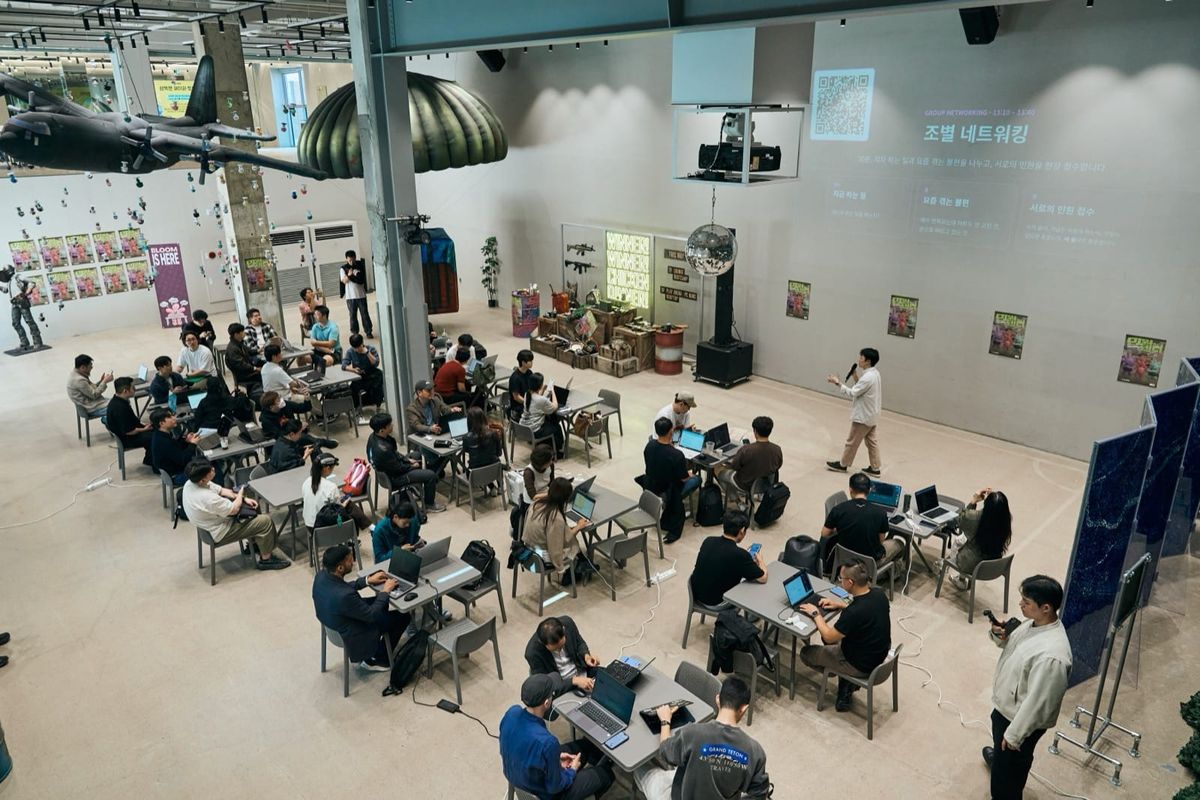
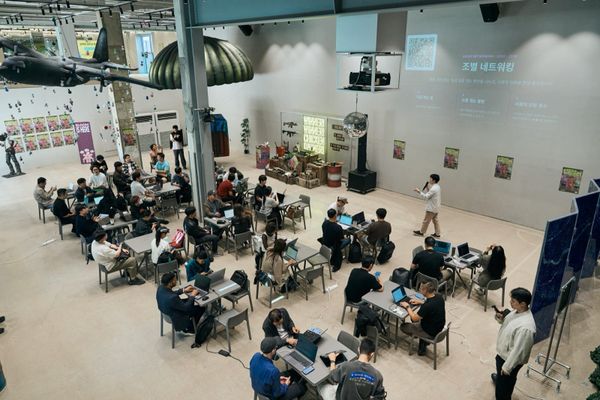
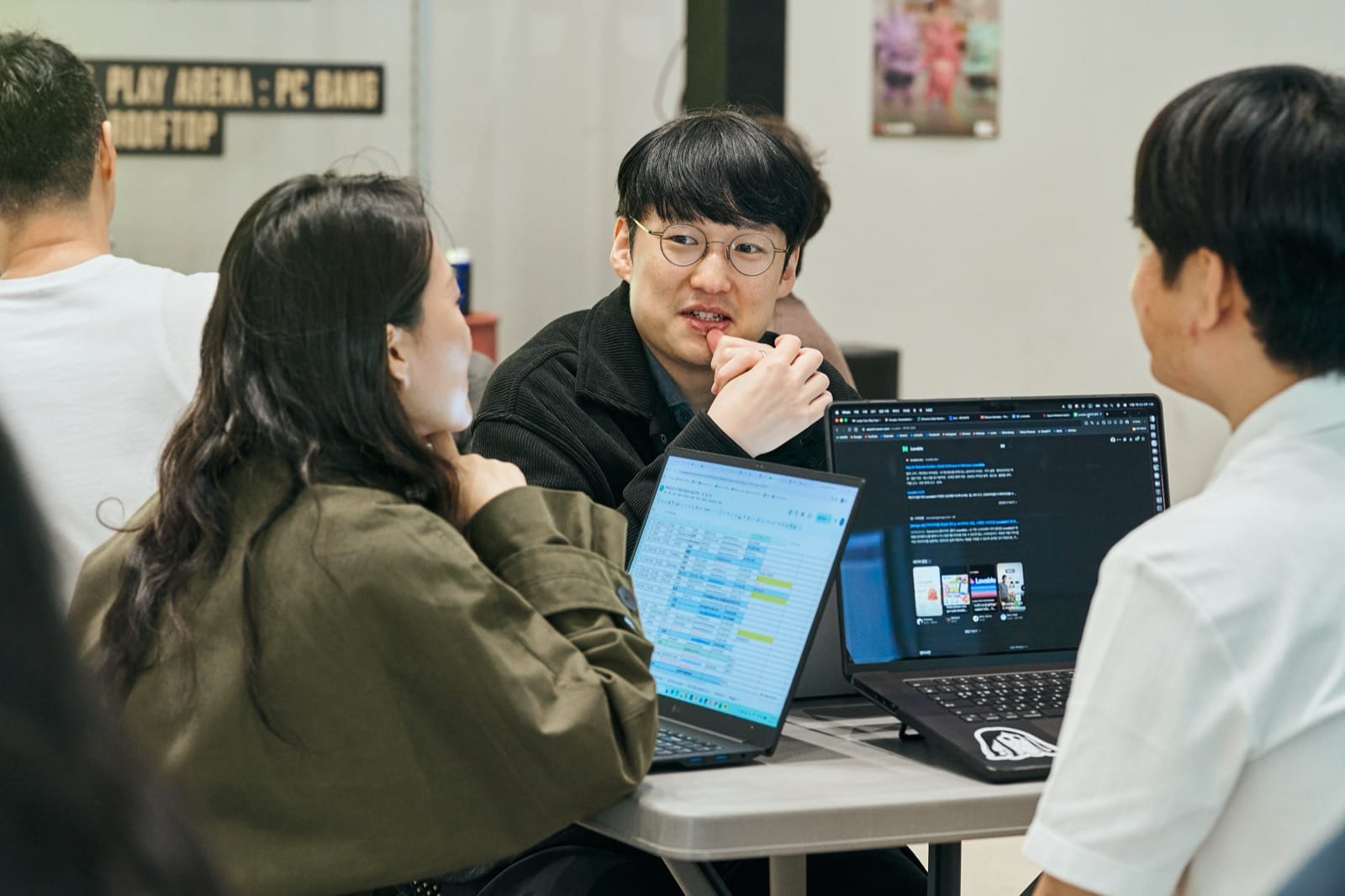
On the afternoon of Wednesday, October 7, Bloom × Lovable held a buildathon at PUBG Seongsu. The concept was an AI complaints desk. For a week beforehand we collected things people had always wanted to build with AI but never managed to, through the complaints desk channel on the Bloom Discord and the signup form, and on the day itself people took each other's complaints in person during small-group networking. Then every participant picked one complaint and spent about an hour and a half building it in Lovable, and 30 services came out of it.
A complaint means someone is already waiting to use it
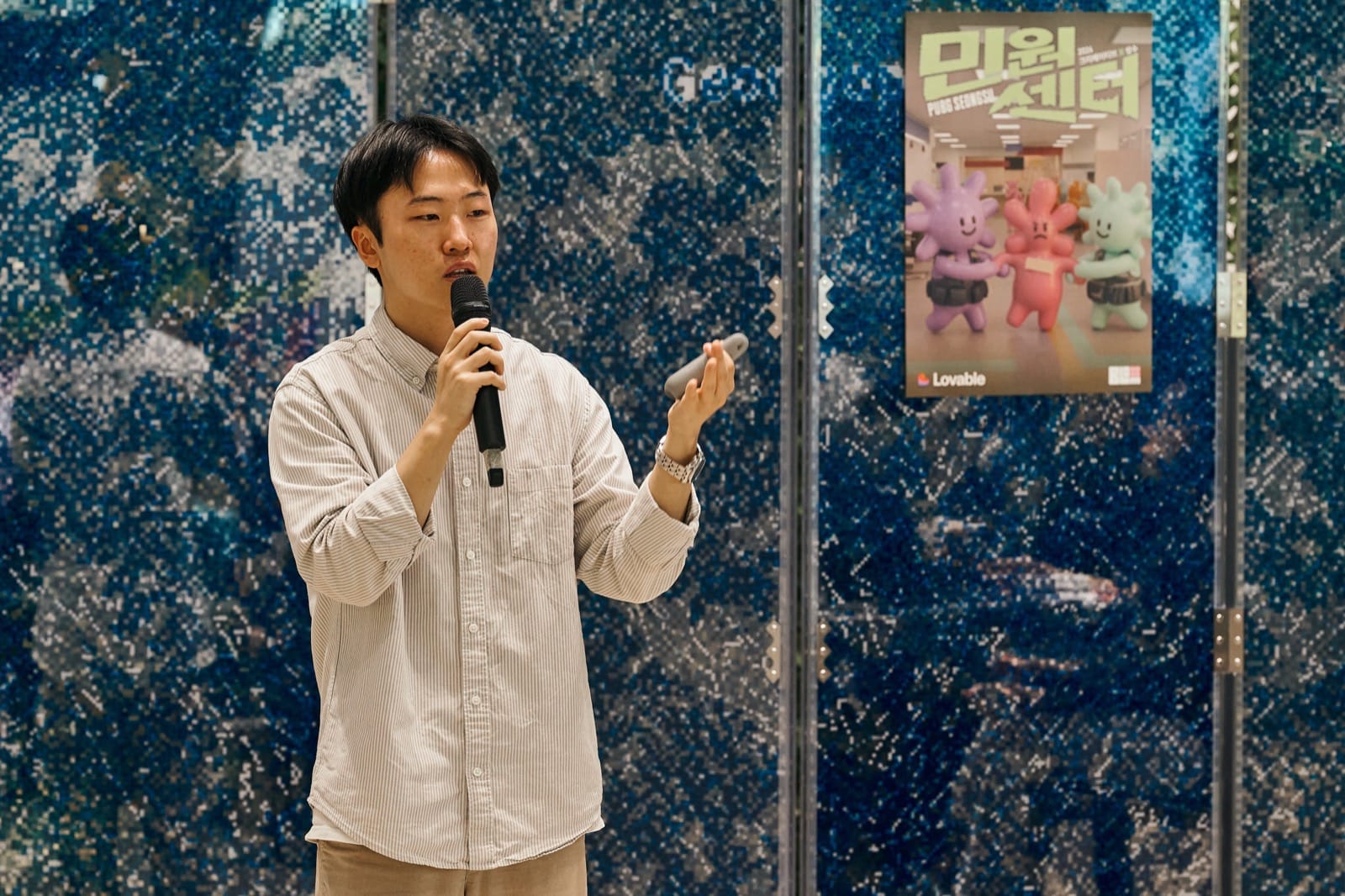
The theme, Taste Is All You Need, says that as AI writes code faster and more easily, the maker's taste matters more and more. So we built the day around hearing each other's problems first and then solving them yourself. We told people three lines would do for a complaint: who would use it, how they handle it now, and what they wish existed. For examples we offered a task that comes back every week that nobody has automated, a side project whose idea is old but whose first screen never got built, and a meetup still held together with a spreadsheet. Junsu Kim explained why we collected complaints at all by pointing to customers.
If there's a complaint, there's a customer. The moment you build it, someone who'll use it already exists.
Junsu's view was that the people who came that day might not write code themselves, but they knew their own problems and what they wanted to build, and that hearing someone else's problem gives you plenty of ideas about what to make. Hammering away at AI alone gets you fewer answers than you'd expect, so the advice was to ask as many questions and have as many conversations as possible. Anyone living such a happy, peaceful life that they had no complaints could practice by solving someone else's instead. As for why we cleared out an entire weekday afternoon, Junsu drew on personal experience.
You always tell yourself you'll grind on the weekend, but when you actually try to carve out time alone, human willpower turns out to be weak and it often doesn't happen. I figured if we got everyone together on a weekday, you'd be far more focused, so that's why we invited you this way.
For freelancers, college students and job seekers, a weekday afternoon is the freest time they've got, and for people with jobs we hoped it would be worth a day off. From the start, the goal was also to make something people could put straight into their own business or portfolio.
Networking with the recorder on
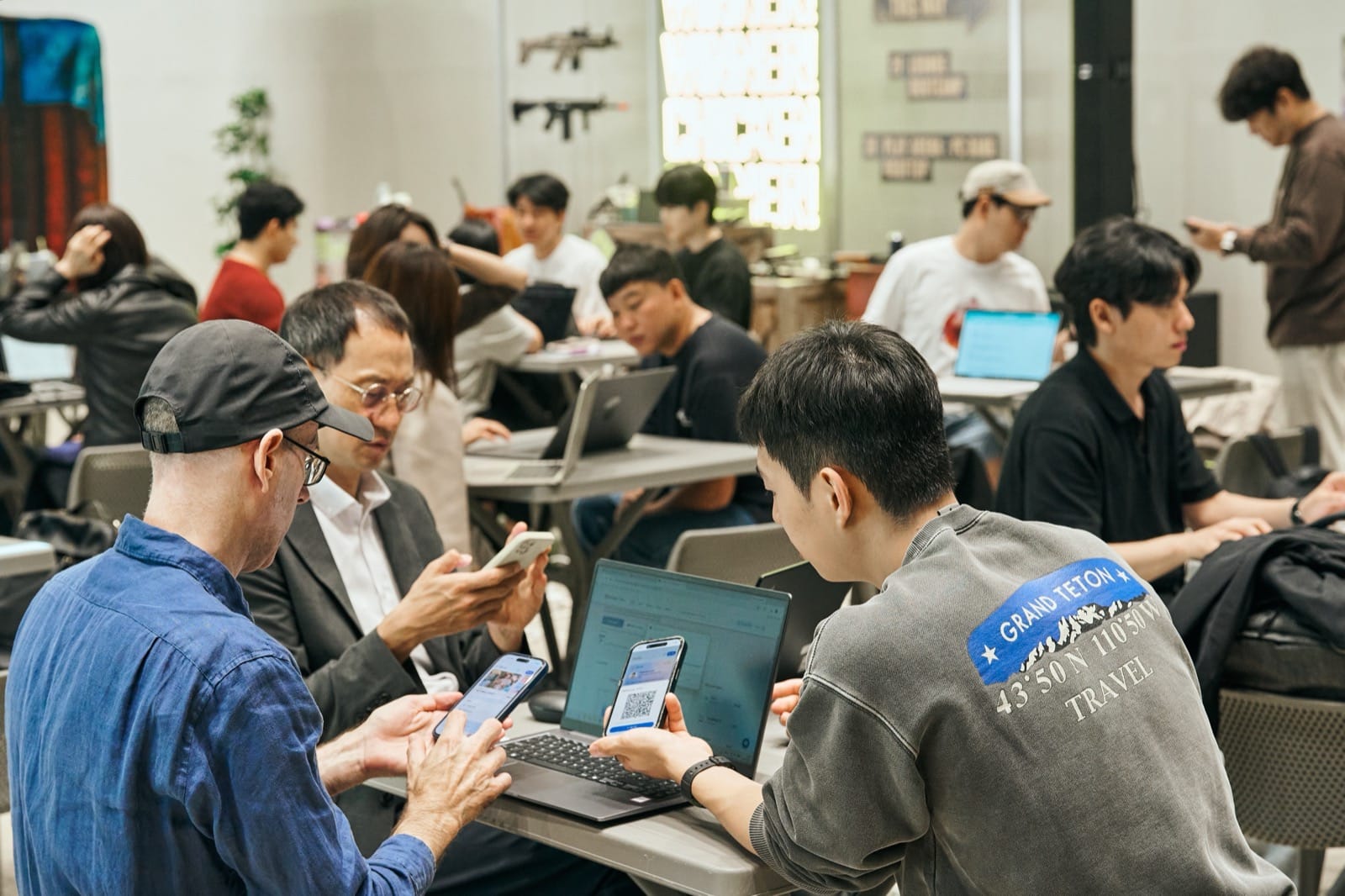
Groups were random but only for networking. The building itself was an individual event. Networking ran 30 to 40 minutes: a quick intro to what you do now, then talking through a recent frustration or what you wanted to build that day, then how you'd build it. Junsu's tip was to keep a recording running the whole time, because talking it through sorts out your thinking and feeding that recording straight to AI makes the build much faster.

A QR code above the networking area let people join the Bloom app (app.bloomworld.ai). It's invite-only, so Junsu used admin access to invite everyone who scanned it that day in one go. Signing up gives you a profile member card, cards can connect as first-degree connections, and when a connection opens a Mixer you get notified. What the Bloom app is going for is an offline LinkedIn where, the more people you meet, the more you hold on to the ones who share your grain and your goals. Another QR led to the Discord complaints desk channel, where every announcement and finished link was collected.
Lovable, where describing an app makes the app
Lovable, which everyone used that day, is an AI app builder that started in Stockholm. Describe what you want to make and it builds a web app with screens and features, and you can publish the finished app right away at a lovable.app address. It passed $100 million in annual recurring revenue eight months after launch and is counted among the fastest-growing software companies, and its pitch is that people who don't write code can build products too.

Every participant got 100 Lovable credits and built from 2 to 3:30 p.m., and 29 of the 30 were published on the spot at lovable.app addresses anyone could open. An assistant that picks up your schedule on any device through Google sign-in, an AI that reads one screenshot and tells you whether it's a scam, a service that pulls shelter notices from across the country through a public data OpenAPI, a room a whole group joins from one link, a tool that turns a plan into presentation slides and a PDF: all of it came out in a little over an hour and a half.
We agreed to collect the links to the best work and pass them on to Lovable. Nothing's confirmed, but follow-up support could come, the way people who did great work at our Genspark and Higgsfield events got generous extra credits.
Apps for looking after yourself
Swimpyo (dev-chameleon.lovable.app), Korean for “comma,” is a wellness planner for freelancers working in Seoul. It finds the gaps between your appointments, suggests a place or a break that fits each one, and reminds you what to bring before the next thing. The first screen says up front that it doesn't collect your current location and keeps all your data on your own device.
DOERS (start-your-doing.lovable.app) is an AI wellness app under the banner STOP SCROLLING, START DOING. Rather than stopping at watching and saving things, it nudges you to actually do one thing today, keeping a small daily practice going for yourself.
Star by Star (sky-lit-tasks.lovable.app) is a casual to-do game: every task you finish lights a star in tonight's sky, and finishing them all reveals a hidden constellation. The constellations pile up month by month into a universe of your own.
My Manager (weather-routine-planner.lovable.app) is an AI assistant that lays out your day around the weather, your routine and your schedule, and its maker described it as a manager who whips a slacking self back into shape. Sign in with Google and you can keep managing your schedule and routine from any device.
Today (pixel-perfect-showcase-0870.lovable.app) is an AI chief of staff. It works out with you what kind of life you want, maps a path to that future, then tells you what to do today. On the sample screen your future self sits beside today's schedule, and the chief of staff suggests spending an hour and a half of today's open time on your most important long-term goal. Its tagline is that it connects today to the person you want to become.

The Interfaith Prescription (bible-comfort-card.lovable.app) has you pick what you're feeling, like anxiety, exhaustion, career worries, loneliness or anger, and write what's on your mind in under 300 characters. It then prescribes a single letter that weaves together the Bible, Buddhism and philosophy. It even cites its sources: Bible verses from the Korean Revised Version, and Buddhist and philosophical lines adapted from classic scriptures and texts.
Maieu (maieu.lovable.app) takes its name from maieutike, Socrates' art of midwifery, the method of drawing ideas out through questions. It's a workshop for writing and thinking where Maieu asks and you think, and AI never writes for you. Its maker described where the idea came from like this.
With AI, everyone's productivity keeps going up, but along the way I feel like our ability to think things through is shrinking, and the records of our own thinking are getting fragmented and scattered.
Maieu offers itself as a 10-minute sparring partner that finds the holes in your logic before anyone else does. It won't write for you. It puts a red pen through the weak logic and the gaps and leaves the rewriting to you. There's a log mode for piling up thoughts as they come, with no questions, and a deep-dive mode where you answer its questions, rewrite in your own words, and note the questions you still haven't resolved. It suggests using it to find the blind spots in a proposal or a deck before your boss or client does, or to rewrite a LinkedIn post or a cover letter in your own thinking.
Complaints from home and the neighborhood
Parenting by Temperament (my-child-advisor.lovable.app) is a parenting coach. Jot down the situation, what you did and how your child reacted, and AI builds a profile of your child's temperament that it refines as the entries pile up. When tantrums, sleep or mealtime problems come up, you can ask for approaches that fit your child, and there's a space for parents to work out a shared parenting philosophy and record what they agreed.
Mom or Dad? (bloomy-parenting-hub.lovable.app) is for when that agreement doesn't come easily. When parents clash over how to raise their child, it weighs both people's worries and intentions evenly, looking for what works for your family over who's right, and with the child's safety and development at the center it proposes a small agreement to try today.
Is This a Scam? (sagiscan.lovable.app) was built for a mom who asks whether every text she gets is a scam. Upload a text, a KakaoTalk message, even a screenshot of YouTube or the news, as a photo or as text, and AI points out what's suspicious and what to do, free for up to three checks a day with no signup. The screen is full of lines written with parents in mind, like a note that pressing and holding the input box brings up paste, or a reminder to cover passwords and verification codes before uploading.
Daughters are slow to reply sometimes too. Mom, ask here first from now on.
Homeward (jibeuro.lovable.app) was built after its maker learned that the public data portal has an OpenAPI for rescued animals, and it shows notices for animals in shelters across the country in one place. You can look for a lost pet, share missing reports and sightings, or adopt an abandoned animal. The hope that many of them make it home became the name.
From neighborhood life came Clean Toilets Near Me (simple-md-reader.lovable.app), a map that scores cleanliness and facilities separately and recommends the cleanest, best-equipped restrooms first.
Rainy Day Shelter Map (rainy-day-escape.lovable.app) checks the day's weather, and if rain is forecast it recommends indoor spots near you like museums, exhibitions and cafés, then lets you pay right away with Toss Pay.
Everyone's Last Train (makcha.lovable.app) is for anyone who's ever stayed a little longer so as not to kill the mood and missed the last train home. One person sets up a table and shares the link, everyone joins on their own phone and enters their last-train time, and it pulls them together to show in real time how long until the party starts breaking up and when each person needs to leave. The time left shows as a candle melting on the table. For now you can try it on a demo table first, and the first screen reads: our night goes on, and the candles tell each of us our time.
So whoever leaves first doesn't have to feel bad about it.
Can I Trust You With the Camera? (pic-coach.lovable.app) is a smartphone photography test that asks: your phone is pro, but how about you? When it's unclear which friend or family member should hold the camera on a trip, send them the link. With no login, seven photos and about three minutes reveal their eye for a shot, and a score of 8 or higher means you can hand it over with confidence. It warns you up front that the results may be a little blunt.
Complaints from work and careers
Sujugak (suju-radar.lovable.app) promises to pick out only the freelance contracts that are a sure bet, and the name is a pun on winning contracts and Korean slang for a sure thing. Freelance developers and studios hunt for clients by combing Wishket, government grant programs and open KakaoTalk chats every day. It gathers the Wishket and K-Startup notices actually posted that day and flags only the ones that fit your company and tech stack.
All it needs is your company site or GitHub URL, and if you don't have one, you can just pick a role like frontend, backend, app, AI and data, planning and PM, or design. Each notice shows why it's you, how many competitors there are, and what number you'd be if you applied right now.
Flip it around and a client's posting sends a real-time alert to the matching developers, and if you post a request as a client yourself, you can try both sides on your own. Because it only curates and takes no commission, the 20% a platform would normally take gets split between the client and the developer.
Ctrategy (insight-navigator-772.lovable.app) is a website diagnostic that gets you ready for a 30-minute meeting from one URL, still in demo form. It lays out, with evidence, the gap between what the other company's homepage should be doing and what it does now. It runs in three stages: raw material read only from public pages with numbered sources, an internal assessment that sorts problems, opportunities and meeting questions by evidence and confidence, and a client-facing report with the internal notes stripped out after approval. A person reviews every stage.
Persuasion Lab (convince-craft.lovable.app) starts from the fact that even with a good service or proposal, there are a lot of people to convince: your team lead, executives, the security team. Upload a proposal, a spec or a GitHub URL, and AI first asks back for the numbers and facts the pitch is missing, maps what matters to each audience, whether a CEO, a CFO, a chief information security officer or a team lead, then checks the facts against other companies' cases and statistics and writes a persuasion strategy and likely Q&A for each. You get the results as editable Markdown, a 16:9 slide deck and a PDF.
RoleFit (position-preview.lovable.app) takes your résumé and a job posting and analyzes how well you fit and how to apply, and it states up front that it won't invent experience or achievements that aren't on your résumé. The résumé file is processed only in your browser, and nothing you enter is stored on a server.
OneCard (onecard-make-my-card.lovable.app) builds a mobile business card in three minutes at an address of your own, like onecard/yourname, showing your contact info, career and portfolio at once, shared through a single link. Sample cards for a rehab trainer, a freelance designer and a neighborhood café owner make it clear it's meant for people who don't work in offices too.
Metacognition Test (cognition-lab-collective.lovable.app) took its cue from some companies now using metacognition tests in hiring. You see 20 words, predict how many you'll remember, then take the test, and the gap between prediction and result tells you whether you're the overconfident type or the modest type. It takes about five minutes with no login and follows the calibration method from metacognition research. You can send your result card to a friend or see where you stand among everyone who's taken it, and results are stored anonymously and used only for overall distribution stats.
HowToWork (howtowork.lovable.app) is a second site from the maker of Homeward. It walks through AI-written code in execution order, explains the logic step by step, and checks its claims against the code itself. You need your own OpenAI or Anthropic API key to use it. Uploaded code stays in that browser and is sent briefly for AI analysis only when you ask a question, and nothing is kept on a server or in a database.
It feels like we've reached a point where you can't develop without AI. But it's hard to know how the code AI wrote actually works. I built it, but I don't know how it works. This site explains the logic alongside the code so that ironic situation is easier to understand.
The maker of CDSS (mindful-decision-lab.lovable.app) posted the link saying, “I threw this together and I'm not sure what it is, but something came out.” Open it and you find a decision-support prototype for a 2×2 cognitive-bias mitigation experiment, a research tool that handles the biases that creep into rulings on technical complaints by balancing the evidence. Using sample cases like a reexamination of an EV charger conformity assessment or an appeal of a failed elevator inspection, it filters out emotionally loaded language and stacks up the facts on each side, rule by rule, so the structure itself keeps you from locking in a ruling too early or sliding into confirmation bias.
FedLab (learn-fl-lab.lovable.app) is a learning site that takes you from the basics of federated learning, where data never leaves the device, to the research frontier. It splits levels for people new to machine learning, undergrads and grad students, follows a weekly curriculum with one lesson a day, and ends each week with a test that checks understanding instead of memorization. The tagline is a clever one: just as data never leaves the device, you won't be left confused either. The first week alone covers the basic structure of federated learning, the FedAvg algorithm, data that differs from device to device, and the privacy protection federated learning can't provide by itself.
Apps that bring people together and show off their taste
Gyeol (gyeol-love.lovable.app) started from a complaint posted in the Discord complaints desk channel before the event: “a dating app for sincere connections.” Instead of a dating app where you judge fast by photos and checklists, it's a matchmaking service where you get to know each other's values and thinking first. Four questions about texting, arguments, weekends and the pace of a relationship sum up your dating style, and your taste in film or music gives you a first thing to talk about. It introduces only two people a day, so there's no endless swiping, and when you send interest in an answer you like and they accept, a private conversation begins.
Profile photos stay hidden until you match, and the blur fades a little as you talk, though it never goes fully sharp. It doesn't ask for your real name, phone number or employer, and instead of a compatibility score it tells you why the two of you click. One person's complaint was picked up by someone else and turned into a product in an hour and a half, so this app holds exactly what the complaints desk set out to do.
ApeTogether (apetogether.lovable.app) is an English-language app that finds people to climb or run with wherever you are. You can join sessions nearby or host your own, get matched with climbers, browse community events and a gym map, and fill out your own climbing passport.
ShowMeLook (showmelook.com) is an AI fashion styling service: upload one front-facing photo and stylist Showme suggests styles that suit you and helps you build a lookbook of your own. It was the only one of the 30 published on its own domain.
Chagugyeong (chagugyeong.lovable.app), roughly “car browsing,” gathers official prices, specs and clearly sourced photos for premium cars sold in Korea in one place, with 72 models listed so far. Set your budget ceiling with a slider, filter by body type and fuel, then compare price and spec differences by trim and line two cars up side by side. Every car photo credits the photographer and the license terms, and the screen notes that the list is sorted by starting price and isn't a ranking. You can use it right away without logging in or handing over contact info, and since it's still in testing, its maker said feedback is welcome.
Every price has the date it was checked and a link to the source, and there are no scores, rankings or recommendations.
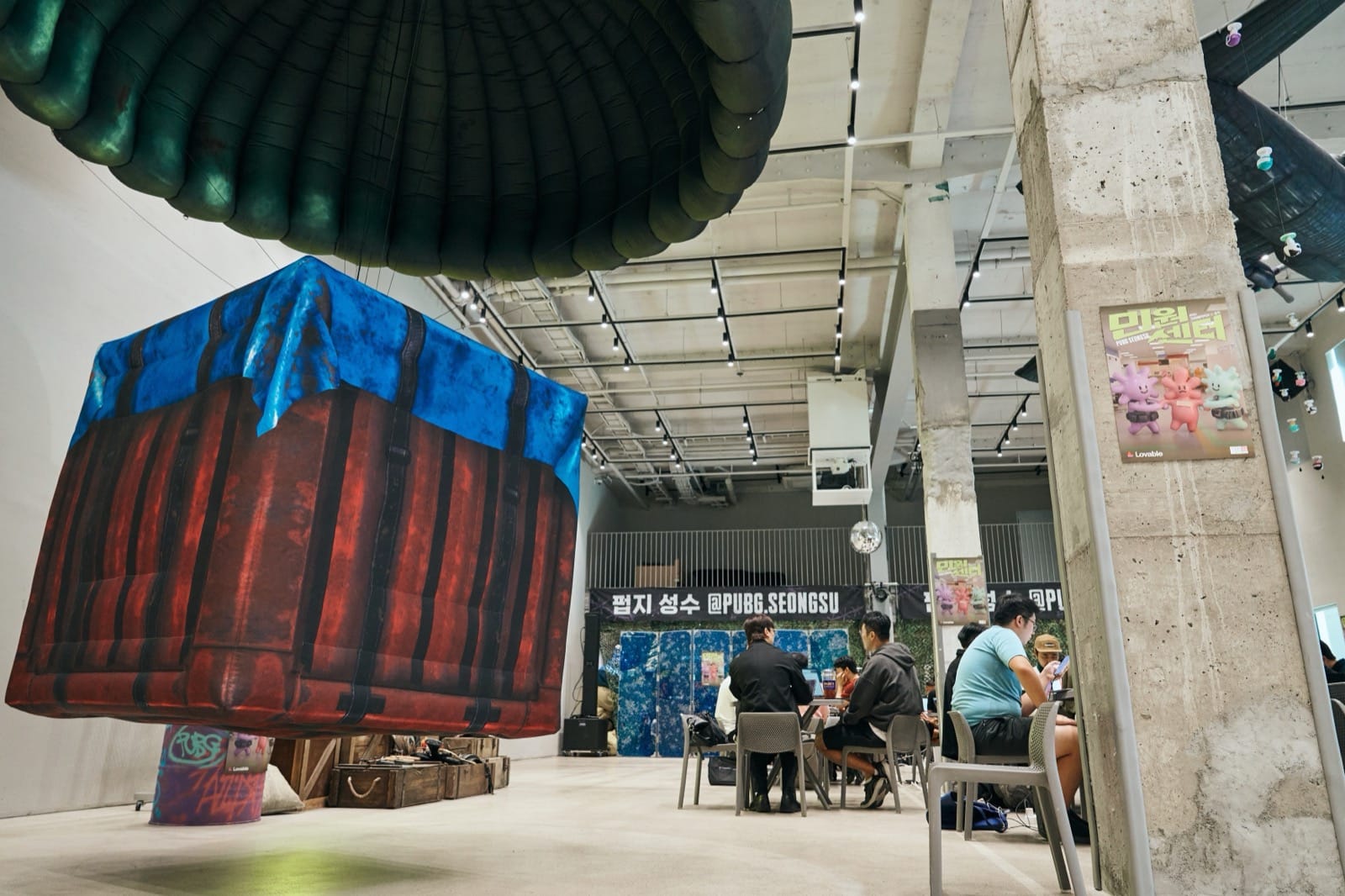
Fittingly for an event at PUBG Seongsu, there was also Care Package Draw (pubgcarepackage.lovable.app), where you pick a Battlegrounds supply crate and open it to get a random dare in an everyday version or a PUBG version.
Reboot My Life (nextlife-quiz-pix.lovable.app), a second entry from the maker of Mom or Dad?, is something to pass the time when life feels dull: answer five off-the-wall questions at a suspicious next-life assessment office and get stamped with who you'll be next time, out of 50 possible results.
A complaints desk that doesn't close after one day
The 30 projects went up in the Discord complaints desk channel one by one between 2:39 and 4:47 p.m., and from 4 p.m. we went through them together in a demo session. From a scam checker for mom to a candle that tells you when your last train leaves to an app that rules on your next life, a lot of it was so inventive it was hard to believe it came out of an hour and a half.
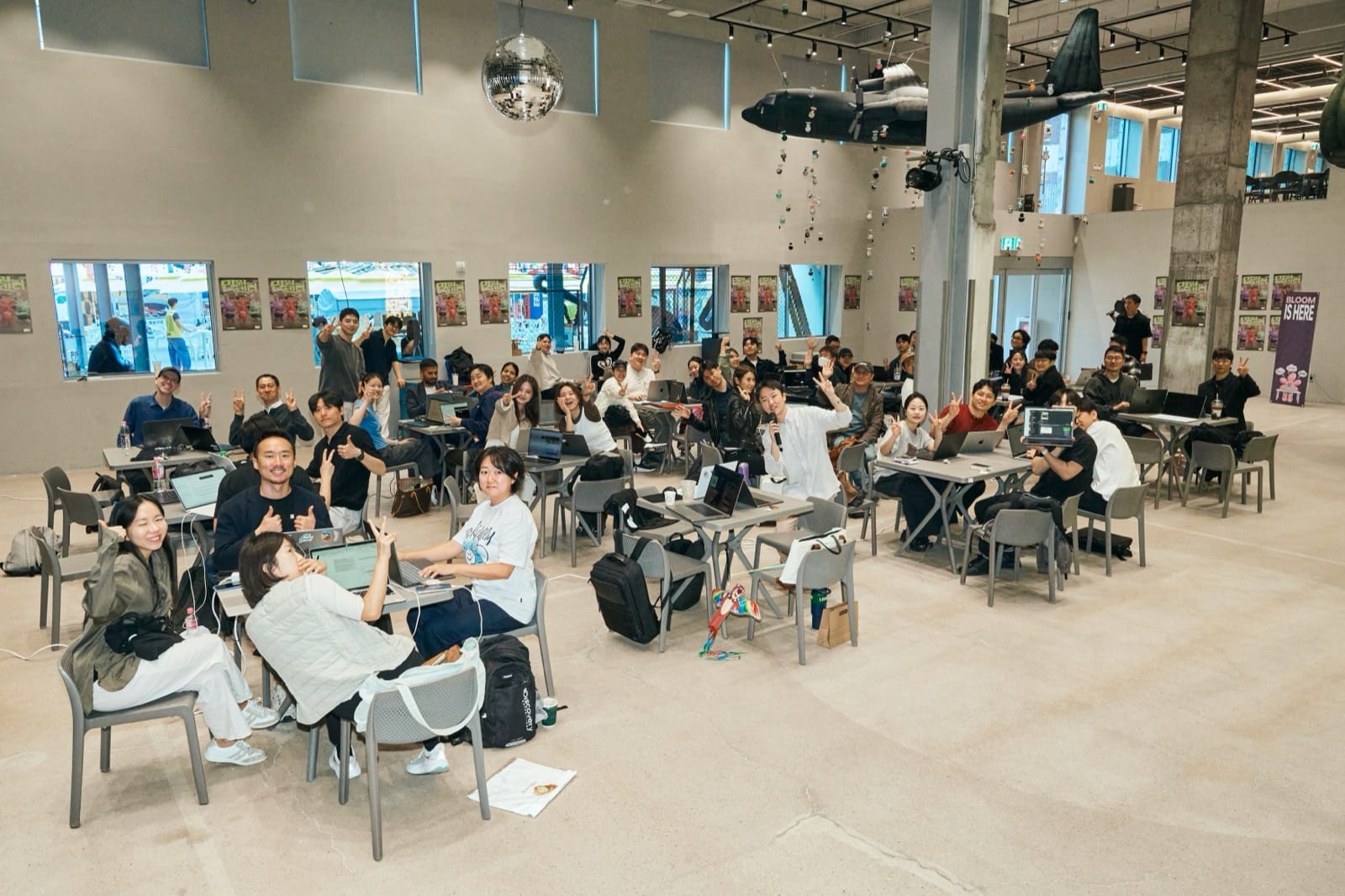
It was a show-and-tell with no rankings or prizes, but the maker of Gyeol asked anyone who wanted to try it to hit the heart, and reactions started coming in from people who'd tried things. The Metacognition Test got this: “Tried it and it's fun. It'd be nice to be able to review which questions I answered and how.” People who filed a complaint now have something to use, and the people who built it get to keep improving it with users already lined up.
The next step for this complaints desk is to keep refining whatever's worth using after the event and grow it into AI products people actually use. Every service above is open to try right now, and any feedback you leave reaches its maker directly through the complaints desk channel on the Bloom Discord (discord.gg/Wd9jaE8MYF). New complaints are welcome there anytime, and you don't have to have come to the event to file one. If reading this made you want to build something yourself, you can start right away at Lovable (lovable.dev).

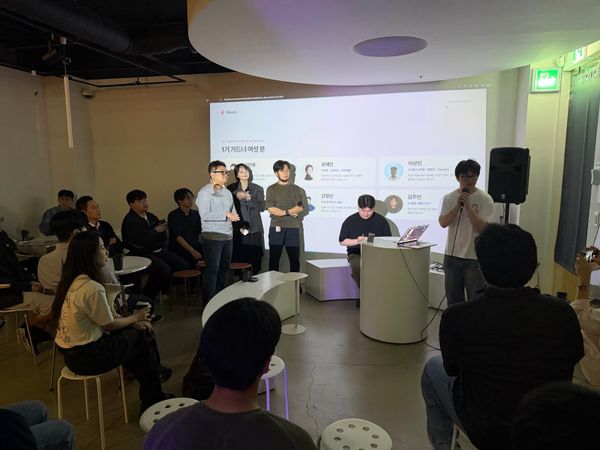
Thank you to the Bloom members who cleared out a whole weekday afternoon, and to Lovable, which made this experiment possible by giving every participant credits. And deep thanks to PUBG Seongsu, CreativeX Seongsu and the Seongdong Cultural Foundation for opening up the space and the opportunity. PUBG Seongsu's Survivor Hall was a clean space, great for keeping your laptop open and staying focused all afternoon, and the same day the Tasty Seongsu W.W.C.D chicken-and-beer party was on outside, so anyone who needed a break from building could step out for a beer.

Keep reading
Join Bloom
Bloom builds offline rooms where people and technology meet. We run them in Seoul, and now beyond it.
- 💬 Discord community, where events are announced first
- ▶️ YouTube, full talks from past events
- 📸 Instagram, photos from our events
- 🎟️ Upcoming events