Five Months In, We Stopped Calling Ourselves Beginners

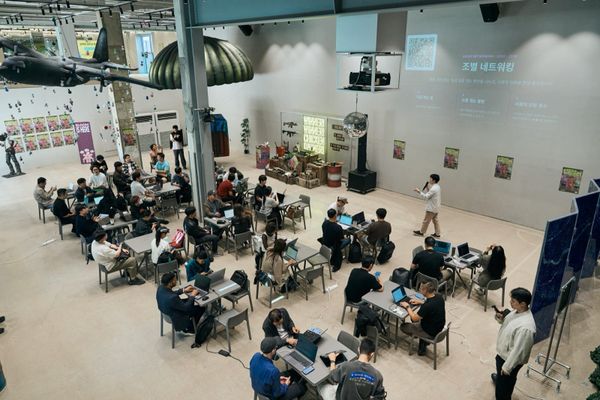
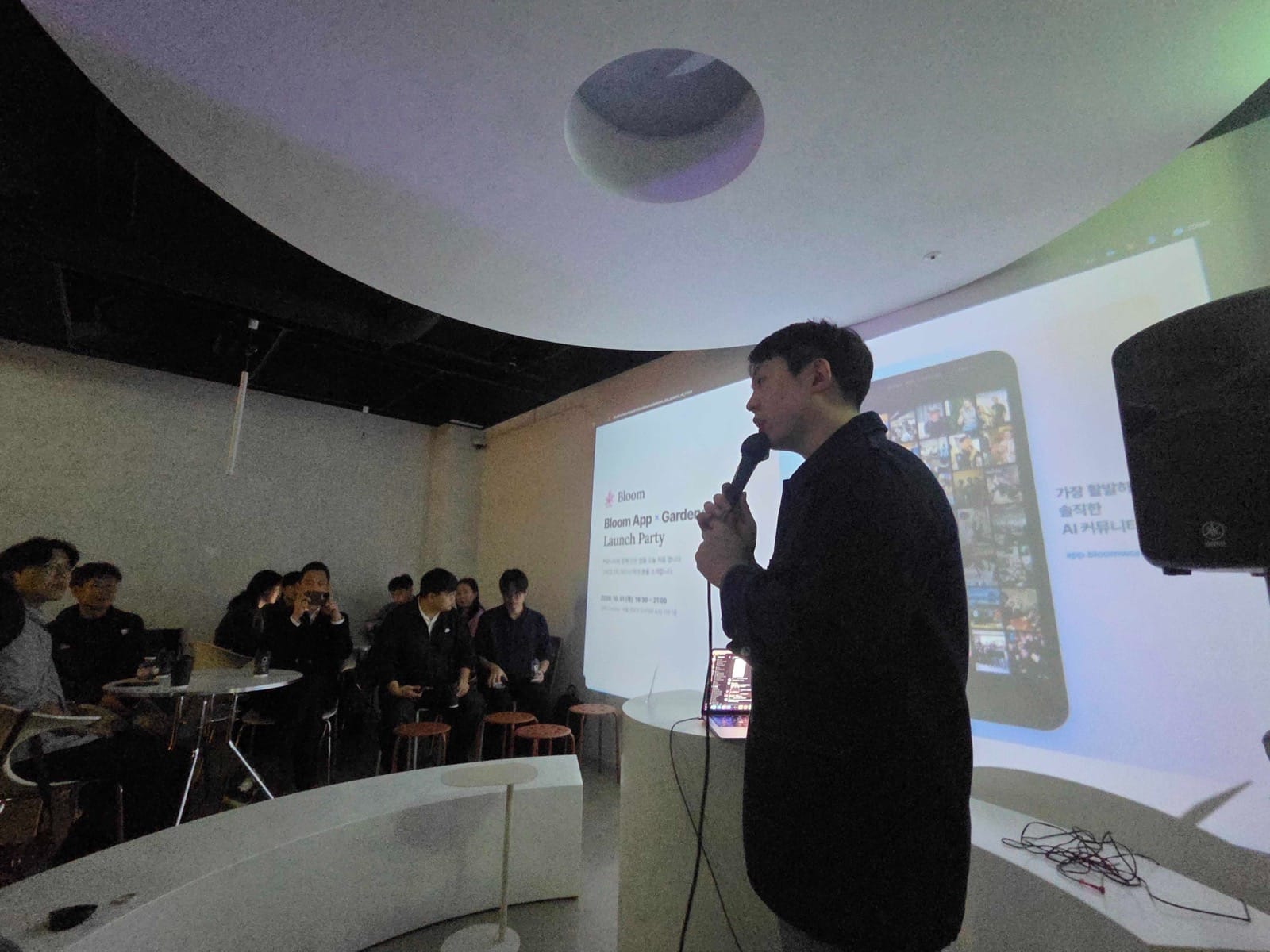
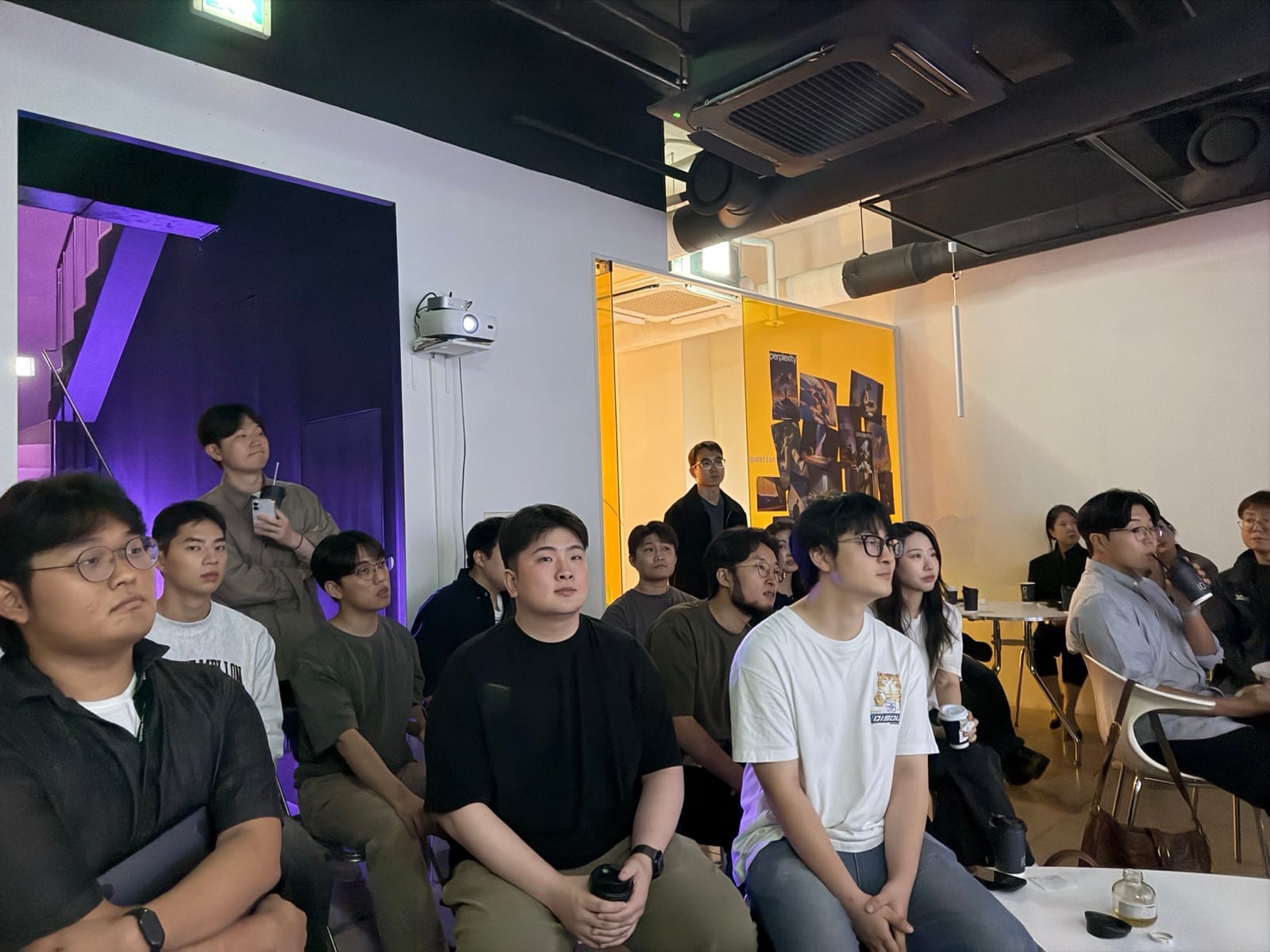
About 40 people came to the Bloom App and Gardener launch party tonight, on two days' notice. There was no headline speaker and no program. We got the community into one room, showed everyone the app we'd just built, and took questions together, which is about as "us" as an event gets. Thank you for coming, for telling us what you thought on the spot, and for all the feedback piling up in Discord.
We've spent a lot of time calling ourselves community beginners, leaning on the fact that we started without much skill and without a clear vision or goal. Five months in, that excuse has run out. What I keep thinking now is that we owe people a more organized operation and a structure that lives up to what they expect when they show up. Building the app was the first step toward it: pull the scattered information into one place, and make it possible for any member, not only the organizers, to run an event or a curated Mixer for the Bloom community.
A lot of you told us things like "you can push through on passion at first, but this is close to donating your talent, so it needs a healthy reward structure to last," and "too many communities shine for a moment and then vanish, and I hope Bloom doesn't."
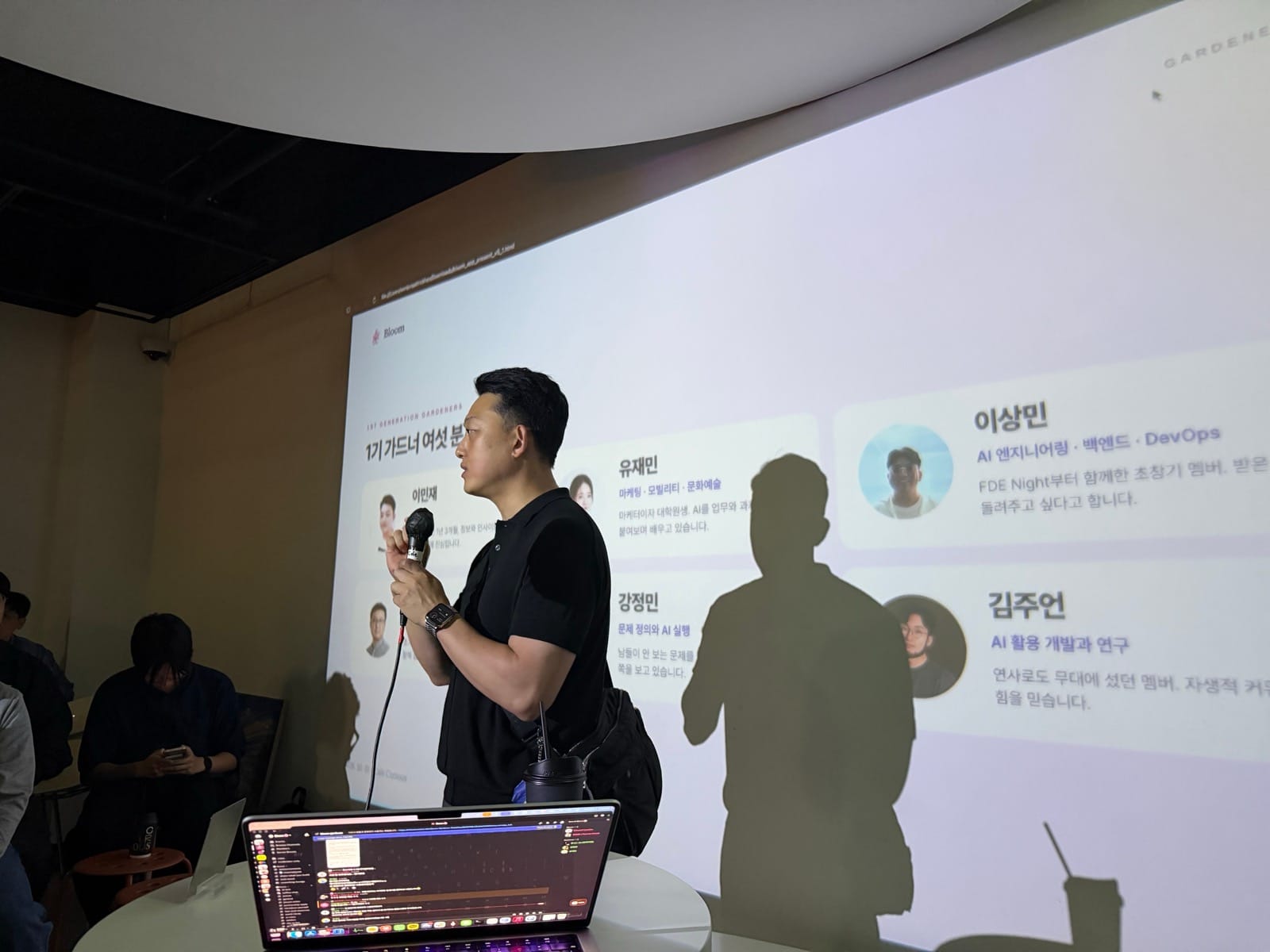
I know what it costs to give up a weeknight after work. So thank you again to everyone in the Bloom community who keeps showing up. And thank you to the six gardeners (Minjae Lee, Jeongmin Kang, Jaemin Yoo, Changwon Jeon, Sangmin Lee and Jueon Kim), who we'll be learning from and leaning on, sometimes for the outside eye that gives us honest and constructive feedback, sometimes as peers growing alongside us. Once the operation settles a little more, we'll run a second cohort.
Last, please take a look at app.bloomworld.ai/">app.bloomworld.ai. Join the waitlist on the site and we'll open access in batches. For now I'd like the invite codes to travel through the people who came tonight and through the gardeners. Thank you again to everyone who was there.
We pulled a scattered Bloom into one app
Between Luma, Discord and the blog, Bloom news was spread all over the place. People asked where event announcements actually go on Discord. Others said they'd been reading recaps and then found the event already over by the time they went to sign up. At first I wondered how we'd ever manage all of it. Five months in, it felt like time to tidy it up and deliver our content somewhere official, so we decided to put the blog, YouTube, events and Mixer into a single app.
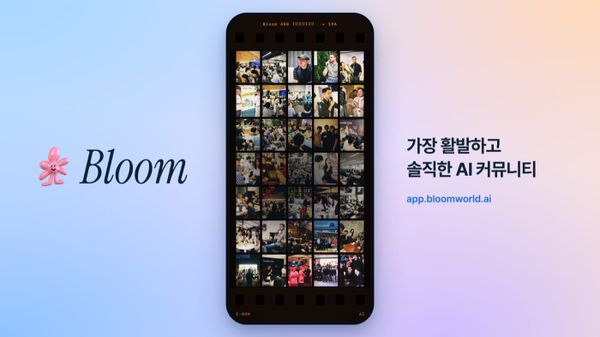
We started building on Monday and it took about two days. The iOS and Android builds are still in review, so we opened the web app first. Add it to your home screen and it works like an app. This is my first time building one. I know it'll look rough to developers and short on taste to designers. I promised to treat it as something we build together and to turn feedback around fast. The whole time I was building it I kept noticing how much better AI has gotten. I had a lot of fun.
Feedback goes to the new app channel on the Bloom Discord. Leave a screenshot with it and AI reads the screenshot and runs the fix. What you post flows into the app on its own. We emailed the web app address to everyone who came that night first.
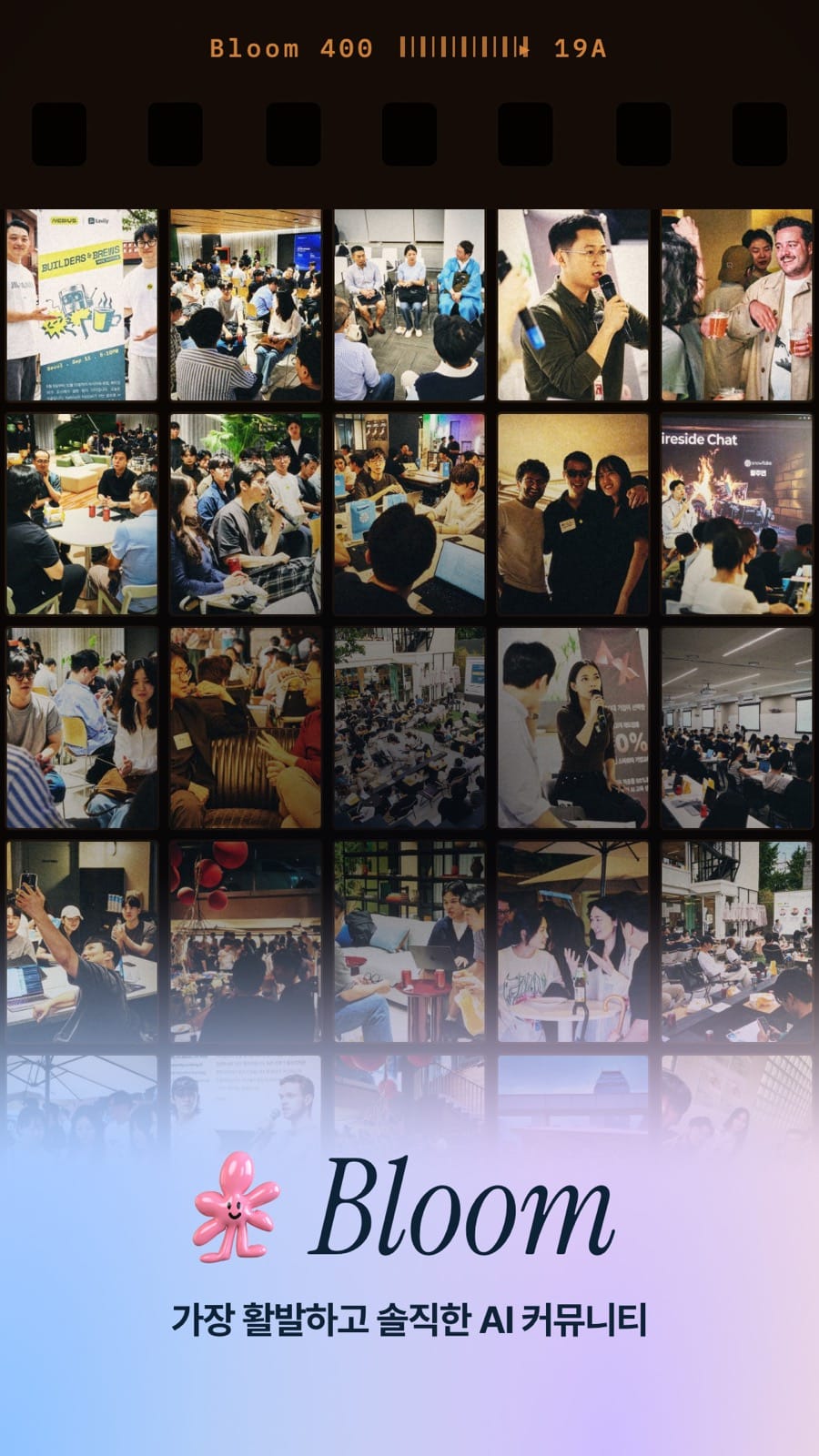
Somebody said it looked like a fortune-telling app, so we added photos
When you first sign up there's an onboarding video. Since someone asked how it was made, I put it on screen and walked through it. The video and the copy are both AI's work. The copy made me cringe a little at first, I tried to fix it, my version came out worse. I left it alone.
The app we took inspiration from is 222, a US app backed by Y Combinator. You write down what you're looking for and they curate a small gathering for you each time. The vision is to bring back the chance encounter. It's close enough to Bloom Mixer that we used it as a benchmark when we built Mixer. You can only sign up with a US number, but the onboarding video is built to grab you on the first pass.
I pulled that video, fed it to Claude 5.5 and kept telling it this is the kind of thing I want. What came back at first was a fairly dull screen with stars twinkling on it. Junsu Kim, who runs Bloom with me, said it looked like a fortune-telling app, so we put photos in and it got more real. I dropped every Bloom blog post into one reference and explained the concept we're going for. The copy and the video came straight out, background gradient and all. The promo video at the end of the slides came out of a request to add onboarding and nothing else, and watching it I was floored.
We're starting as a closed network
Part of why you can only get in by invitation is that we're still in closed beta doing QA. The other part is that when someone asks what edge this app has over Luma and the dozens of others, the only honest answer is the members in this room. So I said we want to grow it around the people who come to our events often and the people who made time to be here, and hold the quality while we widen it.
Invite codes go first to the people who came that night and the regulars. We haven't opened access yet to people who've rarely come or never come. The gardeners got a generous 10 each and everyone there got 5. If there's someone you'd like to see in the room, bring them in with one. Start closed, settle, then open wider: that's the order we built the structure around.
I deliberately didn't explain how to send an invite. If you need me to explain it before you can find it, the app isn't intuitive enough. I wanted people to go looking. I pointed them at the personal QR code the same way. Features matter, but the app is only a tool for growing our community. I asked people to judge it from there.
We ask the gardeners before we plan the program
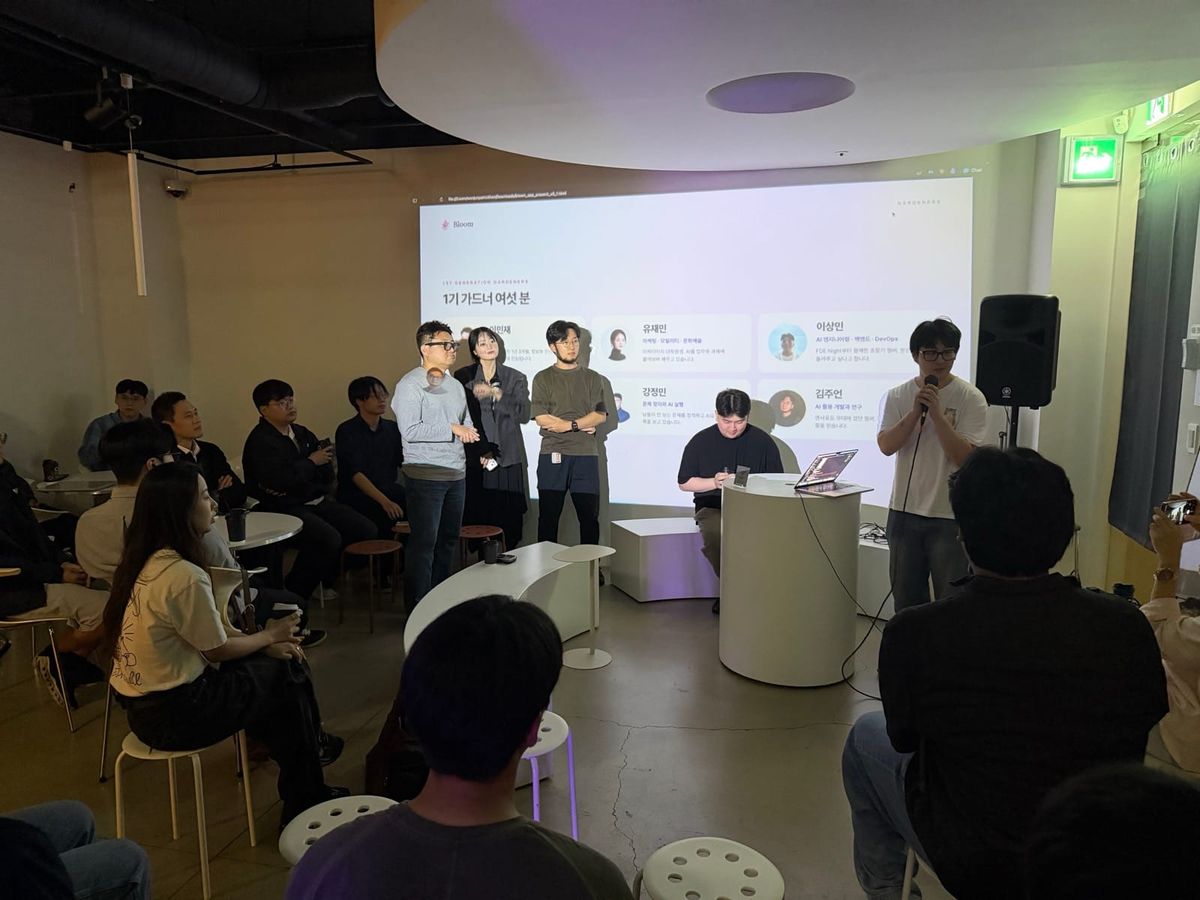
Gardeners are the people tending the garden that is Bloom. 55 people applied, more than I expected, and we picked 6 after reading the applications and weighing a few other things, wanting as much range as we could get. When I suggested we hear their visions and ambitions, everyone looked away, but one by one they came to the front and talked about why they'd applied and what they're planning.
Before we plan a program we'll ask the gardeners what they think of it first. We'll lean hard on the outside eye for the things we can't see from inside the organizing team. That doesn't mean we'll only listen to the gardeners. We made this night happen because we want to hear from more people. I asked for constructive feedback through whatever channel is easiest, Discord or DM.
A gardener once told me they weren't sure whether it was alright to post their thoughts on Discord. But Discord isn't the organizers' announcement board, it's everyone's channel, and short of anything close to gambling we want ads up there too. I'd like people to look at the app in the same spirit, as somewhere anyone can speak freely.
Because what you get from people is worth it
Jeongmin Kang first came looking for a community while job hunting.
I'd been wrestling with LLMs and one day I was so worn out I just went to a community meetup, and what you get from people there felt so valuable that I kept coming back, and I got lucky enough to end up a gardener.
The ambitions they said they hadn't prepared, then produced on the spot, ran along the same line. All the insight they've picked up here has them turning from job seeker to prospective founder, and they named 10,000 subscribers on their YouTube channel as their biggest goal, closing with a pitch for subscriptions.
Minjae Lee has used AI since ChatGPT first appeared, and in their current job on an overseas sales team handling cosmetics OEM and ODM work they use it across the board, because the pace of improvement is so fast. What they always wondered was how people outside their own domain were using it, and hunting for that answer they dug through Karrot and Luma for meetups, went everywhere, came to Bloom, sat through a session on San Francisco and knew they'd found it.
Networking here, I get a huge amount out of it, and I hear so much about how people use AI in fields I don't know, so I decided I had to come every day. Not every day, but every time.
Jaemin Yoo, who said they're probably the most different from everyone introduced so far, has worked in marketing communications at a mobility company and is studying AI in grad school now, but their interests sit more in startups, art tech and the arts than in their day job, and most of their friends are from there. Working at a large company means security rules keep AI tools from even running on their work computer, so they've always envied friends who have AI wired into their work.
Following those friends around is how they found Bloom. They studied marketing and fashion and cares about the meaning carried in a brand, and to them Bloom, with its cute character and a name that means to flower, was somewhere people unfamiliar with AI could walk into easily. They introduced themselves as maybe the worst with AI in the room, a non-developer and a thoroughly humanities person who does art, and that's exactly why they run a content series called Gardener Diary that sets them apart from the other gardeners.
It's a record of a non-developer who knows nothing learning one thing at a time and working through their own job with it, and they're deep enough into the fun that they're up until dawn automating this and that. When the invitation arrived before dawn the day before, they happened to be up working, so we were trading feedback right away.
Traditional art fields are still really conservative about AI, and there's nobody who can use it well. Nobody even knows what something like Claude Code is, and nobody can run it.
They said they want to be the person who connects AI to people more warmly, and especially someone who can help the art world, where AI is still unfamiliar.
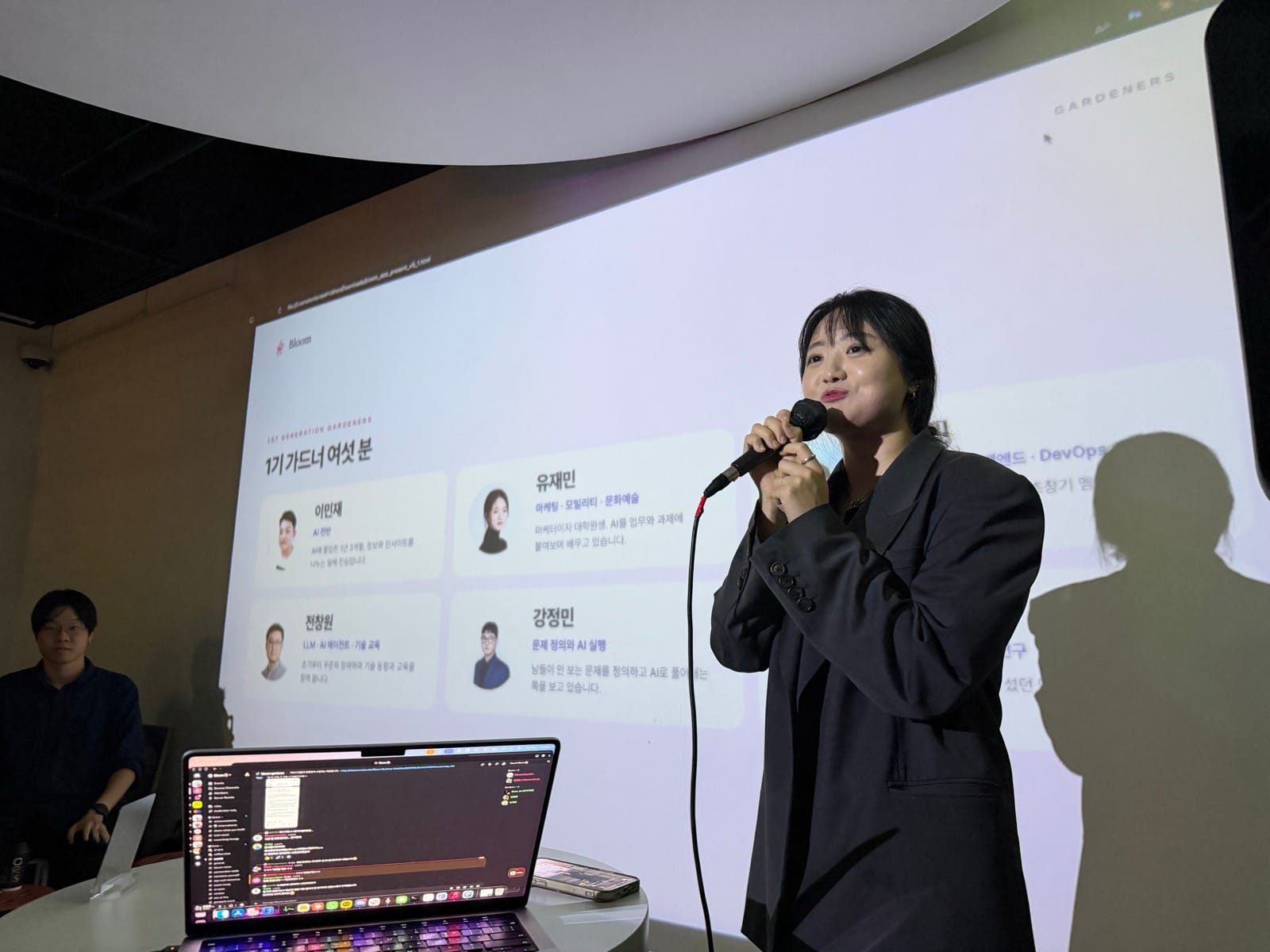
Wanting to give back what they got
Sangmin Lee opened by saying the thing in their hand should probably be a drink rather than coffee, and somehow they'd ended up standing there with a coffee cup. A software engineer six years in, they've had a good part of their career made inside communities, and the scouting offer that moved them came through one.
Over six years I've gotten so much through communities. I got so much from good colleagues and seniors around me that I decided it was my turn to share, and that started with talks.
They're working hard to be useful to members of other communities too, and they applied as a gardener because they want to share what they can at a new one. Going forward they plan to research what we all need to grow together and bring that back here.
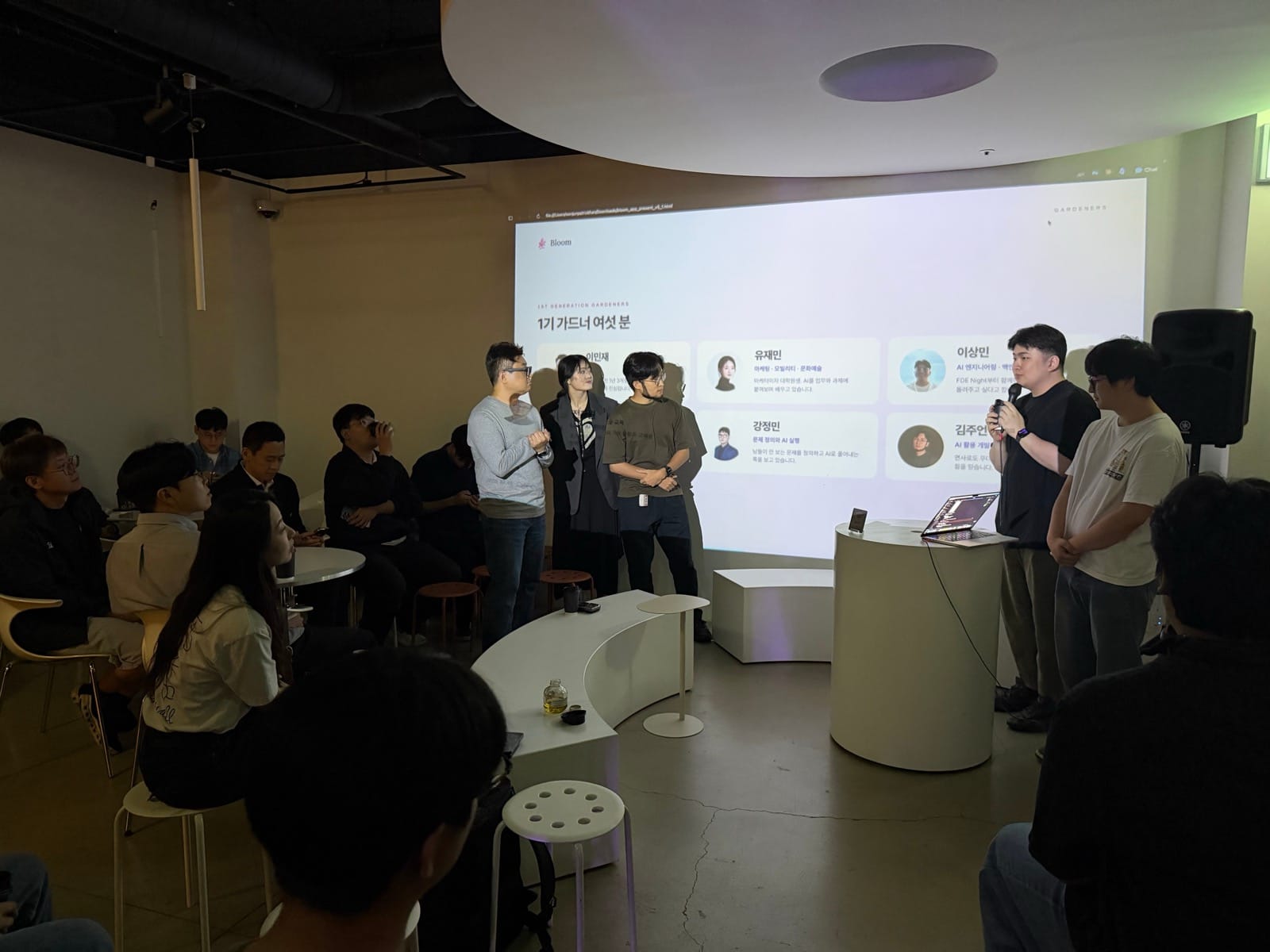
Changwon Jeon counted it up in the Luma app and found they'd been to Bloom 27 times, so they figured they got picked for the volume rather than anything special. They're an AI researcher at a systems integrator, where research is often solitary work and the people around them are always the same, so they started going out to get a different field of view. At the after-party for some event they got talking to me, and by their telling that's where they got hooked.
When the gardener call went out I thought somebody else would do it well, and then Wonjun suddenly asked, "You're not going to?" and I thought, "Do I have to?" and here I am.
Changwon has met everyone at Bloom from people at sister companies in their own group to people they'd never otherwise cross paths with, and they said they'd rather help with things worth sharing and helping with than chase results, standing in the middle so people connect better.
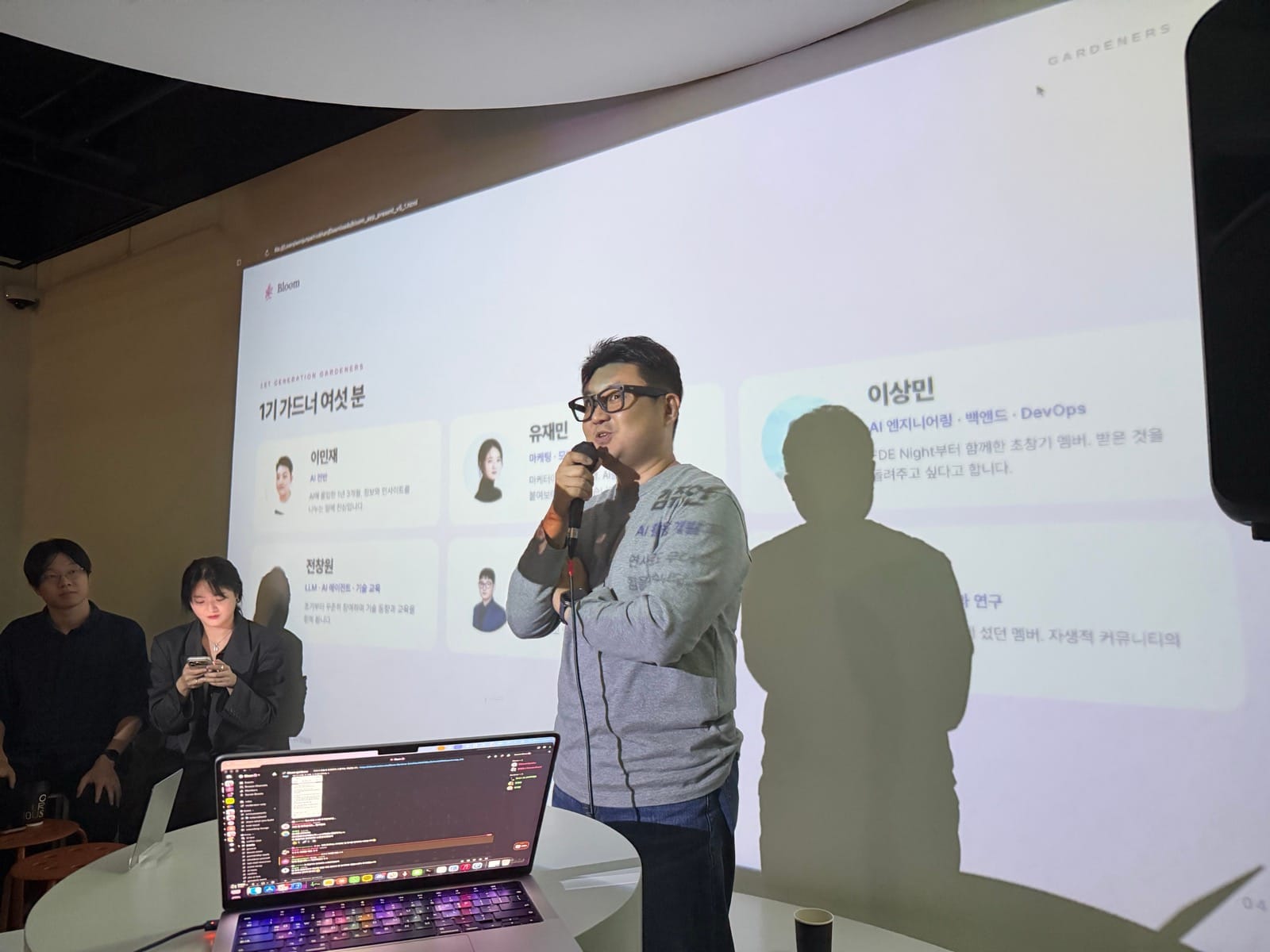
Jueon Kim, who works on DevOps and backend at Toss and did MLOps before that, first came to Bloom wanting to meet people interested in AI. What they found was that Bloom is a rare thing compared to other communities, because the operation actually runs and the sessions are far better than paid ones despite being free. They'd been wanting to watch how the organizers work, learn from it and help, and the gardener opening gave them the way in.
We're on the edge of AGI, so everybody's wrestling with what to do once the moat around features is gone.
Their own answer to that is a YouTube-style media channel carrying their vision, which they're building now.
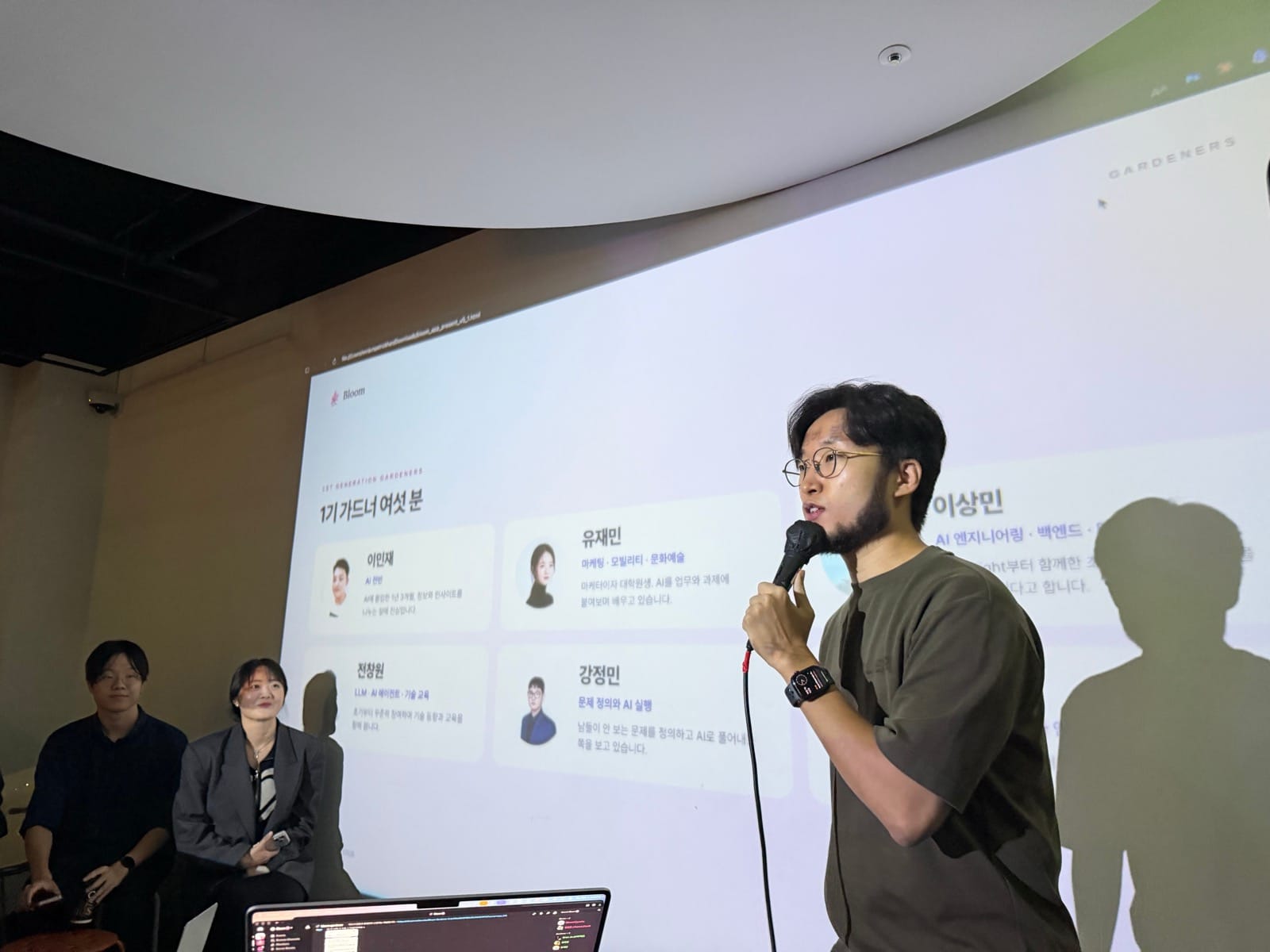
Real names or handles decides what kind of community you become
After the introductions we opened it up for questions about the app and the community, and the first one was about names. The person asking whether we'd run the app on real names or let people type whatever they wanted said they'd used their real name, and pointed out we could start from identity verification.
Whether people use handles or real names, the character of the community changes a lot right from there.
That a name can connect to identity was something I hadn't thought about. We haven't added identity verification. So far not one person has signed up under a handle. I asked back whether they meant the phone-based PASS or Kakao verification flow, and said we'd think it over.
Someone who'd signed up the moment their invite arrived said every community has its own character and draws the people who fit it, so they had no particular opinion on direction, then raised what happened when they signed up for next week's Lovable event.
I applied on Luma and got approved, and since you asked me to test the features I also signed up for next week's event in the app, and confirmations came from both sides.
Their suggestion was that with some people on the app, some on Discord and some on Luma, whichever door they come through should funnel into one channel automatically. It ties right back into the question about names. Blocking duplicate registrations means the email on Luma has to match the one in the app, and people can sign up with a different address, so agreeing on that up front would carry over people who registered elsewhere and keep duplicates from happening.
We can't drop Luma entirely, but I've been wanting to pull things into the app where we can, so it was welcome feature feedback. Someone else chipped in that Luma has an API, so it shouldn't be hard. There is one. Matching emails makes cross-checking work, so I said we'd reach out to anyone double-registered and sort it out. This is the kind of thing I plan to knock out with AI.
Discord stays, and the app grows into an offline LinkedIn
Asked what happens to Discord once the app is running, I said it stays as it is for now. Anthropic, OpenAI and Lovable all run Discords, and while I'd never used Discord myself and found it awkward at first, building our own Discord would be absurd no matter how good AI has gotten. From an event operations angle, we often co-host with companies like Higgsfield or Genspark and get credits from them. Announcing that kind of thing on Discord is far easier.
For now I'm thinking of the app as Luma plus Mixer plus a content archive, with DMs, first-degree connections like the ones in Remember, and QR check-in going in on top. If I'm being greedy, I want this app to become an offline LinkedIn. You only know whether someone fits you by meeting them, so after an event you'd pick in the app whether you want to keep seeing this person or whether that was enough. We're also thinking about a way to keep you from running into someone who wasn't a fit at the next event.
Members can open their own Mixers now
Every Bloom event and Mixer so far has been ours to open. From here you'll be able to open events and Mixers yourself in the app. If there's a topic you want to talk about or a place you want to gather, open a Mixer. It doesn't have to be about AI, so if you like board games, open a board game one.
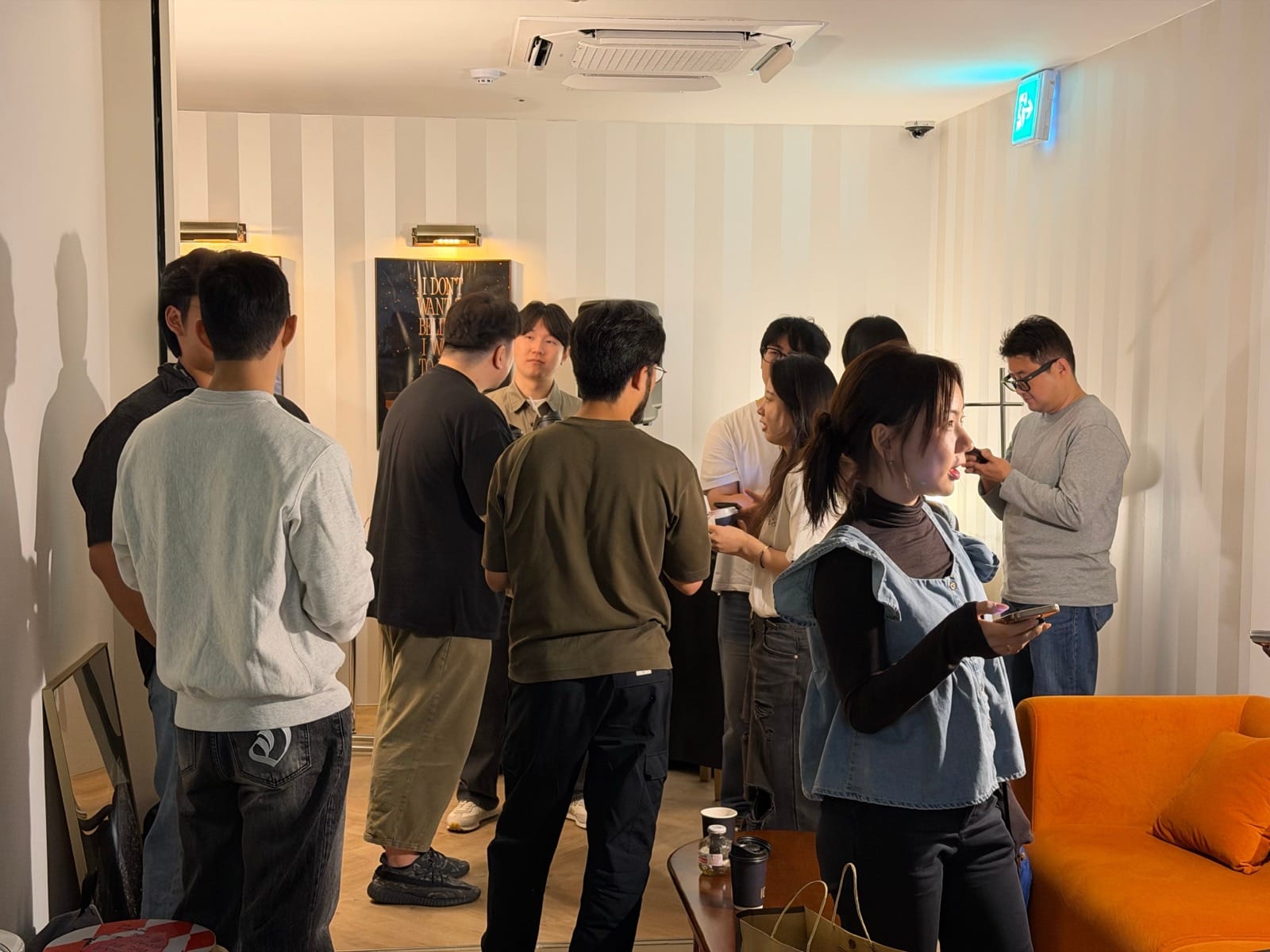
After I finished talking we turned the lights up, moved to the sofas in back and spent the rest of the night introducing ourselves and talking. Adding someone as a first-degree connection in the app lets you see their details. I suggested people who'd just met connect there. We'll fold in as much of what came up that night as we can before launch.
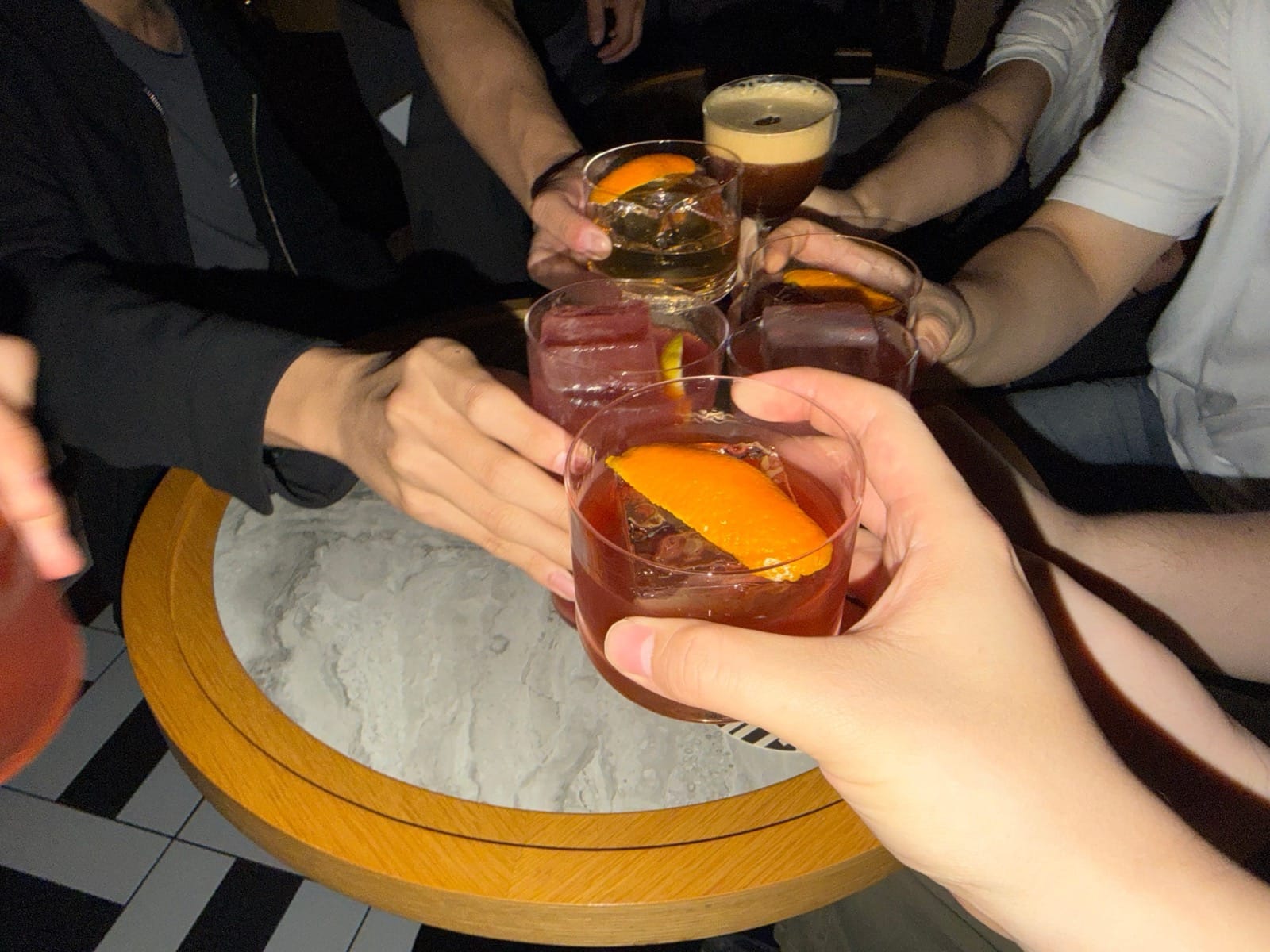
Join Bloom
Bloom builds offline rooms where people and technology meet. We run them in Seoul, and now beyond it.
- 💬 Discord community, where events are announced first
- ▶️ YouTube, full talks from past events
- 📸 Instagram, photos from our events
- 🎟️ Upcoming events