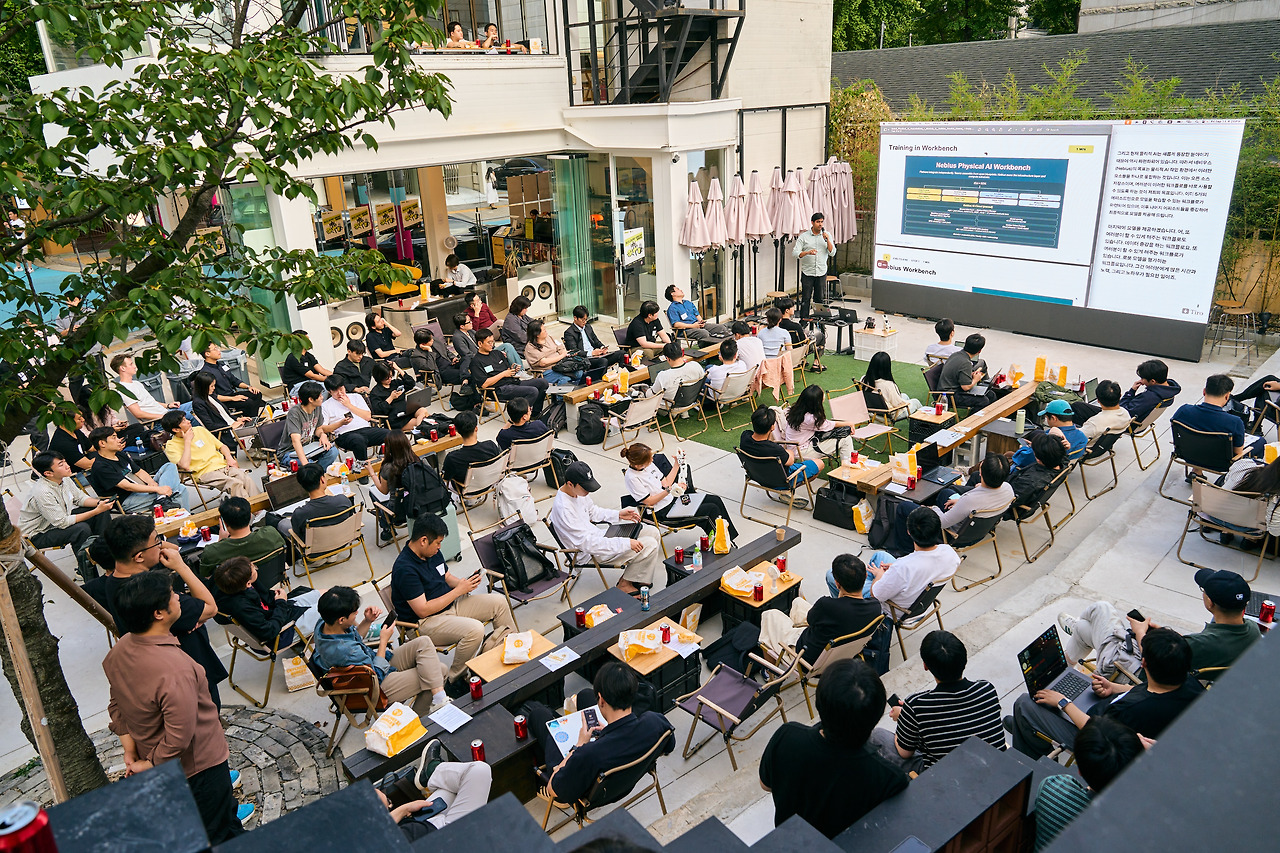
AI Slop vs. AI Assets
It started with a confession: I built hundreds of things and use none of them. Then a hundred people opened their laptops and practiced building assets instead of slop.

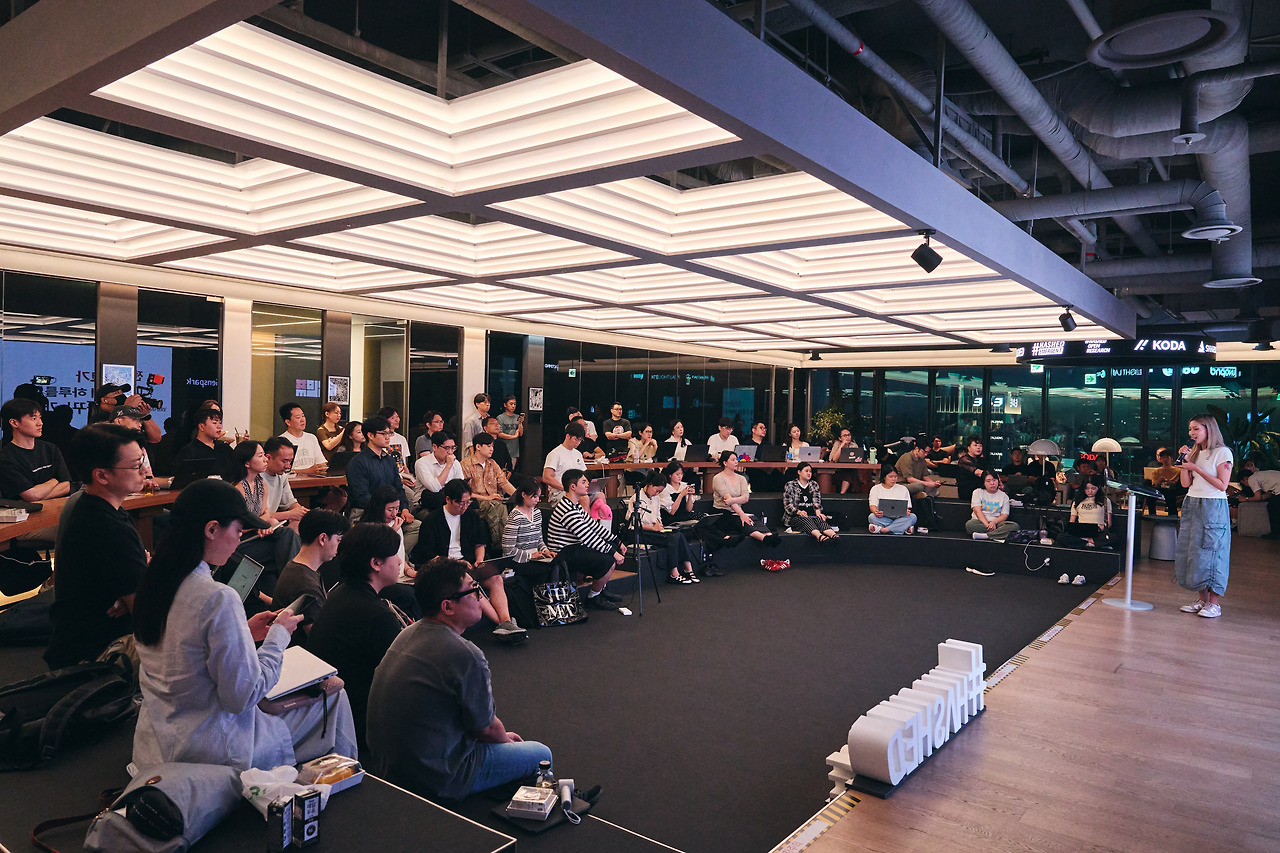
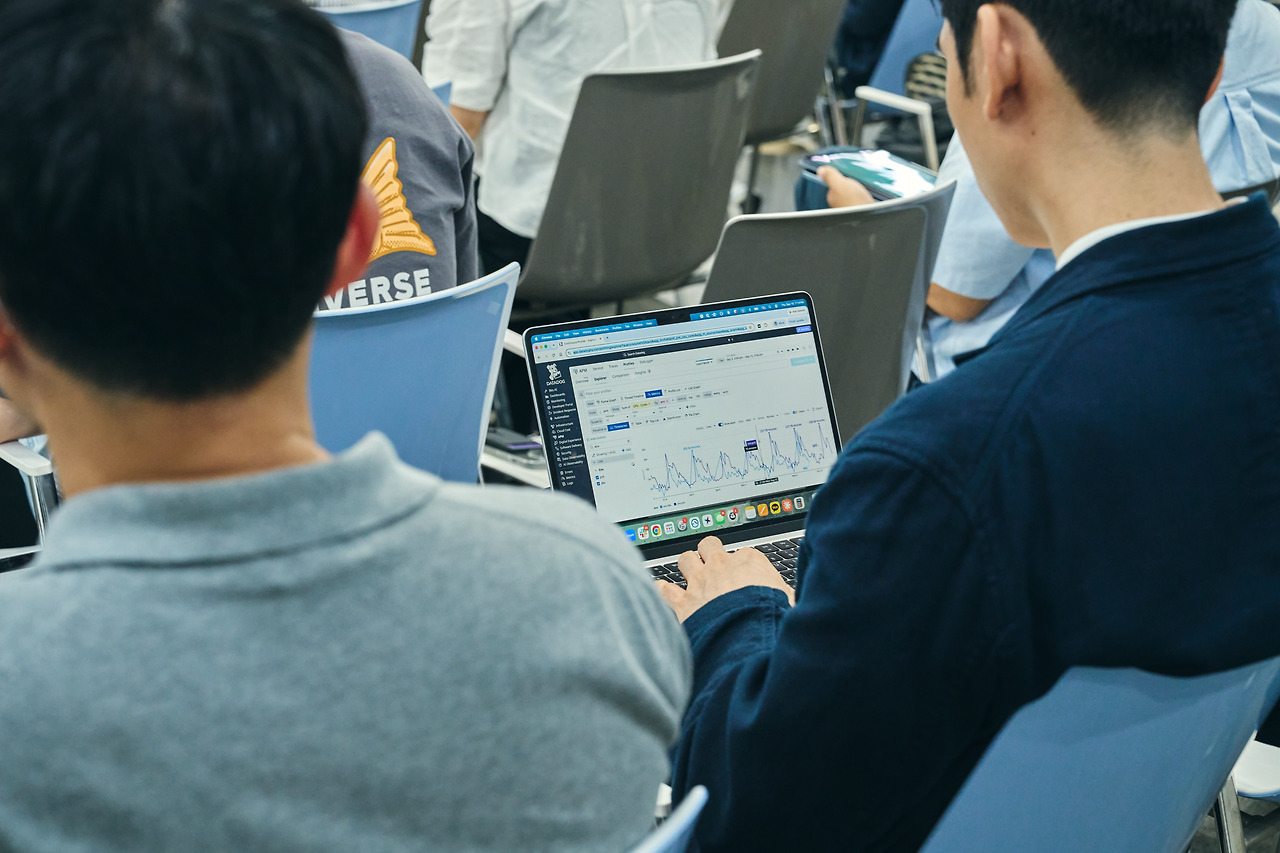
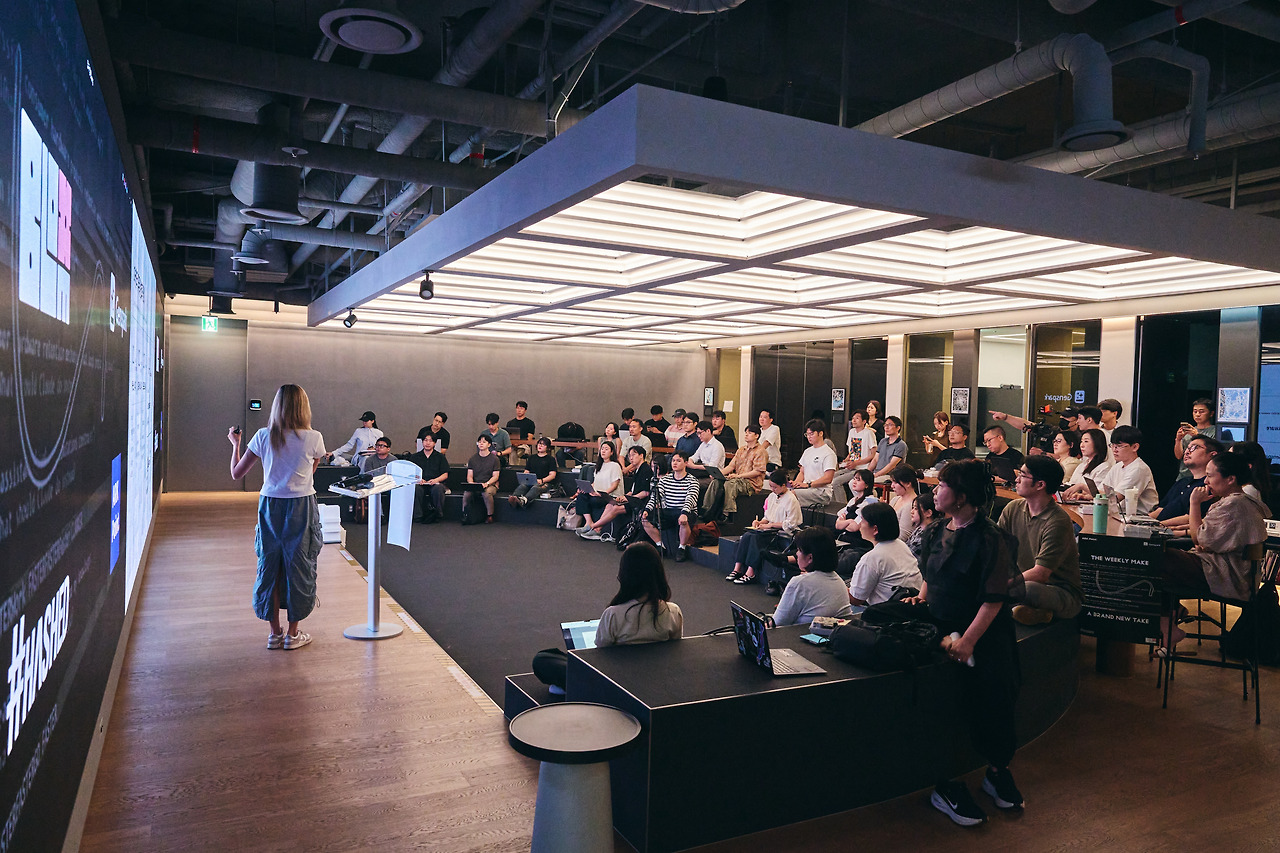
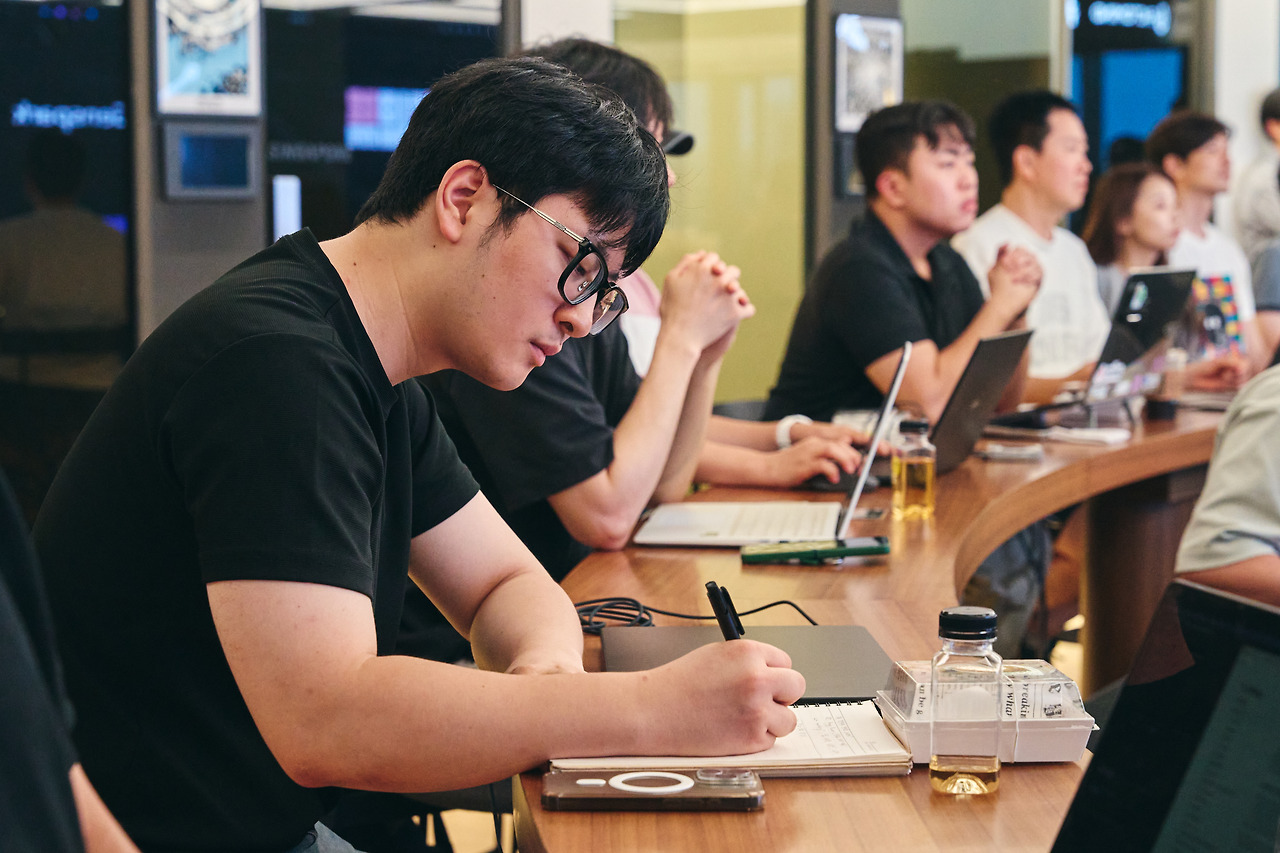
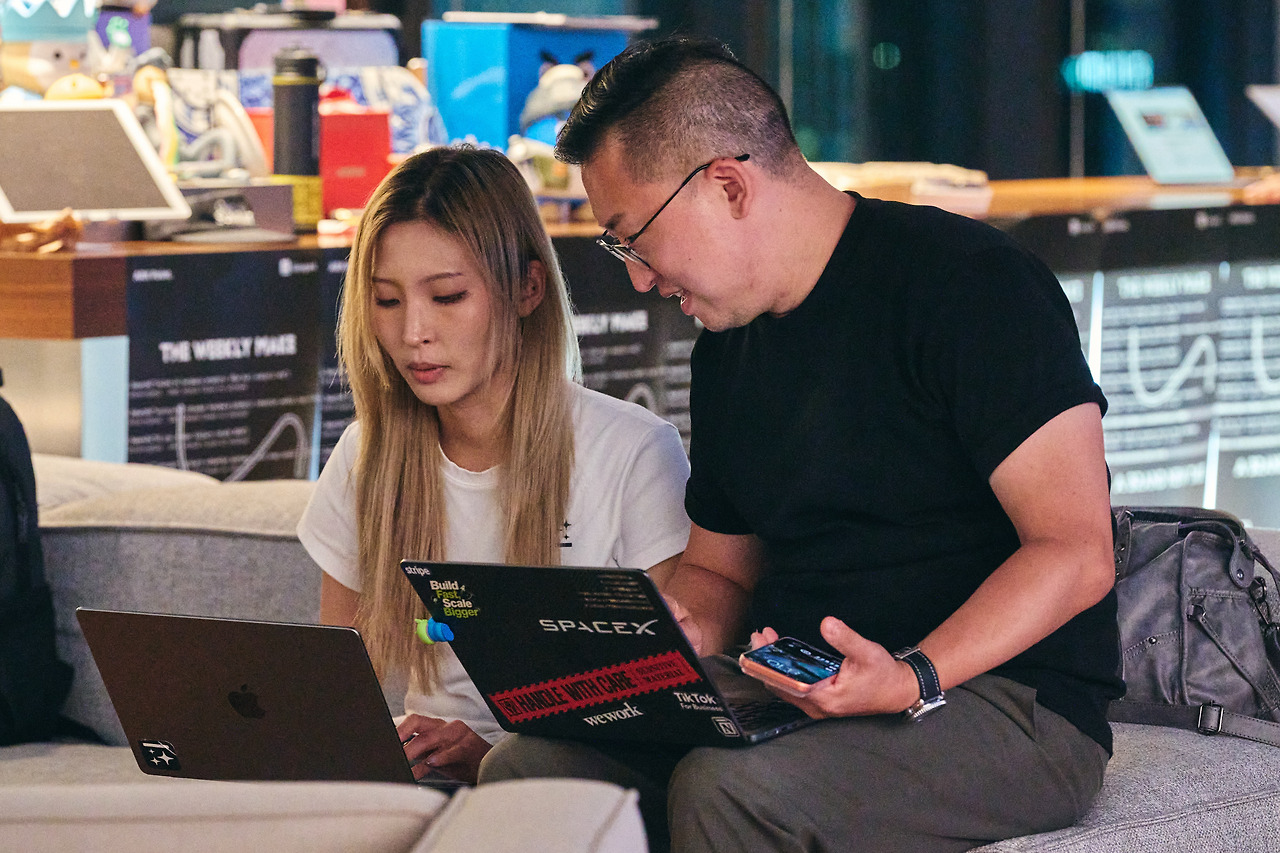
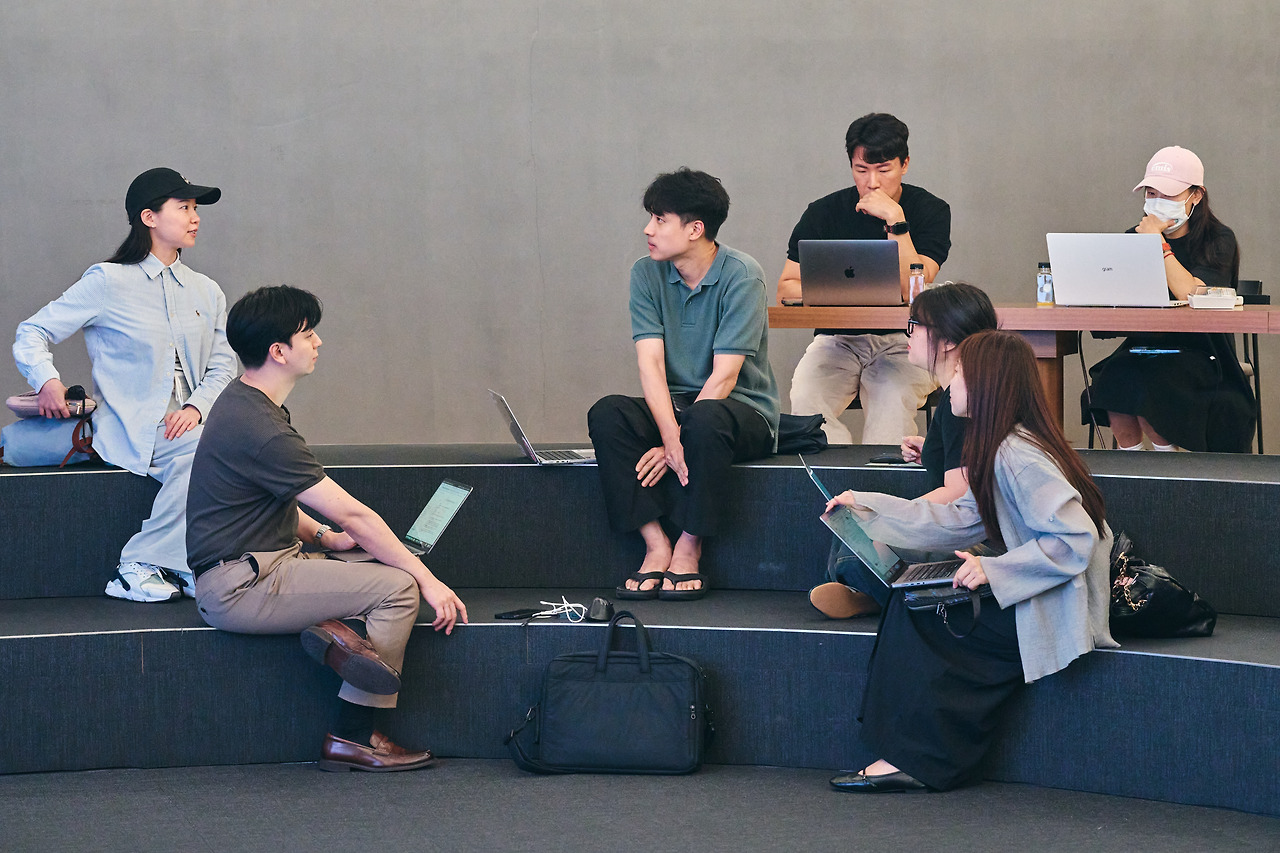
A hands-on workshop with Genspark. After two sessions, a hundred people opened their laptops: one hour of building, thirty minutes of passing results around the table, thirty minutes of sharing on Discord. Hashed sponsored the space.
🤝 Bloom × Genspark × Hashed
🎤 Taewan Oh (ARK Point) · Seoyeon Park (Genspark) · Seulgi Kang (Genspark)
🎟️ Event page
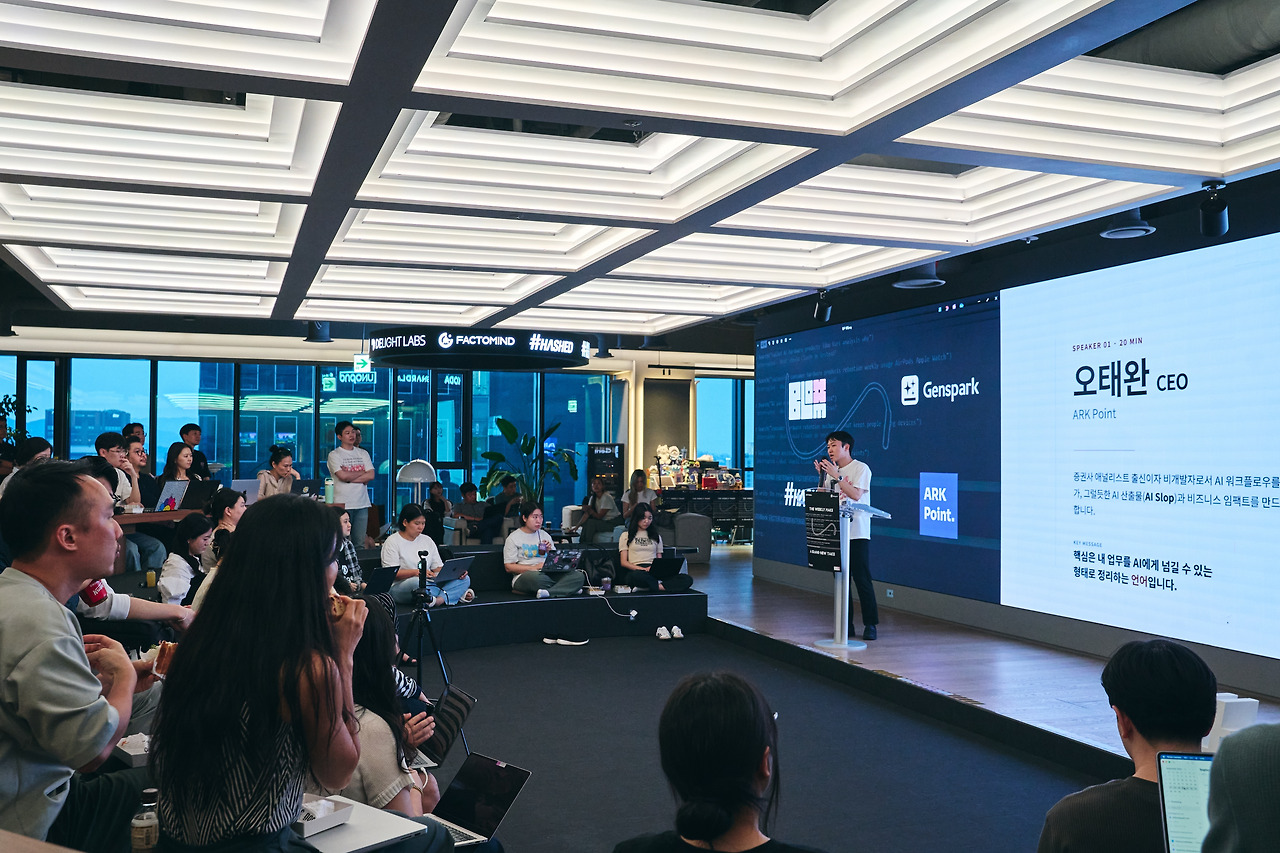
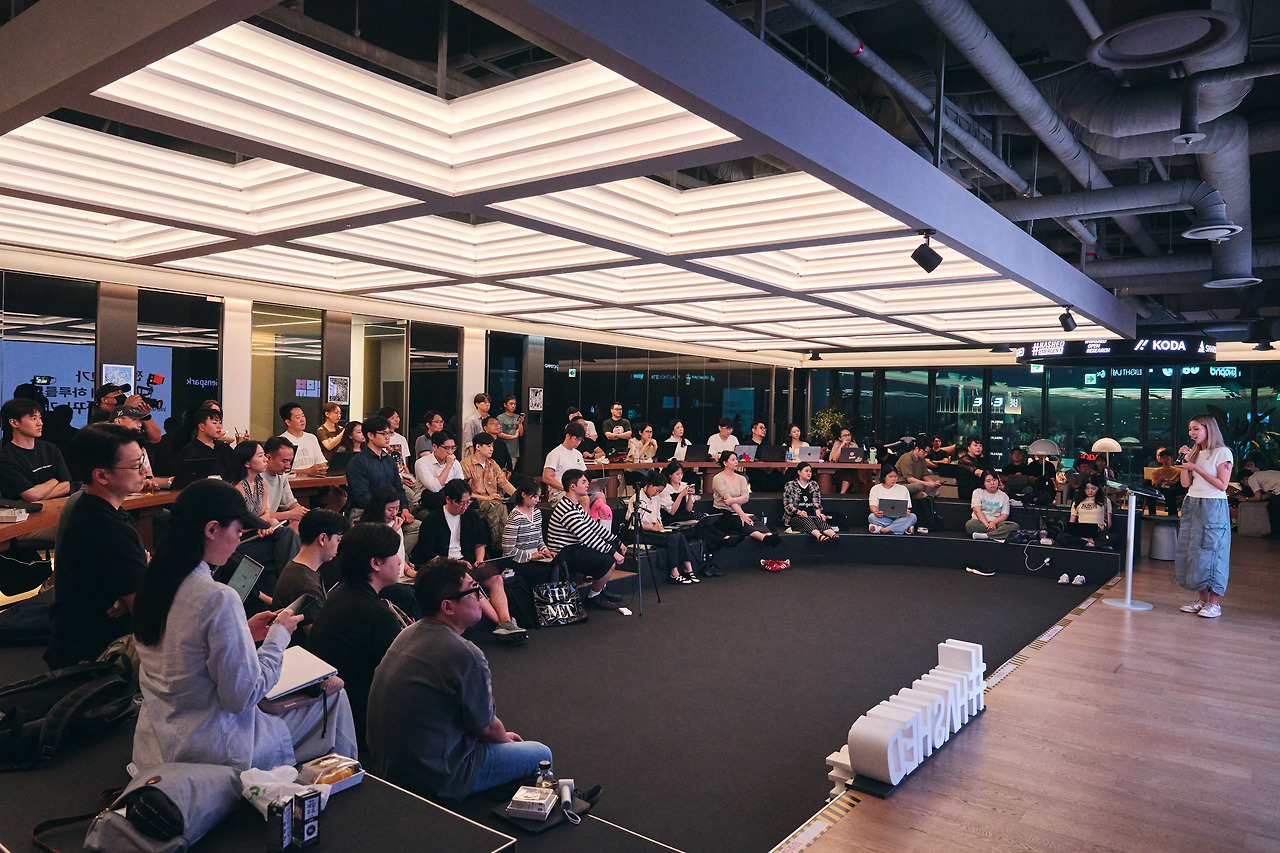
The day a non-engineer opened Claude Code
The opening speaker was Taewan Oh of ARK Point. He knew no code and did not know what the black terminal window was. One evening a colleague opened Claude Code for him and told him to type what he wanted. His first product was built on the spot. By the next day he was hooked, and he ended up pivoting his blockchain consulting firm into an AI native company where most early products are built by non-engineers and designers.
So what do I actually have left
Once he learned to build, he built everything. One project went viral and made the news. There was a parody restaurant guide, and more than ten apps. Then one day the question landed: I built hundreds of these, and honestly, I use none of them. That is when it became clear that AI output splits into slop and assets, and the two are different things.
Four marks of slop
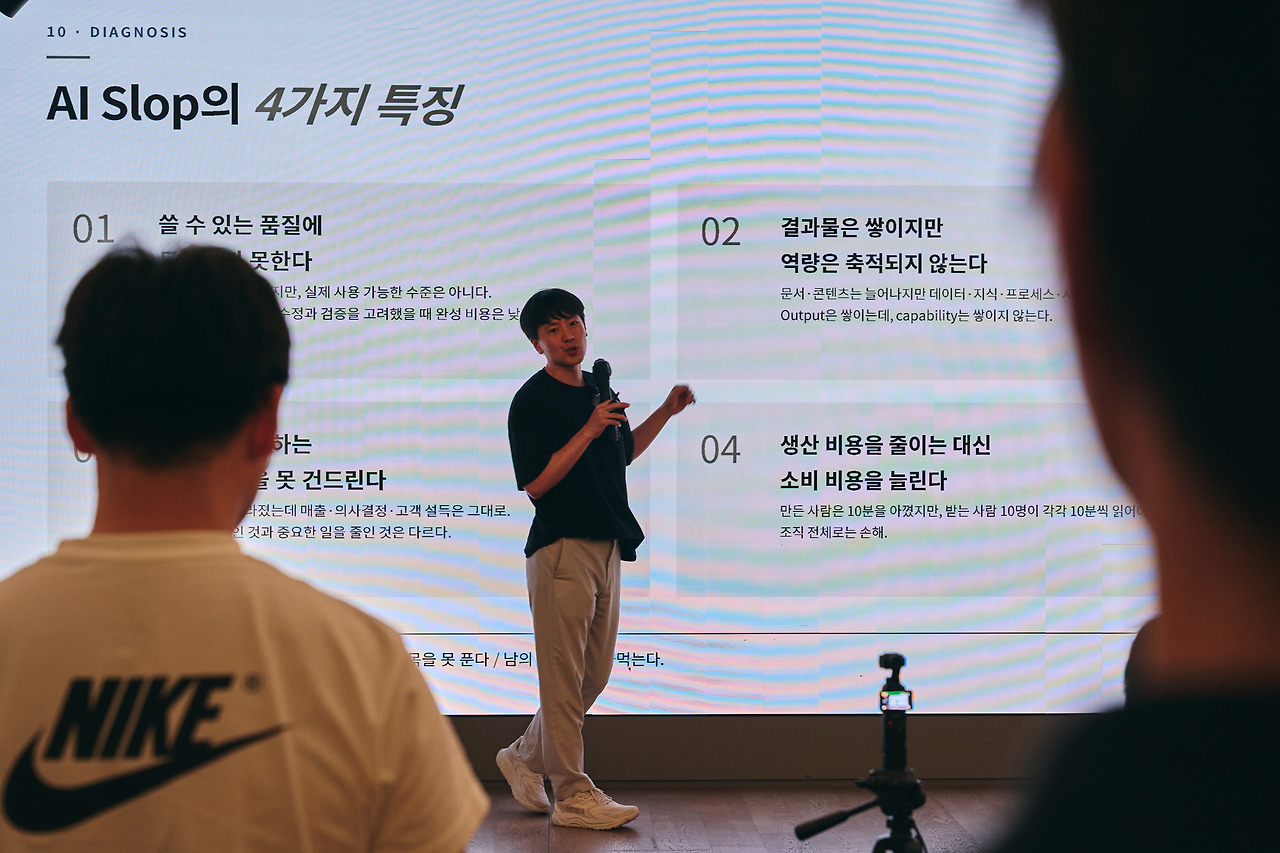
First, it never reaches usable quality: people start using things at 80 points, and slop sits at 70. Second, output pours out but skill does not accumulate, the way walking to work every day never makes you a sprinter. Third, it shifts the bottleneck instead of removing it: generate meeting notes in a minute without attending, and the burden moves to the ten people who must read them. Fourth, the workflow stays exactly the same.
Is a flyer with a QR code digital advertising?
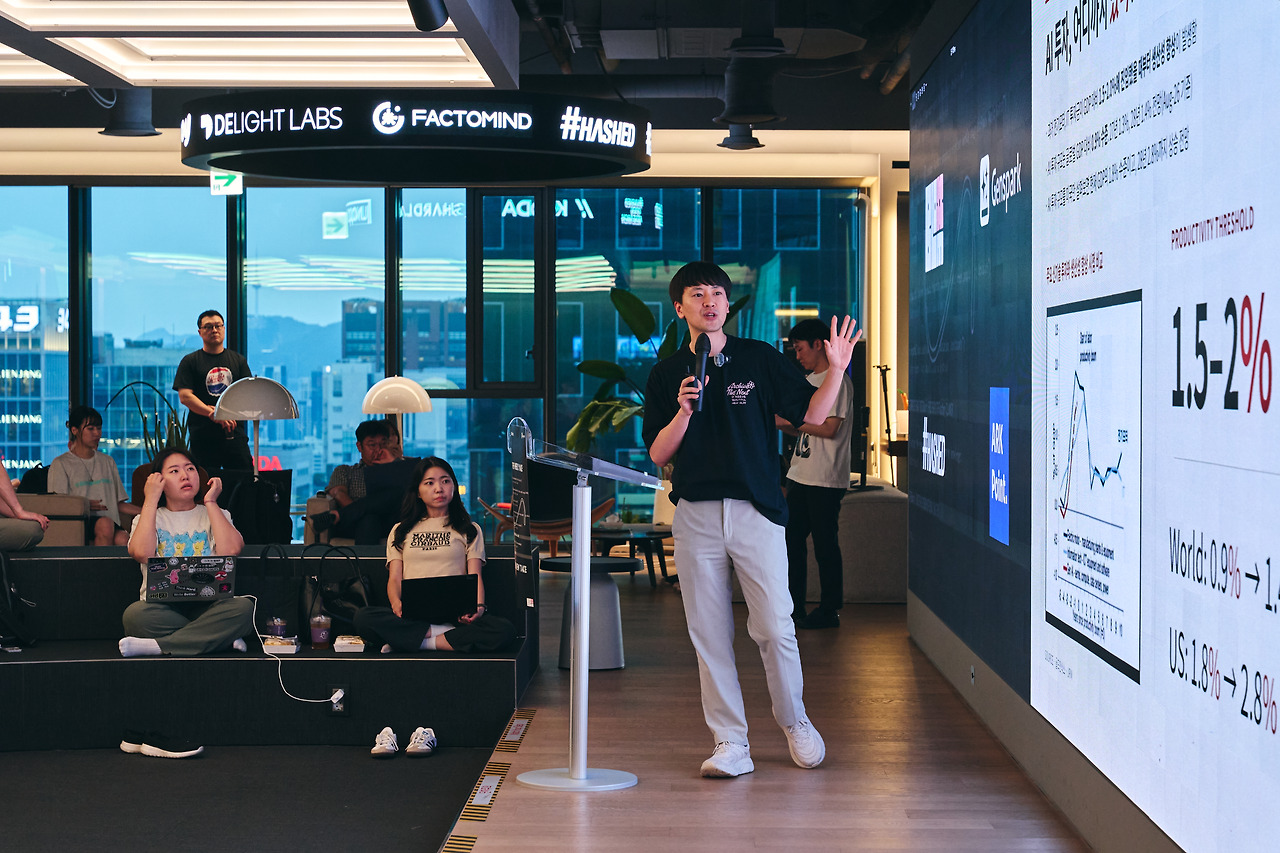
The analogy that stayed longest: a flyer company meets the internet and prints QR codes on its flyers. Is it now a digital advertising company? No. Digital advertising is a different grammar entirely, analyzing user data in real time and swapping banners on the fly, not papering a 200 meter radius. AI is the same choice. Stick a QR code on your existing structure, or redesign the business with this era as the premise.
Your own AI tutor
He shared one skill he actually keeps using. When a good article appears on LinkedIn, do not bookmark it, because nobody revisits bookmarks. Copy the link and run the skill, and a study document is generated in Notion: it fills in the background the article assumes, offers comparisons and alternatives, and over time compiles into a personal curriculum.
From learning tools to talking to them
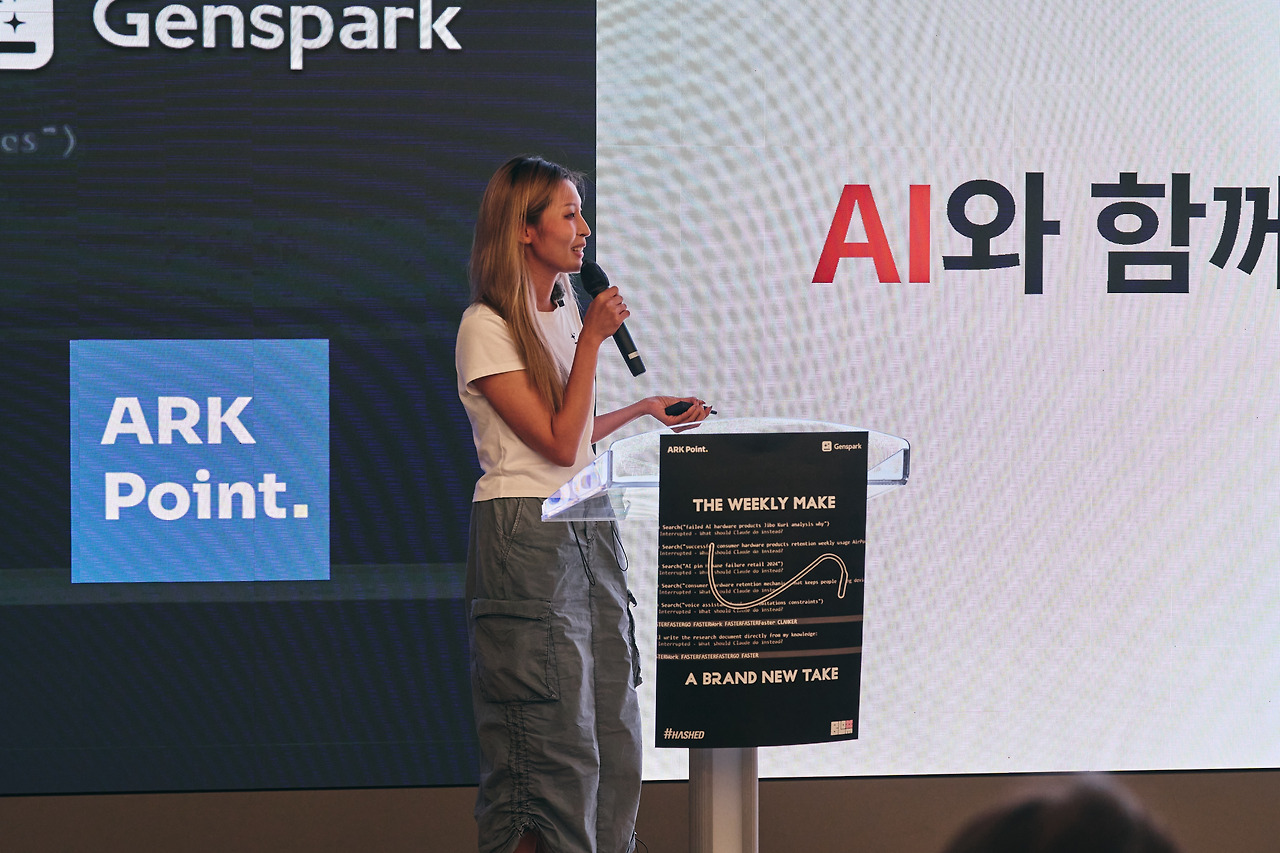
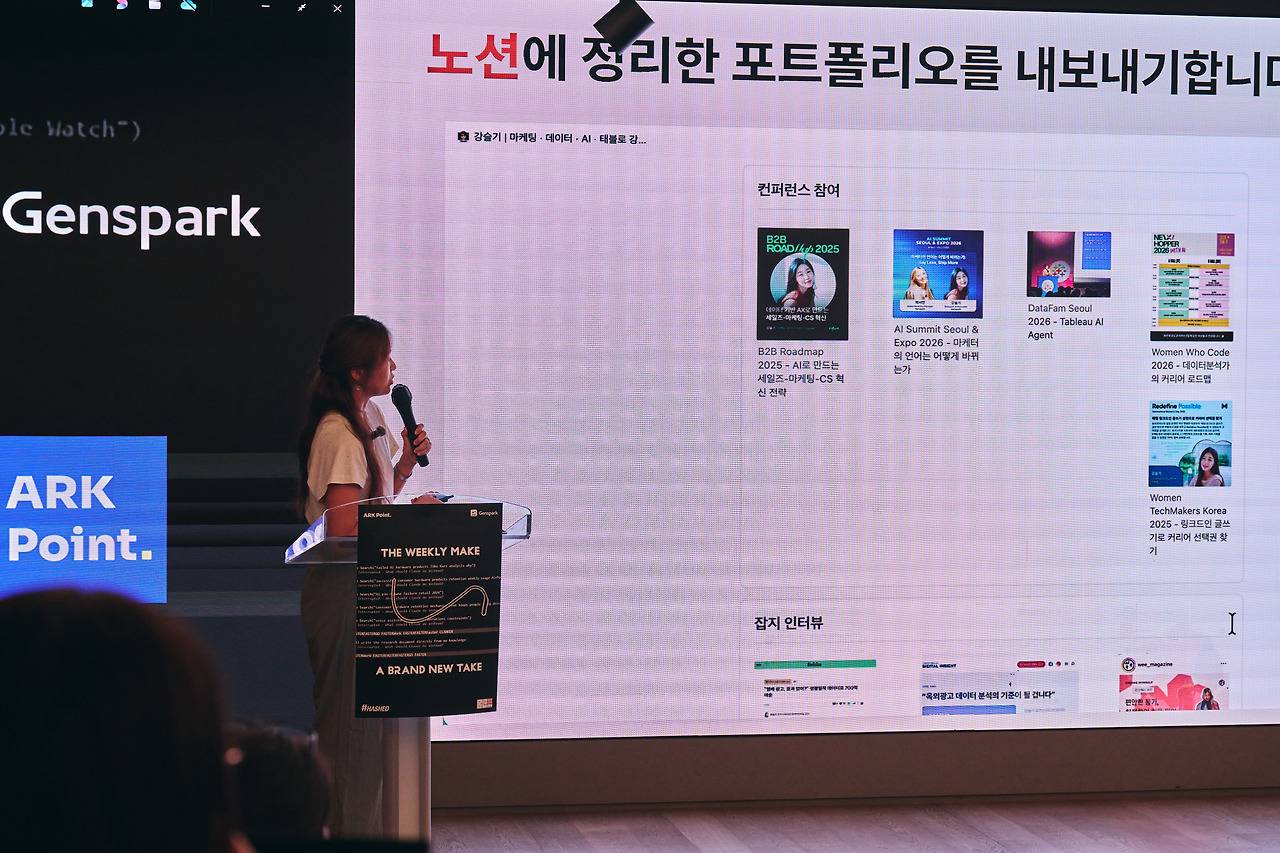
The second session came from Genspark: marketing manager Seoyeon Park and ambassador Seulgi Kang. The subtitle said it all. Say Less, Ship More. From the era of learning tools to the era of talking to them. For years a marketer was someone who learned tools, design tools, performance tools, analytics tools. Now the job is saying precisely what you want.
Save the brand page, all of it
The practical tip was concrete. Right-click a brand page and save it, HTML and images together, then register that folder as a design system. Ask AI for one flat image and you cannot verify it followed the brand guide. Have it compose text and logo over a background, like front-end design, and the output respects the guide. The two versions shown side by side were clearly different.
It asks you questions back
The most striking part of the demo was not the output but the process. Instead of producing immediately, it asks follow-up questions: what goes in the sub copy, what is the visual direction. You have to answer to get the full result. It sounded less like a production tool and more like a tool that forces you to organize your thinking.
What remains for the marketer
Five things, she concluded: a brand guide that does not waver, a sense of direction, the conviction to answer the AI when it asks, an eye to judge the output, and execution. She admitted she automated a card news pipeline and never posted a single one to Instagram, which got the biggest laugh. It connected exactly to the first session: the easier making becomes, the more judgment and execution are what remain.
Watching from the back
After the sessions, a hundred people built for an hour. I stayed at the back the whole time. The community ran without me holding a microphone. As the opening put it, fear of AI does not belong to engineers alone. Our community is 30 percent engineers and 70 percent everyone else, and all three people on stage were non-engineers: an analyst turned CEO, a marketing manager, an ambassador from advertising. It was an evening where they taught a hundred non-engineers how to build.
Photos from the event

Join Bloom
Bloom builds offline rooms where people and technology meet. We run them in Seoul, and now beyond it.
- 💬 Discord community, where events are announced first
- ▶️ YouTube, full talks from past events
- 📸 Instagram, photos from our events
- 🎟️ Upcoming events