
AI for Growth Marketing: Problem Definition Wins

The battleground of AI-era marketing is not learning new features. It is the ability to define problems and explain them precisely to AI.
🤝 Bloom × AB180 × Reply Marketing
🎤 Sungpil Nam (CEO, AB180) · Jehim Choi (Reply Marketing)
The person who defines the problem wins, not the person who knows the feature
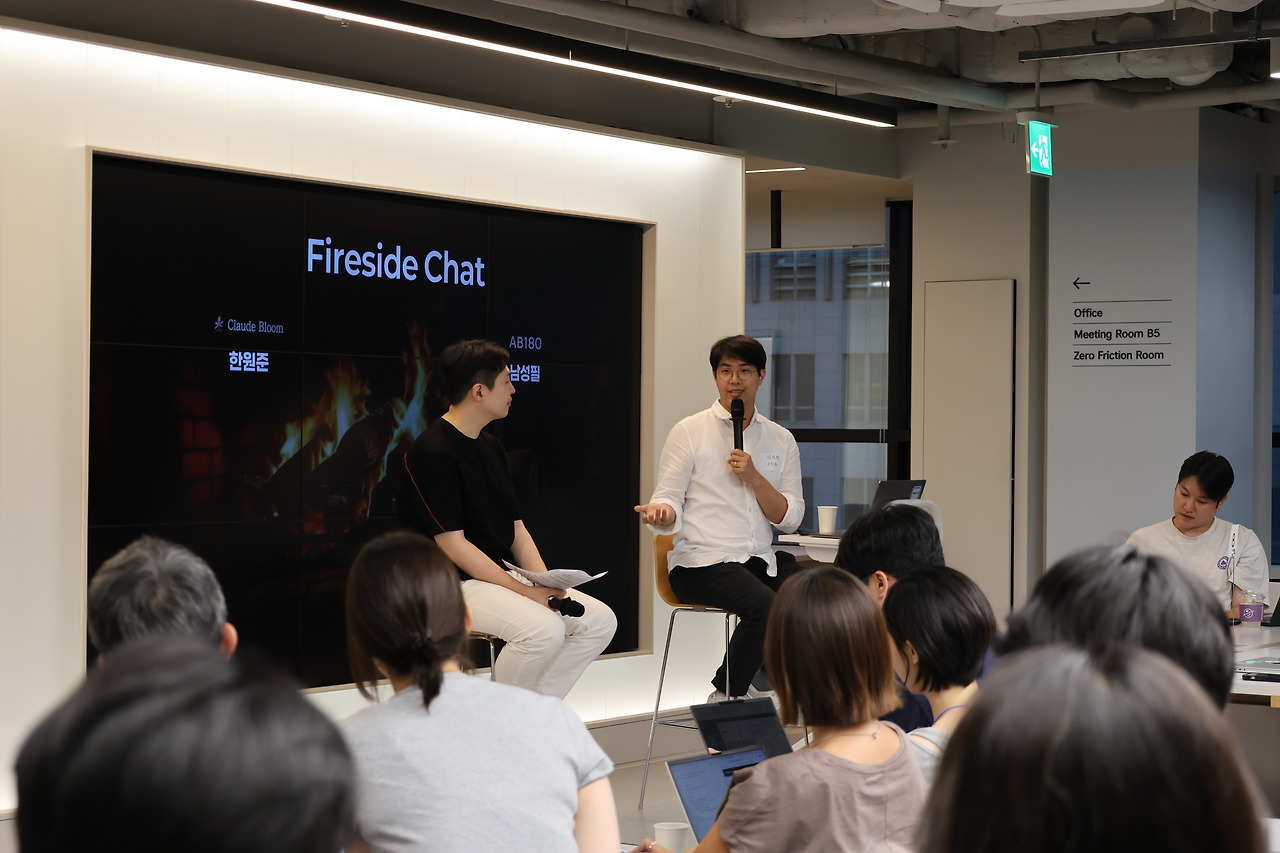
On June 18, Bloom, AB180, and Reply Marketing gathered at the AB180 office in Seolleung for AI for Growth Marketing. Where the previous sales edition started from whether AI can replace people, this marketing edition began from the opposite question: marketing has so much AI can do, so how far does it extend?
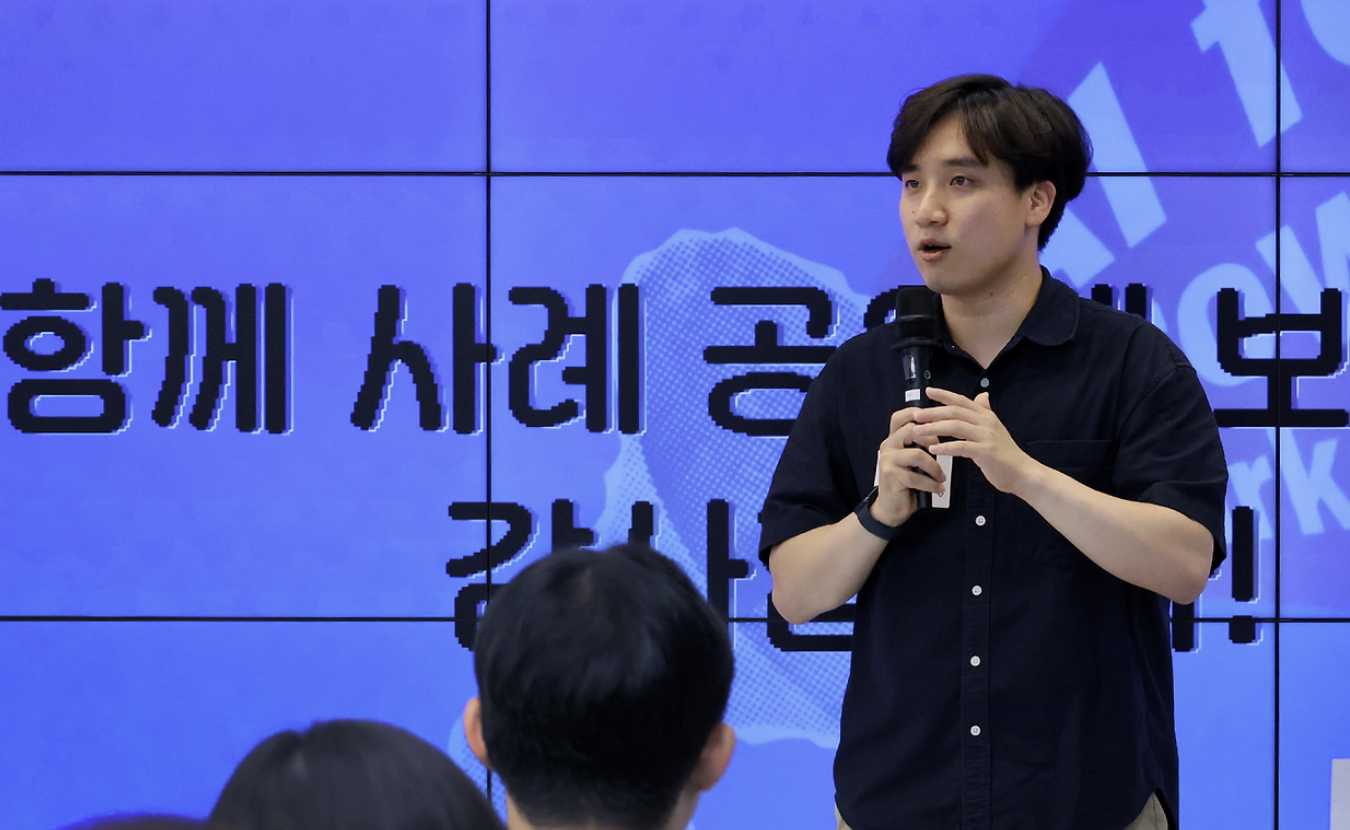
Jehim Choi of Reply Marketing opened with a premise: this is a field where AI answers age fast. After winning first place at the OpenAI Codex Skillathon he received many talk requests and declined most, because any feature he demonstrated would be obsolete within a week. So instead of demos, he shared which real problems he solved and how. His title was: so, what is the problem? An executive at his first job asked that question five times for every reported issue, and from it he drew the conclusion that the most important AI-era skill is defining a problem and explaining it well to AI.
To support the point he quizzed the audience: of five winners at a Claude Code hackathon, how many were non-developers? All five, and first place was a doctor. A developer building a medical dashboard must learn medicine from scratch; the doctor already carried years of clinical data and tacit knowledge and could solve the problem immediately. Real competitiveness in the AI era is domain knowledge, and the person who converts it into problem definition produces the results.
Three ways to plant AI into work: vibe coding, automation, skills
Choi organizes his own AI use into three categories. Vibe coding turns what used to live in spreadsheets into a web page or app. Automation covers periodic work that runs itself on schedule. Skills cover repetitive work where the same input must produce the same output.
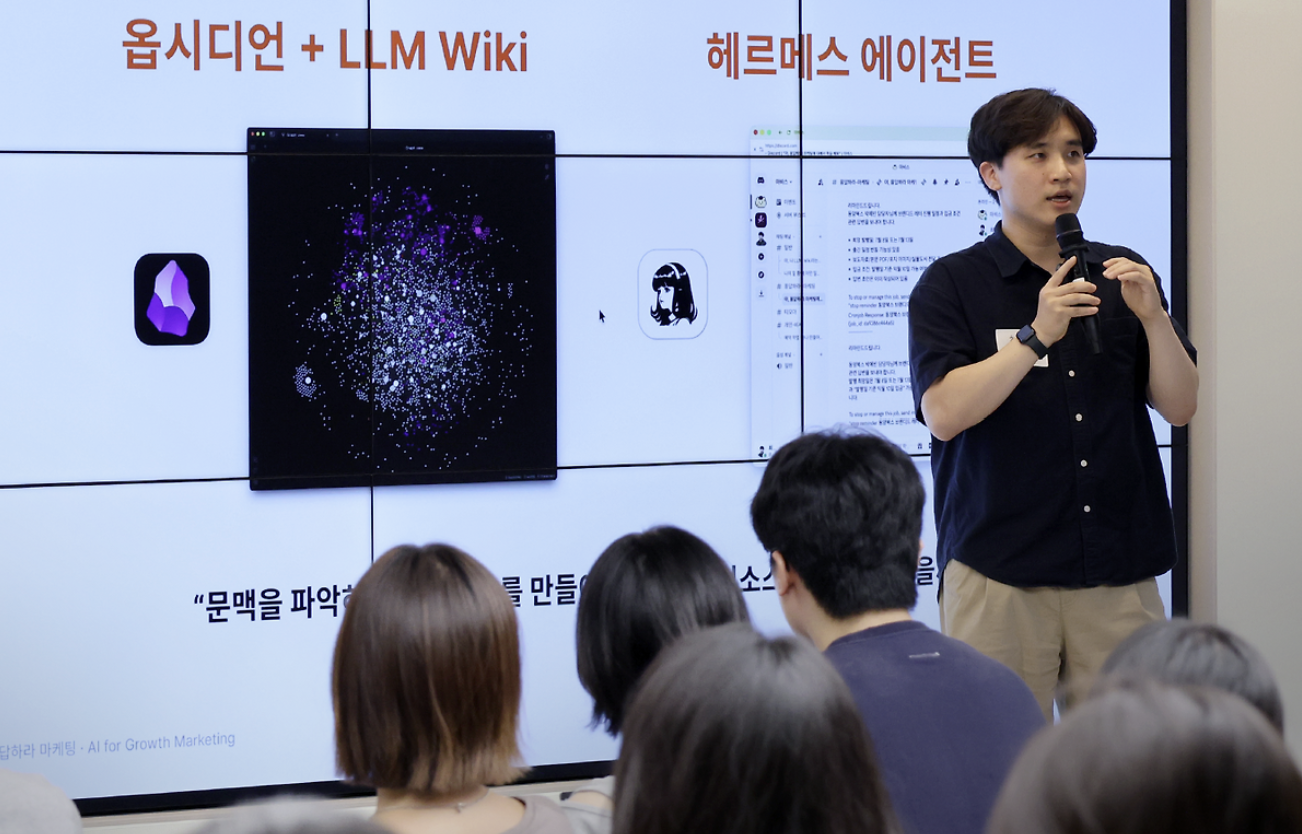
The cases were concrete. Store cashback inquiries, paid three months after contract, used to mean searching business names in a spreadsheet one at a time; now a tool shows all promotions for a store the moment its name is entered. Competitor monitoring, a marketer's weekly staple of manually capturing competitor Instagram accounts every Monday, became a crawler that mails posts and engagement metrics automatically, freeing operating time for planning. His Skillathon-winning entry generates a web report for store owners from order data, and what won the room over was not flashiness but immediate usability.
He was honest about the limits. AI-generated images still fail the in-house designer bar, so they cannot go straight to brand social accounts, and automated work does not disappear; it needs maintenance every time the standard changes. That is why he applies AI first to areas like government support program content, where information matters and image dependence is low. The core conclusion returns: separate what to delegate to AI from what people keep, and define the delegated problems precisely.
From philosophy student to martech founder, and the MMP partnerships
The fireside centerpiece was the journey of AB180 CEO Sungpil Nam. Planning to study French philosophy, he decided during military service to do something more practical, discovered marketing through a Google keyword marketing competition he entered on a whim, researched keywords in five languages, tuned landing page quality scores, tested relentlessly, and finished as the unofficial national number one. His conviction that performance marketing rewards effort with room to improve was formed there.

Airbridge, the AB180 product, did not start as what it is now. It began as a search engine, pivoted to a deep-linking tool on customer demand, then pivoted again to ad attribution. With Baedal Minjok and eBay Korea as the first paying customers, it tracked 30 million devices and built big data and machine learning muscle fast. To secure data collection stability on old devices, the team combed the Yongsan electronics market buying phones that had never been OS-updated, a story that shows where early product completeness comes from.
The MMP partnerships with Meta, Google, and TikTok took three and a half years and over a hundred meetings, because advertising identifiers are sensitive pseudonymous data and the company had to prove why it deserved them across security, technology, and growth. AB180 became one of only seven partners worldwide and the only MMP partner headquartered in Asia. The decision to also distribute Braze and Amplitude in Korea while growing its own product deserves note: it matched the market shift from acquisition to retention and repeat purchase, grounded in the judgment that digital growth never comes from a single element.
SaaS does not die, it differentiates
What happens to SaaS when agents build and customize software themselves, the so-called SaaS-pocalypse? Nam sees differentiation, not death. The essence of software is producing results, and the road forks: evolve into the agent that produces the result, or become the infrastructure that agent uses.
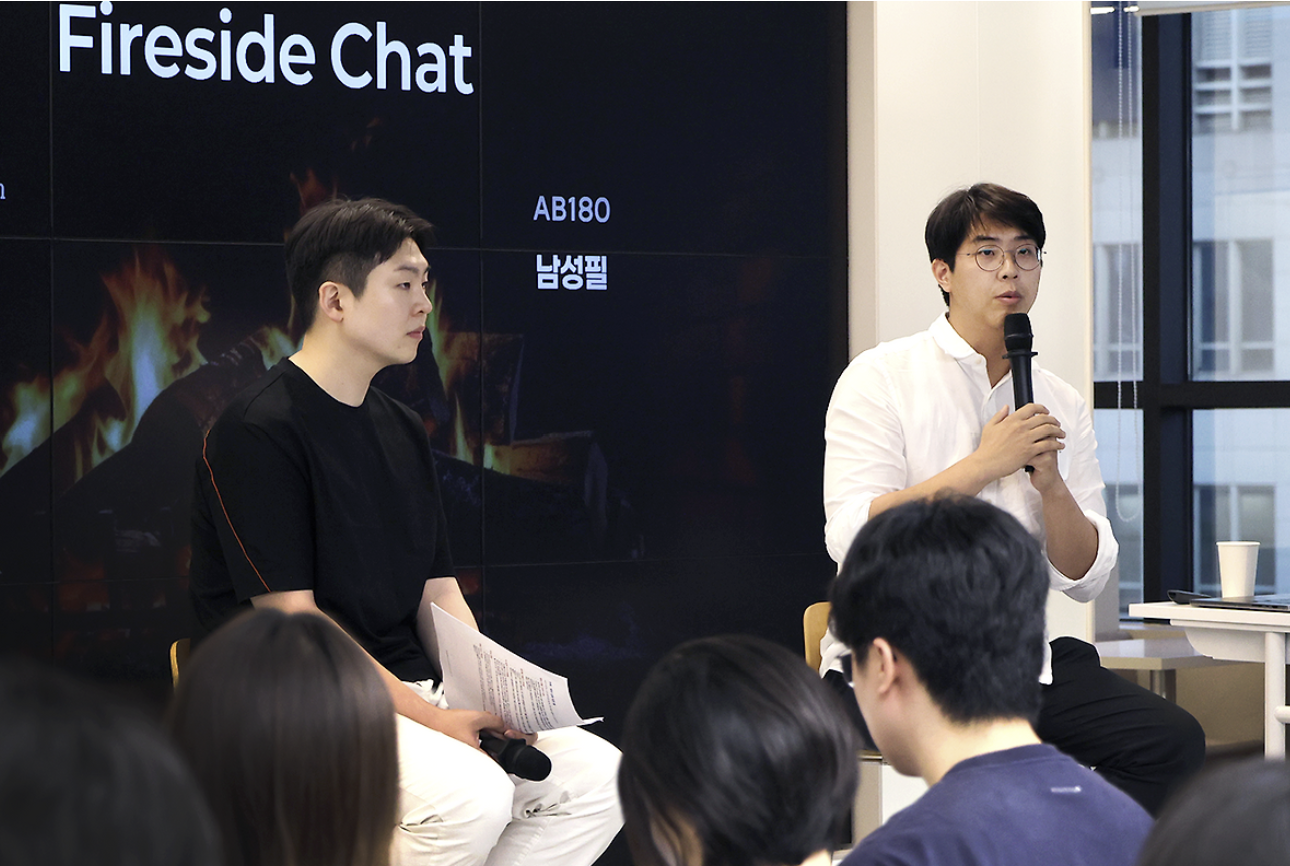
His analogy was the robot kitchen. A frying robot still needs a fryer, and bolting the fryer onto the robot is inefficient. Instead, the fryer signals the robot when cooking is done, and the handle made for human hands becomes a shape robots grip well. That interface is the CLI or MCP: the same work, communicated in a form agents can use. So software must strengthen its infrastructure properties while also producing results as an agent. Software used directly by people may shrink, and software used by agents can grow larger than ever.
His framing of AI marketing was practical too. Growth hacking is small input, large output, and that is exactly what people hope AI marketing will be; the gap opens through whoever learns faster and applies more relentlessly. The same game that D2C commerce companies played in early Facebook ads, grinding creative, copy, and hooks to maximize a technical edge, is running now in AI, in ad creative, campaign interpretation, and SEO alike.
Ninety percent of the day with AI: clarity and organizational assets
Nam calls AB180 a company serious about AI, starting with himself at ninety percent of working hours spent with AI. The company website, once built in Webflow, was fully rebuilt with AI; designers and marketers learned Codex together and their cumulative pull requests passed one thousand; and the internal agent connected to the knowledge base, Slack, GitHub, and Jira now takes 400 to 500 queries a day.

From the trial and error he extracted two principles. First, clarity: AI performs poorly on unclear requirements, so throw out your first draft of an idea and then make the AI interview you until it becomes clear; the more you define the standard of clarity, the better the output. Second, organizational assets: when everyone builds personal skills, synergy eventually caps out. Beyond personal productivity, find the common denominators, productize them into assets the organization can trust, and keep developing them.
That view extends into his maturity ladder for AX: using chatbots on the web, moving to coding tools for agentic work, turning daily workflows into skills, productizing the common parts of those skills into organizational assets, and reinforcing the assets with context engineering to orchestrate ever more APIs. Do you stop at being personally good, or does it become an organizational asset creating value across more cases? That is the difference in companies that do AX well.
From the roundtables
After the fireside, marketers from many companies shared working views. The most repeated conclusion: the AI-era marketing game is won on problem definition and insight discovery, not execution. Marketers are shifting from doing to designing operations and automation, becoming orchestrators who cross brand, performance, operations, and PM. And since AI helps with data and execution while purchases are made by human emotion, the talent that shines will be people who use AI well on top of understanding people.
What companies can take away
Four things, in working language. One, hire and grow problem-definers: domain knowledge converted into precise problem statements beats feature knowledge. Two, plant AI in three forms: vibe-coded tools, scheduled automation, and reusable skills, each maintained as standards change. Three, make clarity a process: let AI interview you until requirements are unambiguous. Four, turn personal skills into organizational assets, and reinforce them with context engineering.
FAQ
What matters most in AI-era marketing? Defining problems and explaining them precisely to AI. Features age within weeks; problem definition compounds.
What happens to SaaS in the agent era? It differentiates: software either becomes the agent that produces results or the infrastructure agents use, communicating through interfaces like CLI and MCP.
How does AB180 judge AX maturity? By whether AI use progresses from chatbots to agentic tools to skills, and finally to productized organizational assets strengthened by context engineering.
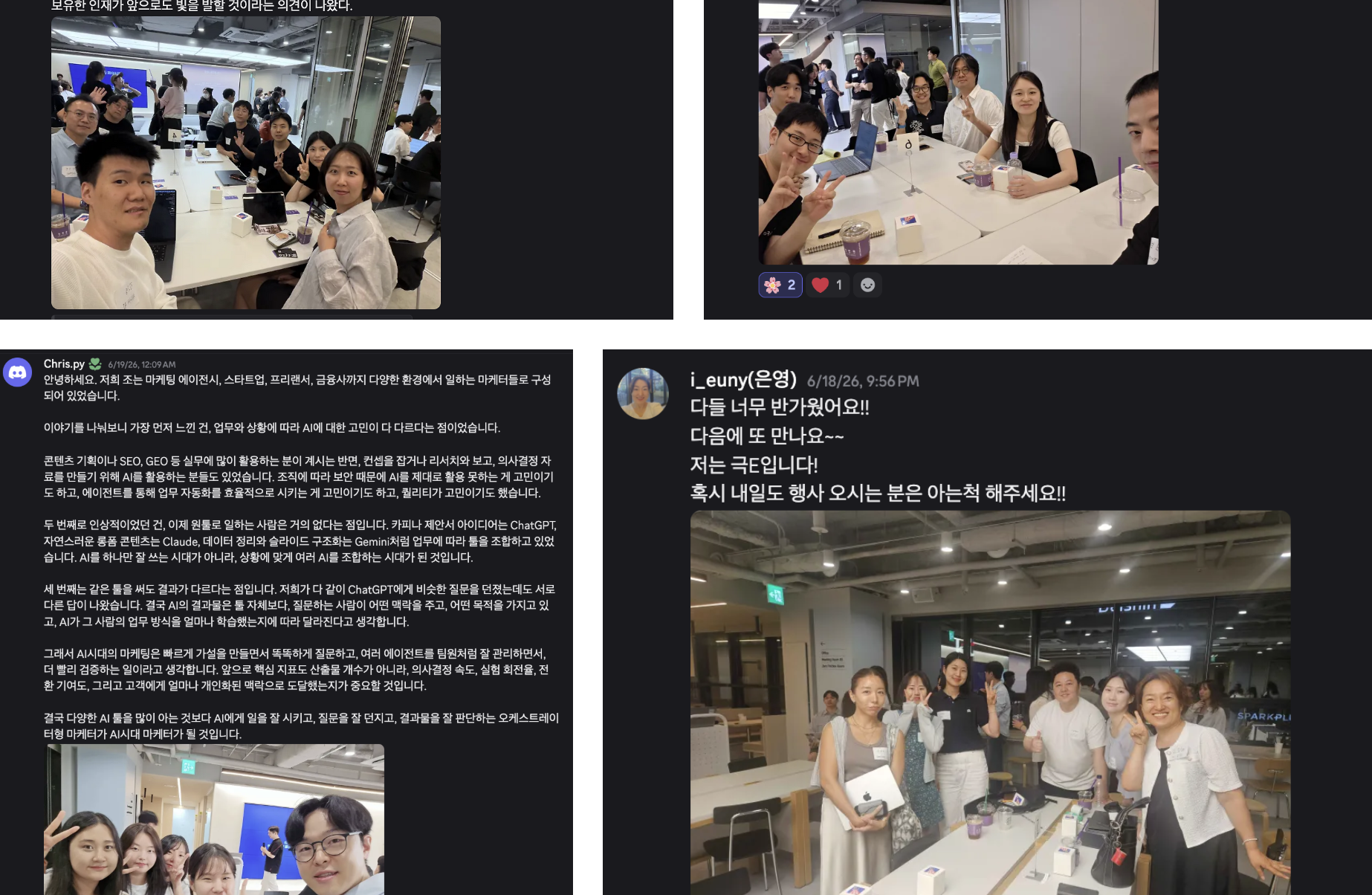
Scenes from the night

Join Bloom
Bloom builds offline rooms where people and technology meet. We run them in Seoul, and now beyond it.
- 💬 Discord community, where events are announced first
- ▶️ YouTube, full talks from past events
- 📸 Instagram, photos from our events
- 🎟️ Upcoming events