
Winning Proposals in the AI Era

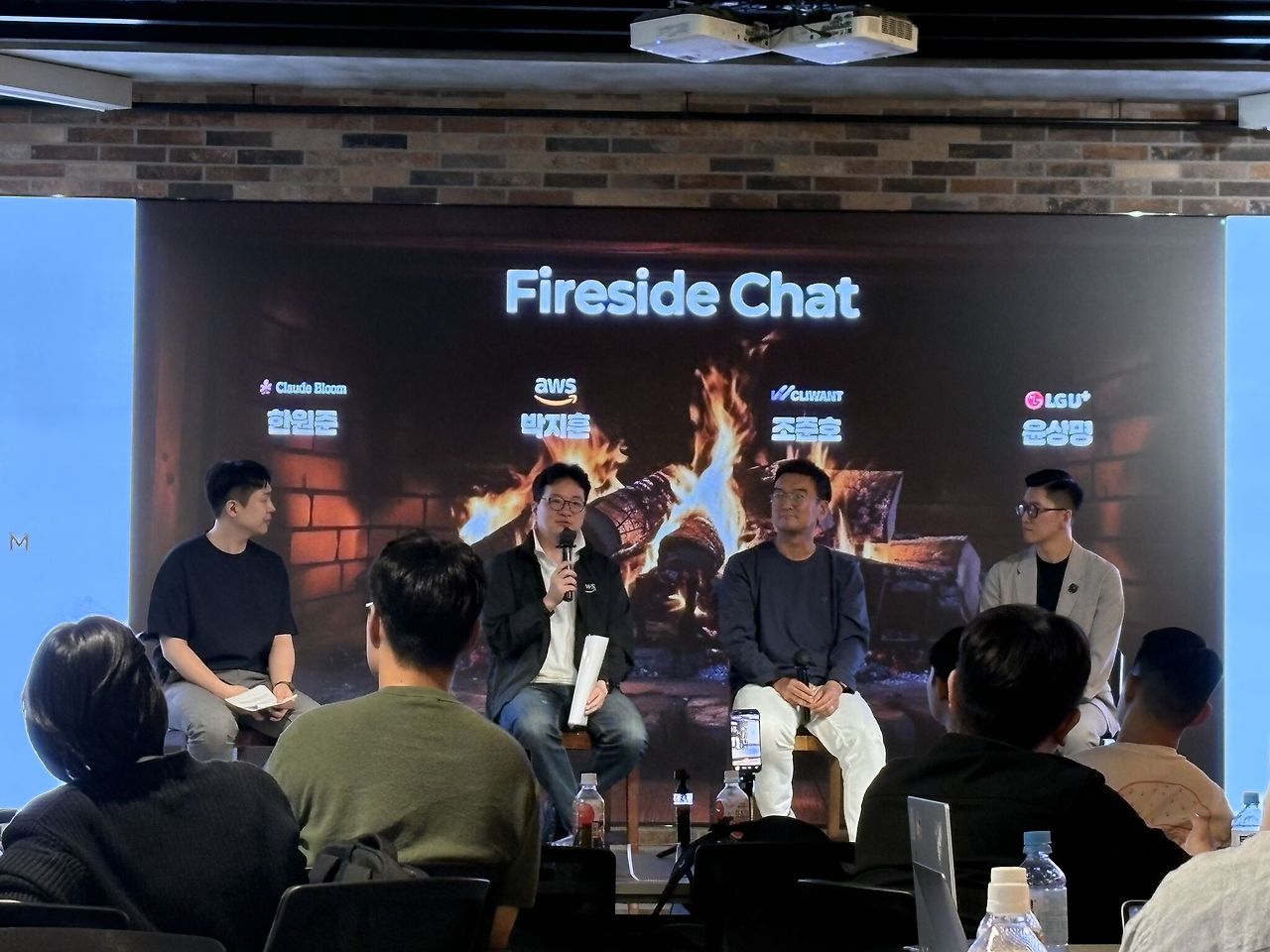
Jihoon Park of AWS calls it TITO, Trash In Trash Out: what decides a proposal is not the 20 to 30 percent written in the RFP but the 70 to 80 percent dug out of the field.
Cliwant CEO Junho Cho: the essence of a winning proposal does not change in the AI era. What changes is the complicated process, and growth comes from redesigning the business itself with AI.
Sangmyung Yoon of LG Uplus put it in one line: Trash in, Jewel out. Given the same information, the output someone produces is the human part.
🤝 Bloom × AWS × LG U+ × Cliwant × DREAMPLUS
🎤 Jihoon Park (AWS) · Junho Cho (CEO, Cliwant) · Sangmyung Yoon (LG Uplus)
Information gathering is 80 percent of the proposal
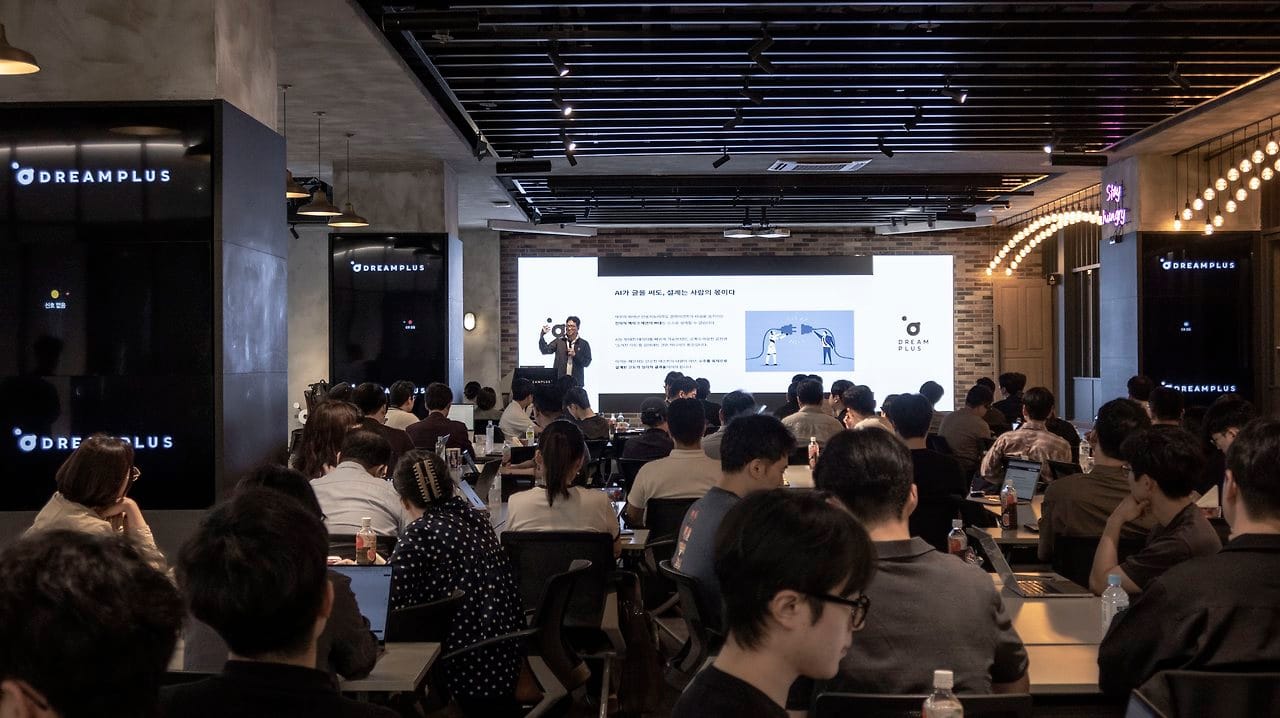
AWS proposal manager Jihoon Park had one core message: TITO, Trash In Trash Out. Feed in weak information and only a weak proposal comes out. Proposal teams know only what the RFP says, and RFPs are not honest: as formal documents, they never contain what the customer actually thinks. Public information covers 20 to 30 percent, and the remaining 70 to 80 must be asked for in person. That is why sales has to live in the field. A need the account rep failed to collect will never make it into a single line of the proposal.
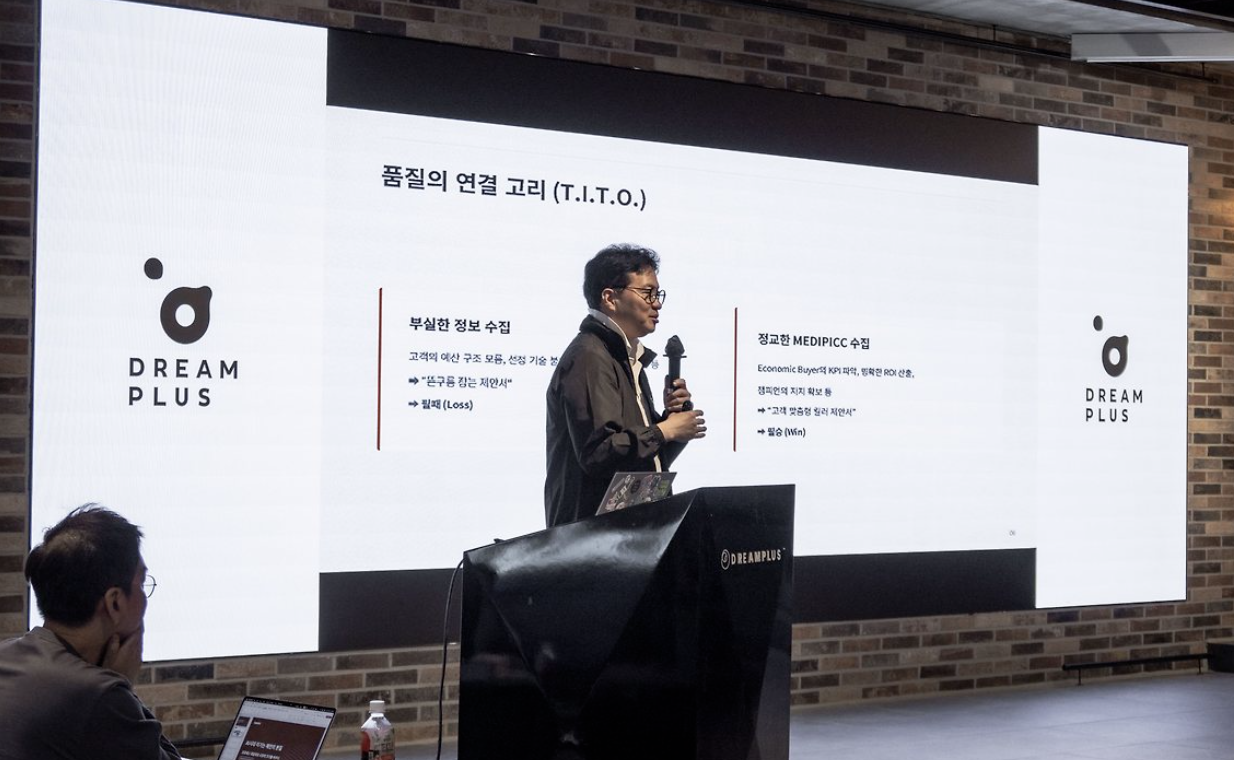
The information to gather has a skeleton. First, prove the economic value of the solution in concrete numbers, because once a price appears, the customer wants value larger than it. Second, find the hidden needs, the real worries not written into the RFP. Third, always confirm who holds the budget and makes the final decision. Without these three, a proposal floats. The mirror image is the triangle of death: eager to brag, you under-analyze the pain points, you list supplier-side features instead of customer benefits, and the information the customer actually wants goes missing.
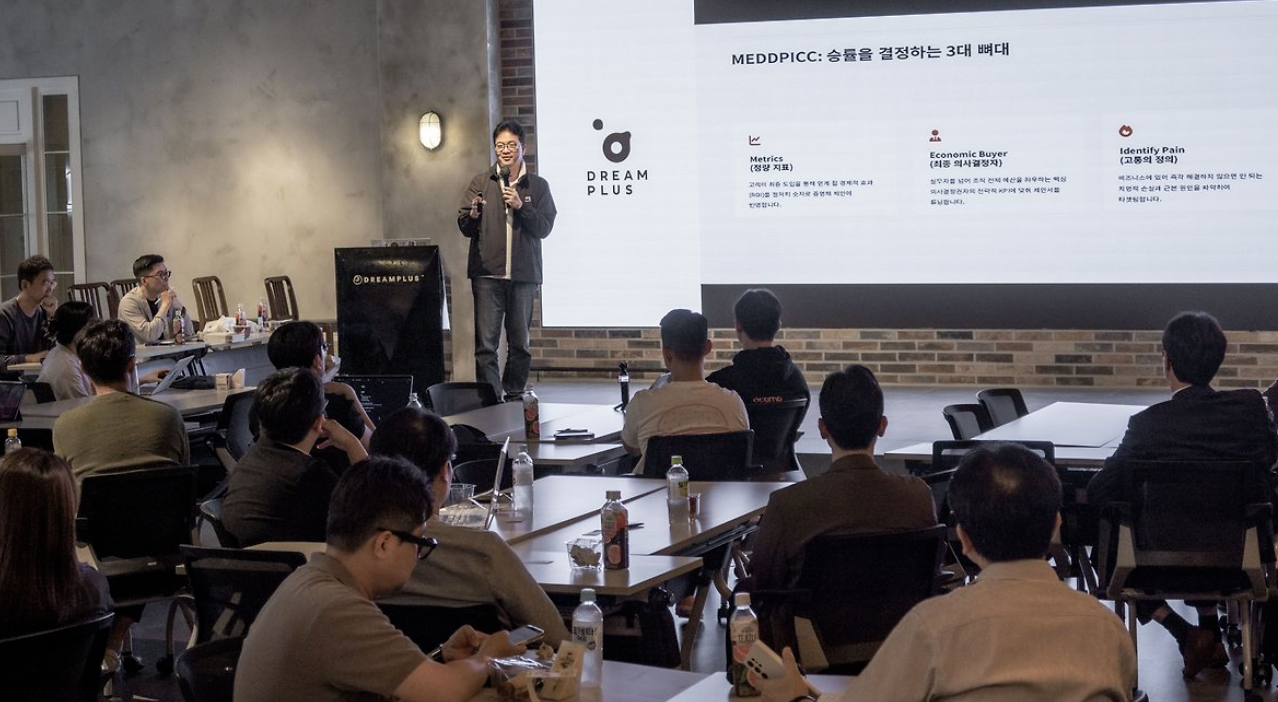
Proposals are nearly always winner-take-all, so differentiation is everything. Win-theme design has principles: combine proven core ideas, back them with quantitative evidence, and target the hot buttons that neutralize competitors. Neutralizing means killing their strength by showing it does not matter for this project, which is why it is called ghosting. Hot buttons are never volunteered; they are found through information gathering. And the pain point is best compressed into a single sentence anyone can understand. His conclusion for the AI era: everyone uses AI now, so proposals all look alike. The one who reinvents the process wins.
The essence of winning does not change
Cliwant CEO Junho Cho led with his conclusion: even in the AI era, the essence of a winning proposal does not change; what changes is the complicated process. He leads the Korean chapter of APMP, the global association of proposal professionals with over 18,000 members, which spent decades codifying concepts like win themes and hot buttons.
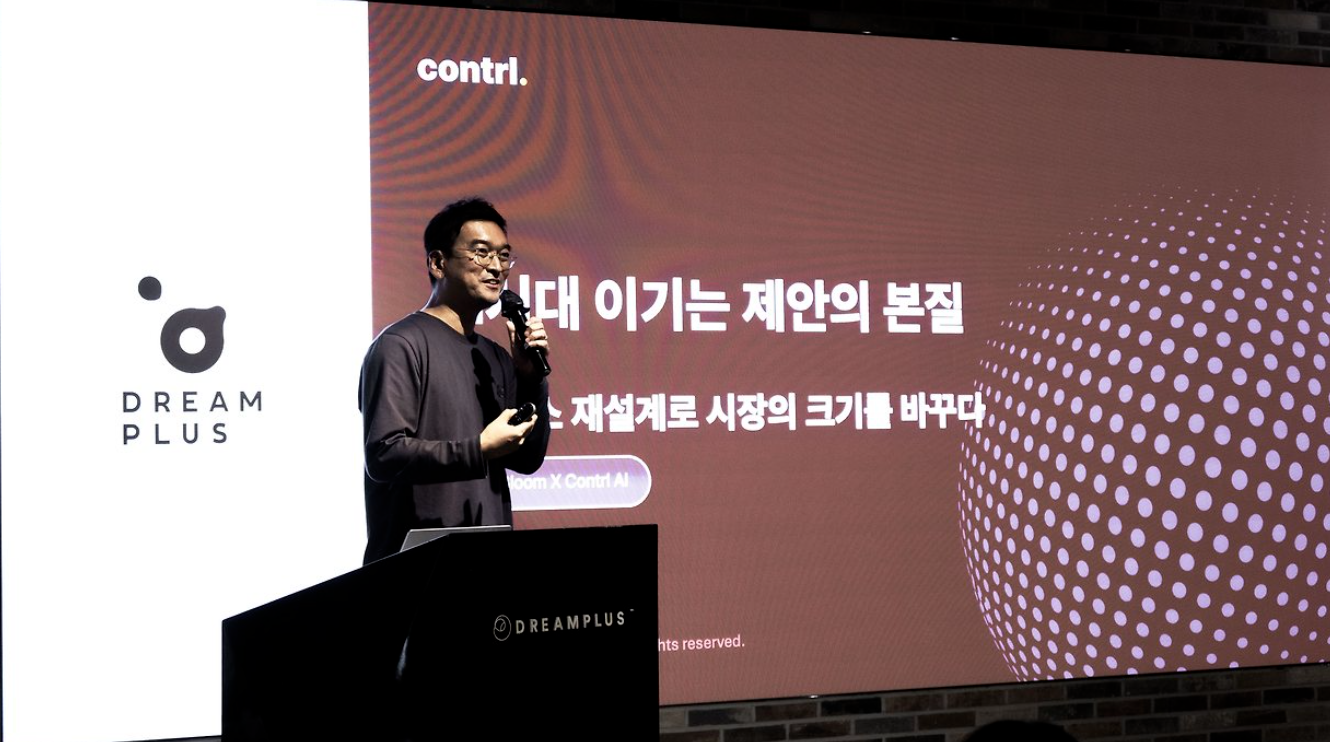
There was a period of fear: would the product, and he himself, be eaten by AI? So he flipped the question: not which business survives AI, but which business can only grow because of AI. Then the answer appeared. Using AI well is no longer differentiating; his elementary school son builds dozens of games with it. A professional must be able to redesign the business itself with AI. He was honest about the hard lesson: the company adopted AI firm-wide early this year and carved out Thursday afternoons for experiments, and AI skills grew while the company did not. Growth required redesigning the business.
In that context he introduced Contrl, which supports the entire public bidding process with AI. With proposal requests and task orders extracted from seven years of bidding data, it produces contact search, bid analysis, hidden needs and 3C analysis, condition checklists, bid simulation, and submission document lists in one pass. The heart of it is the sweet spot of proposal strategy: where customer needs and your strengths overlap and competitors are absent. Everyone reads what is inside the RFP, so a win theme needs what is outside it. The domestic B2B SaaS market caps around 2 trillion KRW, while public bidding is a 200 trillion KRW market; when the company pivoted from selling a tool to entering that market alongside its customers, the size of the pie itself changed. The most memorable story was from Singapore: theirs was the most expensive bid, but visiting the site before the presentation, he noticed a dead display on a bathroom wall, photographed it, and said, we will connect this for you. The customer, moved, chose the most expensive option. The last one percent no AI could produce.
Trash in, Jewel out
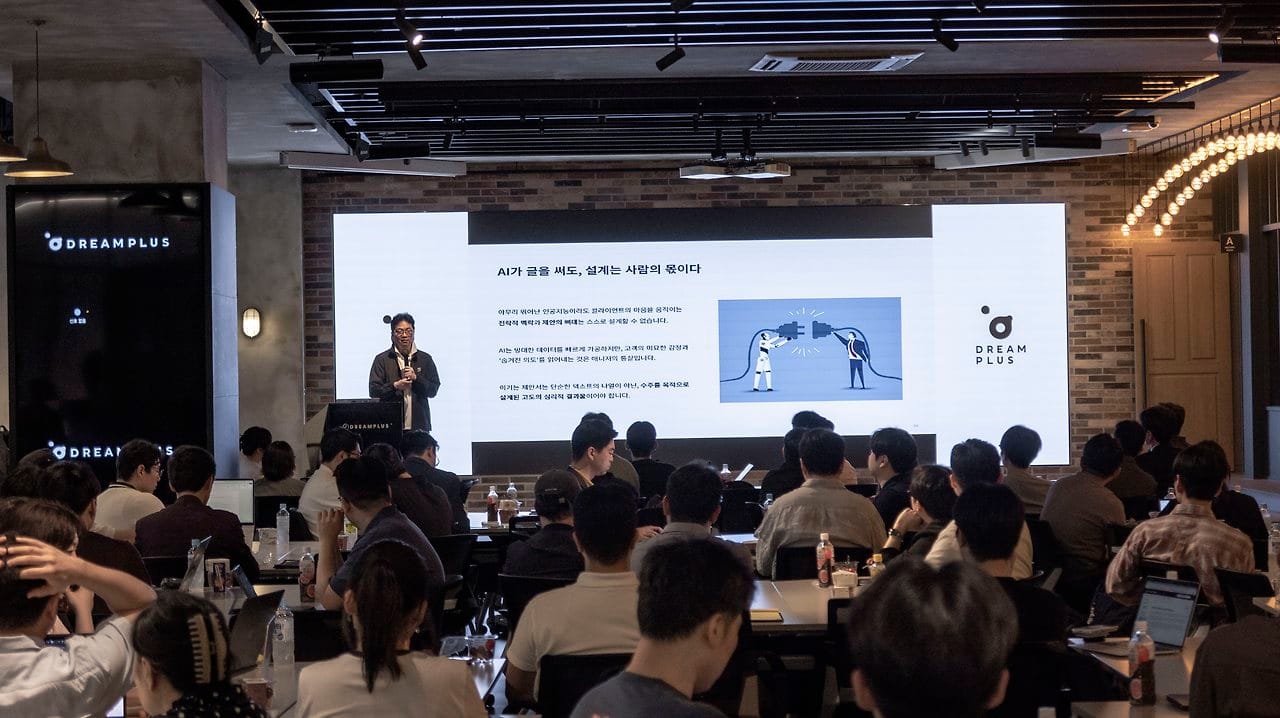
Sangmyung Yoon of LG Uplus introduced himself as a national-team presenter, a best-selling author twice over, and living proof that presenting is not something you are born with, having relearned Seoul speech after 33 years in the provinces. His one line: Trash in, Jewel out. Given identical information, the output someone produces is the human domain.
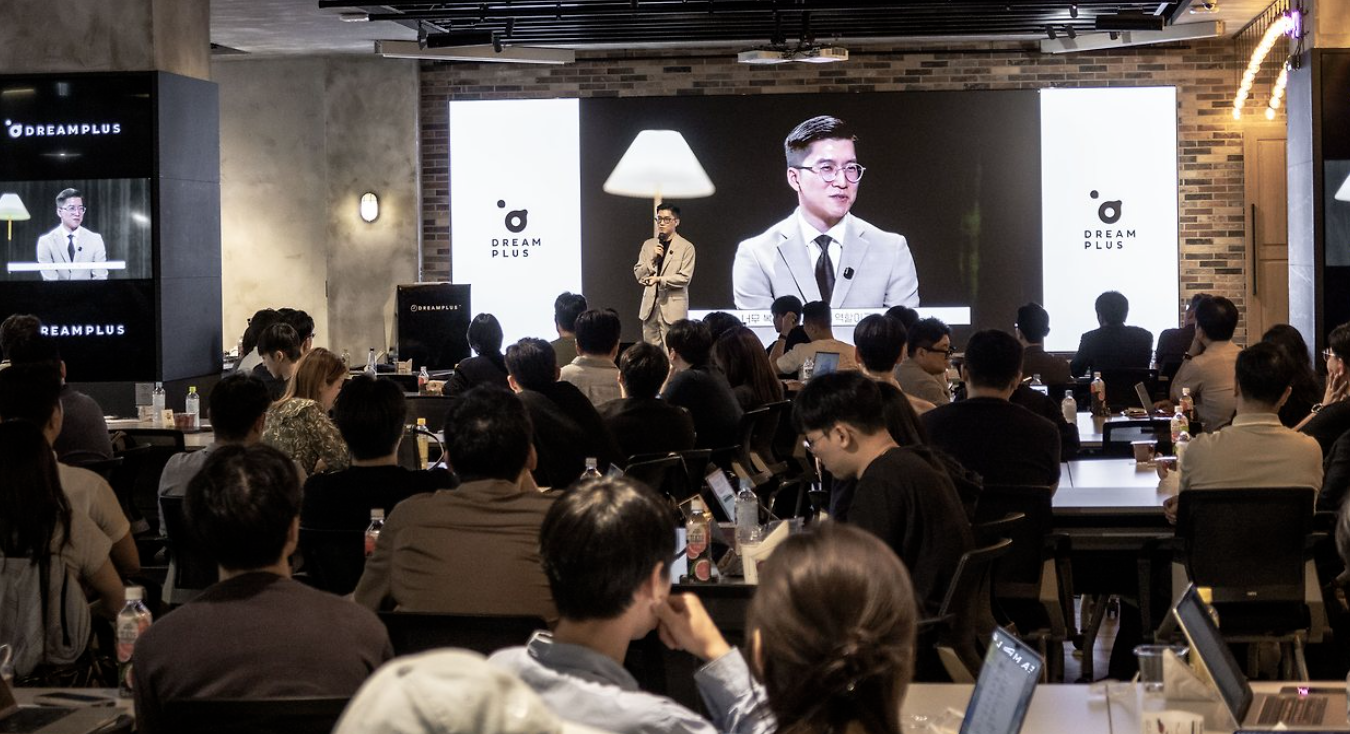
This is the VUCA era: volatile, uncertain, complex, ambiguous. When any team member can ask AI mid-meeting and receive the information of the entire world, a leader can no longer hand down all the answers. Which is exactly why face-to-face presentation matters more in the AI era: professors are replacing reports with presentations, and resumes have been leveled upward by AI while interviews increasingly fail to match them. Responsibility stays with people: autonomous driving is slow to commercialize despite mature technology because of accident liability, and AI-written documents are the same. Judging and taking responsibility is the human share.
He also named what only humans can do: the atmosphere that changes a room with a few seconds of silence, and the non-verbal channel of gesture and eye contact. Humans are the only animal whose eye whites show from the front, so where you look is legible, which is what social sense is. Persuasion has formulas: OREO, Opinion-Reason-Example-Opinion, validated at Harvard for logical persuasion, and STAR, Situation-Task-Action-Result, for unfolding a situation structurally. Structure decides delivery more than content. He flipped VUCA into human language: Vision, Understanding, Clarity, Agile. And his final weapon was humor: humor is human, and in the AI era the value of analog human touch, like handwriting, only rises.
From the fireside chat
With all three speakers together, working instincts surfaced. Asked how to find hot buttons, Yoon said look at the customer of your customer: proposing to a bank, speak all the way through to how satisfied the bank's customers will be, and that language already exists in the customer's mid-term strategy reports, IR materials, and executive interviews. In the public sector the language shifts to citizen benefit and resident satisfaction.
Bidding culture differs across countries. Korea submits slide decks and judges by presentation, with clear questions. Australia and Singapore submit spreadsheets with over a hundred mostly technical and security line items, down to naming services, scoring exactly how precisely conditions are met. AI has largely dissolved the language barrier, but each country works differently, and without the culture the results do not come. Understand how a country works before its language. Tacit knowledge came up too: Cho still gets calls three years after leaving a former employer asking where that proposal file is; the files survive, the context dies, so the knowledge base must keep the context of the process, not just the outputs. And the essence of pre-sales was plain: hidden needs are only learned by meeting the customer early, and AI does not replace that; it finds who to meet and what to ask, and folds the answers into strategy.
The conclusion of the small groups
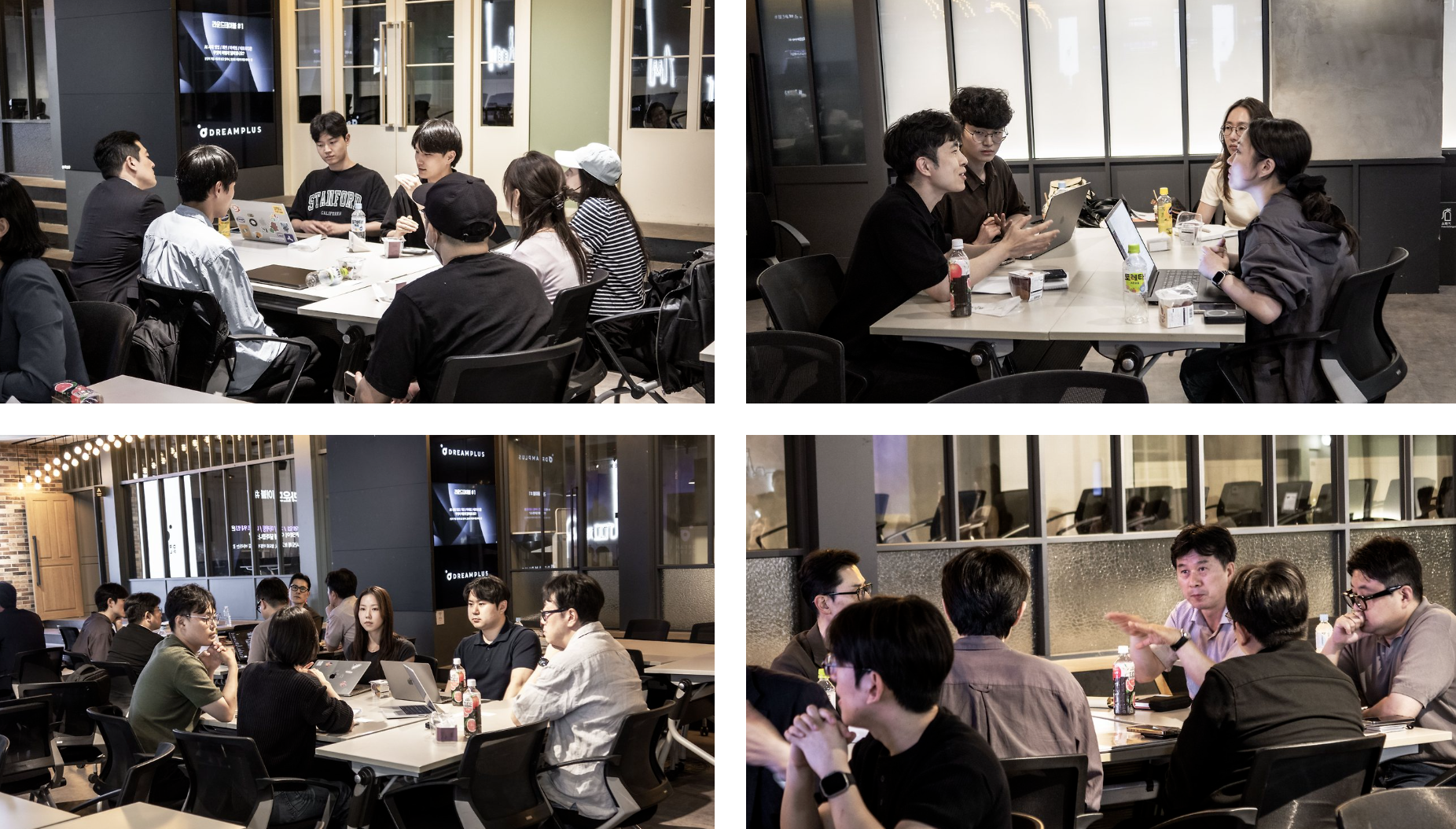
Ten tables debated how they sell and propose differently in the AI era, and a common sentence emerged: AI produces a 70-point proposal, and the final 30 points belong to people. How deeply the presenter has absorbed the proposal decides outcomes, and the reviewer's judgment matters more than ever. Someone noted the structural shift too: with AI, junior staff can sell like veterans.
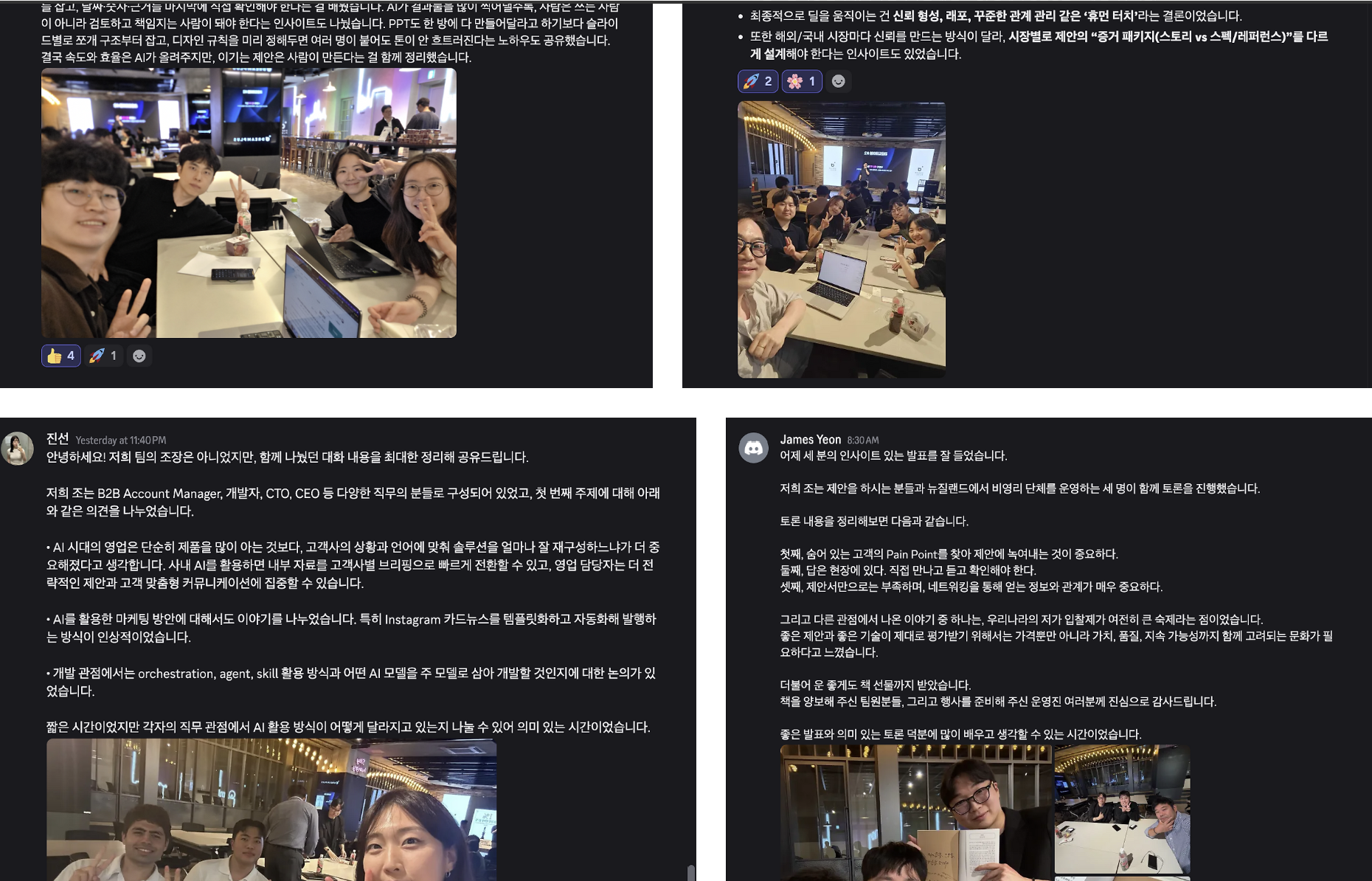
Directions converged: accumulate company and personal data first and learn to summon it well through tools, and use LinkedIn to find hidden key people and secure the material AI cannot produce. Korea leans toward spec-driven transactional proposals and other markets lead with relationships, but either way, the last mile is human touch. The final presenter left the line of the night: nobody can claim a definitive method for bidding and winning, which is why the people still studying at this late hour may be the ones who cannot be replaced.
What companies can take away
Four things, in working language. One, invest in information gathering first: hidden needs, decision-makers, and economic value dug from the field decide the outcome, not the RFP. Two, redesign the business with AI: growing AI skills alone does not grow the company; give repetition to AI and keep judgment and strategy with people, then rebuild the process. Three, aim for the sweet spot: where customer needs and your strengths overlap and competitors are absent, found through information outside the RFP. Four, let people fill the last 30 percent: field sense, the atmosphere and timing of a presentation, and accountable judgment cannot be delegated.
FAQ
What does TITO mean? Trash In, Trash Out: weak inputs produce weak proposals. The RFP holds only 20 to 30 percent of the information; the rest must be gathered in the field.
What is the sweet spot of proposal strategy? The point where customer needs and your strengths overlap while competitors are absent, found through information outside the RFP.
What remains human in the AI era of proposals? The final 30 points: field sense, presentation presence, non-verbal communication, and the judgment that takes responsibility.
Scenes from the night
Join Bloom
Bloom builds offline rooms where people and technology meet. We run them in Seoul, and now beyond it.
- 💬 Discord community, where events are announced first
- ▶️ YouTube, full talks from past events
- 📸 Instagram, photos from our events
- 🎟️ Upcoming events