
Agents at Work: Amazon, Classmethod, and AI Safety

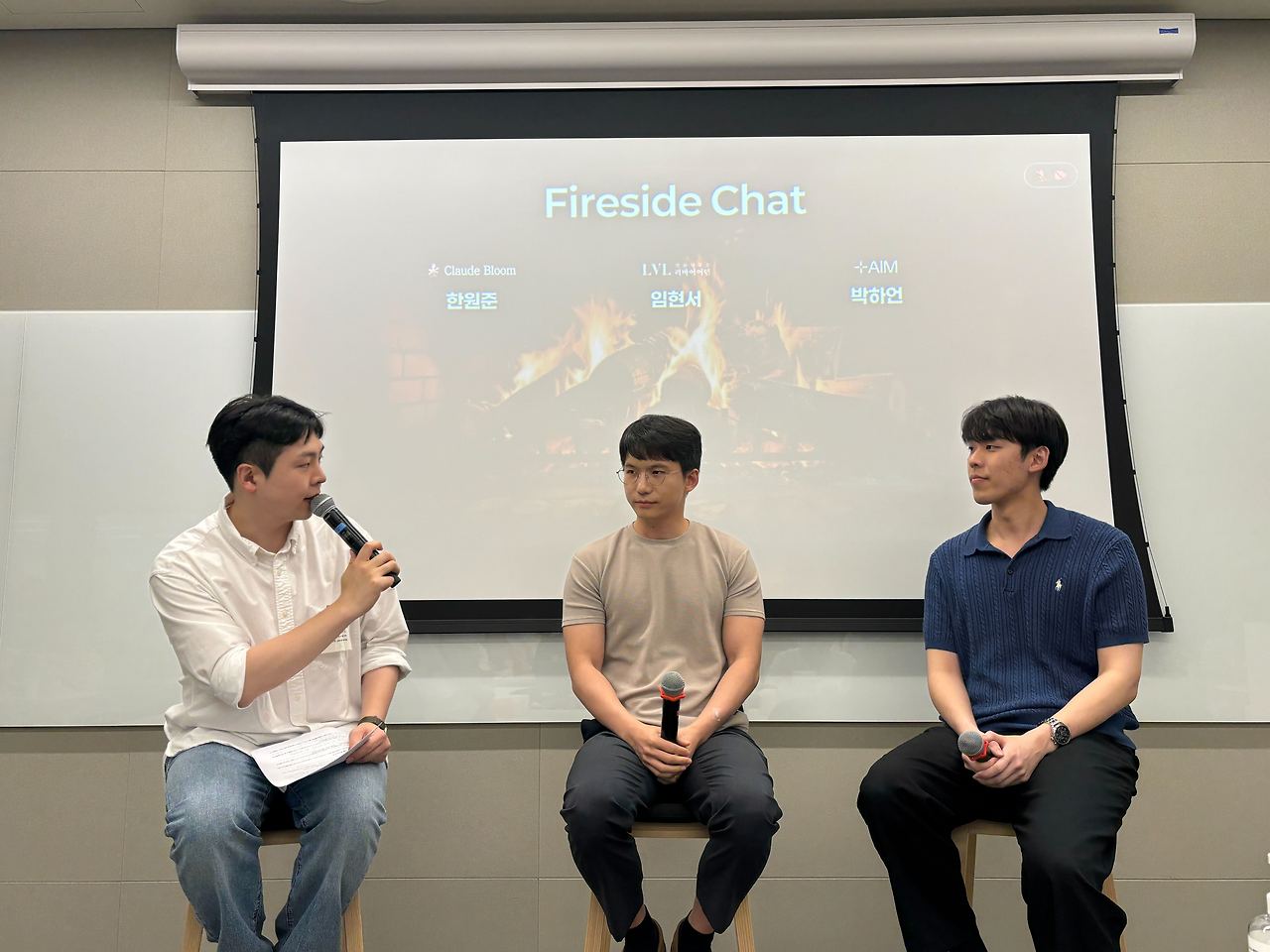
🤝 Bloom × Classmethod Korea × AWS
🎤 Hyunseo Lim (attorney) · Haeon Park (CTO, AIM Intelligence) · Yongho Choi (AWS)
The era where execution, not intelligence, is the edge
The theme of the night was blunt: intelligence no longer matters the way it did. High IQ, deep knowledge, long careers, AI has begun replacing all of it, and one well-made viral open-source project now outweighs a good resume. What remains is the insight and sense to read a market, ideas, and above all the power to execute them fast.
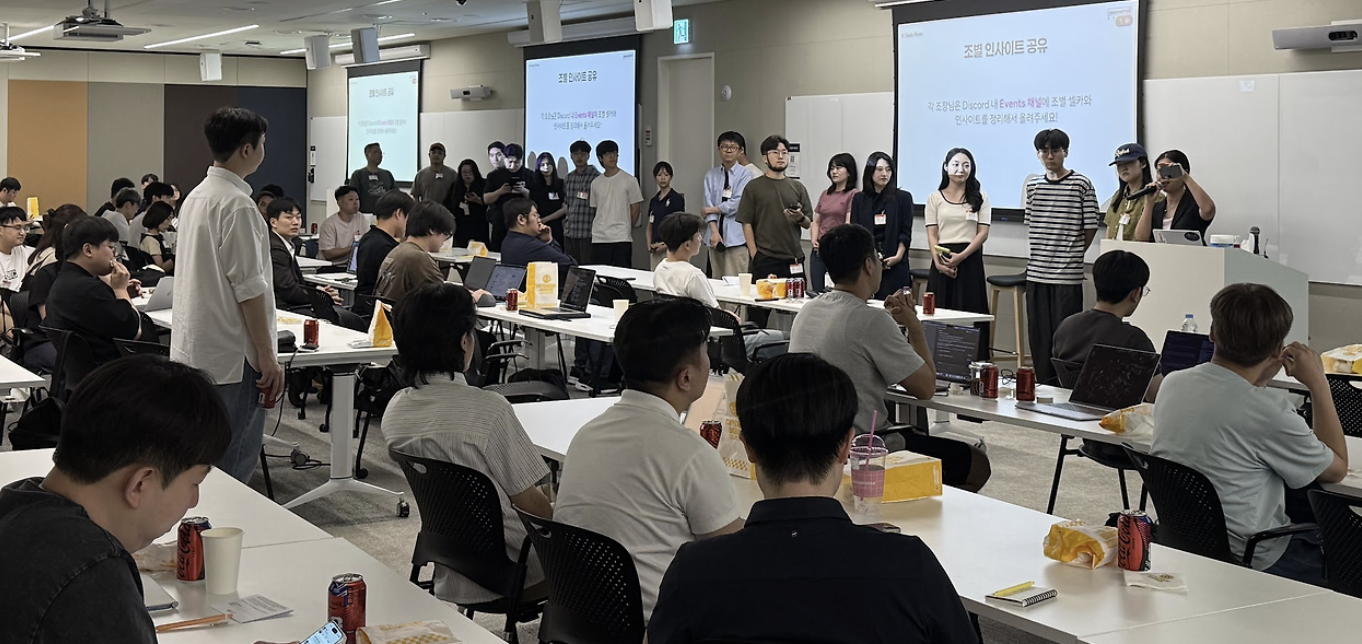
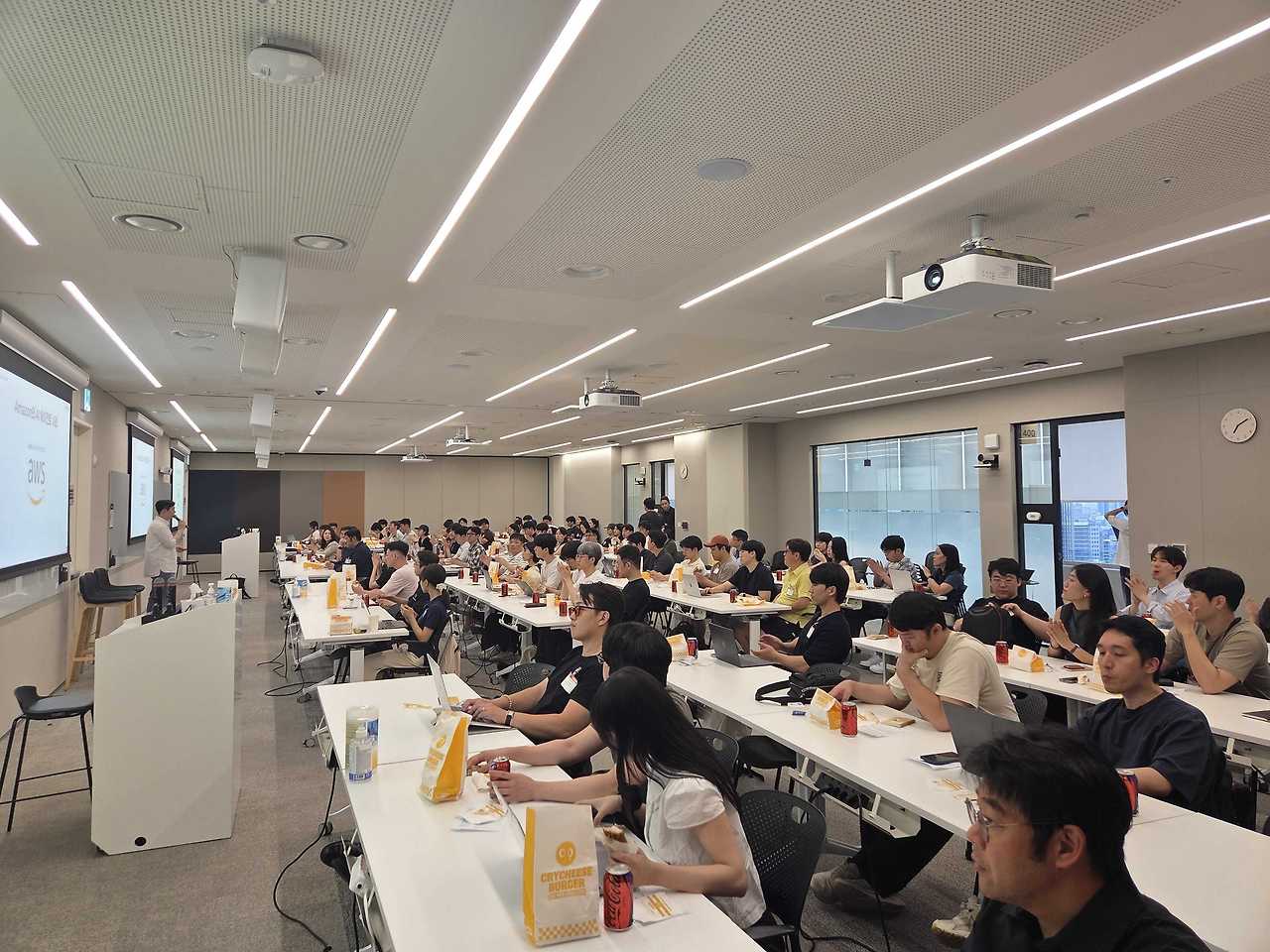
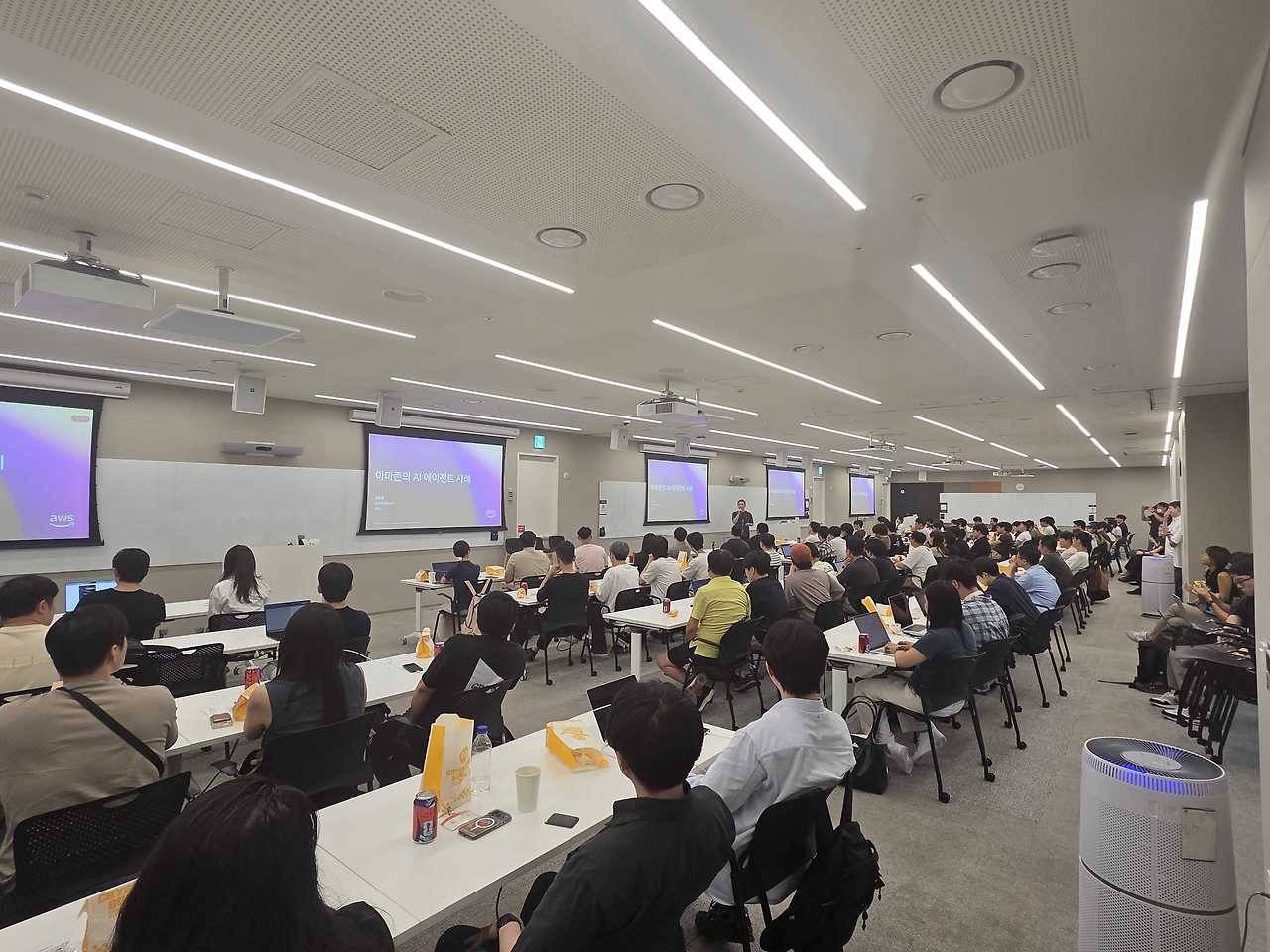
The problem is organizations. Solo builders and small startups can execute; large organizations struggle against internal process and approval lines, which is why the phrase of the moment is: people are the bottleneck. Attendees from large organizations nodded hard. The bigger the org, the bigger the security risk, and agents that work fine for individuals leak at organizational scale. So this event focused past personal proficiency, on workflows that actually run in real work, bringing four companies to one stage, with over 150 attendees forcing the venue to open the adjacent space.
Agents at Amazon: platform and process innovation
AWS tech evangelist Yongho Choi opened with Amazon agent cases, led by delivery. The same address can mean the front door, the security office, or a business closed after hours; these variables used to live in human notes and manual workarounds. Rebuilt as an agent, a person asks a question and the agent orchestrates: internal databases first, then public address, terrain, and business-hour data, then a combined judgment. Early delivery failure rates fell 74 percent.
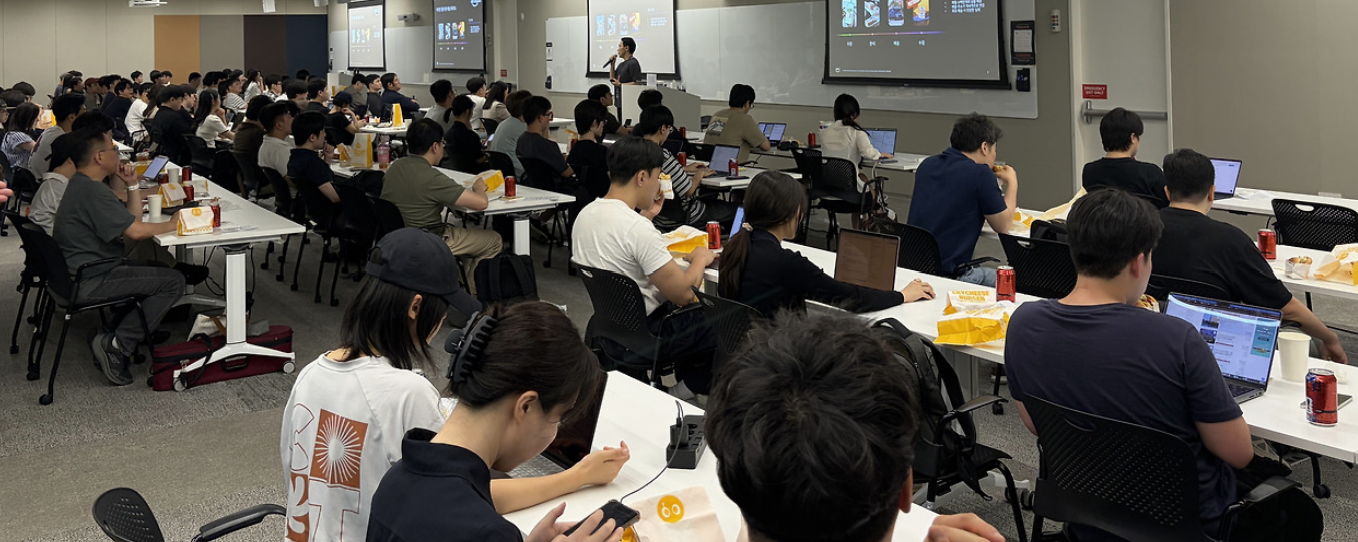
His emphasis: never stop at one agent. Reuse requires a platform. Amazon stacked each team's agents into an internal platform called Agent Z, 23 thousand agents as of May, so a search usually finds one already built and developer workload drops sharply. For the coding tool Kiro, the strength he named was spec-based work: a prompt like build me a shopping mall makes the AI silently decide too many things, so writing an intermediate document first, letting the human correct it and sync, produces better results and better token economics. Amazon accumulated 15 thousand specs in a Spec Studio. The common thread: do not keep it in your team, spread it, platform it.
The other lesson was process innovation. A Bedrock framework estimated at 30 developers for 18 months shipped to production with six developers in 76 days using stack-based tooling. The interesting part: for the first weeks, productivity barely moved. Only after realizing that using AI is not enough, that the work process itself must change, did productivity jump. Three lessons followed: results improve when you hand agents goals and let them run autonomously rather than commanding task by task, when multiple agents collaborate rather than ping-ponging with one, and when runs stretch to hours and days rather than seconds. The newest features of Claude Code and Codex are evolving in exactly this direction.
Japan and APAC today: work slop and context
The second session came from Akimasa Omori, executive officer at Classmethod headquarters in Japan, an AWS premier partner who also oversees the Korean and Malaysian entities, delivered in Japanese with live interpretation. Malaysia and Thailand remain a step before adoption, slowed by cost and security concerns; Japan is adopting gradually, with four current trends: AI-driven development, security measures, reverse engineering, and company-wide adoption. Demand is especially high for reverse engineering, feeding spaghetti legacy systems to AI to document structures nobody understands anymore. The hardest is company-wide adoption, because making internal knowledge shareable takes the longest.
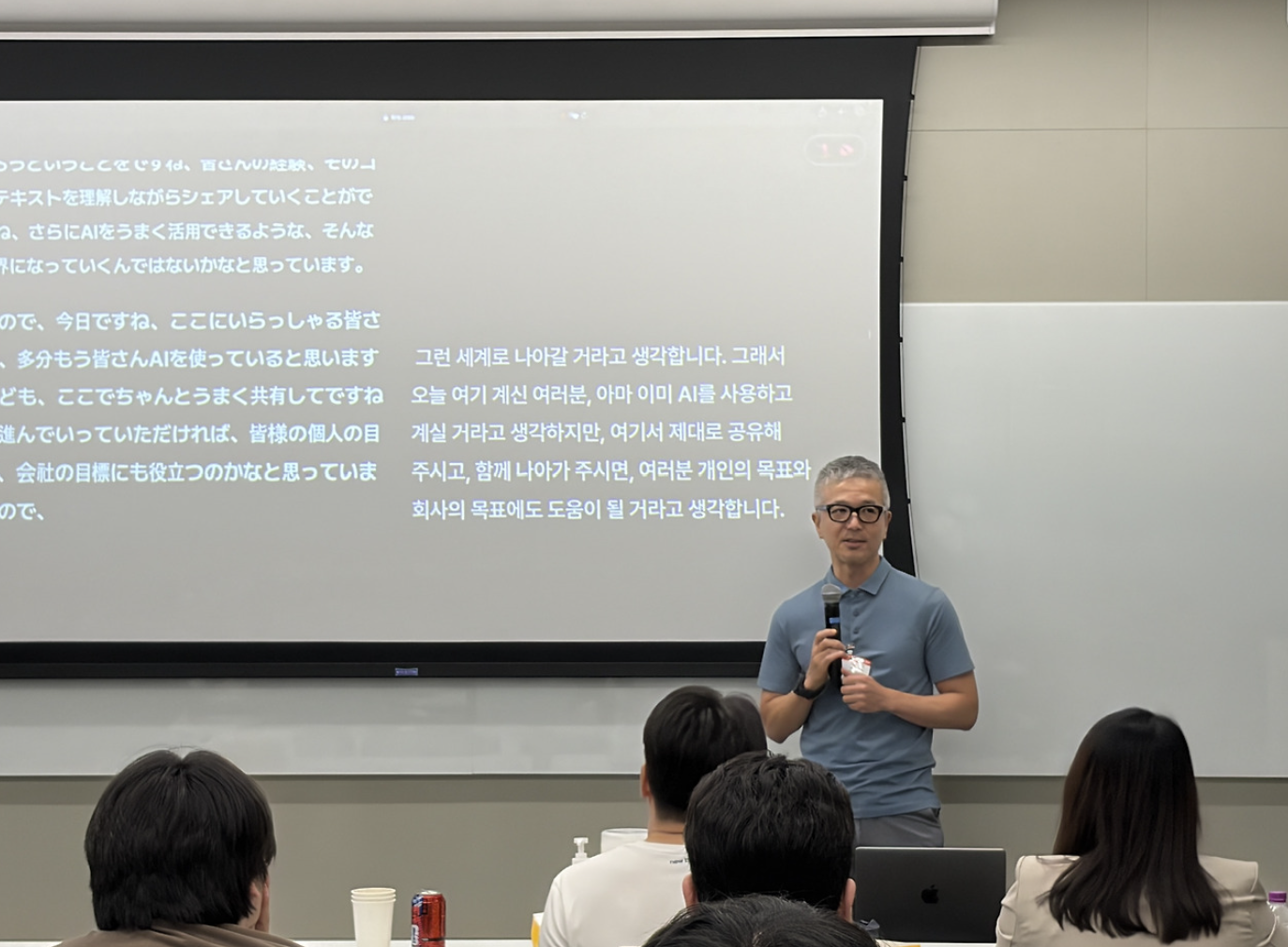
His warning was work slop: AI produces plenty of good-looking material that turns out to be unreadable, costing an average of two hours a day to interpret and fix, a net productivity loss. Hence his emphasis on context: in high-context societies, answers drift further and further off unless you understand the context and ask. The biggest problem he sees in companies is ideas pouring out with nobody executing, so his constant line is: execute something, however small, and produce a result. He also re-reads AI as Actual Intelligence, human intelligence: things move when artificial and actual intelligence execute together, which is why communities that share context and best practices matter.
A lawyer and an AI safety expert on what comes next
The centerpiece fireside brought together Hyunseo Lim, an attorney specializing in insolvency, and Haeon Park, co-founder and CTO of the AI security and safety startup AIM Intelligence. Lim said he now handles roughly 2.5 times the workload of a year and a half ago and sleeps through nights he used to lose. The AI strength he named first was replacing emotional labor: pleading, asking, the unpleasant tasks, AI does them well. He uses AI everywhere it can be used and rates it above 90 percent of lawyers in general reasoning, with one Korean limitation: court decisions are not public, so domain grounding is weak. And in law, he said, the gap between users and non-users has suddenly torn open.
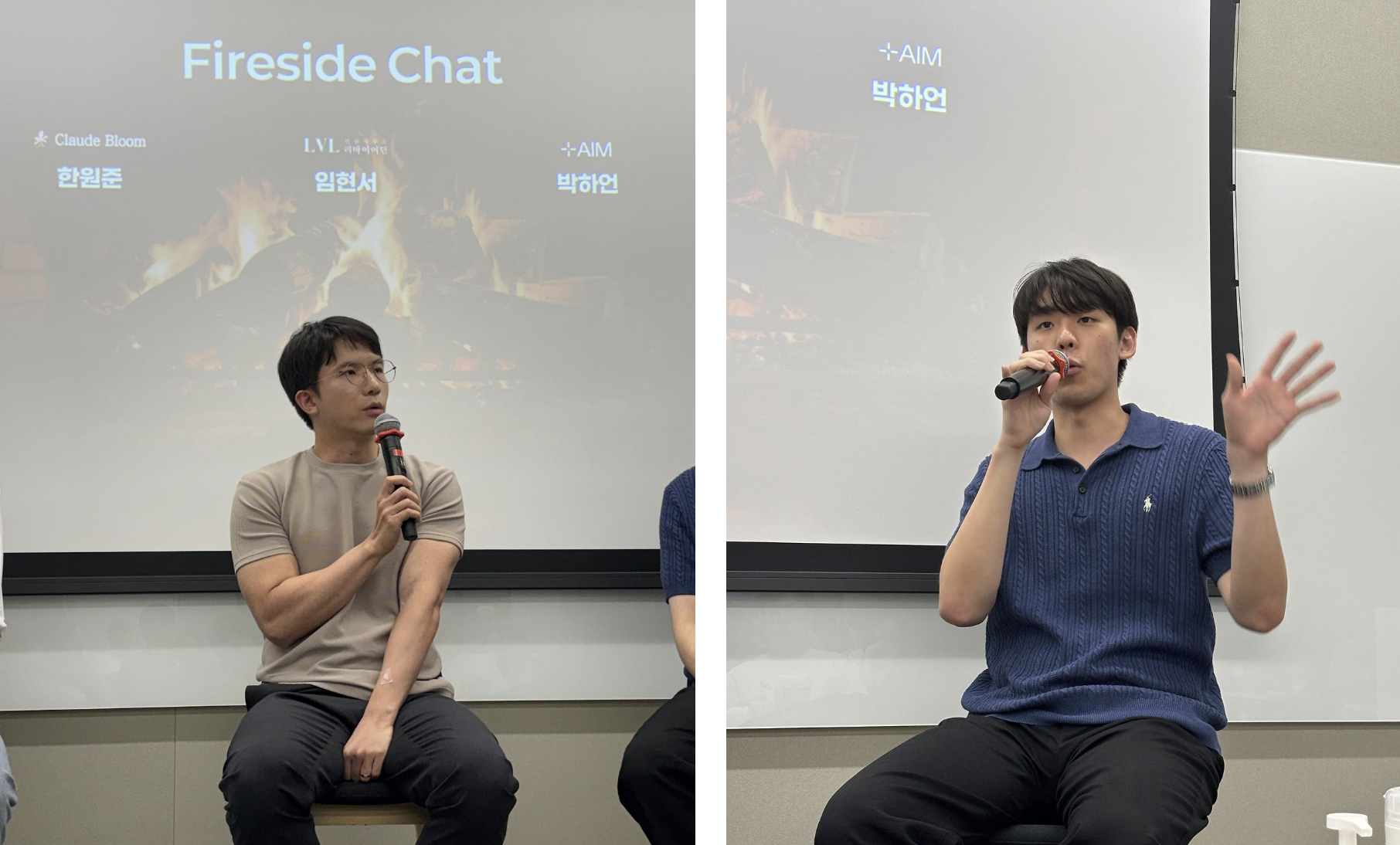
Park's company attacks AI security from both sides: a red-team solution that automatically probes the risks of customer AI services, and a guardrail solution that closes the gaps. They work with global big tech to test models before release, checking for example that a model will not produce bioweapon instructions. The NASA story stayed with the room: testing an official chatbot connected to the Parker Solar Probe, they found dangerous outputs with no filter or guard, reported it, and NASA shut the service down and sent a letter of recognition. His warning: as model capability rises, so does hacking capability, to the point where ordinary people hack at expert level and institutions nobody imagined are being breached. Government regulation, he said, is not a strange instinct.
Asked what they never hand to AI, Park said the balance of control and use is the crux, and the one thing he always checks personally is any email that goes out in his own voice. Lim does not auto-send either, though he added that the speed itself already feels beyond human control.
The collapse of advisory, and copyright chaos
On the future of law, Lim believes the collapse of the advisory market has already begun. Time-based advice is getting hard to justify, and if an AI strong in rules and reasoning finds the answer, the search-proxy species of advisory lawyer becomes unnecessary. What remains is consulting, strategy, and the experiential expertise that only a firm that has been around the loop holds, like overseas fund registration, unfindable by search and known only to those who have done it. His view of AI judges has shifted too: standards of reasonable doubt vary by individual, and if that intelligence could be kept more uniform, why insist on judges with personal variance? Though the system is not yet ready for full digitization.
Copyright he described, bluntly, as pandemonium. Pure AI output gets no recognition of creativity, human involvement does, and verifying the difference is nearly impossible. In one case an obviously AI-generated image was claimed as hand-drawn until someone asked for evidence and the answer came back: the hand has six fingers. Copyright protects only the form of expression, so idea copying is no infringement, and a copier who claims AI did it cannot be checked, leaving everything suspended. The conclusion: the paradigm must change completely, and nobody takes responsibility. Asked who survives the AI era, Lim chose the diligent one-clicker, and Park the person with the skill to verify and take responsibility, because AI will not carry responsibility for a while yet, and the verifying eye only grows from doing the domain many times.
From the roundtables
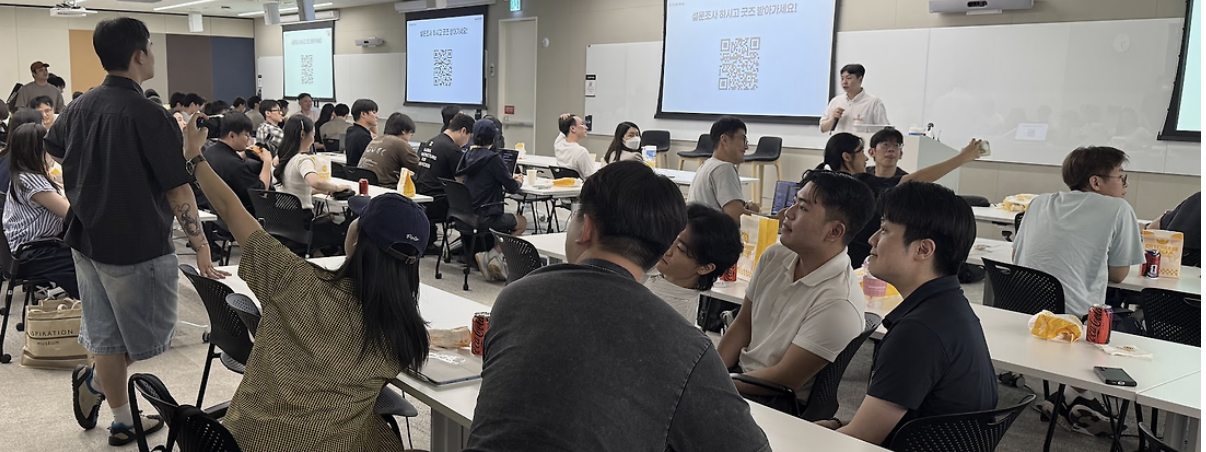
The four-person roundtables branched widely. The most frequent thread was generalists versus specialists: today AI fills the empty areas and favors generalists, and once the areas fill, the specialists take over. With knowledge now the baseline for everyone, the domain expert who can point where to go on top of that domain becomes decisive.
What companies can take away
Four things, in working language. One, platform your agents: one-off agents die, and reuse requires an internal registry the whole company searches. Two, change the process, not just the tool: productivity jumps only when workflows are redesigned around long-running, multi-agent, goal-driven work. Three, fight work slop with context: unreadable AI output is a net loss, and shared context is the antidote. Four, keep verification human: the responsible, domain-trained eye that checks what goes out in your name cannot be delegated.
FAQ
What did Amazon achieve with delivery agents? Early delivery failure rates fell 74 percent by letting an orchestrating agent combine internal data with public address, terrain, and business-hour information.
What is work slop? AI-produced material that looks polished and reads as nothing, costing hours a day to interpret and fix. The antidote is context: understand it, and ask.
What do the experts never hand to AI? Anything going out in their own voice: emails are always personally checked, and neither auto-sends.
Scenes from the night
Join Bloom
Bloom builds offline rooms where people and technology meet. We run them in Seoul, and now beyond it.
- 💬 Discord community, where events are announced first
- ▶️ YouTube, full talks from past events
- 📸 Instagram, photos from our events
- 🎟️ Upcoming events