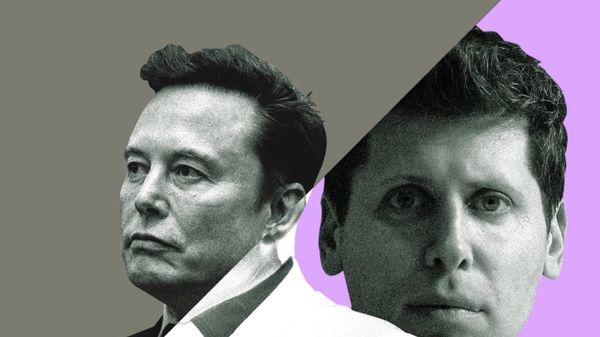
A City of 30,000 Elon Musks
A founder who spent fifty days in the US and a Wall Street trained career coach reached the same conclusion: stop thinking and move.

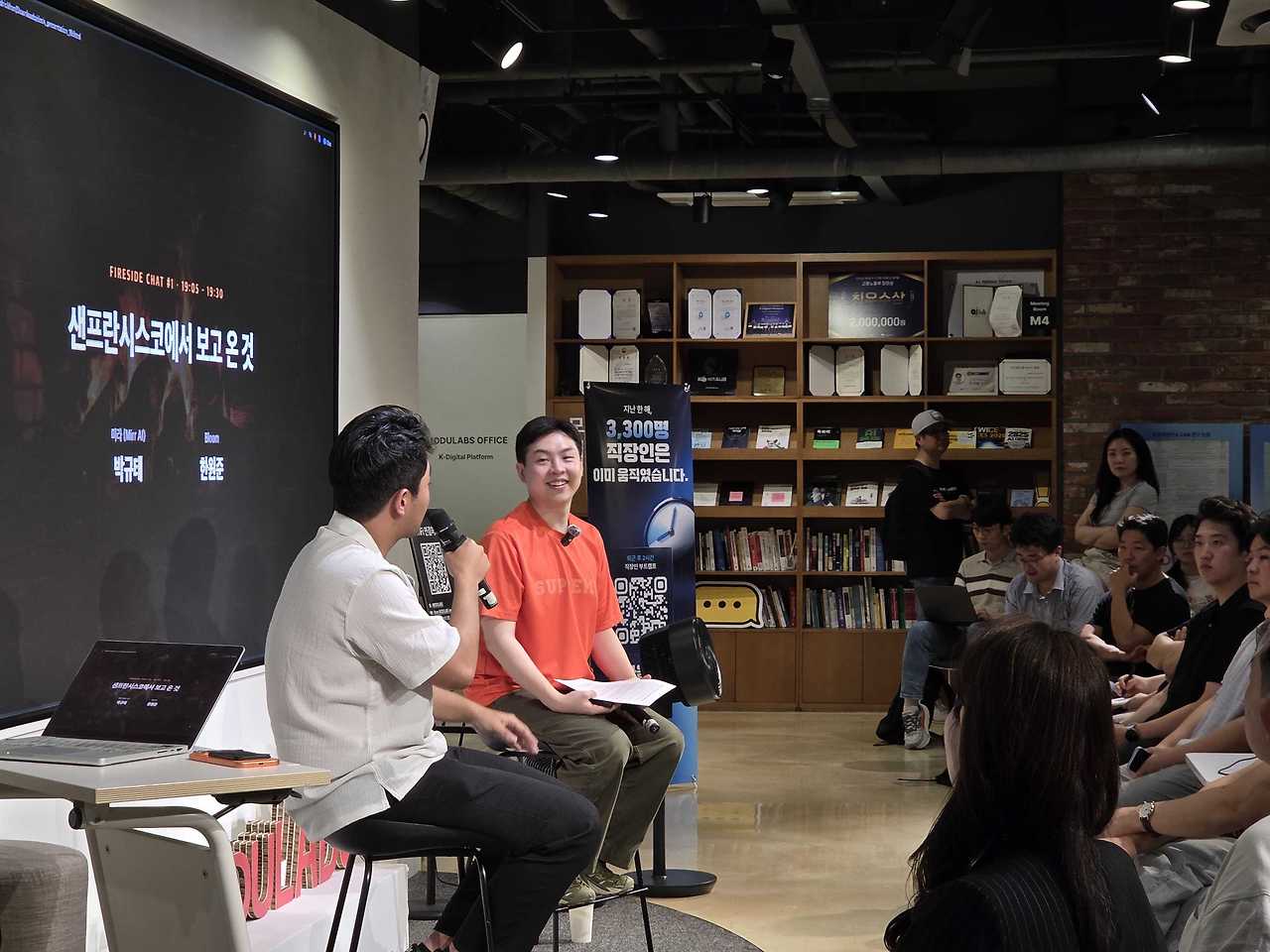
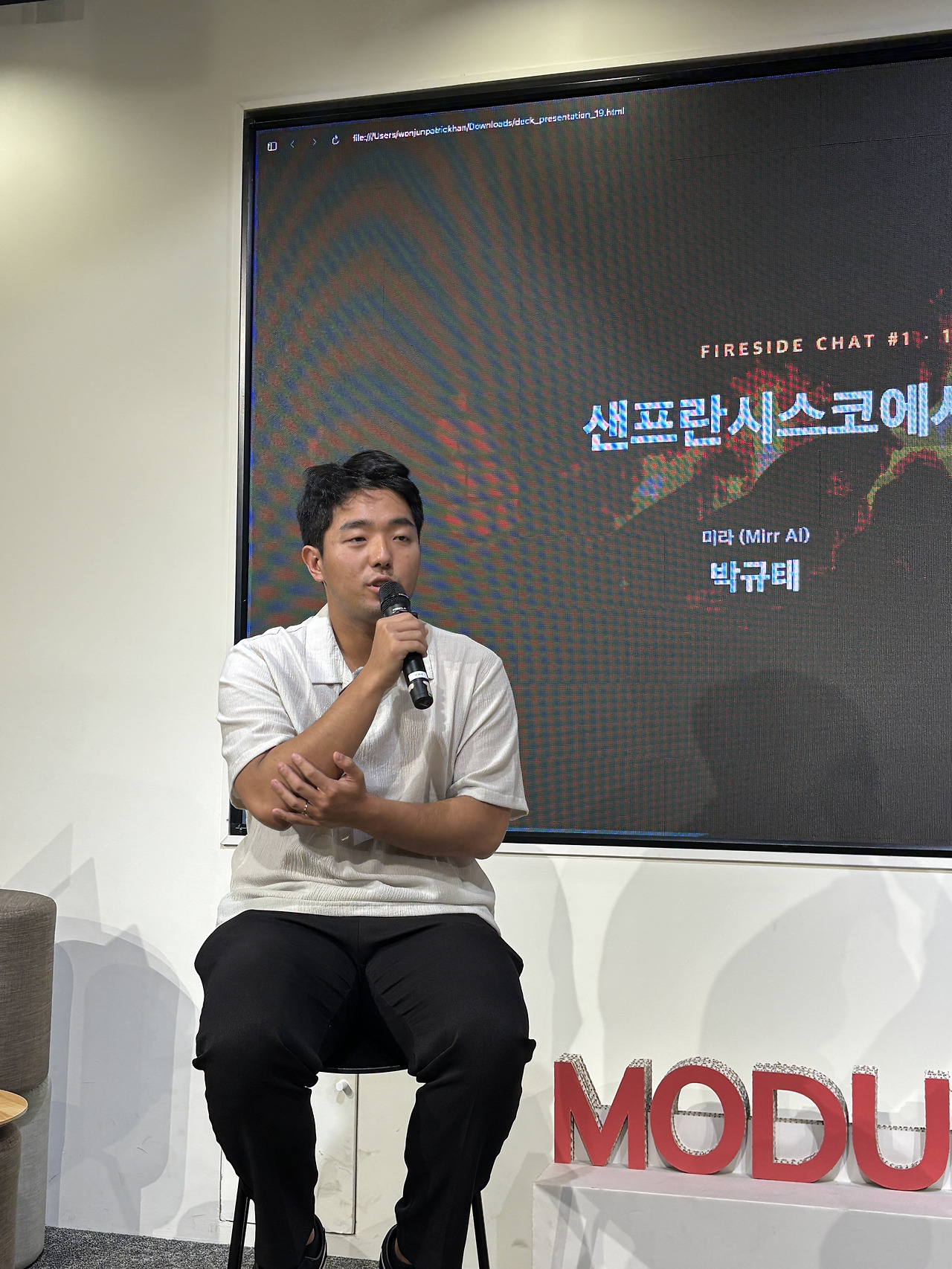
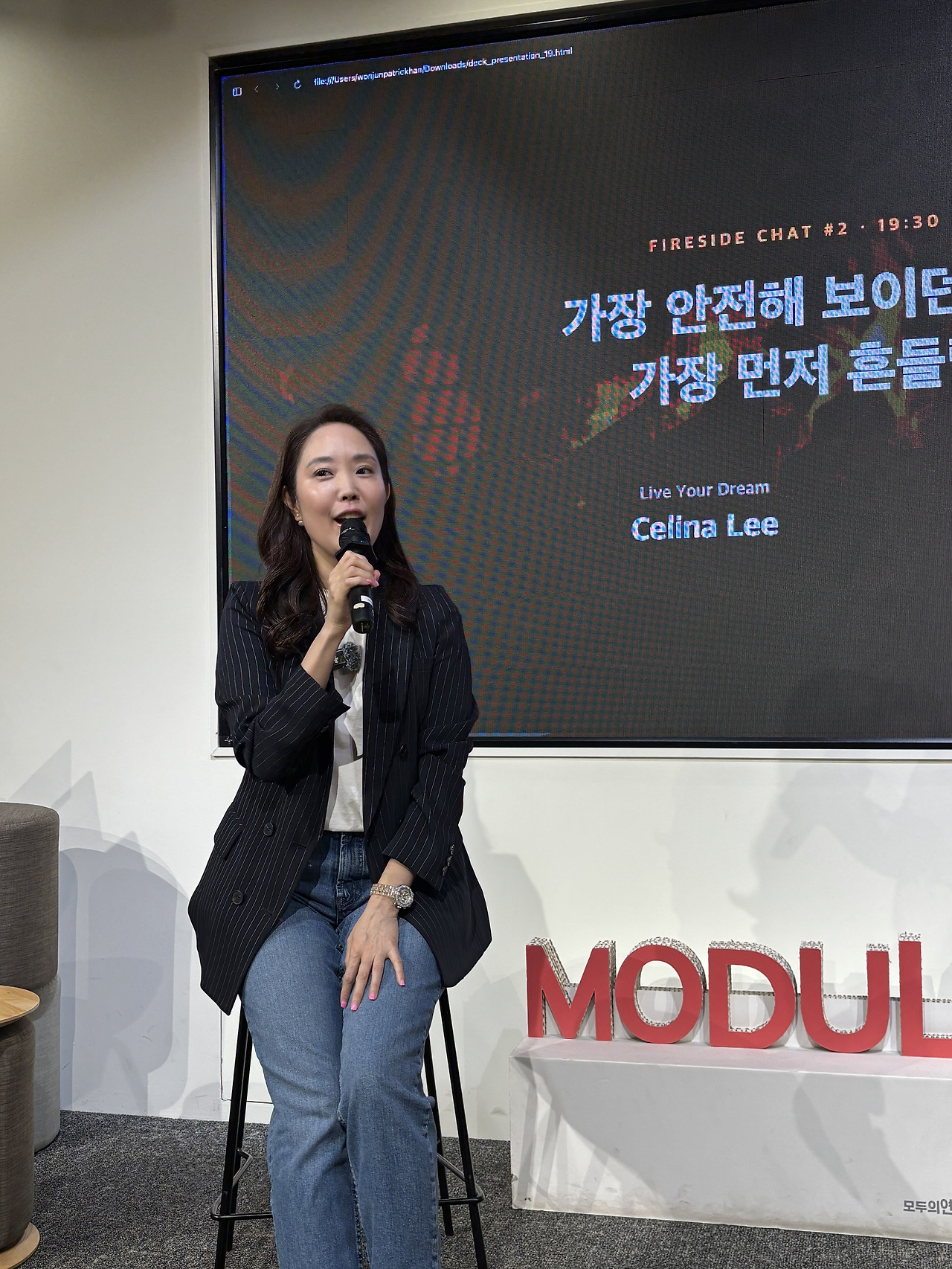
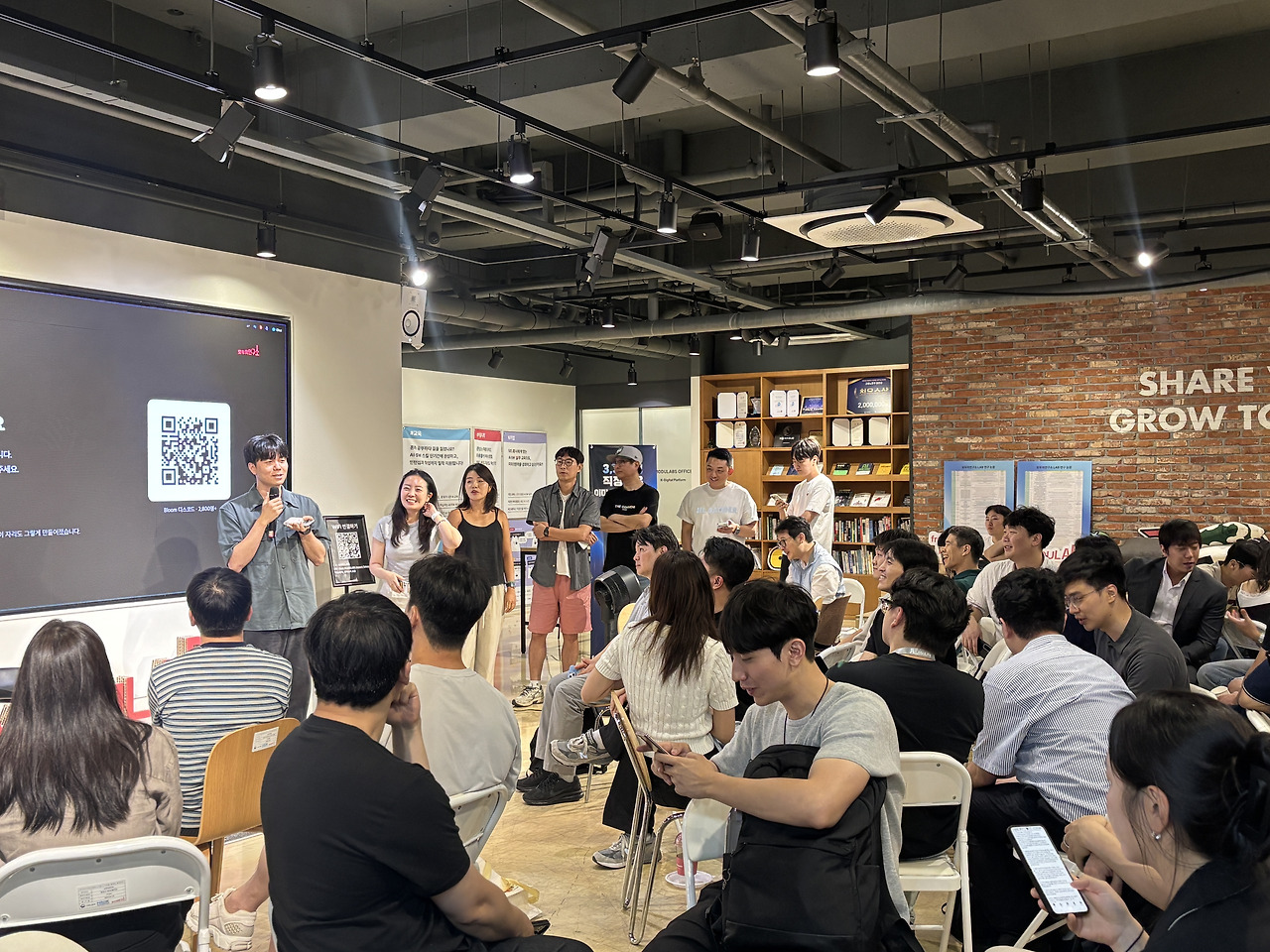
Fifty days across San Francisco, New York, and LA. This meetup had no corporate partner. Both speakers were community members: Kyutae Park, who builds Mirr AI and flew out to see the American market with his own eyes, and Celina Lee, who went from MIT to Wall Street to a New York law firm and now coaches careers in twenty cities.
🎤 Kyutae Park (Mirr AI) · Celina Lee
🎟️ Upcoming events in the Bloom app
A forty million won toy project
Kyutae builds Mirr AI, an agent that plans, produces, and runs Instagram marketing for small businesses. Two people run it, and peak monthly revenue has reached somewhere around forty to fifty million won. On LinkedIn he still calls the whole thing a toy project. His reason is that he cannot yet answer how customers actually use it inside their own workflow, who they consider the alternative to it, and why his team is the one that should win. Until those answers exist, he does not let the revenue number count.
In any meeting, there is always one
He went because no global software product has come out of Korea, and he wanted to see with his own eyes whether his own tool was going to stay a domestic one. In his domain there are maybe ten serious companies in Korea. Over there, in the same domain, there are two thousand. With two thousand of them around you, whatever problem you are hitting, someone in the room has already been through it. In every single meeting he had, there was at least one person like that.

On a train, the person sitting in front of him asked for the wifi password. Small talk carried on from there. The stranger turned out to be the founder of one of the hottest startups in the Valley. That kind of accident, he said, simply does not happen at home.
Thirty thousand Elon Musks
Asked to define Silicon Valley, he said it is thirty thousand people trying to act like Elon Musk, gathered in one place. One percent of them are the real thing, and that mix of the real and the performed is what makes the ecosystem interesting. He was equally blunt about the other side of it, with inflated metrics everywhere you look and too much showmanship chasing the money.
San Francisco and New York gave opposite advice
Same startup, two cities, opposite feedback. In San Francisco the line was that his dream is too small, and why settle for being number one in content marketing AI. In New York the line was that if his customers are in Korea, he may as well raise in Korea. He also felt founder blues while he was there, because X and LinkedIn read like Instagram stories where every founder is winning. It took him exactly one day to snap out of that, because statistically it cannot be true.
The city where token maxing is a session topic
Sessions on using Claude Code well run almost every week over there. What struck him was a dedicated session on token maxing, meaning how to evaluate employees who use AI heavily and what to do when token costs pass labor costs, because a city debating token budgets is a city where companies already pushed AI all the way in, while many of ours still debate whether to start.
If you fly out next week
Practical notes he brought back with him. Ten to fifteen meetups run daily on Luma, and waitlists fill fast, so apply early. Pick the verticals that overlap with your own domain. And the skill that mattered most in networking was not speaking but listening, since five non-native speakers from different regions in one conversation is a listening test far harder than any speaking turn.
Admitting there is no moat
His conclusion on software moats was an admission that nobody has one. His small product already has five or six copycats in Korea alone. So he is steering toward businesses with CapEx and businesses tangled up with people, the kinds an agent cannot copy overnight.
From Wall Street to career coaching
Celina was born in LA, went to elementary school in Korea, then grew up in California. She studied management engineering at MIT and started her career in investment banking. Less than two years in, she asked herself whether she wanted to become her own boss in five or ten years. The answer that came back was no, so she left for law school.
The million dollar invoice
At a New York firm she once worked a private equity deal for a week without sleep, then drafted the bill, which came to one million dollars for the week. That was the moment she understood the business she was actually in. Law firms sell trust more than hours. The partner signs a name and a reputation, and that is what the hourly rate prices.
AI reached the most conservative industry
She now works at a legal AI startup and coaches clients in twenty cities. Law was the most conservative industry she had ever seen, and even law is now adopting AI at speed. The repetitive work junior lawyers used to do is being automated, and firms are actively hiring people who can teach their lawyers to use AI well. The numbers are moving with it, and for the first time since 2014, entry-level associate hiring fell.
What never makes it to LinkedIn
The answer that stayed with the room came from a question about career wandering. In ten years of coaching, she has never met a single person without a season of failure. They just do not post that part anywhere. She knows clients who are struggling badly while their feeds look flawless. Her group coaching even assigns a rejection challenge, where the person who collects the most rejections wins, because the muscle you need in this era is the one that survives a no. Stop consuming anxiety, she said, and go make something instead.
Eight tables
The last hour was roundtables on two questions, which were what do you know you should do but have not done, and what would you do with one extra hour. Answers ranged from meditating to escape the vibe-coding dopamine loop, to a member who already booked an October ticket to San Francisco to ride a Waymo, to the very real problem of weekend token quotas pulling people into working weekends. The final table closed it perfectly: the thing I know but have not done is quitting, and I think I am doing it at the end of this month.
Two speakers, one sentence
Opposite backgrounds, and the same conclusion, which is to stop thinking and move. One of them bought a plane ticket over lunch to see his market. The other tells anxious clients to build something instead of doomscrolling. If something has been sitting on your mind, just go do that one thing. It is nothing special, which is exactly why doing it makes it special.
We also just launched Bloom Mixer, a curated small-group dinner for exactly the conversations that get cut short at events like this.
Keep reading
Join Bloom
Bloom builds offline rooms where people and technology meet. We run them in Seoul, and now beyond it.
- 💬 Discord community, where events are announced first
- ▶️ YouTube, full talks from past events
- 📸 Instagram, photos from our events
- 🎟️ Bloom app, upcoming events and Mixers