Why Bloom Stays Raw
People in Washington do not read the Washington Post. What a16z worked out about new media, and why we decided to stay unpolished instead of getting slicker.

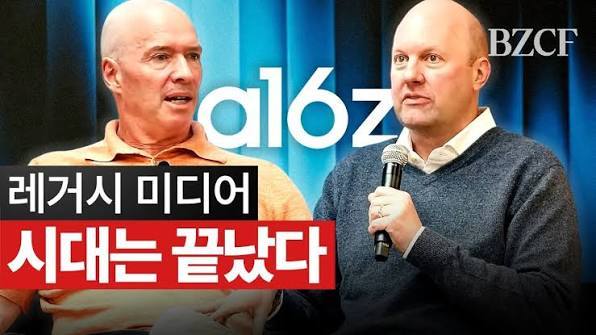
Asked what people in Washington actually read, the answer was a newsletter written by one person.
The first rule of new media is whether you can say on camera what you would say with the door closed.
Old media is dangerous because its only rule is do not be interesting.
Why Bloom decided not to polish
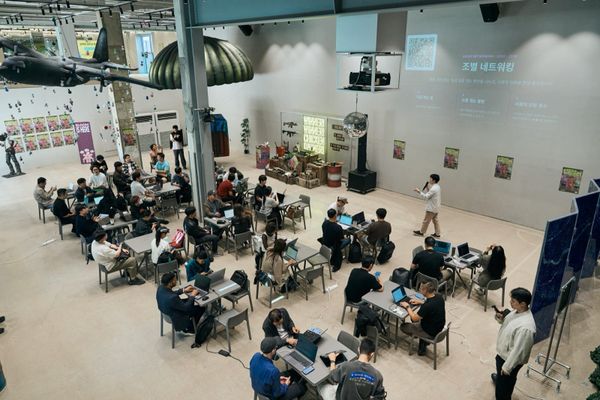
Bloom is an AI community with roughly 6,800 unique applicants, and the start was simple. Pick a topic we were curious about, invite someone worth talking to, run a fireside, and set up roundtables so the room could talk to itself.
As it scaled and sponsors came in, pressure followed, the kind that asks whether this should be more polished and more professional.
But tracing back why three to five hundred people apply each time and more than a hundred fifty actually show up, the answer pointed the other way. Someone with no media training gets up and asks the questions friends would ask each other, and that was the part you do not find at other events.
The a16z framing gave that instinct a name.
People in Washington do not read the Washington Post
It starts in Washington, where after a room full of senators and staffers, the question was what people there actually read, and the answer was a newsletter written by one person.
The surprise is that Washington was supposed to be legacy media's last stronghold. If anywhere still ran on old media it should have been there, and it did not.
Say what you would say over lunch
The first rule of new media is authenticity, and specifically whether you can say on camera what you would say with the door closed. The most common founder mistake is being too tidy and too obviously coached.
Andreessen went back to the nineties, when there were no blogs and no video platforms, so running a company meant going through the press, which meant media training, and he called it the most painful experience available. Important people came on television to say important things and looked like plastic, with the host using an anchor voice and the CEO choosing the most harmless words possible.
How CEOs measured success then is the punchline: by how little controversy they generated, with walking off stage having made no news at all as the win condition. Every piece of news was assumed to be bad news.
Then he hired a trainer who said the opposite, a former producer who announced he would not do conventional media training. He would do exactly one thing: get you to say publicly what you would say to a friend over lunch.
The logic underneath it was sharp: if you are talking about a subject you do not know inside out, what are you doing up there? Only talk about what you know deeply, and if you know it deeply you will be interesting by instinct, and then you will read as an interesting person.
Old media plays defense
Traditional journalism assigned itself two functions, fair and objective reporting and speaking truth to power, and the diagnosis is that the second consumed the first, and the character of the thing flipped.
Andreessen said he did an enormous amount of traditional press between 1994 and 2017, and roughly ninety percent of the time he was glad he did. Reporters and editors of that era largely believed startups and technology were worth explaining well to readers.
His view is that this changed around 2017, and that the side with an agenda took a decisive advantage that will not reverse.
So the new approach splits two ways: go direct through your own channels and friendly ones, or back the new voices and new media outright.
Horowitz added a contrast worth keeping, that even during the supposed golden age, if you wanted to watch a smart person talk for an hour there was exactly one option: a late night interview program broadcast at midnight, with no way to record it. Going from there to podcasts and newsletters is an extraordinary improvement.
The brand is a person now
The cleanest part of the conversation is the structural comparison.
Old media had very few channels and very few formats, and above all the brand was the company. You could talk to a major newspaper, but you were confined to one quote or a very short interview, and you were speaking for a brand rather than yourself. So media strategy collapsed into getting your name out without permanently staining the company, and since nothing said could be unsaid, extreme defensiveness was the rational posture.
New media inverts all of it, with unlimited formats and channels and the brand as a person. When people get angry at a company, they are usually angry at its founder, and the companies winning on marketing have a person as the brand.
Old media is dangerous because its one rule is do not be interesting. Being interesting is the worst thing you can do there.
One condition applies: that person has to be effectively permanent to the organization, and a marketing executive who will leave in three years does not work.
Squeezing through a narrow straw
The smartest passage is Andreessen's history of why corporate brands exist at all.
Until the 1930s, companies did not really have corporate brands, just Ford Motor Company and Edison Electric, a person's name on the door. Through the thirties and forties, large firms with abstract names appeared, then consumer brands poured out.
His explanation is centralized media, since before the 1930s media was extremely distributed, with a dozen newspapers per town and small radio stations everywhere, and then it centralized to a historically unusual degree.
Centralized media is like drinking everything through a very narrow straw, and three networks and twenty four hours in a day caps the available attention. So a company's message had to compress to the smallest possible unit to fit through, and that unit was the brand.
The problem came next, when people concluded that this was simply how the world worked. It only made sense inside a centralized media world, and that world is coming apart, which is why the new approach works and is necessary.
Three hours
Long form podcasts are the clearest expression of the shift. Asked whether a presidential candidate needs to do a three hour podcast, the answer moved from absolutely not to unambiguously yes.
Doing it means talking about anything for three hours, which is the new baseline. You have to be interesting, and you have to be capable of it, and if you cannot, you are capping your own ceiling.
The realistic objection came up too, that running a company is enough work already and being the spokesperson is a second job founders were never trained for. The answer was blunt: there is no way around it, though it does not have to be the CEO, as long as the person is staying.
Pick your fights
Asked what to do when someone attacks you, Horowitz was honest, in that he always wants to respond. The discipline is judging whether responding improves your position, or whether it is bait to make you amplify someone else's opinion for them.
Without that discipline you spend your life reacting, because the bigger you get the more incoming there is. The worst version is replying to an account with fifty followers, which wastes time and hands an audience to someone who had none.
When a real counterpart aims at you properly, it is different, a chance to build the brand, because it lets you show your position. He said a large share of their brand came out of responding to attacks, and his favorite thing he ever wrote was a rebuttal to a major newspaper that became his most read piece.
On being disliked, the position was clear: people should both love you and hate you, and lukewarm neutrality is failure, because neutral means uninteresting.
So what Bloom does
The conclusion is simple: if interesting people talk about interesting subjects, people watch to the end even with no script and no polish.
Which makes the job clear: find the interesting subject, find the person who can talk about it, and build a room raw enough that they do not stiffen up. Not smoother, but further in the direction we already went.
Keep reading
Join Bloom
Bloom builds offline rooms where people and technology meet. We run them in Seoul, and now beyond it.
- 💬 Discord community, where events are announced first
- ▶️ YouTube, full talks from past events
- 📸 Instagram, photos from the floor
- 🎟️ Upcoming events