From Claude Blue to Bloom
A senior AI engineer at Meta said the infrastructure was breaking. That conversation became a term, then a post that traveled, then a community of thousands in Seoul.

"Our infrastructure is completely wrecked right now."
That was the first thing Wonjun heard on the video call. It came from his senior, who works as a senior AI engineer at Meta. The volume of code AI produces had already passed the speed at which a person can read and review it, and people who push code up without really looking at it had appeared all over the company. Infrastructure that is supposed to be stable was shaking under the after-effects.
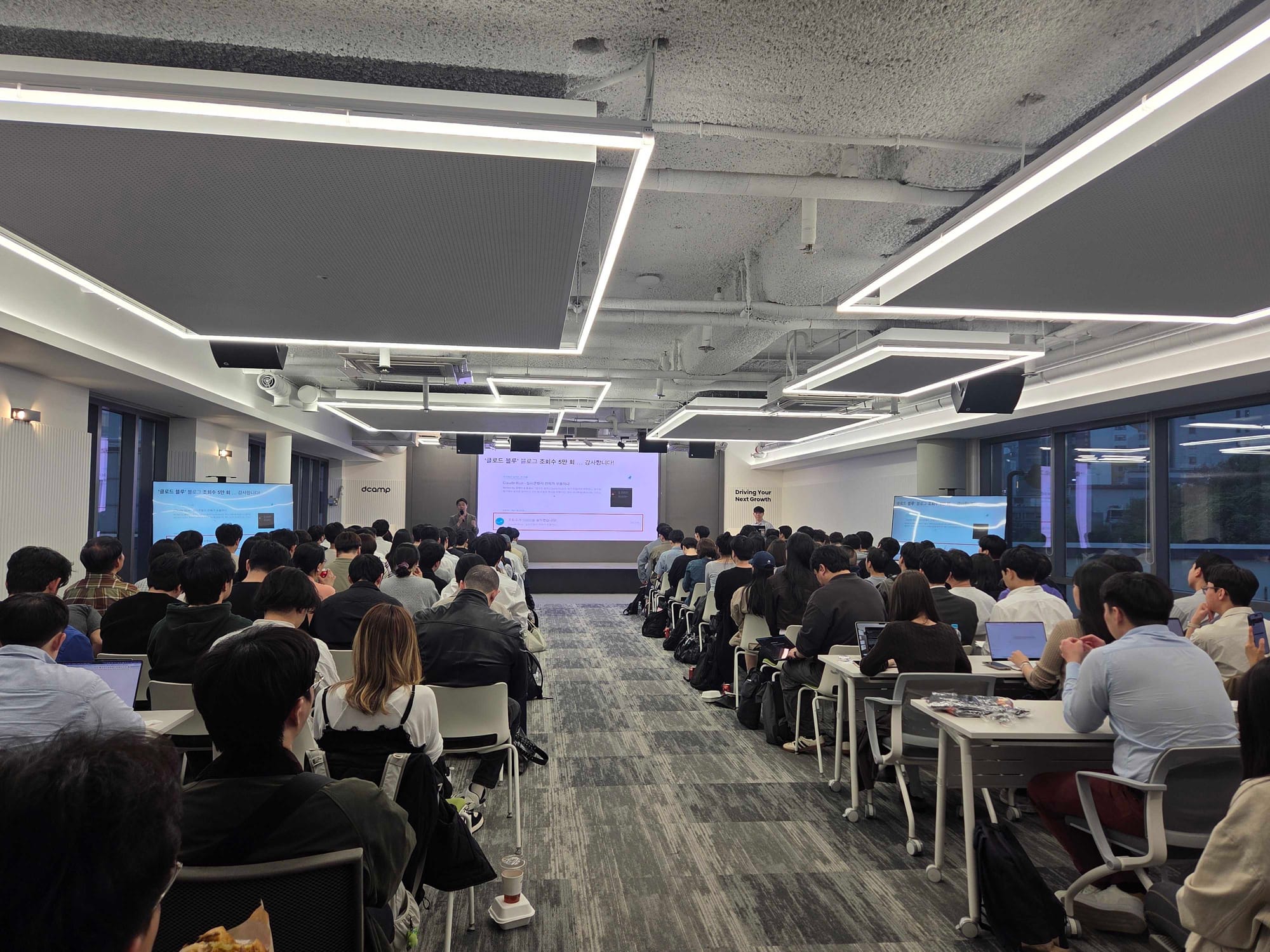
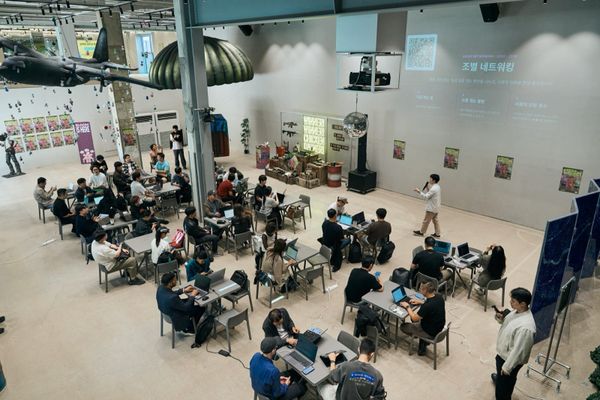
The conversation was originally a private note of Wonjun's. He wrote up what he had heard in a single day from a big tech engineer working in Silicon Valley and from a startup founder, and the piece travelled further than he expected. The response to it led to the first gathering of the Claude community in Seoul, moving from Claude Blue, which means low spirits, to Bloom, which means coming into flower.
Seoul Bloom started from that, and the team took the conversation that set it off and put it back into language a working professional inside a Korean company can use.
What is Claude Blue?
Claude Blue is a phrase for a kind of professional depression felt by the people standing at the front line of AI in Silicon Valley.
It is not the name of a particular product. It sits closer to the feeling that comes from watching expertise you spent decades building get replaced on a timescale of weeks.
What struck Wonjun was that the person feeling this is not somebody who fell behind. His senior holds a doctorate in physics and engineering, went through a large Korean company and then Meta, and is about as far forward as anyone gets, and this is what he said. "When I wrote, I had my own structure, my own methodology for visualising things. That was my edge. Now I ask AI to organise it and a polished piece comes straight back." The time it took, after trying a new model, to think that he did not have long left was no longer months the way it used to be, it was a single day.
How an AI-native organisation actually works
Look into one day of his senior's week and the phrase AI-native gets concrete. He uses Claude Code at work and Codex at home. When a new task lands he starts two agents at once. One is for execution, handed the goal alone and let loose to run ahead, and the other is for learning, there to explain to him what the task even is. After a day or two the execution agent has stacked up close to ten thousand lines of code, and while that runs he gets his own head around the work and reviews the output with yet another agent.
What Wonjun paid more attention to was the way the tools are wired together. Inside Meta, Google Drive, documents, spreadsheets, email, Jira, Confluence and the wiki are all bundled so that an agent can reach them. In his senior's own words: "I only work with agents, and the data piles up inside each tool in the shape of the output I want." Nobody opens a spreadsheet by hand or tidies Jira tickets manually, because you give the instruction inside a terminal and the database fills itself.
One more scene showed how far this has matured. At his first year-end review this year he told an internal AI tool to pull together everything he had done since joining, and it gathered the reports and documents he had written into a vast summarised list. He added his own comments and the self-assessment was finished. The first signal for a company sits right here. The starting point of an AI-native transition is not picking a smarter model, it is connecting the scattered work tools so that agents can move between them.
The other side of the convenience, a code crisis
The same setup creates problems as well, and the line about the infrastructure being wrecked belongs right here. As more people commit code written by AI without reviewing it enough, cracks are opening in the stability of the system.
His senior's prediction went a step further than that, because companies that do not build software will walk the same road. A company where three people handle with agents the work 100 people used to do will show up and undercut everyone on price, and the incumbent goes down first. After that comes a crisis inside those three, caused by losing the context of everything the agents pour out. In the end the organisations left standing are the ones where three people can genuinely conduct the agents.
Wonjun did not read this as a warning to slow down. It sits closer to an instruction to design the boundary in advance, deciding which stages are fine for AI to verify and which stages a person has to look at. Automation that flows through without review turns into debt rather than productivity.
The contest has moved to agent orchestration
In Silicon Valley people apparently do not say vibe coding much any more, because a vague request along the lines of make me a game is already a generation old. Now you define the genre, the range of character progression and the way enemy difficulty scales in a detailed spec document, and skill is decided by how well you bundle the common parts of repeated requests into skills or tools and feed them to the agent. That is why the phrase in wider use these days is agent orchestration, he explained.
The core of what Wonjun took from it is this. The parts that stay with people are the beginning and the end: knowing by instinct what should be built, and judging whether the thing that came out is any good.
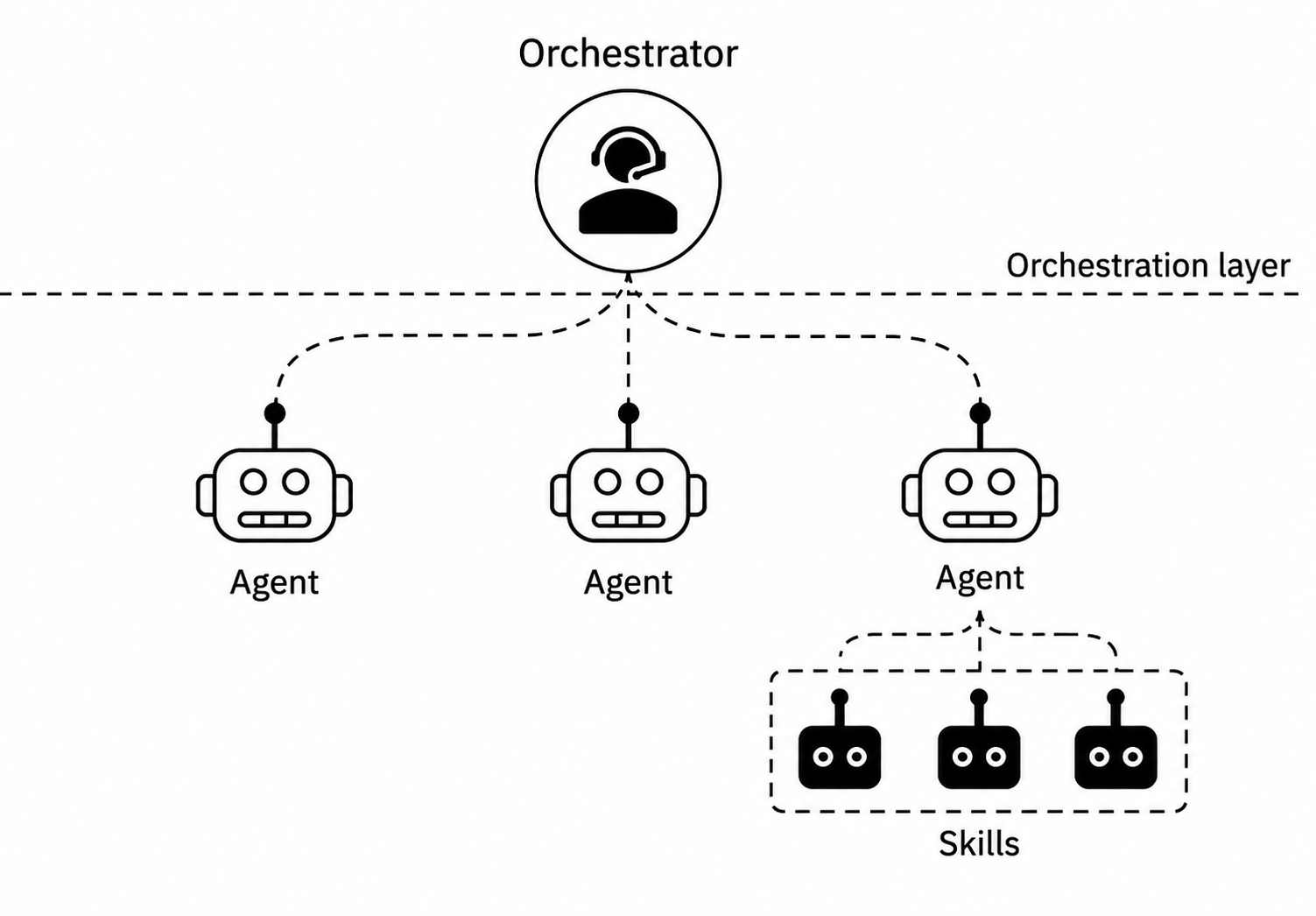
One more thing attaches to that.
It is the ability to point out exactly which part fell short and why, when the result does not satisfy you. At the level of a company, resource optimisation sits on top of that. Agents spend tokens too, so designing where to put human hands and agent hands is itself a competitive advantage.
This is not a story about engineers alone
Engineers are not the only people running AI at Meta. From what Wonjun was told, program managers, HR and sales are all attached to it, which covers effectively every job function in the company.
A manager who handles sales data at Apple has moved a whole team onto agents. Once the work of organising data and pulling out insights for management decisions was handed over to agents wholesale, the team had capacity left over and widened the scope of what it does.
Inside Meta, posts go up fairly often where an HR person shares a tool they built, along the lines of I am not an engineer but I made this. Even a face-to-face job like sales can put the key messages into a spreadsheet and get slides back. His senior no longer draws slides one at a time either, because he hands over paragraphs and graphs, says make it, then runs a couple of rounds of make this table bigger, and it is done.
His senior's conclusion was short: "I do not think there is anybody at Meta right now who is not doing AI." Office work built around documents and data analysis is next in line for this change.
An organisation that does not change gets eaten
His senior has worked at the head office of a large Korean company. The job was the same AI engineering work, yet the life around it was completely different. The biggest gap was the depth of permission you need before you try anything. At the Korean company you get your manager's approval, that manager gets approval from above, a contract gets written and the preparation gets reported. At Meta you build it, put it up, tag the people involved and ask whether what you did is all right, and one person approving is enough for it to land. Work that took 3 months at the Korean company now takes a week.
His diagnosis of organisations that do not use AI was blunt. "If a place is not using it now, there is a reason it is not, and a place like that carries on not using it." Behind the surface reason of security there is usually an interest at stake. If an affiliate supplies the internal AI tool and that relationship is already set, a proposal to bring in an outside tool shakes the structure. The formula that worked is what carried the organisation this far, so it does not change its way of working when something new arrives. And smaller, faster organisations dig into that gap.
What AI still cannot replace
The Silicon Valley founder Wonjun met the same day sat in a completely different position and spoke at a similar temperature. He was clear about one thing, which is that business still runs on relationships. However global software gets and however much of it can be done remotely, there is trust that only fills up when you see a face and eat a meal together. The channel through which he won his early customers was his university alumni network.
Wonjun saw the implication of that clearly. The more you automate with AI, the more the value of the judgement and the relationships only a person can make goes up.
- The instinct for deciding what to build
- The judgement that settles whether a result is acceptable
- Trust between one person and another
The destination of an AI-native transition is not taking people out, it is concentrating them on these three things.
What companies should do
Put the conversations Wonjun wrote up into working language and four tasks remain.
- Connect the tools first. Bundling documents, spreadsheets, issue trackers and email so that agents can move between them is the first button of the transition. Which model you pick is the question after that.
- Design the review boundary. Decide in advance which work AI may verify and which work a person has to look at. Automation without review turns into debt.
- Grow the orchestration muscle. Writing a spec precisely, pointing at the part that fell short and distributing resources between people and agents is the new skill.
- Do not limit it to one job function. Set the ground so that planning, HR and sales redesign their own work around agents, alongside engineering.
From Claude Blue to Bloom
Wonjun says that at first he asked 15 people around him and none of them felt a bottleneck caused by AI, which left him wondering whether it was still too early. After a day of talking with those two people he changed his mind. The reason we do not feel a bottleneck may be that we have not used AI enough yet, rather than that we are good at our jobs.
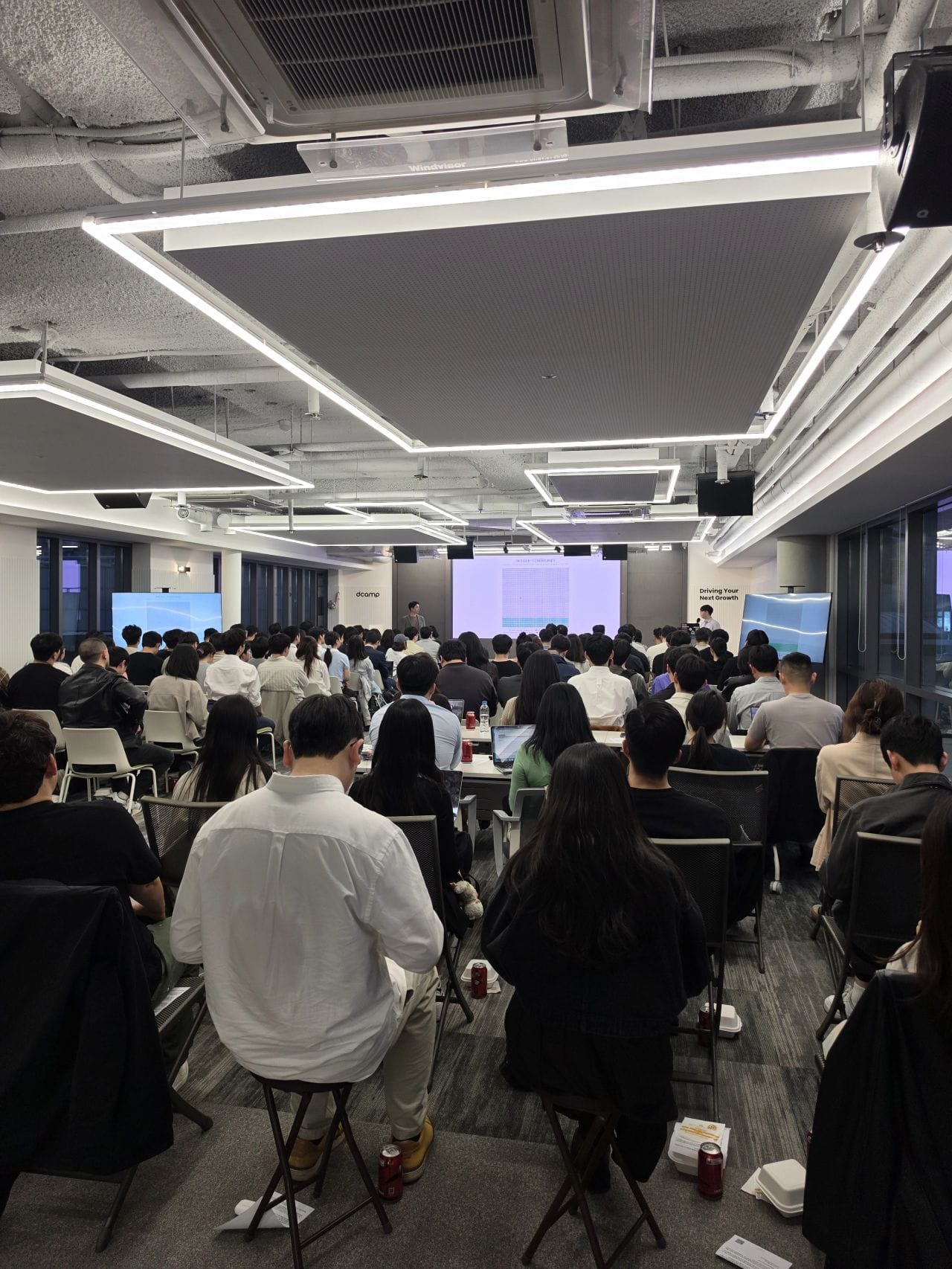
If Claude Blue is the name of a sense of crisis, Bloom is the name for facing that crisis together and looking for an answer from wherever each of us stands. Seoul Bloom is the conversation Wonjun left behind, moved offline. This blog will keep stacking up the stories that come out of making and running the events. Today's record is the first page of that.
If one agent is running on your screen right now, starting with a second one next to it would be a good place to begin.
Frequently asked questions (FAQ)
Q. What exactly does Claude Blue mean?
- It is a phrase for the professional low that people at the front line of AI in Silicon Valley go through. It sits closer to the sense of crisis you feel while watching your own expertise get replaced quickly.
Q. How is agent orchestration different from vibe coding?
- Vibe coding is a rough request along the lines of make me a game. Agent orchestration means writing a detailed spec document, bundling repeated work into skills and tools, and conducting several agents in a structured way.
Q. Do non-engineering functions need an AI-native transition as well?
- Yes. At Meta, program managers, HR and sales all use agents, which covers every function. Office work built around documents and data analysis is next in line for this change.
Q. What should a company do first?
- Connecting the scattered work tools so that agents can reach them comes before picking a better model. After that you have to design the review boundary between people and AI.
Watch it again
Keep reading
Join Bloom
Bloom builds offline rooms where people and technology meet. We run them in Seoul, and now beyond it.
- 💬 Discord community, where events are announced first
- ▶️ YouTube, full talks from past events
- 📸 Instagram, photos from the floor
- 🎟️ Upcoming events