What We Learned Running Thirty AI Events in One Year
Seventeen patterns that kept repeating: why FOMO burns out, why vibe coding raised the bar instead of lowering it, and why the moat is distribution rather than technology.

People have stopped asking how to use AI well. They now ask how someone in a different function turned it into revenue.
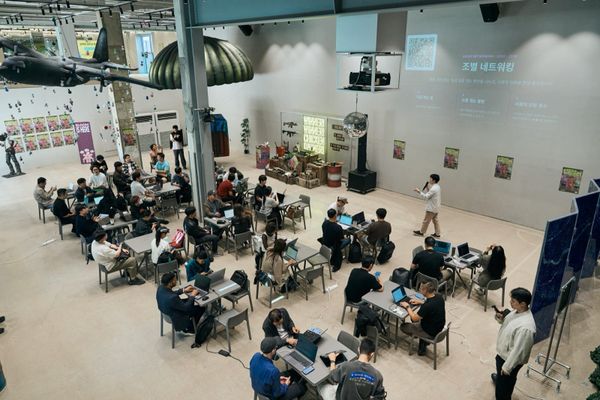
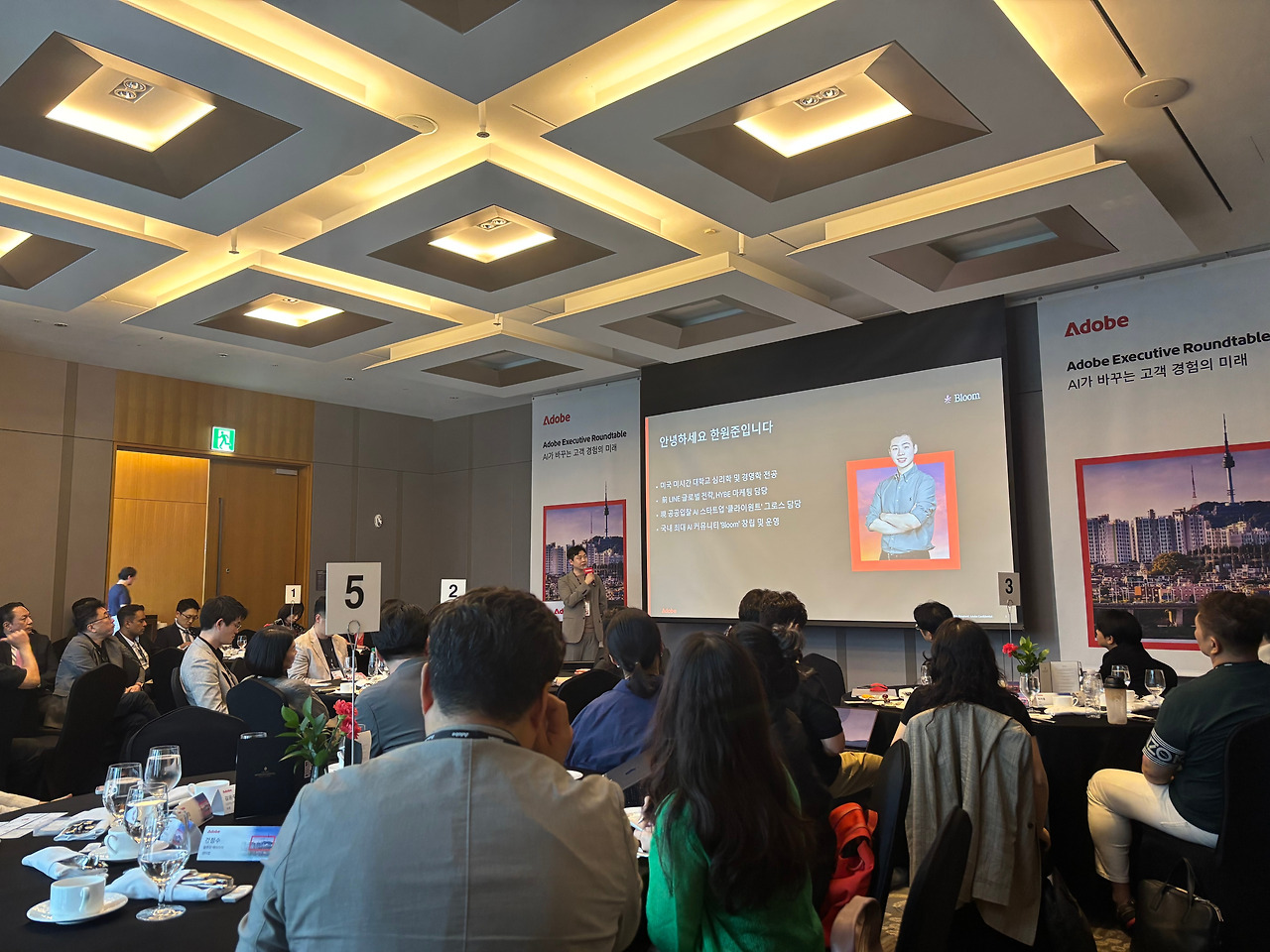
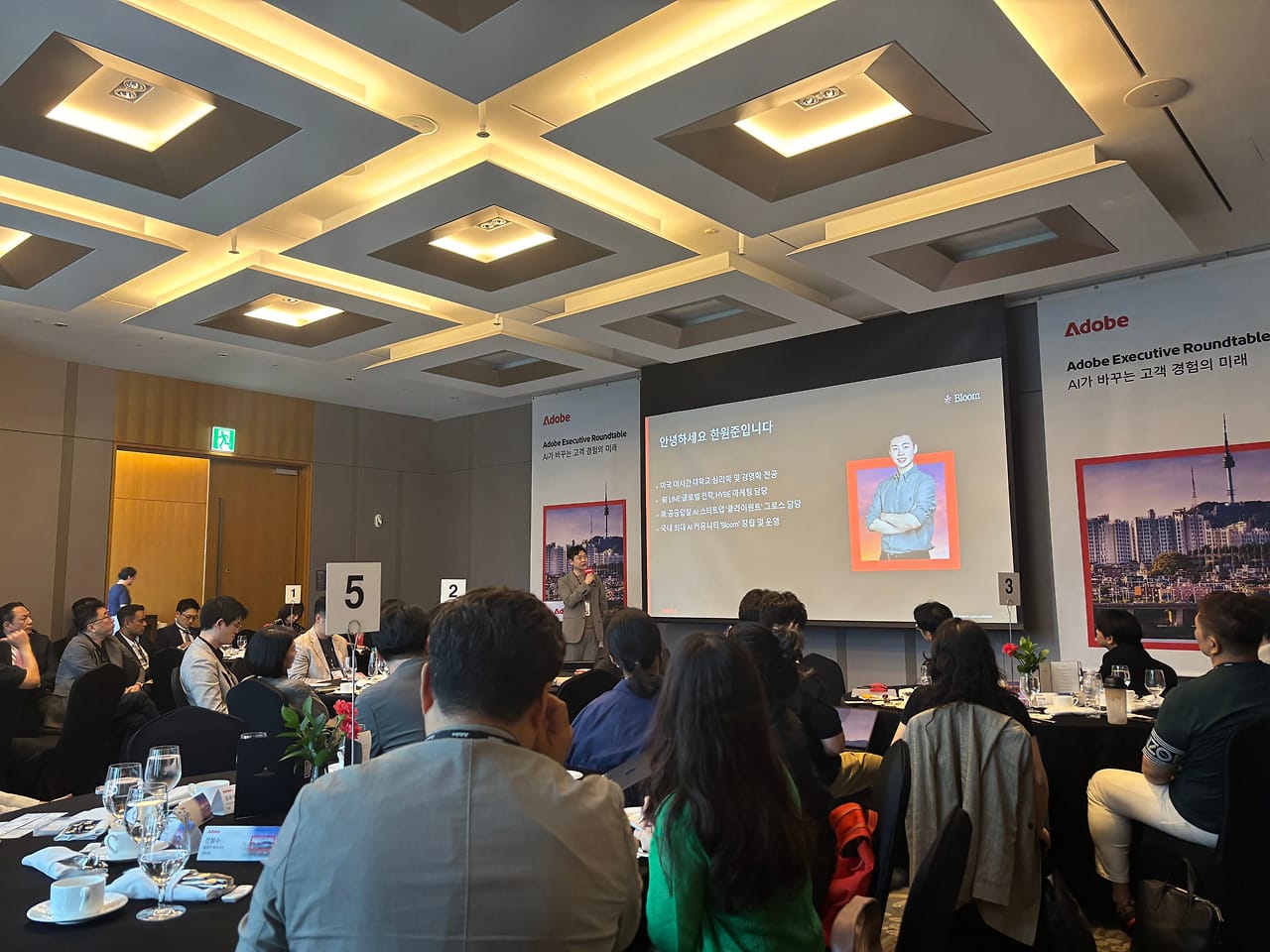
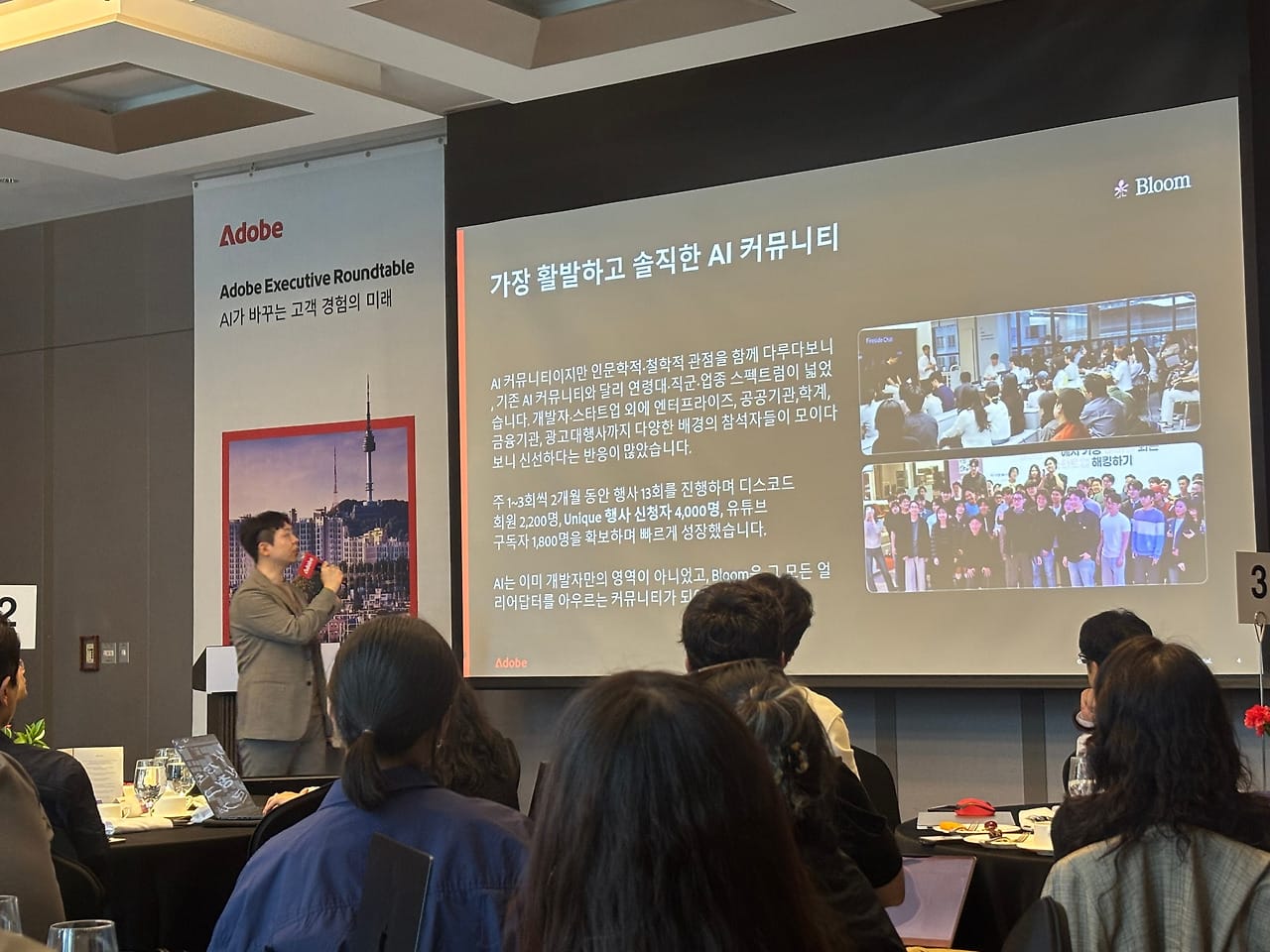
Bloom has run close to thirty offline events in Seoul in under a year, with a community of roughly 6,800 unique applicants. These are the patterns that kept repeating, collected from those rooms and from a talk given to executives at 23 Korean and global companies.
1. FOMO is a thrilling growth lever and a short one
Fear of missing out sells tickets, but it does not hold people, and it may be a poisoned chalice. And there is still no clean answer to the anxiety underneath it, though what we did find is that connection alone satisfies people enough that they will pay money and give up an evening for it.
2. The question moved from "how do I use it" to "how do I earn with it"
Interest in AI technique has flattened, while interest in cases where another function or another industry turned AI into business growth has not. As the boundaries between roles blur, even engineers now ask the revenue question first, and we keep meeting developers who have moved into sales, marketing, and developer relations.
3. Only the genuinely skilled survive
Anyone can write code now, which is exactly why fewer people can ship a real product. Building something durable still requires real knowledge, and fewer people are bothering to acquire it, so the AI era asks you to study more, not less.
4. The speed of the model creates impatience in the human
A model answers in minutes, so when a person spends the usual thirty minutes thinking, a strange competitive anxiety kicks in. Sometimes speed is the right call, and sometimes an odd, unreasonable human idea is worth far more, and telling those two situations apart matters more than it used to.
5. Three things that outlast the tools
AI is a tool, and three capabilities keep gaining value around it. Communication, meaning the ability to understand what the other person actually wants, since most people only pay attention to what they themselves are doing. Learning rate, which requires humility and curiosity as preconditions, and sharing, because the hardest asset to acquire is influence, and reputation only comes to people who give first.
6. Keep your hands on the wheel
Recognizing good output matters more than ever, but delegate everything and you dull, without noticing that you are dulling. Humans learn by making mistakes and being corrected, and demanding an instant answer skips that loop, so treat it as a back and forth instead. You may not follow every step, but you must understand the plan and the result.
7. The models got smarter and we got more worn out
Human attention has a hard ceiling, and physical stamina governs the mind more than we admit. A line from the Korean drama Misaeng gets quoted often here: if there is something you want to achieve, build your stamina first, and we are not machines, and forgetting that is expensive.
8. Maybe build the product that gets people out of the office
At the individual level, the desire to be good at your job may simply fade, since the value of human-made work is falling and vague dread makes people shrink. If that holds, the opportunity may not be another workplace tool but the tool that lets someone leave the workplace, such as software that turns one person into a viable independent business.
9. The most dangerous gap of this era
The distance between the 1 percent who use AI intensively and the 99 percent who do not is far wider than it looks. Engineering work was relatively standardized, so it was disrupted first and fastest, while non-engineering work is less structured and the change looks slower. That is misleading, because when it arrives there the wave will be bigger. Telling that story early is a large part of why Bloom exists.
10. What the world needs is a crazy idea, not more AI
AI now does most of the work, and the end of the pure software business is visible from here, so it may be more useful to treat AI as a mindset that breaks assumptions than as a technology. One US company raised serious money to put mirrors on satellites and sell sunlight as a subscription, and that kind of thinking is the scarce input.
11. The scattered generalist may win this round
The real obstacle to AI transformation inside companies is time, since nobody on the floor has room for deep training. That favors people who juggle several things at once and pay a low switching cost: throw work at the model, judge the output fast, move to the next thing.
12. People are more honest with AI than with each other
Anthropic's research found that countries with stronger face-saving norms, East Asia in particular, answer AI surveys more candidly, and soldiers in Ukraine have said AI was what pulled them out of the worst of it. The shape of the anxiety also splits by region, with wealthy countries fearing the loss of what they have and developing ones anticipating what they might gain. The East worries about a crisis of relationships, that the self disappears, while the West worries about a crisis of control, that something is taken.
13. Trigger something primal
A US company replaced cold email with cold cake, mailing custom cakes to prospects, which has nothing to do with AI. People loved it, it went viral in the Valley, and it reportedly cleared well over a million dollars a month, and detecting a primal human response and wiring it to a business has never stopped working.
14. Venture criteria changed
Investors used to ask how big the market was, and now every market size is unpredictable, because nobody forecast that coding assistants would become a multibillion dollar category. So the weight moved to the founder: ambition, persistence, and the ability to execute, or determinate optimism, meaning people who design the future rather than wait to see it.
15. In Silicon Valley, writing is the one thing people do not delegate
Which implies almost everything else is delegated. Writing is not a task, it is a mirror, and it is how thought and self get expressed, so handing it to another entity hollows out the thinking. There is a practical version of this too: we talk to computers through prompts, which is writing, and if you stop writing prompts you may no longer be the one using the AI.
16. The moat is distribution
Put bluntly, if you cannot build a route to market, building the product is wasted effort. Try selling yourself before you sell the service, since you are the easiest thing you will ever have to explain, and if you cannot market that, the product will not fare better.
17. The story is part of the product
We do not consume products as they are, because who made it, with what intent, out of what background, all of it is part of what we are buying. So skip the debate about whether to use AI: if the model builds it better, use the model, and then spend your own time on the narrative, the brand, and the story around it.
Keep reading
Join Bloom
Bloom builds offline rooms where people and technology meet. We run them in Seoul, and now beyond it.
- 💬 Discord community, where events are announced first
- ▶️ YouTube, full talks from past events
- 📸 Instagram, photos from the floor
- 🎟️ Upcoming events