
Taste, Data, and Trust: daytrip Meets Snowflake

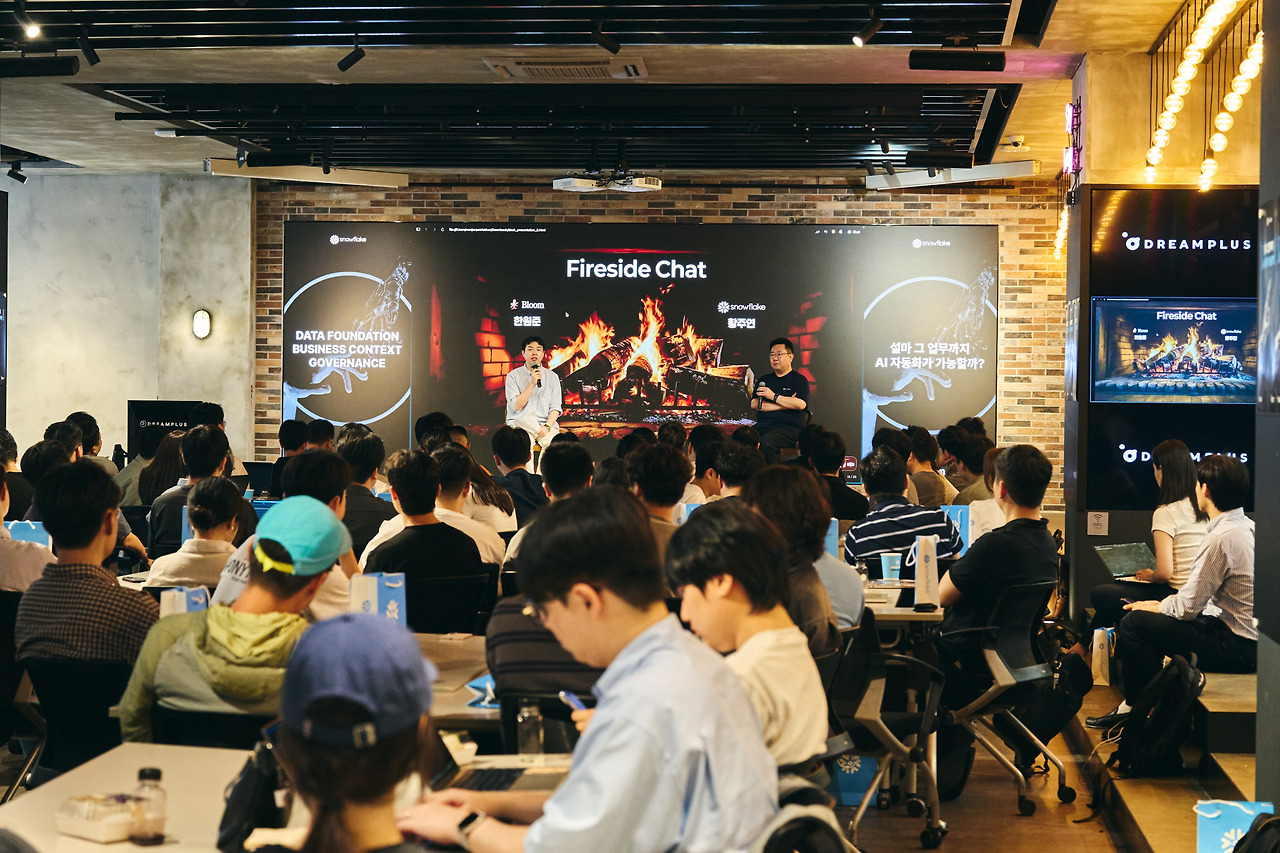
The evening held two very different conversations. One came from a person who turned taste, the vaguest of standards, into a business on Instagram. The other was about why enterprise data is so stubbornly hard. Two sessions with no apparent overlap met at the same point: good judgment comes from good data, and from the people who can read it.
🤝 Bloom × Snowflake × DREAMPLUS × daytrip
🎤 Seokho Yoon, CEO of daytrip · Juyeon Hwang, Principal Solution Engineer at Snowflake
🎟️ Event page
There was no standard for taste
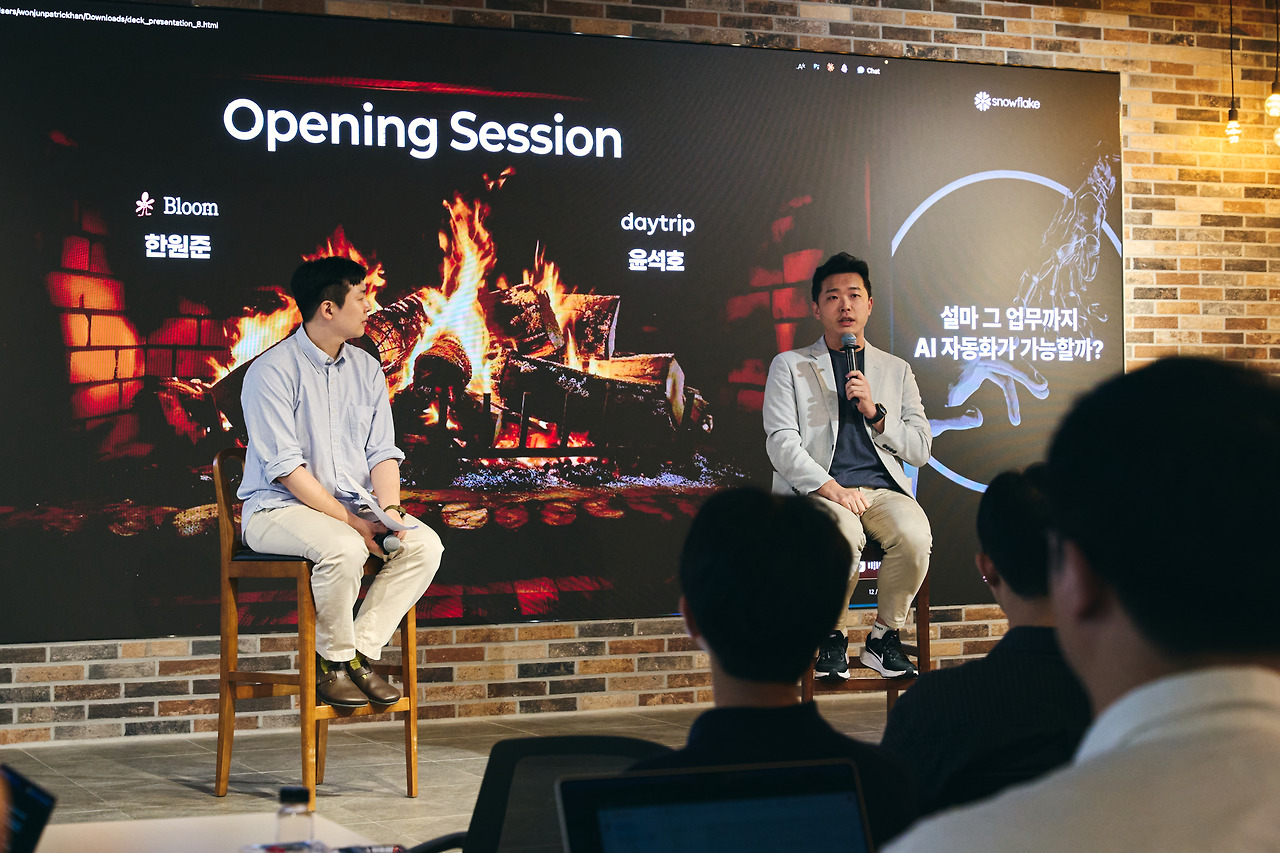
The opening session was with Seokho Yoon of daytrip, the travel curation page you have almost certainly seen on Instagram, the familiar format that lists where to go in Seoul.
Even his self introduction was unusual. He calls himself a four-jobber: a nonprofit debate society he has run for thirteen years, the travel curation platform daytrip, and being a husband and a father of two.
A human can live at 100 percent, maybe 120 as a superhuman. But holding four jobs means four places each expecting my 100. In reality I am giving each about 25.
So he lives asking how to turn that 25 into 30, then 35. It is why he cannot help caring about using AI well.
The debate society had its own logic. Korea, he argued, has no debate culture: nobody teaches it, and the word itself gets heard as quarreling. Living with structured debate in the United States, he came to believe that the creativity and scale of that country grow out of its embedded culture of debate. His example was pointed: adopting English names does not create a debate culture. The structure of thinking has to change first, and renaming people while asking for open conversation changes nothing.
He shared a recent UN collaboration. They built a channel for young people worldwide to send their stories to the UN, and 27,000 applied. Reading 27,000 applications used to be impossible. Now AI categorizes them by region and theme, and humans make decisions on top. AI sits inside the process of turning individual opinions into a collective conclusion.
Moving to daytrip, he was careful to make one thing clear: he is not the founder. His younger sibling founded it and runs the US version; he runs the Korean side. And what did the service start from?
There was no standard for taste.
People clearly feel this is beautiful, I want this, but there was no way to search by that feeling. You end up in a map app judging places by criteria that differ by person: closest, cheapest, best. So the founding idea was to build one shared standard of taste. A few creators and curators began collecting high-taste spaces under their own criteria, people started trusting the list, and that trust became the business.
The now ubiquitous format, a card post in white text listing places worth visiting, five hot spots in Seongsu and so on, was started by daytrip before the pandemic. The format did not exist on Instagram; they created the culture itself.
Why they decline 70 percent of ads
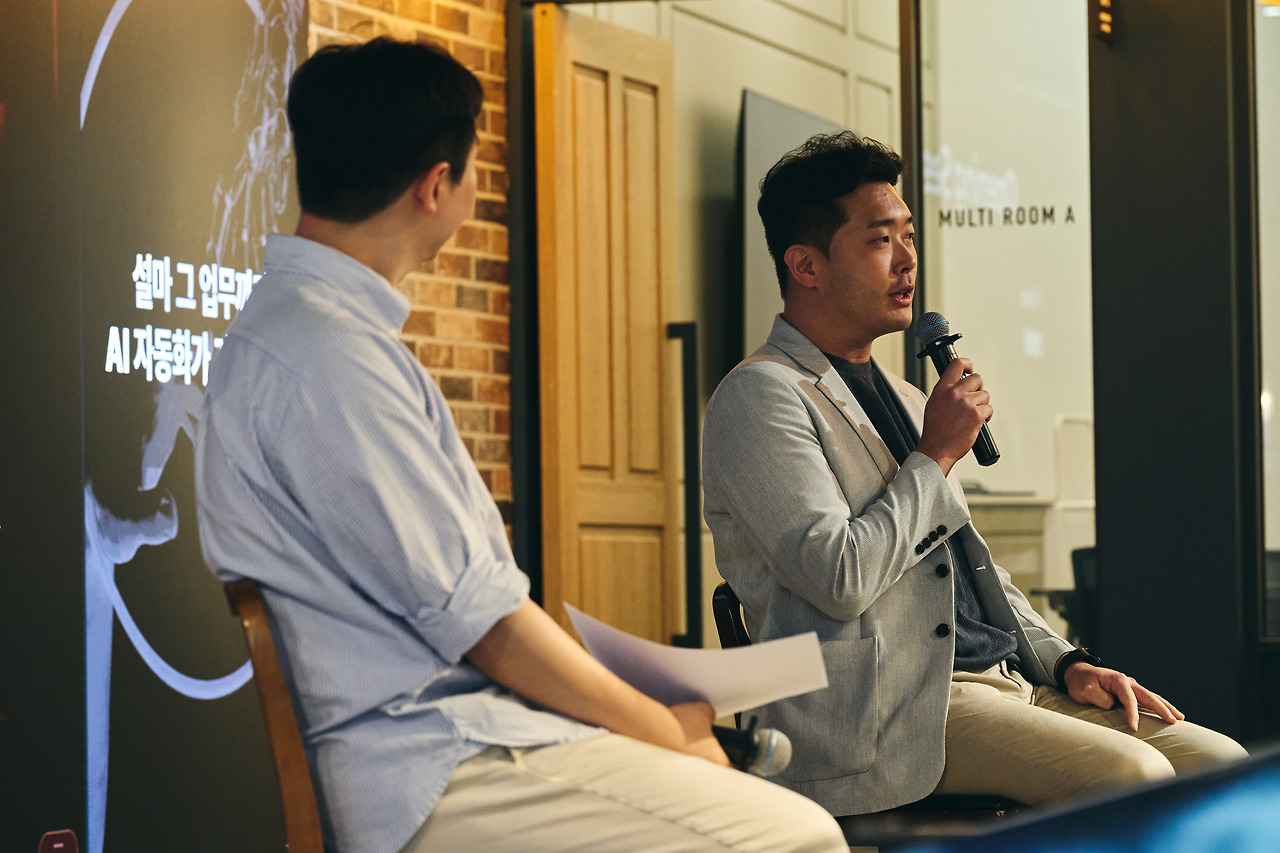
The account has about 550,000 followers. Bigger accounts exist, but what he protects is permanence: content you can always come back to, and only verified spaces. He admits this meant chasing less viral heat and giving up some revenue.
Then came the striking number: they turn down roughly 70 percent of incoming ads. The reason is mechanical. Run one ad for a slightly underwhelming space and it shows up immediately as unfollows. One ad earns less than the trust it burns.
But taste is something its maker knows and cannot explain. How do you tell what is daytrip and what is not?
Even now I do not think I can explain it in one sentence.
What is beautiful, which space is good, cannot be phrased, but we know it by feel. So daytrip did the next best thing: they turned the spaces all users agree are good into an internal algorithm, a data model of the elements that together make a space preferred. Still, pointing at a space and saying this one is good remains something only a person can do.
The metrics talk was the most practical part. On Instagram, 80 percent of the outcome is decided by the first ten minutes of reactions. And the core metric for daytrip is not likes but saves, precisely saves and shares. Shares run about double the likes and saves double the shares, so saves are roughly four times the likes; content above that line is what counts. What earns a save? Not a place you will visit today or this weekend, but the reaction of I want to go someday, let me share this so we can go together. The goal is one thing: making people record a place for the moment they will want it.
When an editor's algorithm becomes data
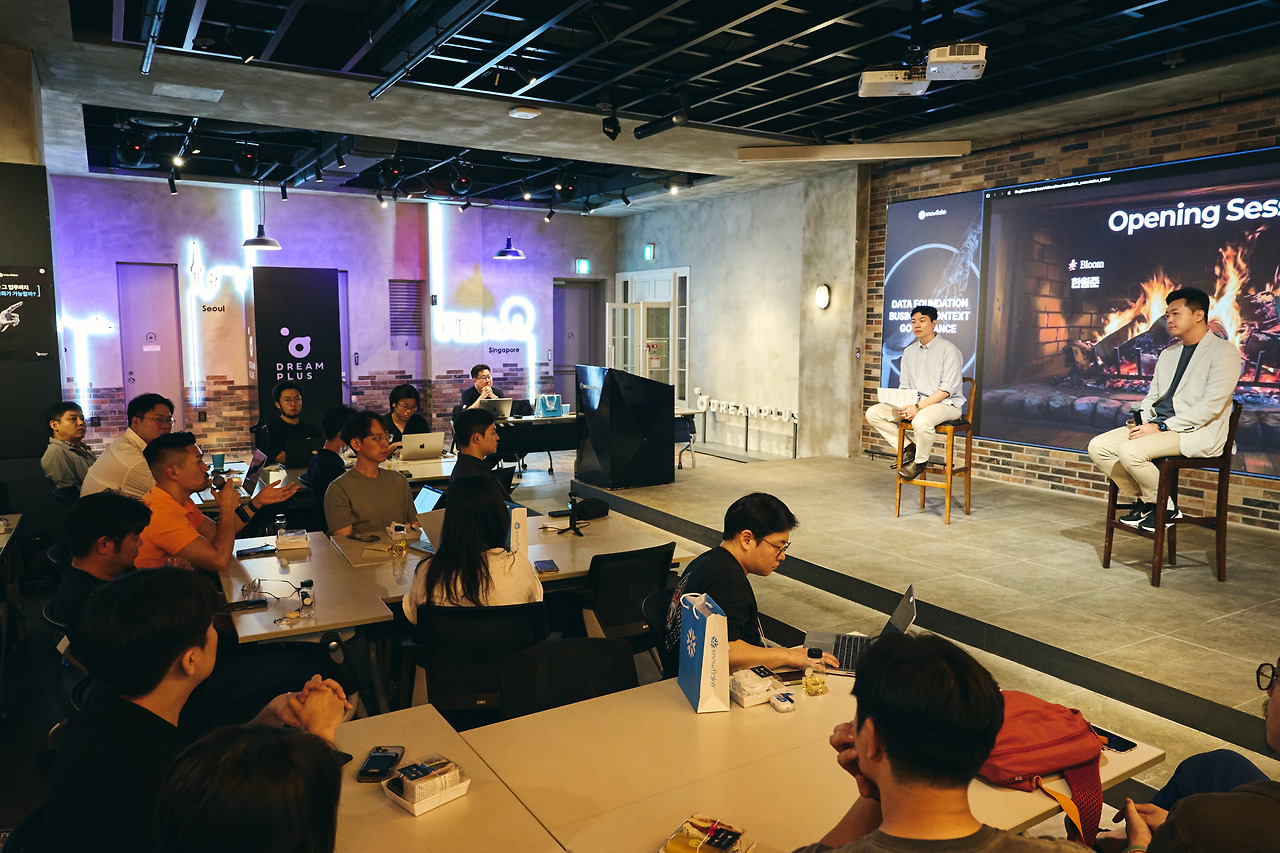
I asked what I was most curious about: how big is the team? At its peak, twenty people. It has since shrunk substantially, and the reason maps exactly onto the theme of the night.
Before AI, an editor's personal algorithm was the asset: how many channels you followed, how fast you caught new places. Nobody can physically visit every space, so editors accumulated a sense of where things surface early and pooled it. That is now what AI does. There is far more data, far faster, and decisions are easier. What is the raw material?
Five years of posting on Instagram. All of it is data.
One more layer of the business surfaced here. Space advertising is a revenue model, but trend research is actually the bigger one. The largest data on where people go belongs to the map apps; what makes daytrip different is how it categorizes the high-end need for tasteful spaces against the places everyone floods to.
Asked where users can see evidence of the automation, he gave a fun answer: followers will have noticed a recent rise in international content. Sourcing that used to be impossible domestically has become far easier, and that shift is the evidence. He was equally honest about what does not work yet: there are no data points on foreign users. They can predict where a Korean will go in New York, not where a New Yorker will go. Same for Japan. Widen the user cases, and there is no reason to stay confined to Korea.
Not a salesperson, but someone who rides along
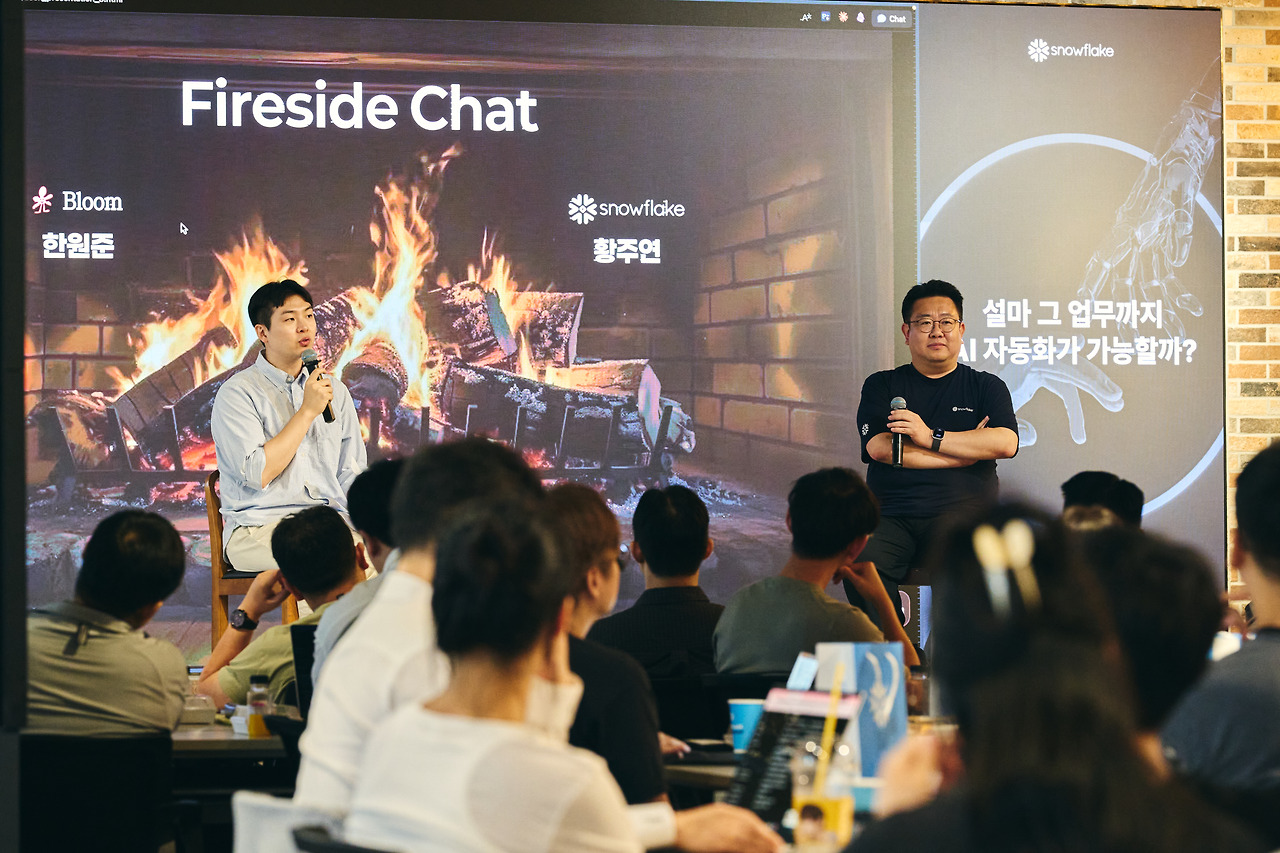
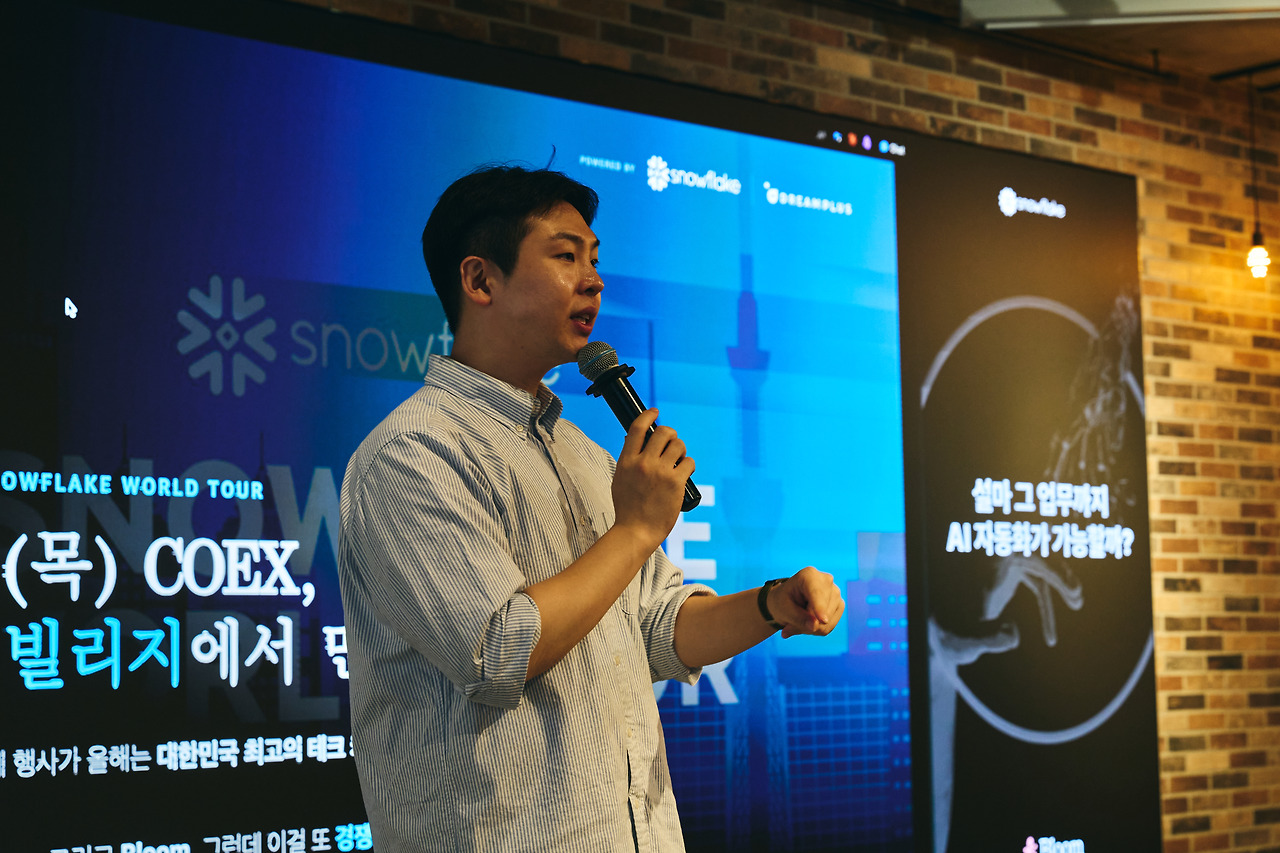
The second session was with Juyeon Hwang, Principal Solution Engineer at Snowflake.
The career path itself was interesting: IT at an e-commerce company, into Hadoop chasing bigger data, then the Hadoop ecosystem on cloud, and finally the judgment that big data belongs on public cloud rather than on-premises, which brought him to Snowflake four years ago.
His description of the solution engineer role was the best analogy of the night. A typical salesperson explains the specs of the car and how great it is. A solution engineer just gets in the car with the customer: here is how the turn signal works, here is how you park, driving together. If the car keeps drifting right on turns, you deflate the right tire a little and hand over a tuning guide so right turns work beautifully.
How much did revenue grow versus last year?
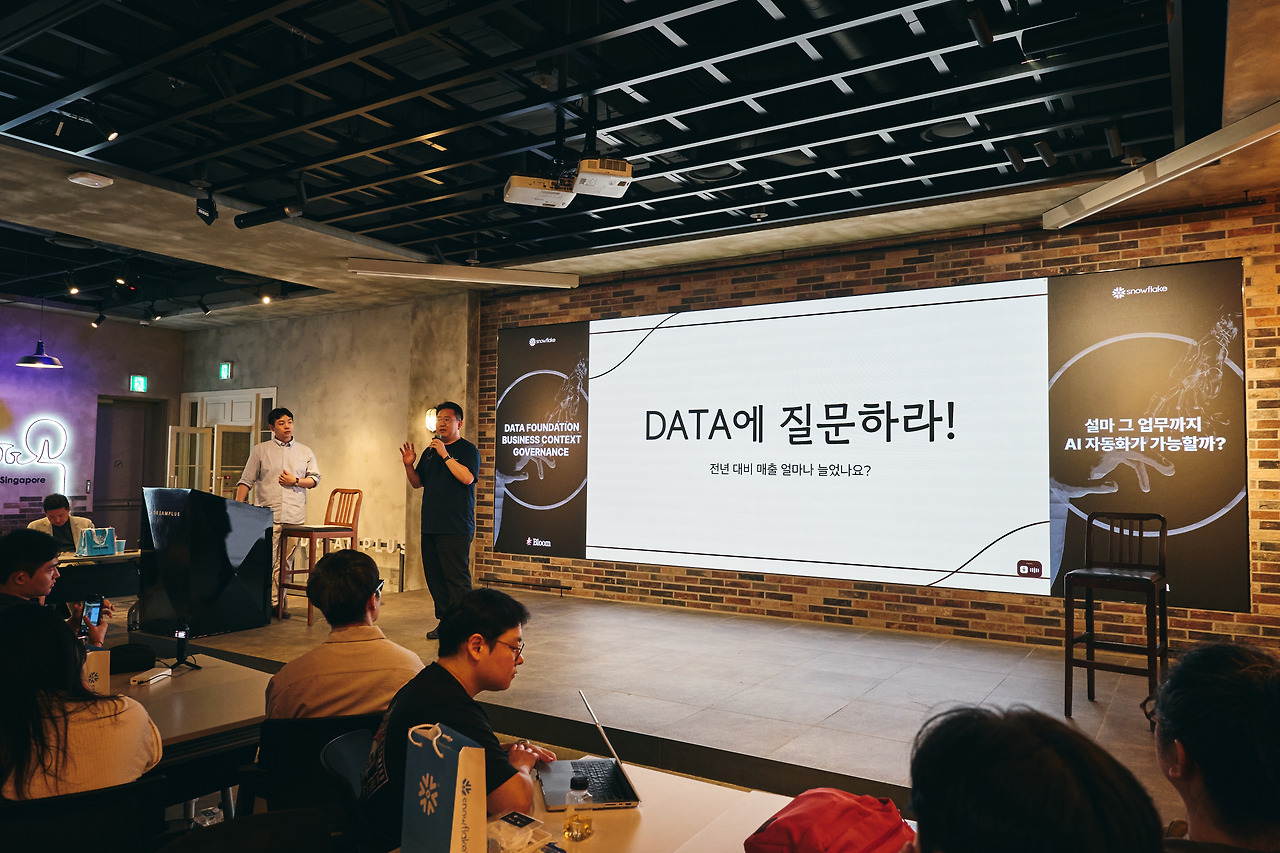
The main talk started from that question. It looks simple and splits immediately. It is July, so does last year mean January to July, or last July to this July? Change the definition and the report changes. Even revenue is ambiguous: tax included or not, returns included or not. And since every team builds the metric that flatters it, answers diverge across teams too.
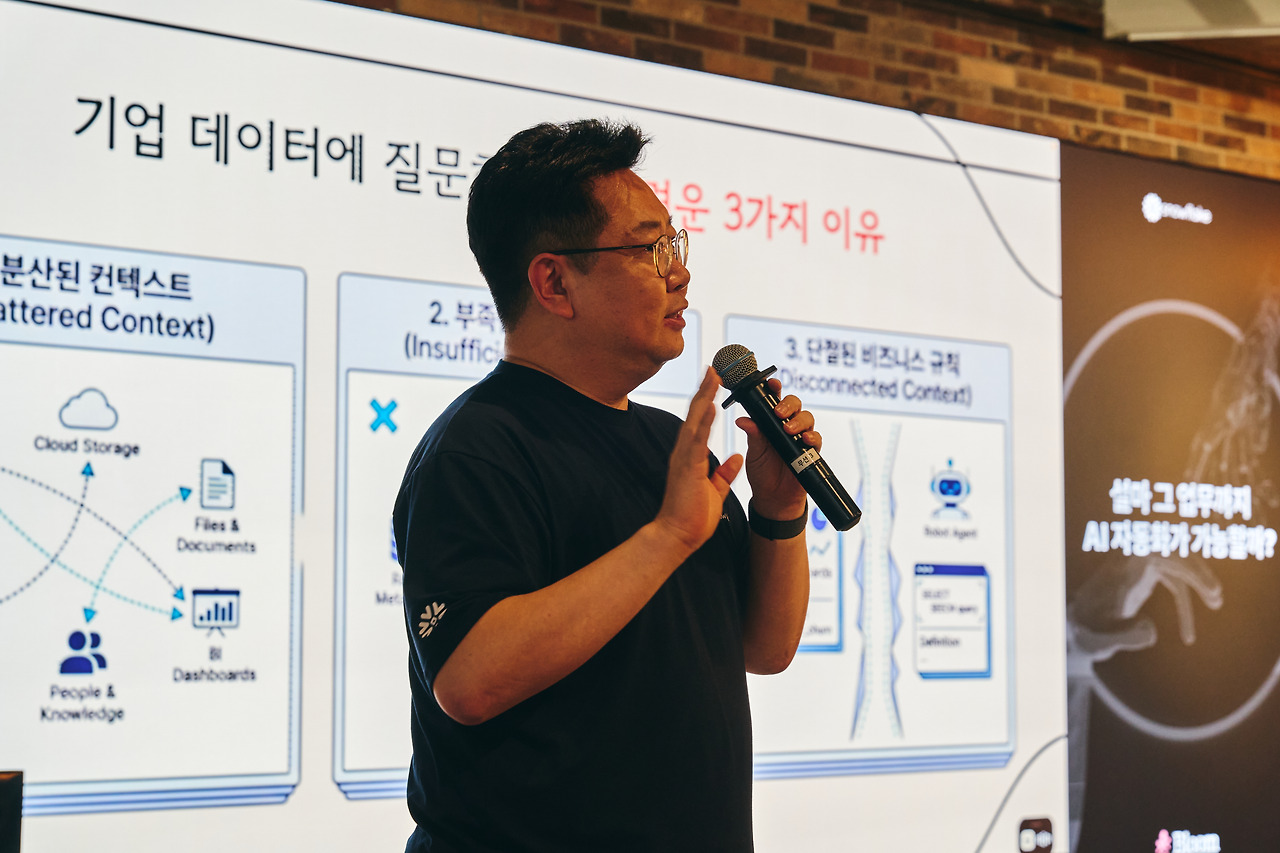
His summary of enterprise data pain came in three parts. First, you do not know where the data is. Second, even when you find it, you do not know what it means. Third, you do not know how the data relates to other data.
The full structure, in his ordering: a question arrives, so you need the data, then a catalog that defines the data, then a context layer holding each definition and the relationships between datasets. Only when that context is effectively wired into an agent do you get the answer you wanted.
And the final sentence was the conclusion of the session: what matters most in enterprise AI is trust. Build an AI you can trust first, and only then can you ask it why revenue dropped or what demand looks like next quarter. The order is clear: trustworthy AI first, business logic on top.
The hardest thing to find is not data but people
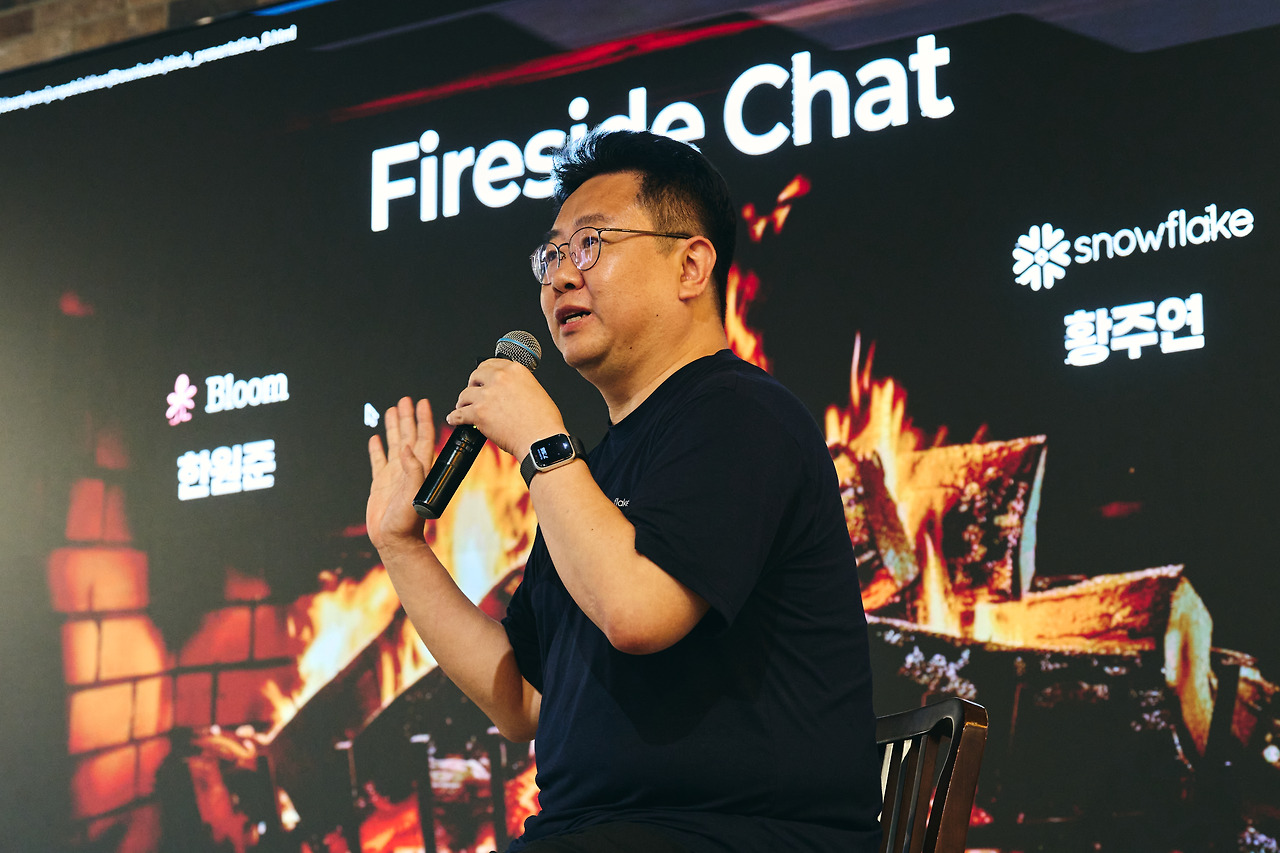
Of the three problems, I asked which is really the biggest, and whether it is a technology problem or a people and culture problem.
A people problem, he said. The hardest thing to find is not the data but the context itself, the meaning the data carries, and that is a people problem because it is a question of who still knows it. Someone built every system, but most people leave within four or five years, so 80 percent of systems become legacy. Nobody remembers why it was built this way.
The room laughed, and I suspect most people were picturing their own company.
Asking AI to raise revenue is asking for lottery numbers
Where should a company that wants a full AI transformation start? The answer inverted expectations. It is tempting to start by preparing the data, but it is the reverse: decide first what you want AI to do. Without a goal you cannot decide which data to prepare or how. And the goal must be concrete. Saying you want AI to raise revenue is no different from asking it to pick lottery numbers.
I also asked about the Korean market, because at a recent Bloom meetup in Singapore I had heard that Korea's high AI adoption is pulling global companies to put their Asia-Pacific hubs here. His answer pointed the same way. Every company in the room carries some mandate to adopt AI and a real intent to use it. Korea approaches AI with a goal of producing results rather than fear or rejection, and compared with markets still stuck on whether AI can be trusted at all, that is a clear difference.
Business gets the spotlight, IT does the work
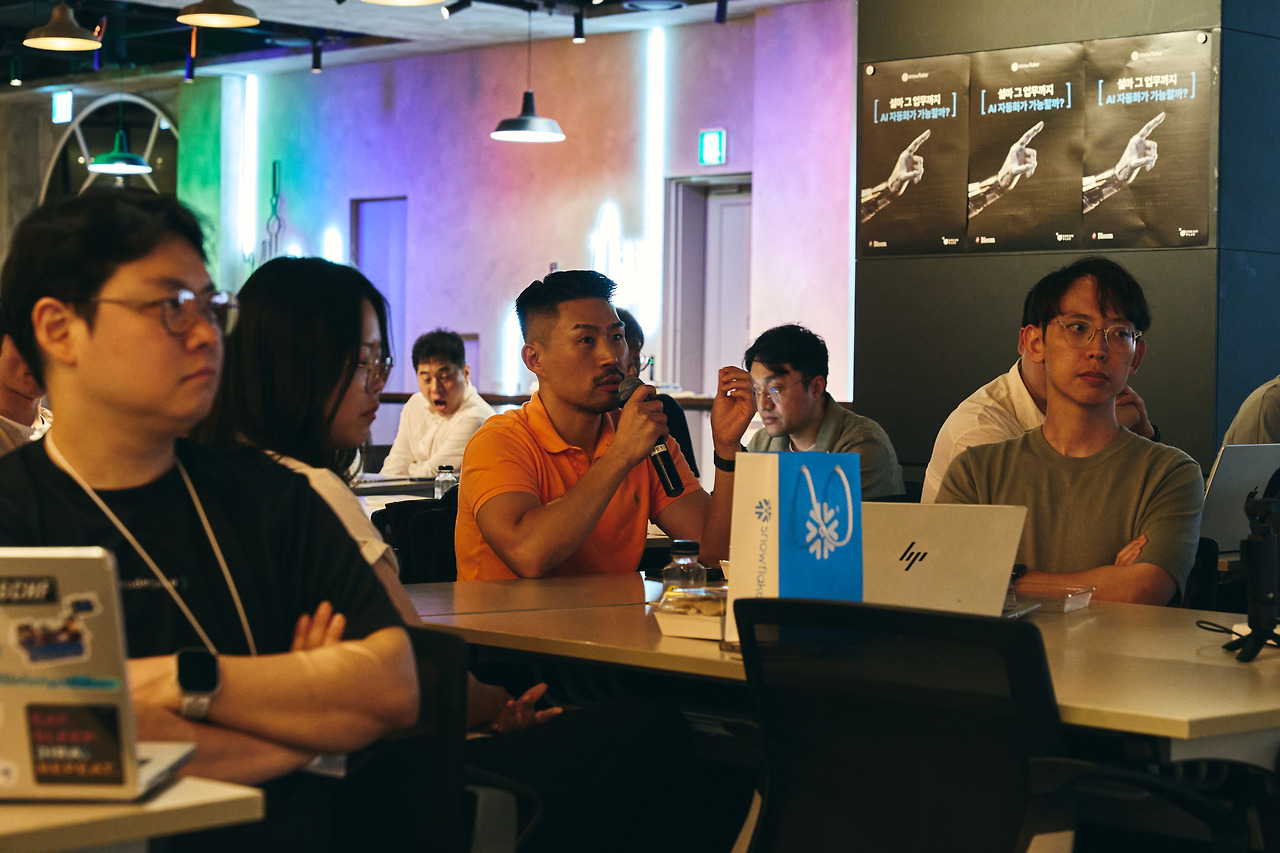
What keeps a system from becoming the thing nobody uses? Here the conversation turned organizational. AI needs both organizations. Ideas come from the business side, which does not know how to build them; and because enterprise AI runs on data, the business side cannot solve it with software on a personal laptop, so it needs the infrastructure team. But the infrastructure team keeps its ideas quiet, because every idea becomes its own workload.
The structural problem he named was the heart of this section: when the business side gets the spotlight and IT does the work, good outcomes are hard to build. What is needed is a culture where the work is shared and, when results come, the fruit is shared back.
An audience question hit exactly that nerve: the company pushes hard for AI adoption while security demands separate review and approval for everything, and the deeper you go into data analysis the harder those two demands collide. Heads nodded around the room. Everyone is living it.
And on August 27, at COEX
On August 27, Bloom was invited to Snowflake World Tour at COEX as one of six Korean communities with a booth. We turned the opportunity back to our members, running fireside sessions at the booth every hour, and handed one stage to a 17-year-old founder from the community. That day has its own recap: Your next tool is our textbook.
FAQ
What is daytrip? An Instagram-based travel curation platform with about 550,000 followers that built the now familiar card format for listing tasteful spaces, and increasingly a trend research business built on five years of curation data.
What are the three hard problems of enterprise data? You do not know where the data is, what it means, or how it relates to other data. The scarcest resource is context, which is a people problem, since the builders of most systems have long left.
Where should an AI transformation start? Not with the data. Decide concretely what you want AI to do first; only then can you know which data to prepare. Vague revenue goals are lottery tickets.
Scenes from the night
Join Bloom
Bloom builds offline rooms where people and technology meet. We run them in Seoul, and now beyond it.
- 💬 Discord community, where events are announced first
- ▶️ YouTube, full talks from past events
- 📸 Instagram, photos from our events
- 🎟️ Upcoming events