The AI Creator Working with Disney, the Foreign Ministry, and CJ

Anyone can make something with AI. Turning what you make into a business is a completely different skill, and the key, as this evening made clear, is originality and story.
Putting Keep in front of his own name
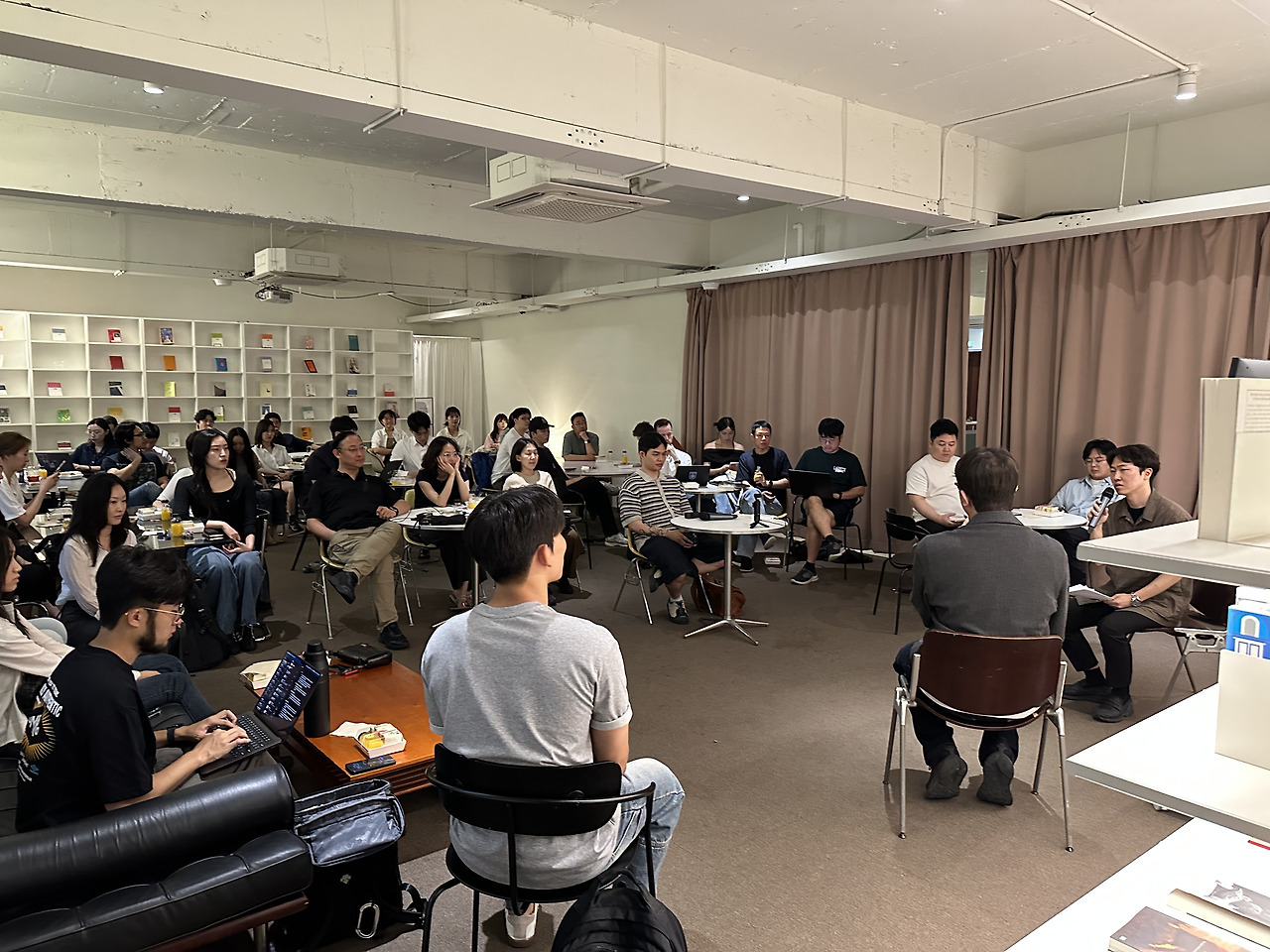
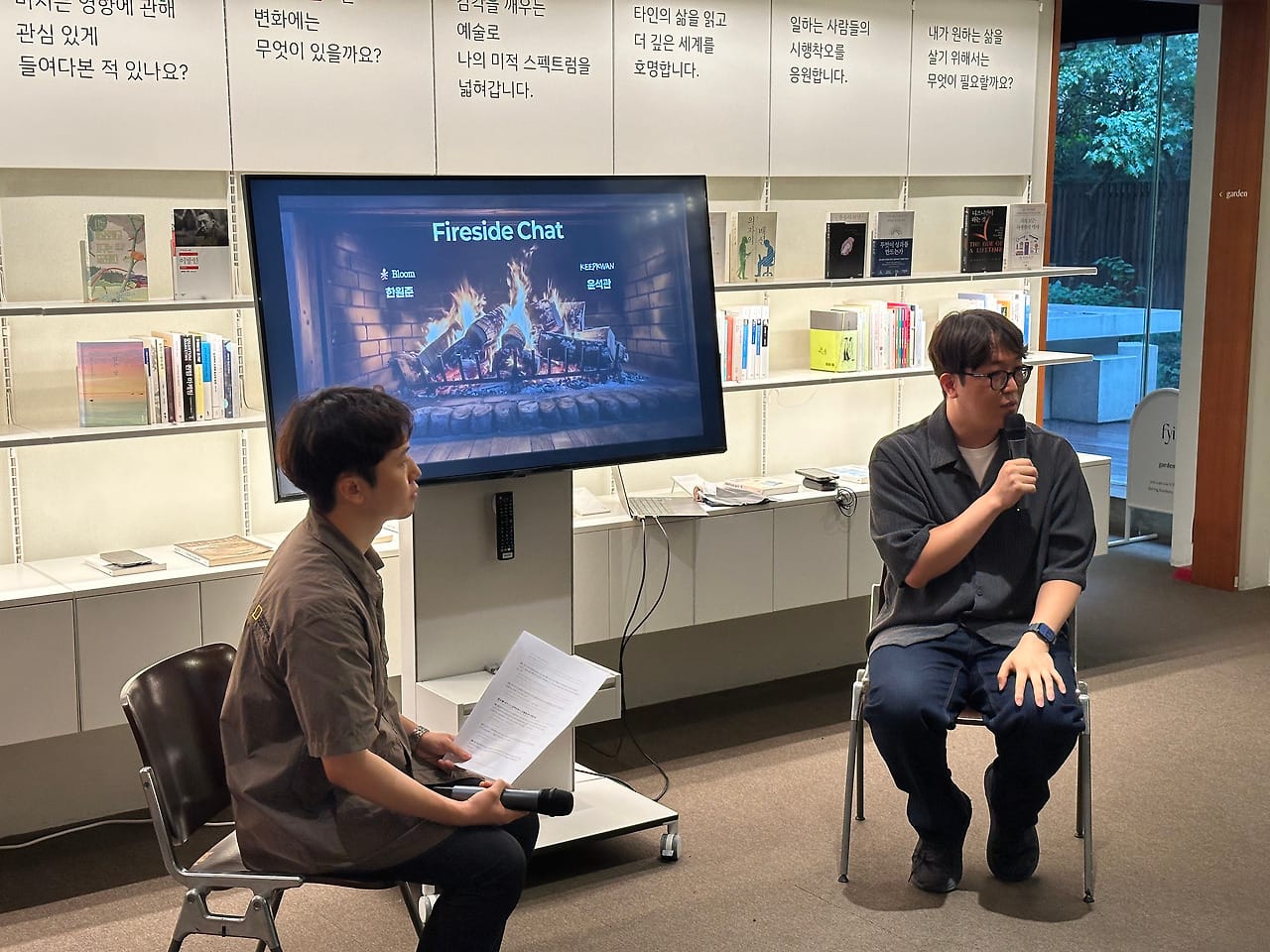
The speaker was KeepKwan, an AI creator who has worked with Disney, the Korean Ministry of Foreign Affairs, the Korea Heritage Service, and CJ. The origin of the nickname says a lot. He spent twelve years in business strategy at SM C&C, drafting mid to long term plans, and first met AI in 2021. It fascinated him, and it also scared him: would this thing eventually swallow him? So he took his given name, Seokkwan Yoon, and put Keep in front of it. KeepKwan, a name he carries like a personal declaration to protect himself.
The moment AI felt like his own arena came while researching what his company should live on five and ten years out. Before pitching anyone, he decided to find out what this technology really was, working nights and weekends. He fed a classical Chinese novel he had written in high school into an early beta of Midjourney. The output was crude, but the fact that text could come back as something with color shocked him. He was convinced it would become a serious weapon in the content business.
Designing his own exit as a test
He did not set out to quit. At first he hoped to build something as a new business inside the company. But the work turned out to be too much fun, and watching things take shape one by one, he tasted freedom. Even then he did not walk out. He gave himself a year of tests, and only if he passed would he leave the company he had served for twelve years.
The tests ran on two tracks: educator and artist. He had studied business and lived in numbers and slide decks, but he saw himself as an artist, and he wanted to become an educator who teaches not just how to use AI but how to protect what is human with it. As an artist, hold an exhibition under his own name. As an educator, open an offline class and see whether enough people sign up. Stage by stage, he cleared each bar. A strategist to the end, he ran his own resignation like a project plan. Asked about the best part of his third and fourth year as a freelancer, he said freedom. The worst part was also freedom: with the frame gone, he works weekends and dawns, and the freedom of time can quietly disappear.
Anyone can make. Selling is different
Connecting what an individual makes to a business is another matter entirely, the same theme now echoing through startups: do not just use AI, make money with it. His first collaboration was with Disney. He had started his artist life on X, posting work steadily and exhibiting abroad, and the opportunities followed.
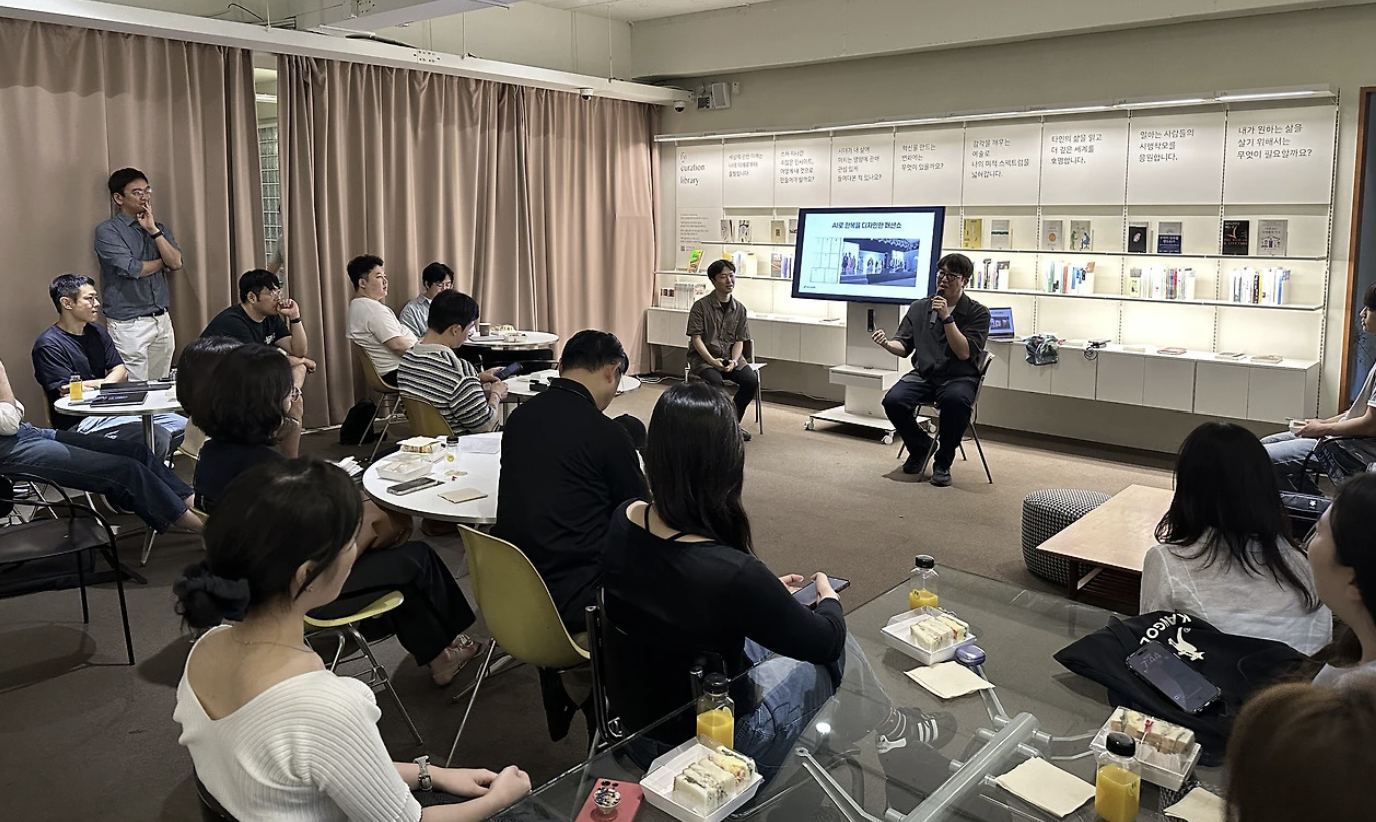
He constantly asks himself why they found him, and the answer he keeps landing on is story. A clear story, a clear concept, a clear worldview, held consistently across the work. He builds content around Korean tradition and mixes it with other elements, branding himself so that Korean tradition brings his name to mind. Companies and institutions look for AI artists precisely because of that edge and originality, he said. Which is why his classes always start with the same instruction: before you touch AI, find the worldview and the originality inside you. Find your color.
Sketch first, then open the AI
Even his theme came from ordinary life. On a business trip to New York he saw hanbok in a shop window labeled Chinese kimono. If I barely know my own tradition, he thought, how would foreigners know it? So he decided to make content that teaches it. Then he discovered that AI itself did not know hanbok, generating kimono or Qing dynasty costumes instead. Fine, he decided: I will teach the model and study alongside it. To this day he checks the historical accuracy of every piece.
So he sketches before he opens any tool. Not which model to use, but what is in his head, on paper first, then the details: how the garment ties, which traditional pattern is correct. He teaches the same way. In a sixteen week university semester, the first six weeks are paper and pencil only. Students think about prompts and outputs so much that they forget to pull out what is already inside them. He trains them to find subjects through writing, doodling, taking photos, and walking through familiar streets.
Running himself like a company
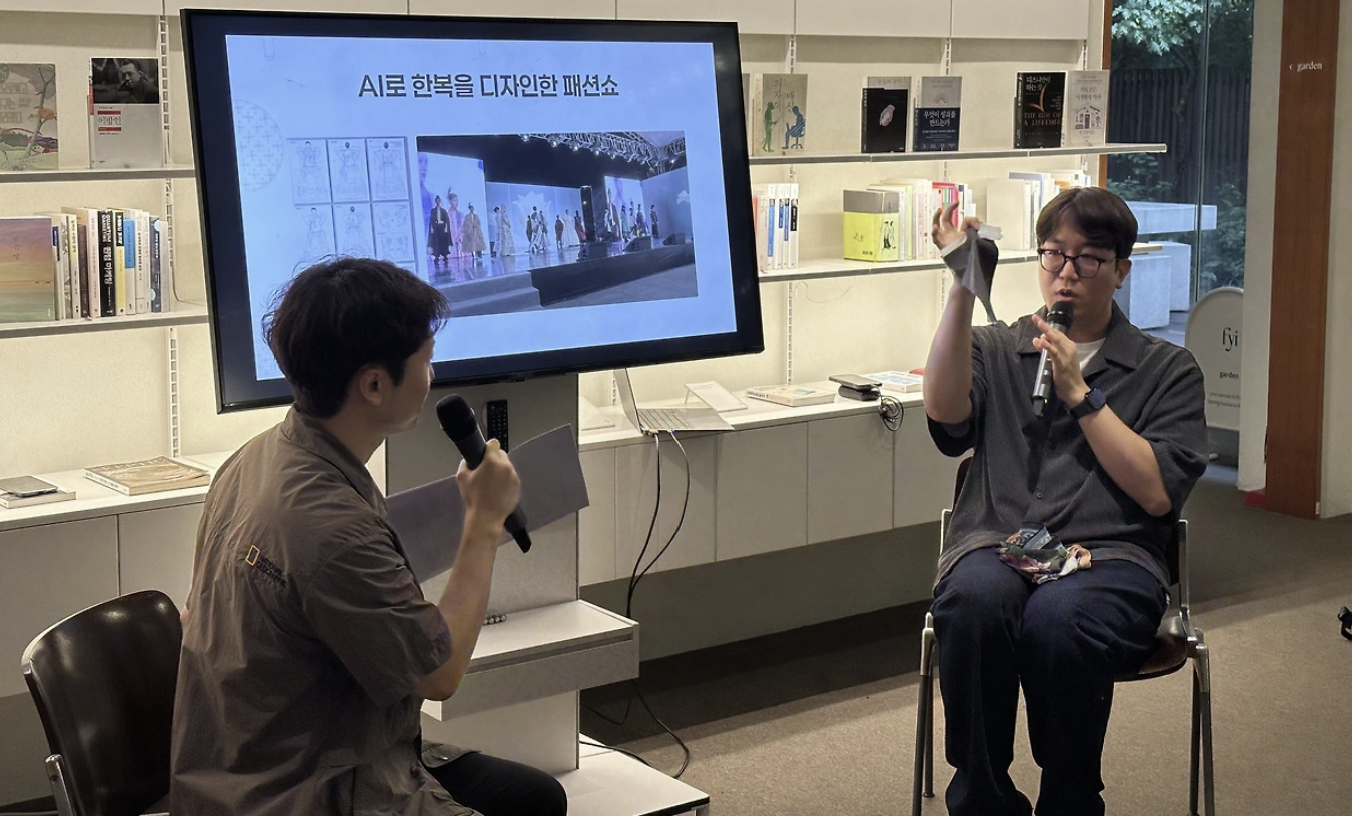
He treats himself as a company and sets yearly KPIs. The long term strategy is to move beyond images and video into physical products. Last year the theme was wearing. From AI photo spreads to fabric to silk screen, step by step, until he produced a wearable hanbok based on the archaic letterforms of the Hunminjeongeum manuscript, and in November staged a runway of AI designed clothing in Gwanghwamun Square. One piece photographed the dancheong patterns of Geunjeongjeon Hall in Gyeongbokgung Palace and swapped the traditional five colors for neon; in warm weather the black garment reveals its neon patterns. This year the theme is scent, visualizing fragrance instead of describing it. Next year is eating, and the ultimate goal is a taste the world has not seen. He does not stop at AI output; he carries it offline, into products, into revenue.
He also sees job boundaries dissolving. A man with no technical background taught an AI creative class for the HR organization of a large company, and the HR staff, keenly interested in content, built HR materials as their final projects. Work that once meant asking the marketing team for help is now handled inside the team. What he told the audience stuck with me. Everyone treats AI as a tool that generates things, he said, but for him AI generates time. When an eight hour task takes minutes, the remaining hours go to learning something new. To keep the feel of his hands, he studies pottery and bonsai.
Dealbreakers and the human one percent
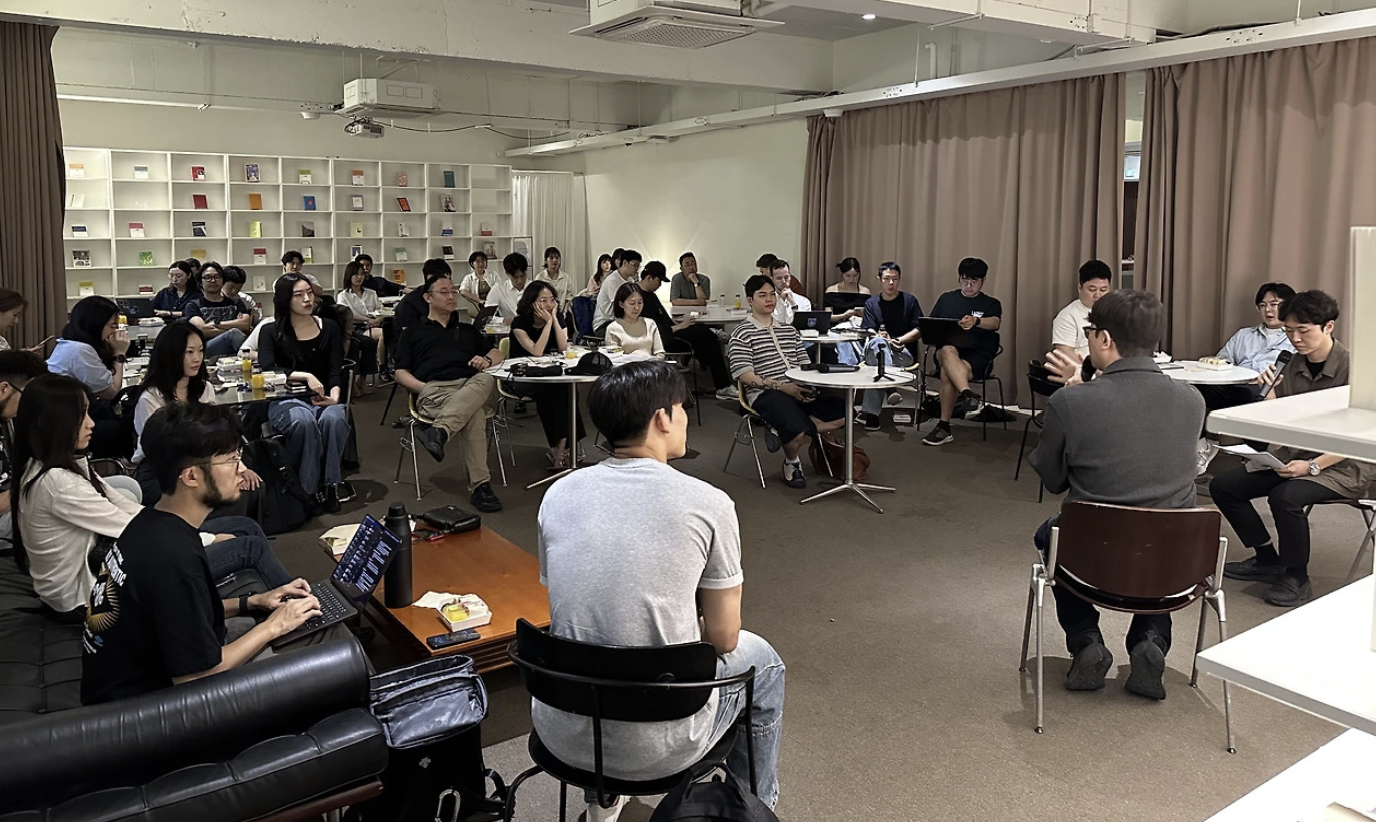
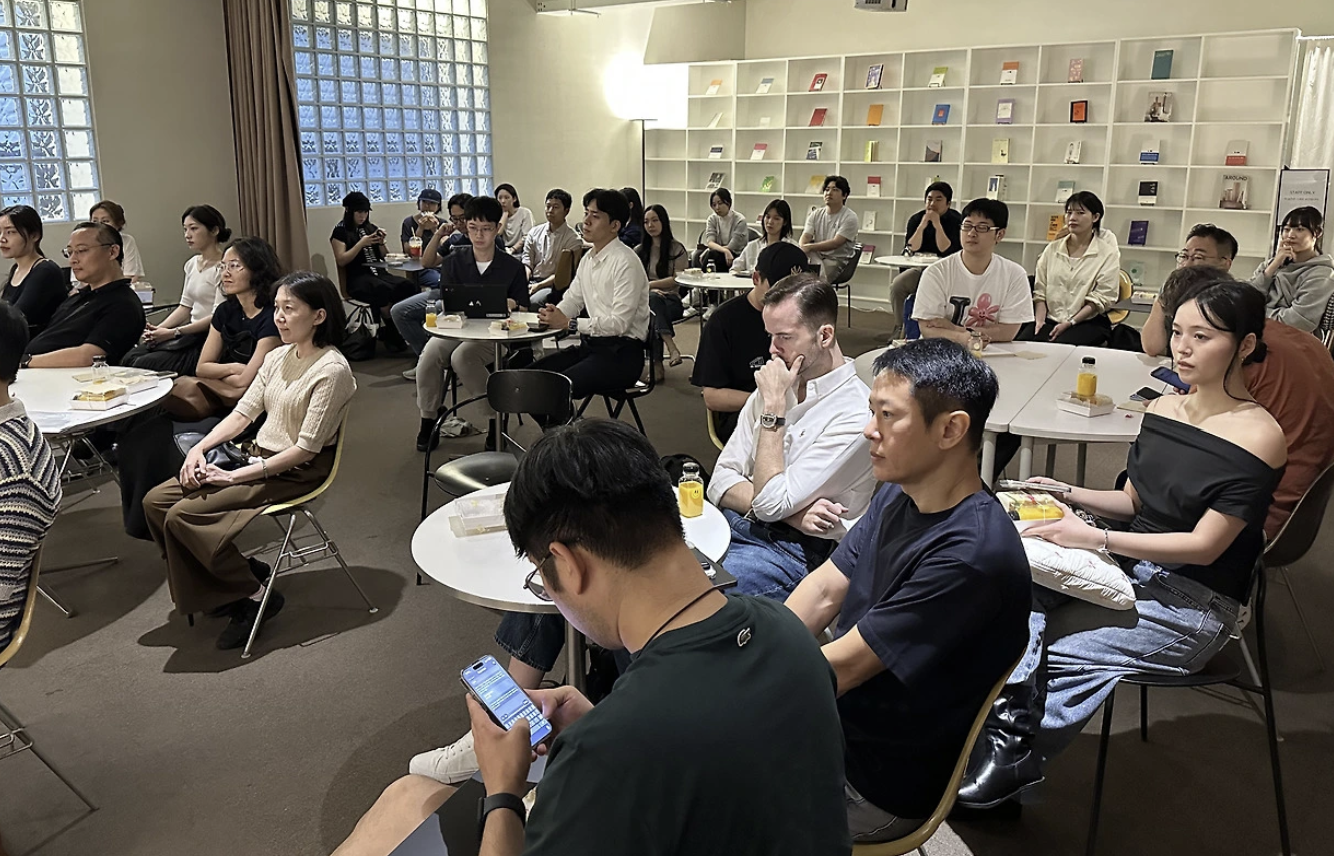
The small group discussions circled two questions. What makes you instantly write off an AI output, and what is your own touch that puts human warmth back in? The dealbreakers converged across tables. The most common answer was clumsy imitation of reality: when AI creates something that does not exist, it reads as creation, but when it imitates reality and fails, it falls into the uncanny valley. Consistency came next. The first draft looks plausible, but by the second and third revision the face and the essence drift, and people go back to Photoshop. Broken Korean fonts, or numbers shipped without a single check, also made the list. Interestingly, many felt that looking AI made is itself no longer a real problem.
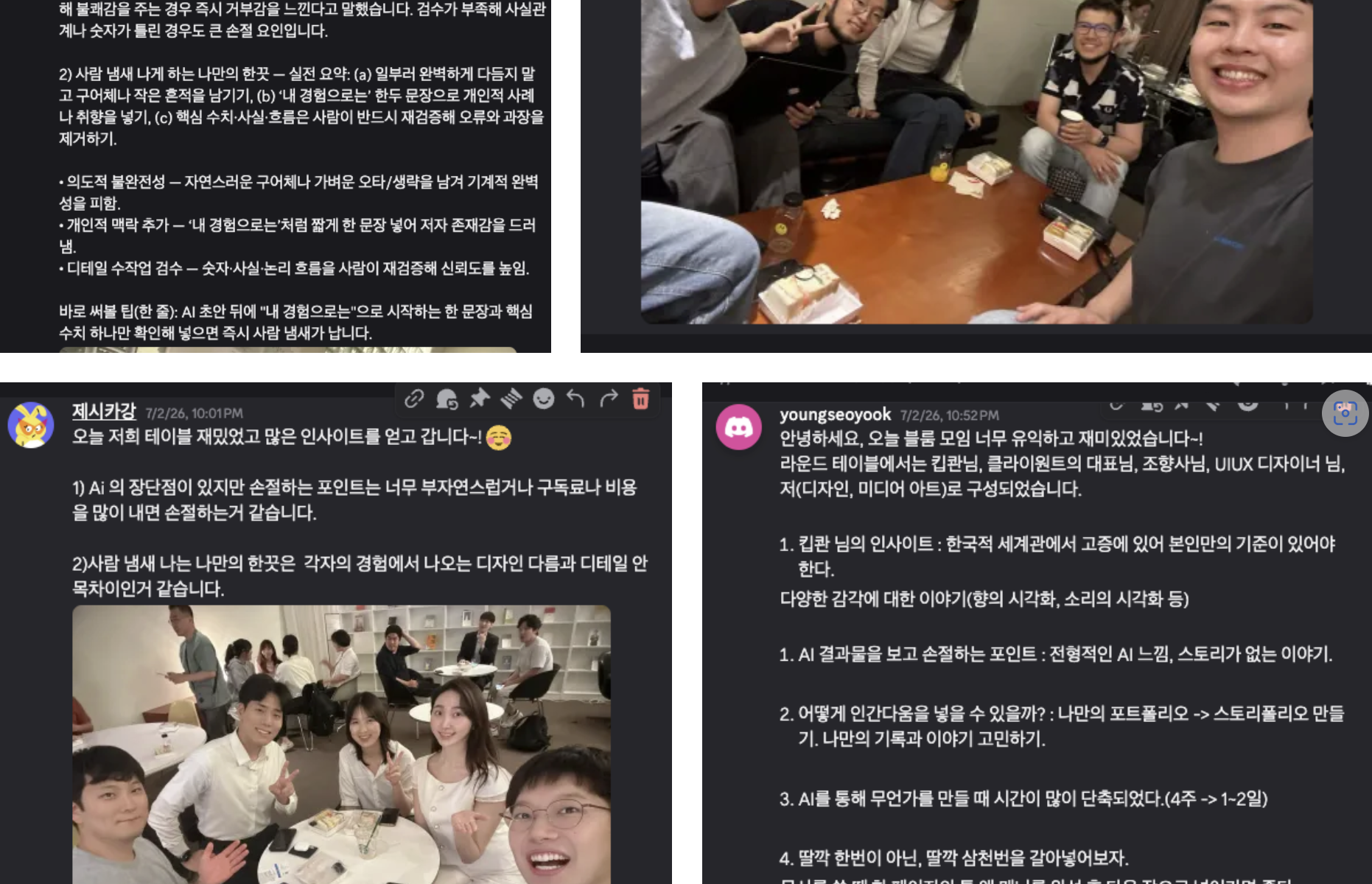
The human touch always came back to the person. One photo you took yourself, or one drawing by your own hand, creates trust. One participant deleted every skill downloaded from GitHub and built their own, and got their best results. Another trained a model on their own speech patterns to keep the human tone. One table put it as a number: thirty percent of the effort still has to be human, in review and in storyline. Nothing ends with a single click; you grind through three thousand clicks. Every table reached a similar conclusion: return to yourself, and keep the sense that it is you using the AI everyone else also uses. As KeepKwan put it, not a portfolio but a storyfolio. What remains is the person building the story.
What companies can take away
Translated into working language, four things remain. Invest in originality, not tools: in an era when anyone can generate, companies look for a clear worldview and a consistent story. Train human thinking before AI: sketching and fact checking pull out what is yours and raise both quality and distinctiveness. Connect digital output to physical, offline revenue: do not stop at images and video. And treat AI as a generator of time: measure what people do with the hours it returns.
FAQ
Who is KeepKwan? An AI creator and educator, formerly twelve years in business strategy at SM C&C, who has collaborated with Disney, the Korean Ministry of Foreign Affairs, the Korea Heritage Service, and CJ, building work around Korean tradition.
How does he keep historical accuracy with AI? He sketches on paper before opening any tool, researches details like garment ties and traditional patterns, and checks accuracy on every piece, effectively teaching the model as he studies.
What was the key business lesson? Companies hire AI artists for originality, not tool skills. A clear worldview and a consistent story are what turn AI output into commissions and revenue.
Scenes from the night
Join Bloom
Bloom builds offline rooms where people and technology meet. We run them in Seoul, and now beyond it.
- 💬 Discord community, where events are announced first
- ▶️ YouTube, full talks from past events
- 📸 Instagram, photos from our events
- 🎟️ Upcoming events