Demand in the Provinces, People in the City: A Friday Breakfast


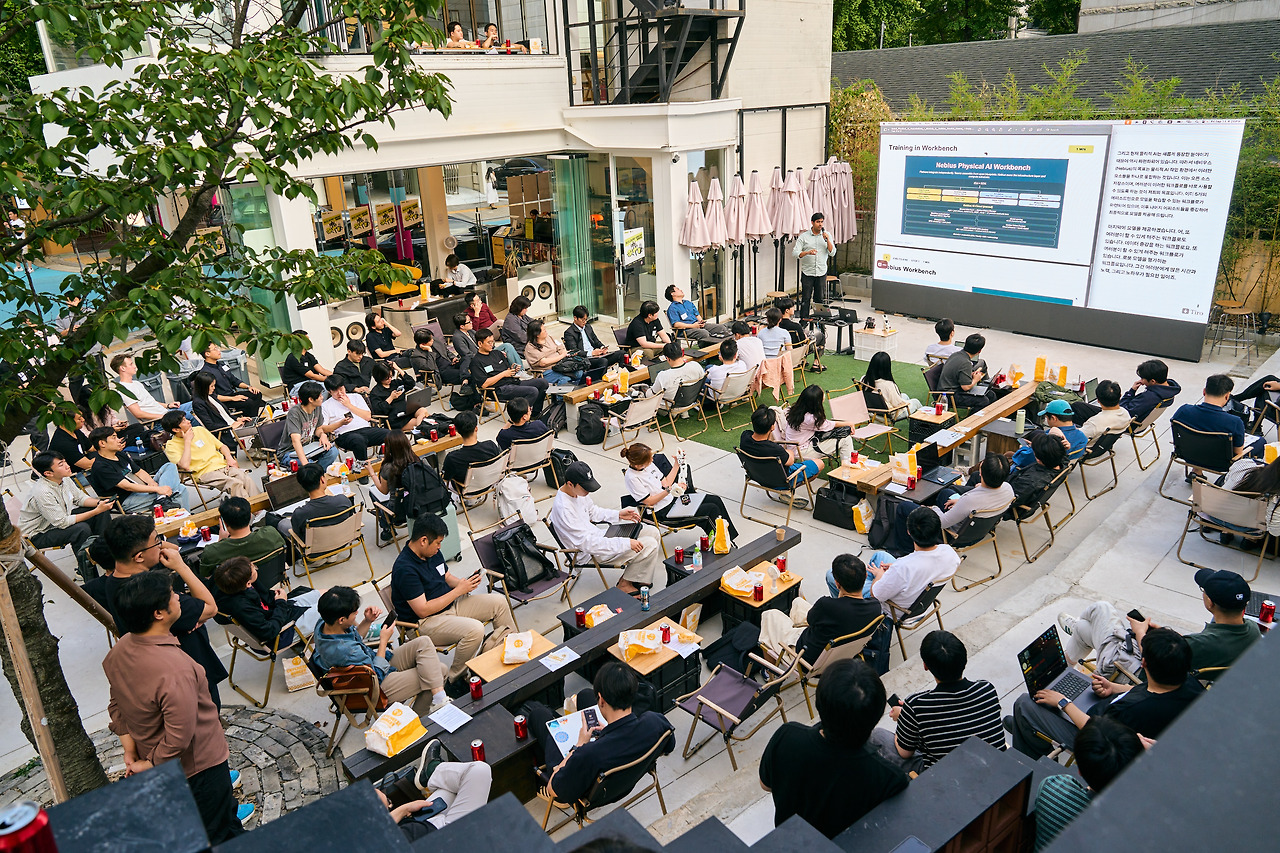
Friday, 7 a.m. The second Bloom Mixer opened with breakfast. This time I attended as a guest myself. I am usually the one opening the room, and sitting down as a participant was a first.
Reading the applications tells you who wants to be in the room. This breakfast alone: a non-developer who built a product and shipped it internally, now wondering where their job ends and the engineers' begins; someone leading a company wide AI transformation, now asking how to manage AI employees; someone redesigning corporate workflows as agents and digging into generative AI security; someone exploring how to bring physical AI into factory floors; and someone who wanted to talk careers in the middle of all this. Different jobs, different angles.
Even at 7 a.m., five people signed up. One had a client briefing that morning and could not come. The rest of us started talking before the coffee was poured. Half were new to Bloom, so instead of trading resumes, we asked each other what problem was currently giving us a headache. A breakfast that should have ended quickly kept going long after the plates were empty.
It started with what everyone uses
The first thread was, inevitably, which model people actually use. Nobody disagreed that Claude Fable is the best for serious work, but the model people reach for day to day was Codex. Not because of capability, but volume: the usage quota is so generous that instead of rationing the best model, you just run the abundant one as your default. The strongest model is not the default. The one you can burn without thinking is.
Chinese models came up too. Performance has jumped, output is fast, and they are usable as substitutes for some work, including security tasks where Western models tend to be more conservative. Rather than committing to one model, everyone was shifting toward swapping models by the nature of the task.
The tip I wanted to apply immediately was memory. Attach memory to an agent and tokens drain visibly, sometimes more than a single account limit can handle. But the performance gain is so clear that everyone who had tried it said the same thing: expensive, and worth it. It is exactly the kind of upgrade you postpone because of cost, and the people who had paid for it did not regret it.
Demand in the provinces, people in the city
When the conversation turned to the market, the line that stayed with me longest appeared. Step just outside the capital region and there are still many manufacturing plants with tens of billions of won in annual revenue, and those are precisely the companies that want to try AI. One large paper mill not far from Seoul was clearly determined to adopt it. The problem is not demand. It is that you cannot find people willing to go there and run the project.
Geography becomes a supply wall. Go further south and there are even more of these factories, and the people who would work there are even scarcer. Demand and supply live in different neighborhoods.
What made this sting was another number from the same table: with companies barely hiring juniors, starting salaries for new developers are slipping below 30 million won. One side has work and no people; the other has people and no way in. Someone mentioned that AI security for renewable energy is becoming a real market, but whether new markets will fill this gap, nobody knows yet.
How far should one person go
AI has widened what a single person can do, and that created an unexpected new problem: where do I stop and hand off? Skill used to draw that line for you. Now the tools keep pushing it outward.
One participant had a clean rule. From zero to one, one person owns it end to end. Whether to split the work comes later, when you scale from one to ten. He had actually done it: over the Lunar New Year holiday he built an internal ERP alone, got it adopted across the company, and only then handed it to the development team.
AI turned out to be a tool that extends how far one person can go. Where to stop, and who to hand it to, is still a human decision.
This is the room we build
For strangers meeting at 7 a.m., the conversation was unusually dense. All we asked was what everyone was working on, and the problems each person was carrying landed on the table by themselves. These were people who cut their morning sleep short precisely to have this conversation.
Bloom Mixer reads every application and seats six people whose interests actually fit together. Whether you build AI, use it, or are still watching from the sidelines, you are welcome. The next table is on the event page.
FAQ
What is Bloom Mixer? A small format Bloom gathering where we read every application and seat six people with matching interests, over breakfast or coffee, for unhurried conversation about AI and work.
Who attends? This table had a non-developer shipping internal products, an enterprise AI transformation lead, an agent and security specialist, and someone working on physical AI for factories.
Do I need to be technical? No. Builders, users, and the still curious all fit. The point is the quality of the conversation, not the stack.
Join Bloom
Bloom builds offline rooms where people and technology meet. We run them in Seoul, and now beyond it.
- 💬 Discord community, where events are announced first
- ▶️ YouTube, full talks from past events
- 📸 Instagram, photos from our events
- 🎟️ Upcoming events