When GPUs Became the Moat, Korea Held HBM
The tightest constraint in GPU supply is HBM memory, and Korea holds a dominant share. A neocloud founder on why that changes the country position, and a creator whose videos found 70 percent of their audience abroad.

Jensen Huang said it first: the more GPUs you buy, the more you earn. Buying capacity is no longer procurement. It is the moat.
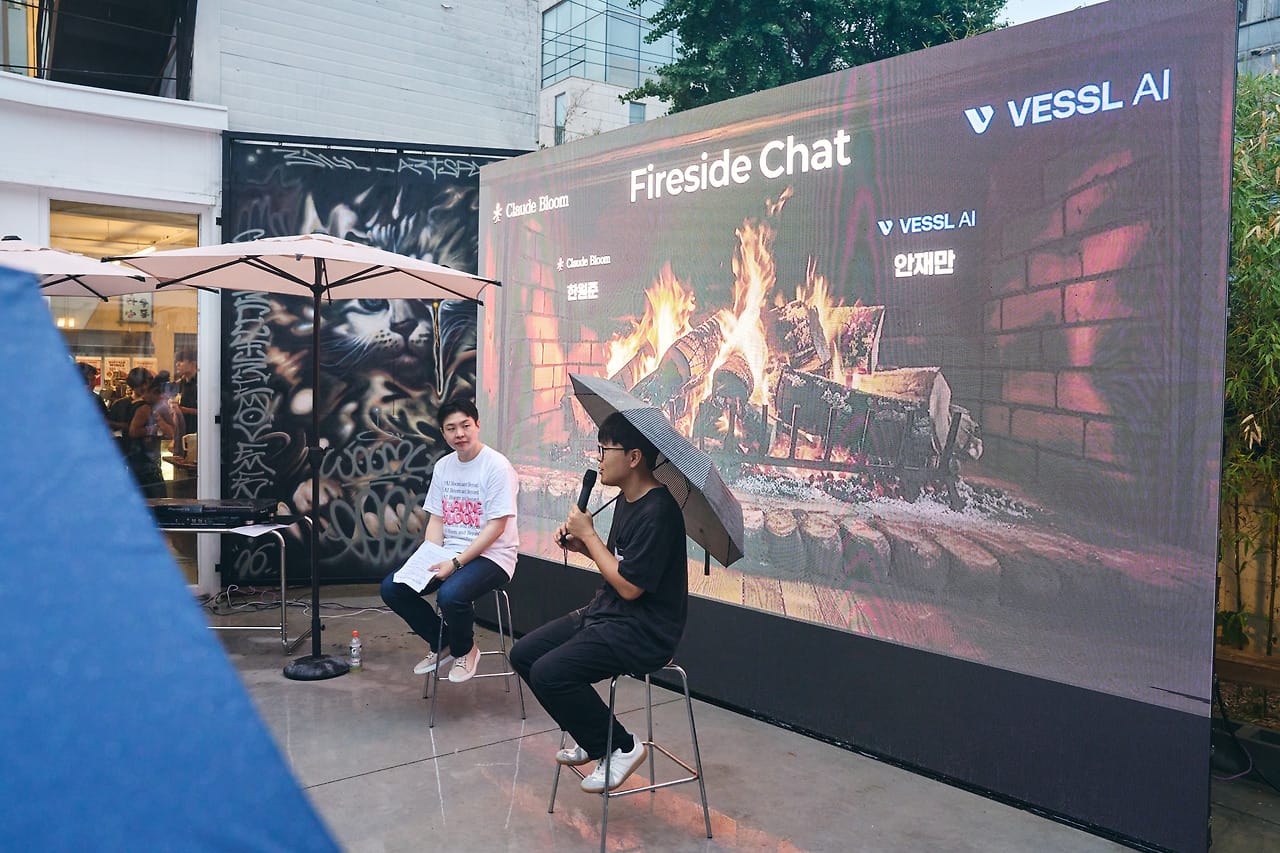
Based on fireside conversations at a Bloom summer event in Seoul with Jaeman Ahn, CEO of VESSL AI, and Minsung Ko of takitani.lab.
Deep House, Deep Learning
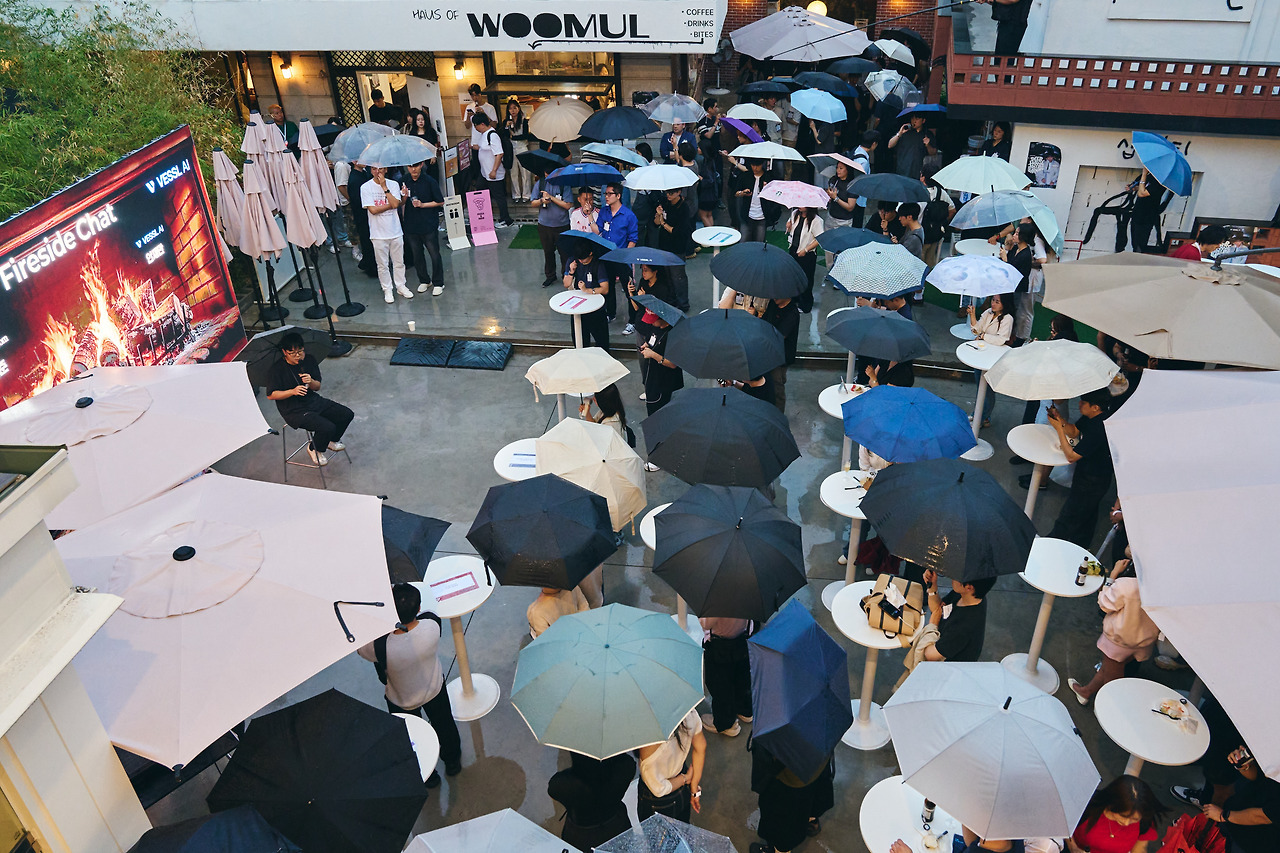
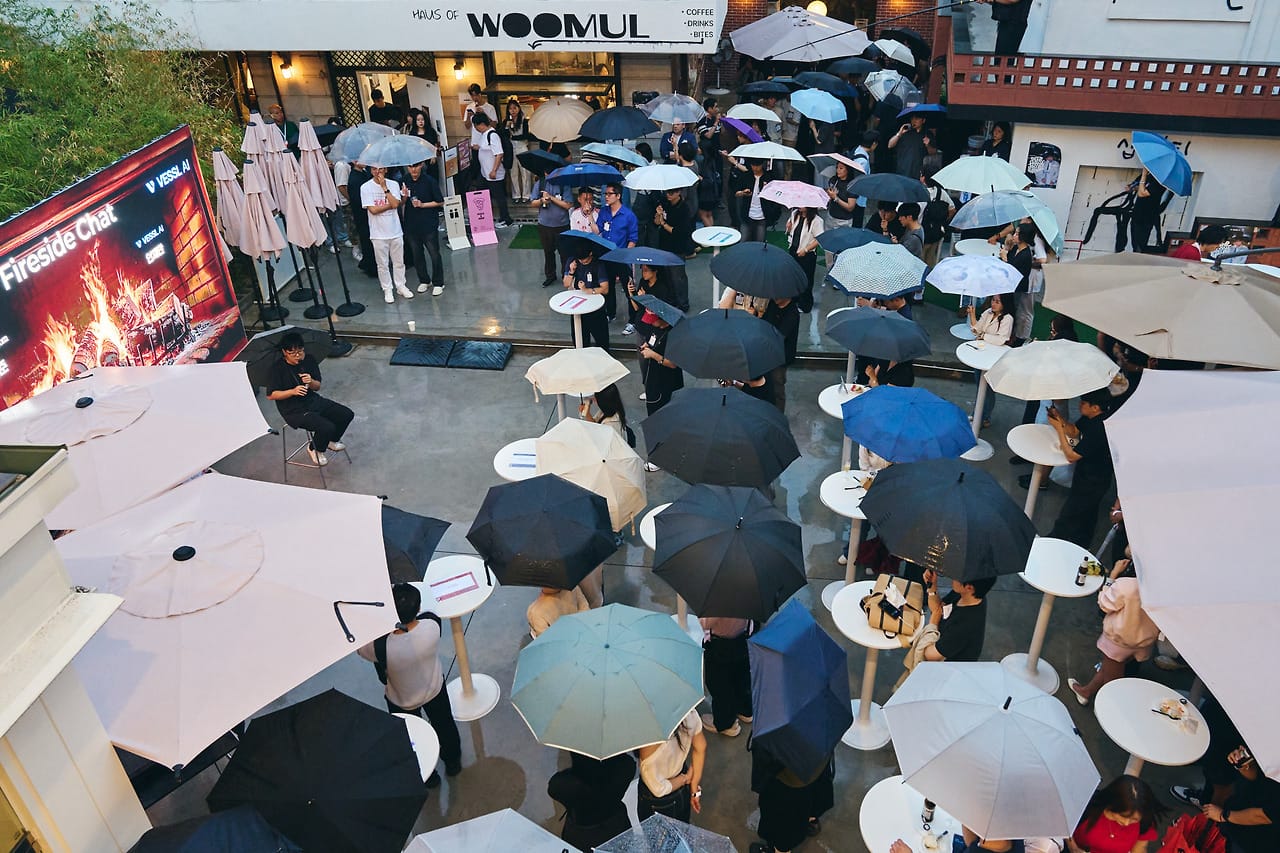
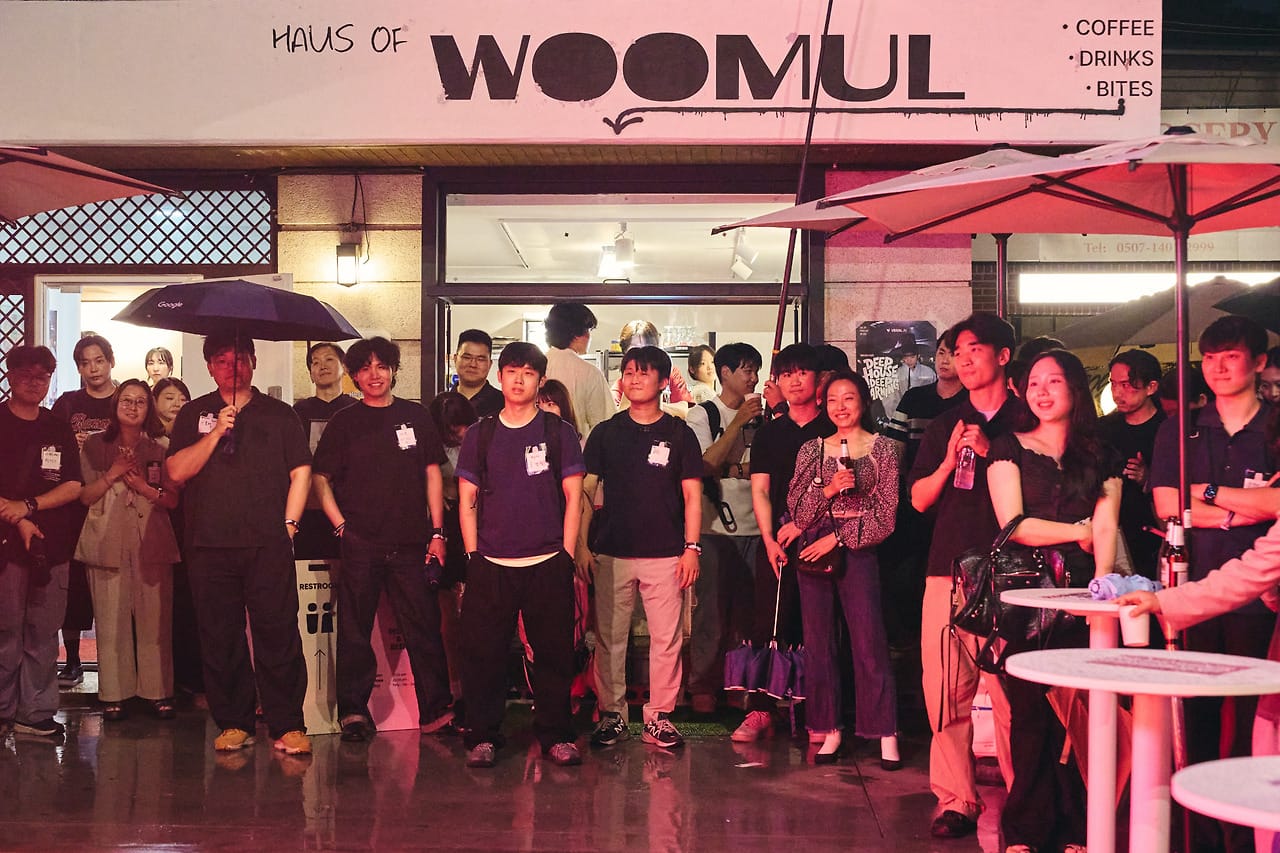
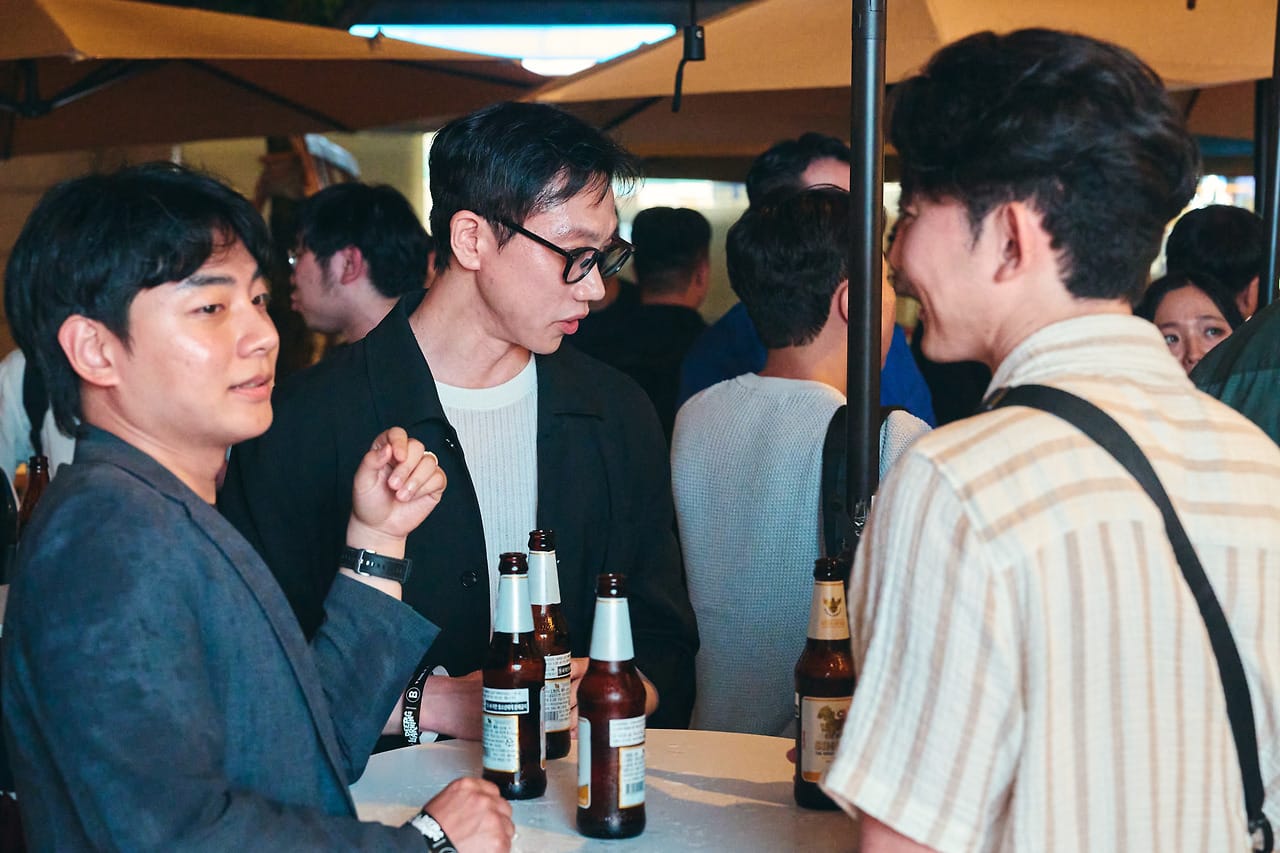
Bloom usually runs indoors, in lecture rooms, and this one moved outside into a large open-air cafe in Seoul. The concept was Deep House, Deep Learning, house music playing while people talked about machine learning. Roughly 640 people applied and 300 attended, and engineers made up 52 percent of the room, followed by product, marketing, design, and sales.
From a cancer diagnosis to AI infrastructure
Jaeman Ahn studied electrical engineering and mathematics at KAIST, then worked at Watcha and at Devsisters, the studio behind Cookie Run. At Devsisters he ran game infrastructure back when AWS was still new, scaling systems from ten million users to a hundred million.
Then his mother was diagnosed with cancer.
"There was nothing I could do."
Building games did not help, and he saw two options: go to medical school and develop cancer treatments, which would take a decade, or bet that AI could get there faster. He joined a medical AI company.
Solving the problem directly turned out to be very hard, so his thinking shifted. Thousands of researchers worldwide were working on the same problem, and if he could make all of them faster the answer would arrive sooner, which put the bottleneck at infrastructure. He started VESSL AI six years ago.
The name means vessel, and he picked it without much thought and only later saw the fit. A startup is a voyage: you cannot see the destination, but you know roughly which way to sail, so you sail.
Why an MLOps company became a GPU cloud
VESSL AI was known for years as an MLOps platform and lately gets called a neocloud, and the pivot came from a blunt piece of market feedback.
At the medical AI company, Ahn watched teams buy GPU servers and then manage access with a spreadsheet, so software to fix that seemed obvious. The market disagreed.
"We don't even have GPUs. Why would we buy GPU management software?"
So the answer became: then we will give you the GPUs. Korean AI startups including Scatter Lab, Upstage, and Tomorrow Robotics started running on it.
Who actually needs raw compute? Companies training their own models, and not only language models, since physical AI, image, sound, and video all qualify. There is a second group too: teams on commercial APIs until token spend climbs into the millions per year, at which point owning hardware starts to pencil out, and agents accelerate this, since they run continuously instead of answering one question at a time.
The moat argument
Without GPUs you cannot train on your own data, so you stay on commercial models and costs keep climbing.
"Jensen Huang said this too. The more GPUs you buy, the more you earn. You buy more, you build better models, you get a bigger moat, and the business does better."
Then comes the part that matters for anyone outside the US. Everyone is short on GPUs right now, and AWS, Google, and Microsoft all struggle to get high-end chips. Ahn argued this is exactly where Korea has the upper hand, because the tightest constraint in GPU supply is HBM memory and Korea holds a dominant position in it.
"Nvidia can't afford not to allocate GPUs to Korea anymore."
At the current pace he expects Korea to land among the top three countries by installed capacity, which would make it a center of AI infrastructure rather than a customer of one.
VESSL AI's own approach runs against the hyperscalers, because renting from a major cloud usually means committing to a year and a large budget. As a challenger, VESSL rents a single GPU by the second or the hour, so fine-tuning a model can cost about the price of a coffee, and that choice traces back to the founding motivation: more researchers moving faster.
He named three drivers behind the demand spike: agents, which run all day and multiply token consumption per user by orders of magnitude; physical AI, where robots need vision, audio, and touch, plus world models trained in simulation because real-world data is hard to collect; and sovereign AI, as governments each decide they need their own model.
The company went from 100 GPUs at the start of this year to 5,000, with 10,000 planned by year end and 50,000 next year. The five year goal is a top three global neocloud, which would mean 200,000 chips. At roughly 100 million won per GPU, that is a capital problem measured in tens of trillions of won.
"How do you raise that? That's the question every neocloud is sitting with right now."
On surviving six years: every funding round came down to a version of "if the money doesn't land in three days, we're done." A bank holding their deposits collapsed, and his method for handling all of it was plain: there is nothing you can do about it, so do the thing you can do.
His closing advice to builders was to source insight from the US directly, because Korea runs one to two months behind, and in this field two months is long. He flies over about once a month.
A Joseon-era DJ, and why it worked abroad
The second conversation was with Minsung Ko of takitani.lab, whose AI video work has built a following on Instagram. The banners and posters around the venue were his.
He came from film and screenwriting, and screenwriting is driven by narrative, but AI let him put the weight on the visual instead.
Why Joseon? He DJs as a hobby, and DJing on its own is not visually interesting, so he looked for the subject furthest from the act of DJing and landed on the Joseon dynasty. He tried plenty of other ideas first, and the Joseon DJ went viral, so he pushed it.
His formula is simple: keep the subject and the action fixed, and change only the setting, because the visual collision between Joseon and a DJ booth holds attention longer.
The production loop tightened fast, and where a fifteen second clip took six hours three months ago, it now takes two. He builds the image, converts it to video, then scores it, and because Reels reward urgency he leans on breakbeat and drum and bass rather than melody.
The audience data was the surprise: of 33,000 followers, under 30 percent are Korean. More than 70 percent are abroad, concentrated in the US, Germany, France, and Spain. He expected Koreans, who grew up with these images, to respond most.
"What looks old to us reads to people abroad as something hip and traditional at the same time."
He is deliberate about not chasing models, because if you build content around whichever video model just shipped, your work ages the moment that model does, and you lose the ability to remake it.
"Rather than chasing the technology, I tend to buy the technology later, once it can execute the idea I already had."
Asked what remains for humans, he said reasoning and logic will go to the models, but the human sense that runs against them is still ours. AI is a tool, one more step in a line running from pen to brush to film to computer.
A designer in the audience asked the hard version of the question. With content flooding every feed, and some people dismissing AI work as slop, what actually survives? He went back to his formula.
"A Joseon man DJing in front of a dinosaur doesn't exist anywhere. What sells is what wasn't there before."
Keep reading
Join Bloom
Bloom builds offline rooms where people and technology meet. We run them in Seoul, and now beyond it.
- 💬 Discord community, where events are announced first
- ▶️ YouTube, full talks from past events
- 📸 Instagram, photos from the floor
- 🎟️ Upcoming events