
How Samsung, a District Office, and Solo Builders Adopted AI

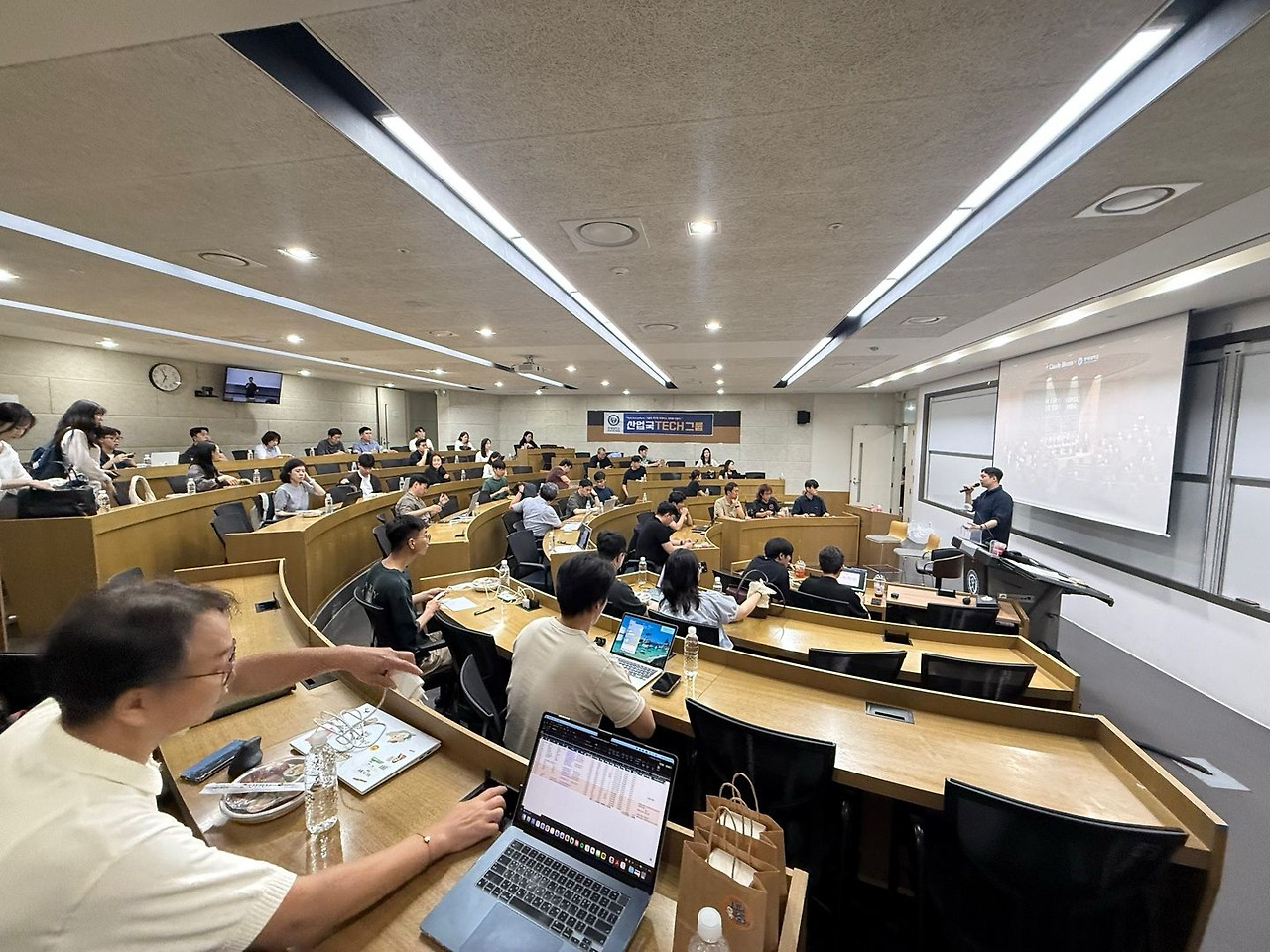
Samsung Electronics built an environment that runs Claude Code with confidential code on in-house GPUs and everything else on Bedrock, and a grade-8 civil servant at the Gwangjin District Office quietly built a statutes MCP that became a public-sector innovation case.
🤝 Bloom × Yonsei MBA × Samsung Electronics × Cliwant × SpaceY
🎤 Sungsoo Kim (Samsung Electronics) · Seungin Ryu (Gwangjin-gu Office) · Hyuntae Hwang (SpaceY)
How conservative organizations let AI in
The first session paired Sungsoo Kim of Samsung Electronics with Seungin Ryu of the Gwangjin District Office on adopting AI inside conservative organizations. Kim personally operates 100 GPUs in the LSI division: 7,000 eligible users, 4,000 active, a workload that properly needs 300 cards, run on 100. On top of that he built an environment that runs Claude Code against in-house GPUs, swapping the install binary endpoint to an internal domain and putting LiteLLM in the middle so confidential code never leaves.
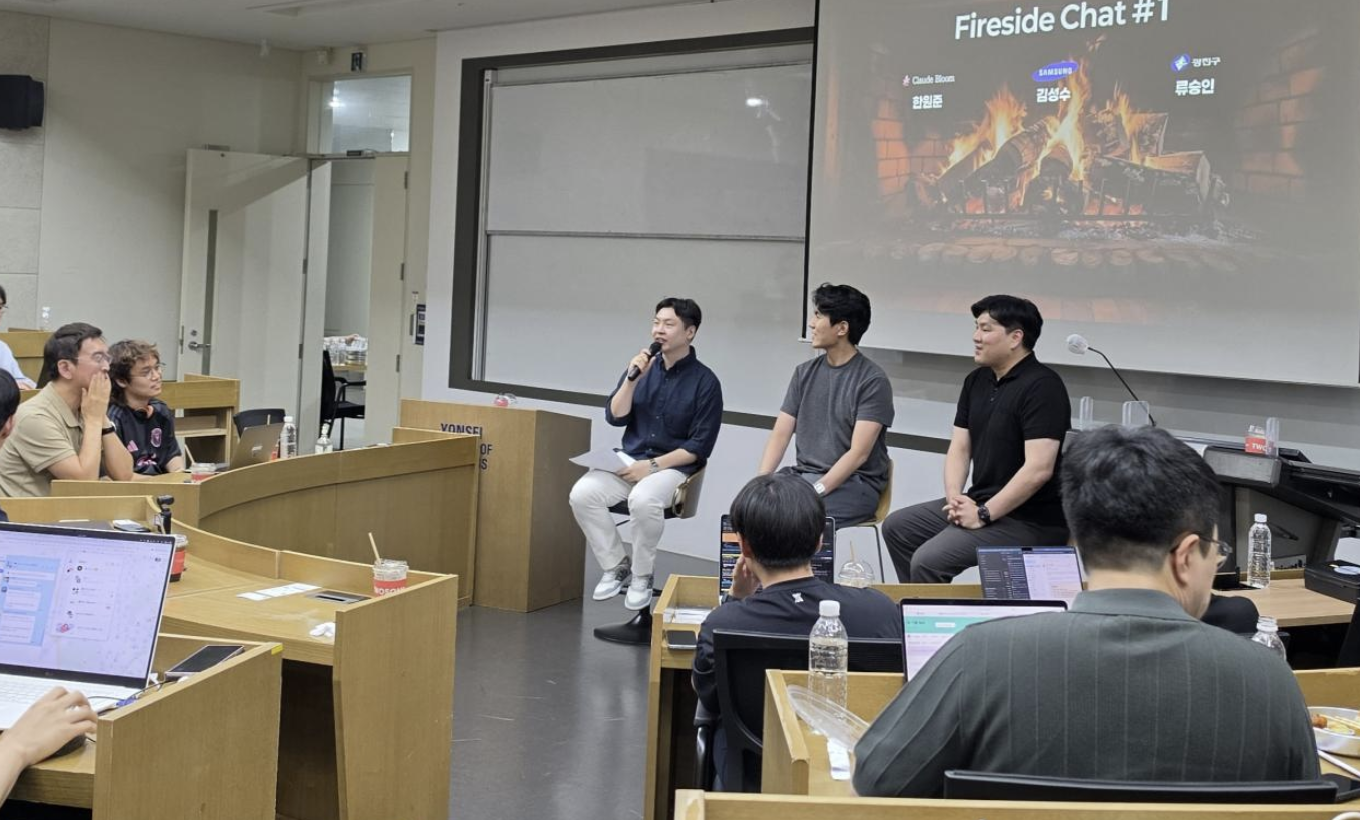
Since AWS is also a competitor, confidential code cannot go to Bedrock either, so two tracks run in parallel: confidential on in-house GPUs, everything else on Bedrock. LSI designs hardware in RTL languages that have never been public, which general models cannot write, so internal documents feed a RAG-based agent instead.
Getting there was a fight. Executives wanted GPUs reserved for a few specialists; Kim argued that AI helps most in the hands of people with domain knowledge, and the standoff ran for months through four all-company emails that made him enemies, including people whose agent-development KPIs became meaningless the moment Claude Code alone covered them. Still, LSI runs on half the headcount of comparable divisions, so the appetite is strong: basic training sessions fill up in one minute.
Ryu took the opposite route. In his own words, he could not break through, so he quietly did what nobody asked. After being scolded because AI answered a statute incorrectly, he dug in, reached MCP, and vibe-coded a statutes MCP against the public API of the national law information center. Posted on Threads, it spread to lawyers, accountants, and civil servants, and was introduced as an innovation case by the national AI committee. Inside, the response was: why would you build that, until he attached it to the internal AI service and built the environment around it, and only then came recognition. For the district newsletter, parsing turned a job of editing 50 to 100 files one by one into eight minutes.
Their advice on beating FOMO pointed the same way: there are no AI experts. A person with domain knowledge who uses AI even slightly well is far stronger, and posing your own fundamental problem well comes before running fast.
Using AI well and doing well are different things
Hyuntae Hwang, CEO of SpaceY, said his years in B2B SaaS left him feeling misled: the game was never about building software well, but about finding the business whose capabilities AI can raise. His concept was the FDE, the forward deployed engineer, who goes into the customer, hears the problem directly, and engineers alongside them. In the AI era, one person does what ten did, and the pressure of carrying it alone brings on the mental blues. So SpaceY is reorganizing into teams of two or three with different temperaments: a foreman, an engineer, a communicator. Everyone already uses the AI well; the real problem was the team structure and mental hedging that come after. Senior and junior roles inverted too: seniors who hold the tacit knowledge organize context and feed it to AI, while juniors run sixteen parallel sessions and win on output volume.
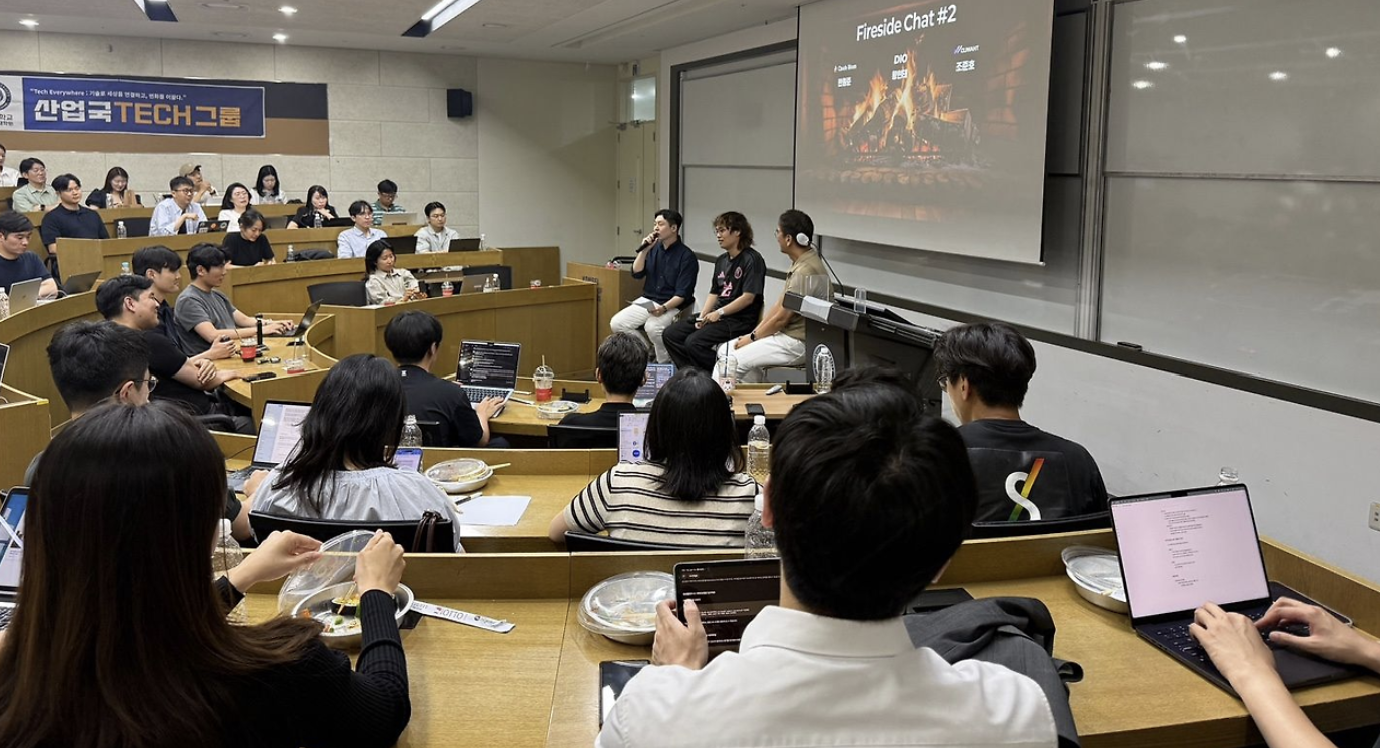
Cliwant CEO Junho Cho continued his confession from the proposal event: AI rolled out company-wide, Thursday afternoons for experiments, and revenue unchanged. Using AI well and the company doing well are completely separate. A startup breaks into an industry with an innovative method, and that method need not be a product. So he took the request customers kept repeating, just do it all for us, and turned it into AI-maximized consulting that compresses the bidding process to a hundred proposals a day. The end picture matters too: as a team follows a founder with a multi-planet vision, without an end picture even excellent AI use cannot reach the next stage. To an audience question, if large companies build everything internally, do startup products become unnecessary, he answered yes: the era of winning with a single product has passed, and value now requires solving the customer journey end to end.
The play of those with nothing to lose
The third session brought two solo builders. Donggyu Kim, an undergraduate researcher at KAIST, built K-Skills, a collection of 90 agent skills for Korean users, and earned 5,600 GitHub stars, which he values at ten to fifty times the effect of YouTube subscribers. His current strategy is shipping at 80 points: release, then fix with feedback rather than polishing to 90. His line: nobody is scarier than the person with nothing to lose. Already open, there is nothing to breach, and whoever copies you becomes dependent on you. The open-source number two can make plays the closed-source number one cannot.
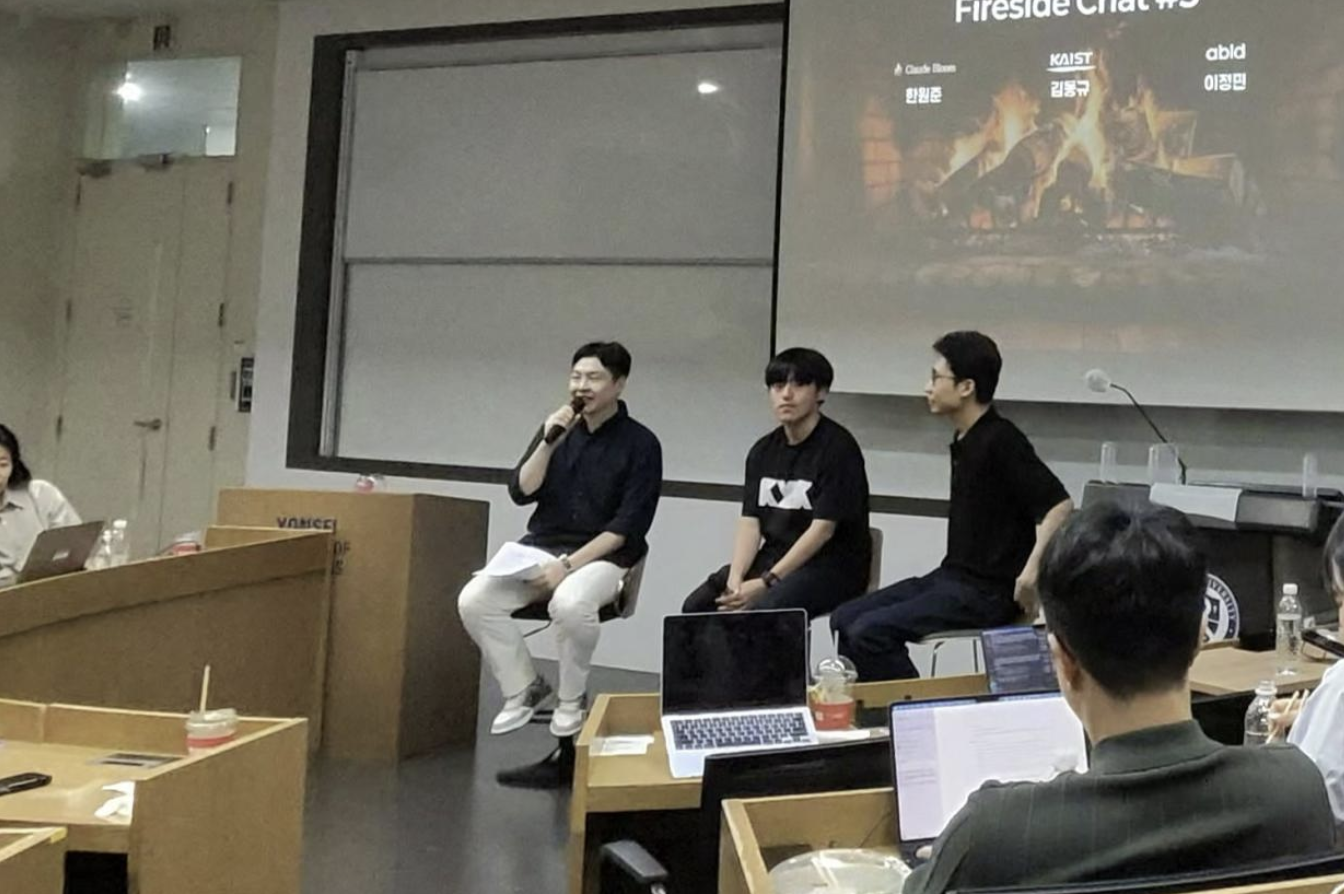
Jeongmin Lee came through a VC and a startup before going solo this year. His premise is that most software collapses, so he experiments with what might hold. He was honest about the limits: fall sick and the day stops, and a deck made in one click is a different thing from carrying it into an executive briefing or a major event. His current focus is private equity AI roll-ups: a fund with control raises enterprise value by lifting productivity with AI, a model with no Korean precedent until one deal was recently confirmed. The solo builder moat, he stressed, is the channel: without a channel, do not become a solo builder, and if your service is hard to explain, explain yourself first, which is easier. Throughout the talk he was building a camera app live, promising to ship it as soon as the event ended.
Token maxing: should you touch the ceiling?
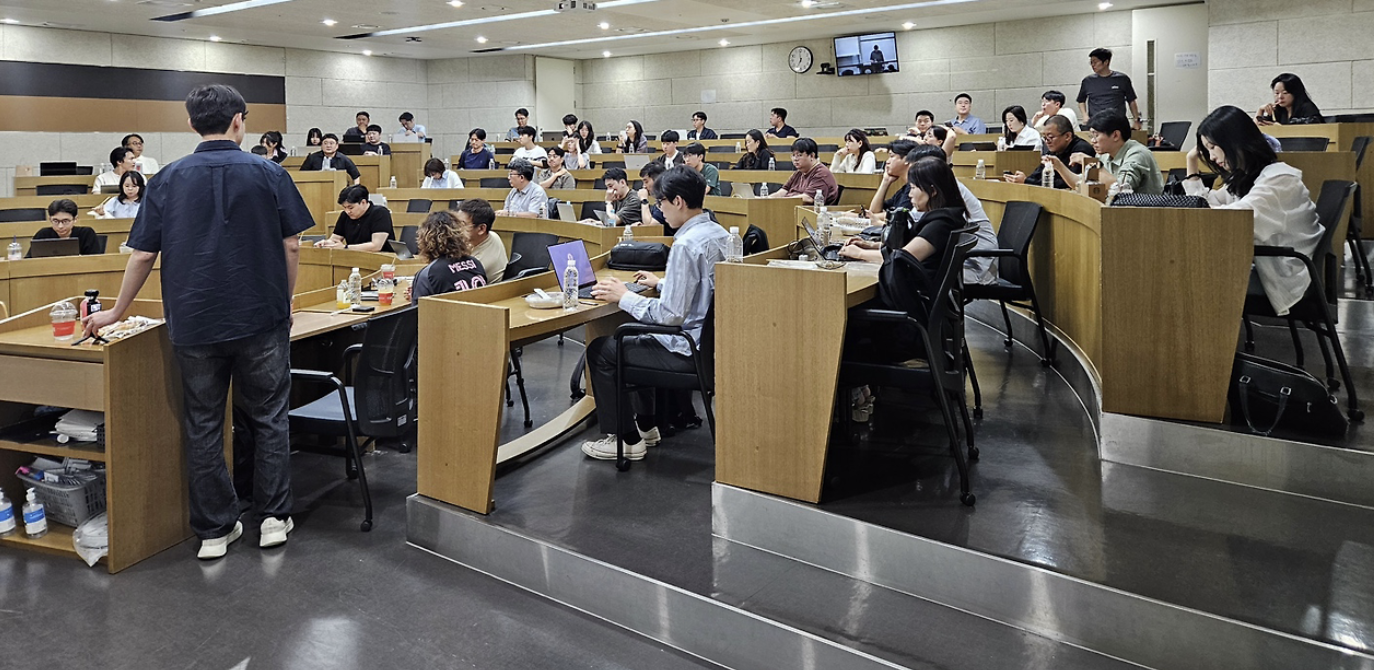
At the end the two split on token maxing. Kim was for it: only by pushing the best model to the end do you see where efficiency can be cut. Touch the ceiling to learn what can be removed, and tokens are cheap now, so hurry. Lee agreed conditionally: without intent and setup, tokens produce nothing. Subscribing to every model and burning tokens with no direction just spends money while you watch a monitor. Token maxing to learn destructive power, yes; directionless burn, no. In the end the two statements were the same: use the best tools to their limit, alongside your own definition of what to build and why.
What companies can take away
Four things, in working language. One, domain knowledge first: rather than hiring separate AI experts, make the people who know the work slightly better at AI. Two, adoption completes with environment: build a good tool and also lay down the permissions, connections, and training that let the organization actually move. Three, redesign the business, not just the skill: AI skills alone do not lift revenue; rebuild the process and the model. Four, build channels and an end picture: for solo builders and organizations alike, without a channel that explains you and a destination to reach, tools end in burnout.
FAQ
How do conservative organizations adopt AI? Samsung runs two tracks, confidential code on in-house GPUs and the rest on cloud, to prevent leakage. The Gwangjin case shows another route: a practitioner builds the tool they need, then the organization attaches the environment that lets everyone use it.
Does using AI well raise revenue? Not by itself. If the business model stays the same, skills alone do not produce growth; hand repetition to AI and redesign the process and the business.
What is the core solo builder strategy? The play of nothing to lose: ship at 80 points, improve with feedback, and build the channel, because without one, a solo builder cannot survive.
Scenes from the night
Join Bloom
Bloom builds offline rooms where people and technology meet. We run them in Seoul, and now beyond it.
- 💬 Discord community, where events are announced first
- ▶️ YouTube, full talks from past events
- 📸 Instagram, photos from our events
- 🎟️ Upcoming events