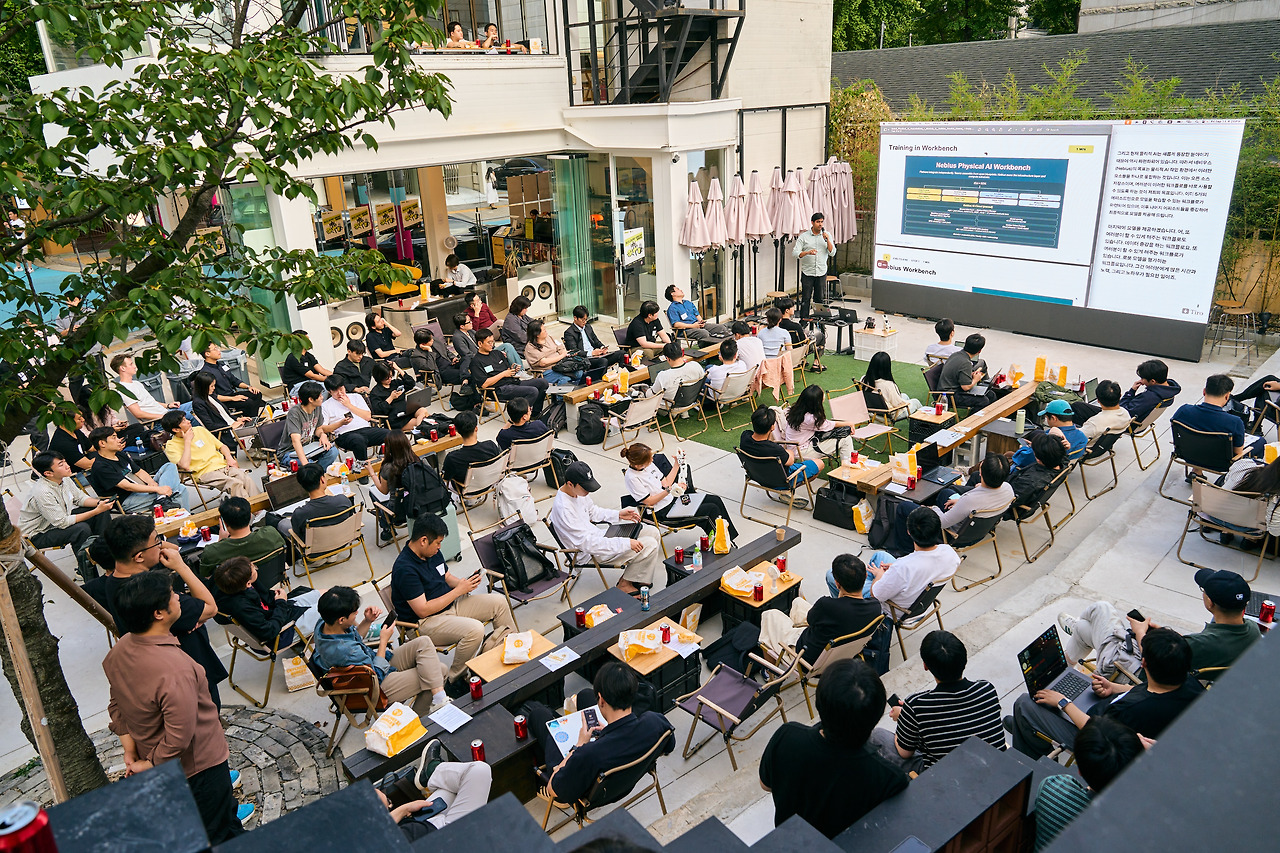
How MyRealTrip Became an AI-Native Company

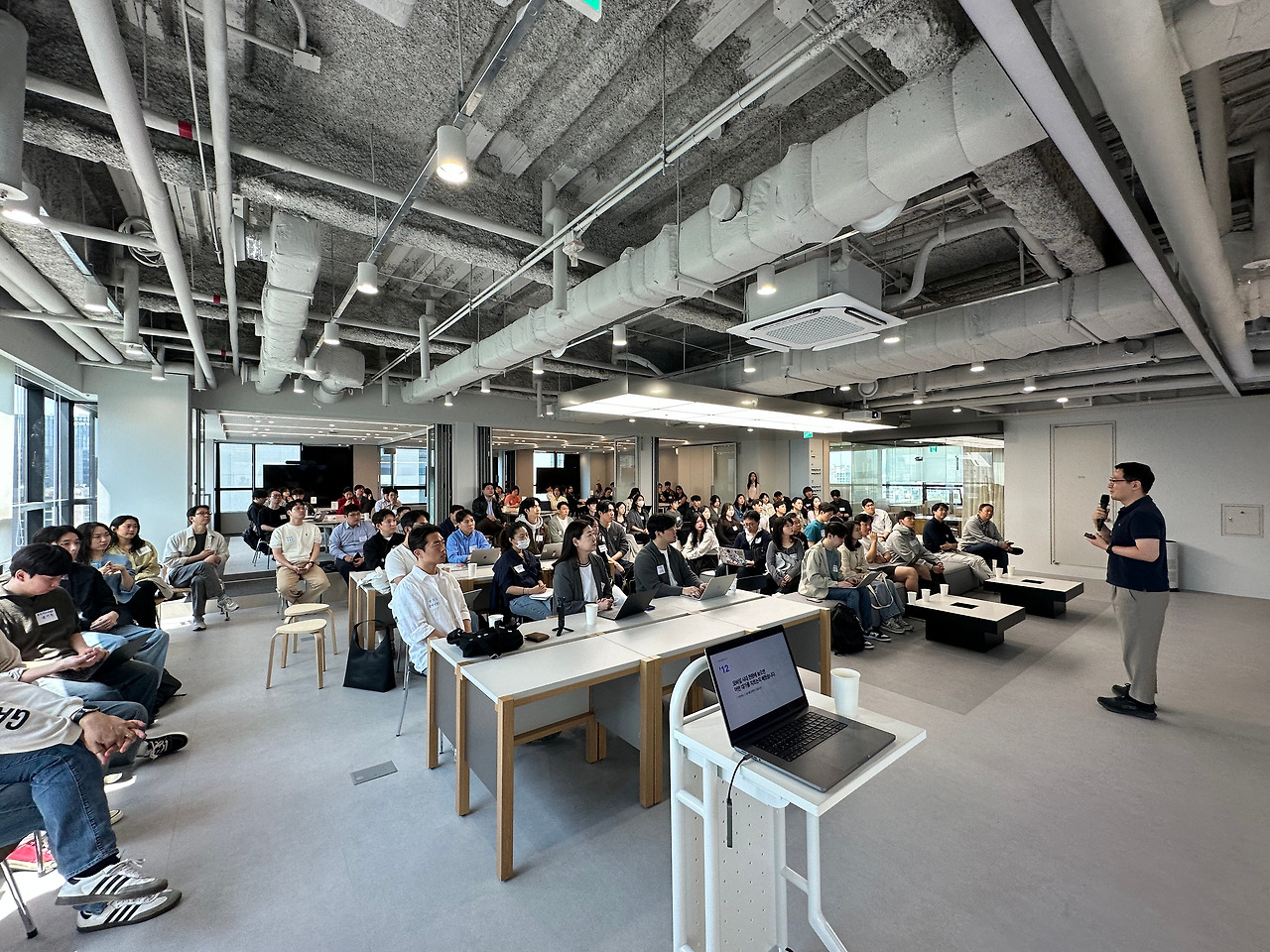
Instead of bolting one more AI feature on, MyRealTrip spent four years changing its execution structure and org structure, and became an AI-native company.
🤝 Bloom × AB180 × MyRealTrip
🎤 Donggun Lee, CEO of MyRealTrip
Inspiration comes from people
Sungpil Nam, CEO of AB180, said he spends 90 percent of his day with AI, and that he was carrying no small amount of gloom when he read the Claude Blue post and connected with the purpose of this event.
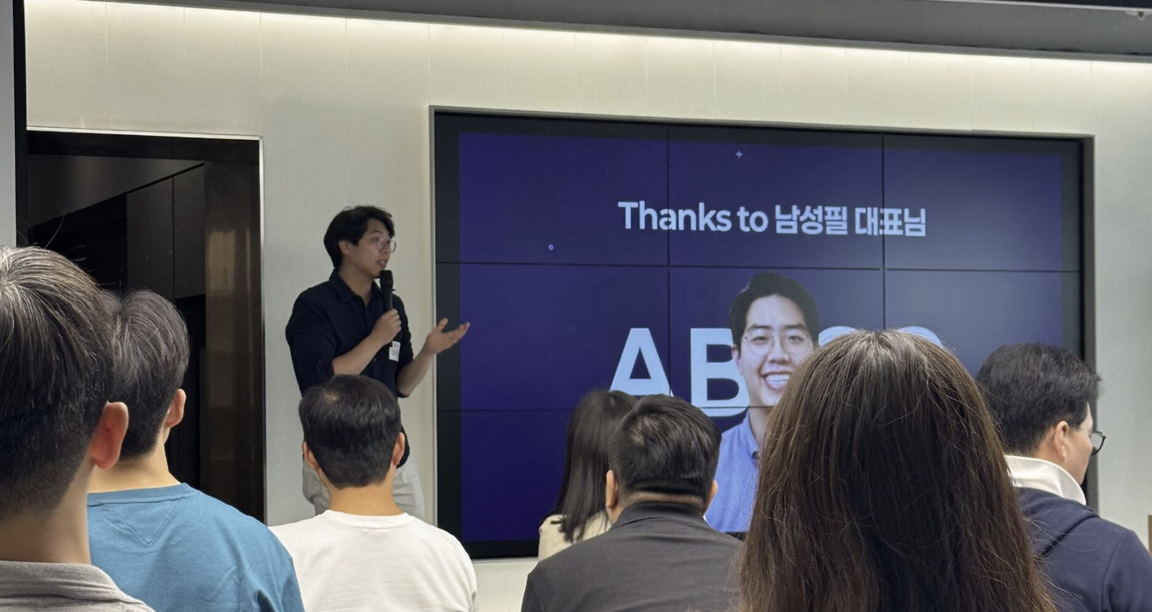
The core of his short greeting from the stage was inspiration. Doing anything takes will, will comes from inspiration, and the source of inspiration is ultimately interaction with people. What got him seriously using Claude and Codex was a senior founder he met in the US, watching that team rebuild everything in their app with AI. That jolt powered more than three months of changing how he works. However good the tool, the will to use it comes from people.
The mobile trauma and a 48-hour lesson
Donggun Lee founded MyRealTrip in 2012 at twenty-seven. He was an early iPhone user and proud of his mobile literacy, and still made a major misjudgment. Travel checkouts run to millions of won, family trips past ten million, and he could not believe sums like that would ever be paid on a phone. Travel, he judged, was planned on a PC with a spreadsheet open, so he invested in PC for over four years.
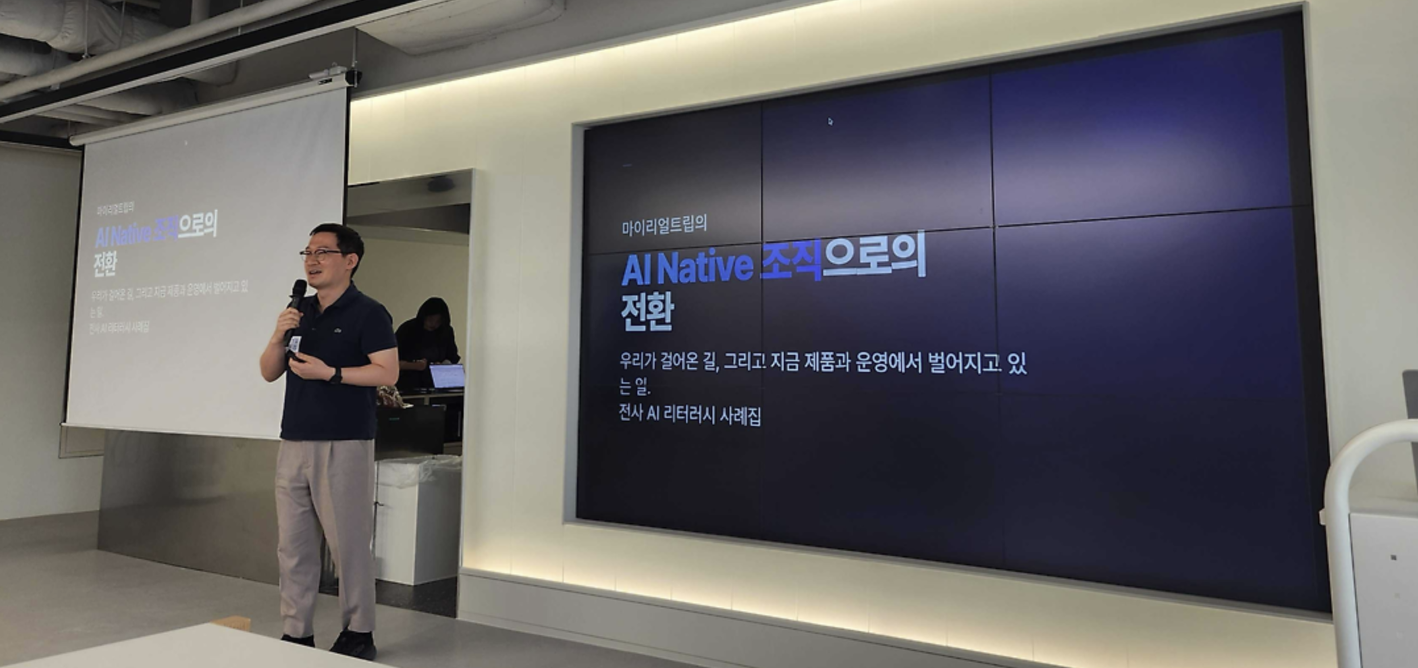
The problem was the latecomers. Competitors too small to build anything but a mobile app went all-in on mobile for exactly that reason, and in ten months they caught up with four-year-old MyRealTrip. Lee described the failure bluntly: as a CEO, his imagination had been impoverished. He resolved that when the next wave came, he would imagine as destructively and as large as possible.
That wave arrived at the end of 2022. The moment he saw GPT 3.5 he was certain, and 48 hours after the announcement the team gathered over a weekend and shipped a live service. To worries about performance and security review, his answer was: never mind, just ship. The next day came a call from the 9 PM news and from Microsoft headquarters. But after three or four days the traffic drained away like a tide. Travel is a high-stakes decision, and in the heavy-hallucination era, handing your whole itinerary to an AI was too much to ask. His retrospective was clear: we attached a feature, and the way we worked did not change.
Not a company that uses AI, a company that works with AI
After that retrospective the direction turned: less about what to build, more about changing the execution and organization, a transformation that ran four years. In 2024 came AI Lab, an education org tasked with getting every employee handling AI, and the customer center subsidiary had its name and mission changed to AI innovation. In 2025, every team got an AI champion so influence would spread naturally from within. The same year, the iOS, Android, backend, and frontend tracks were merged into one, and the designer and PM titles disappeared: everyone became a Product Engineer.
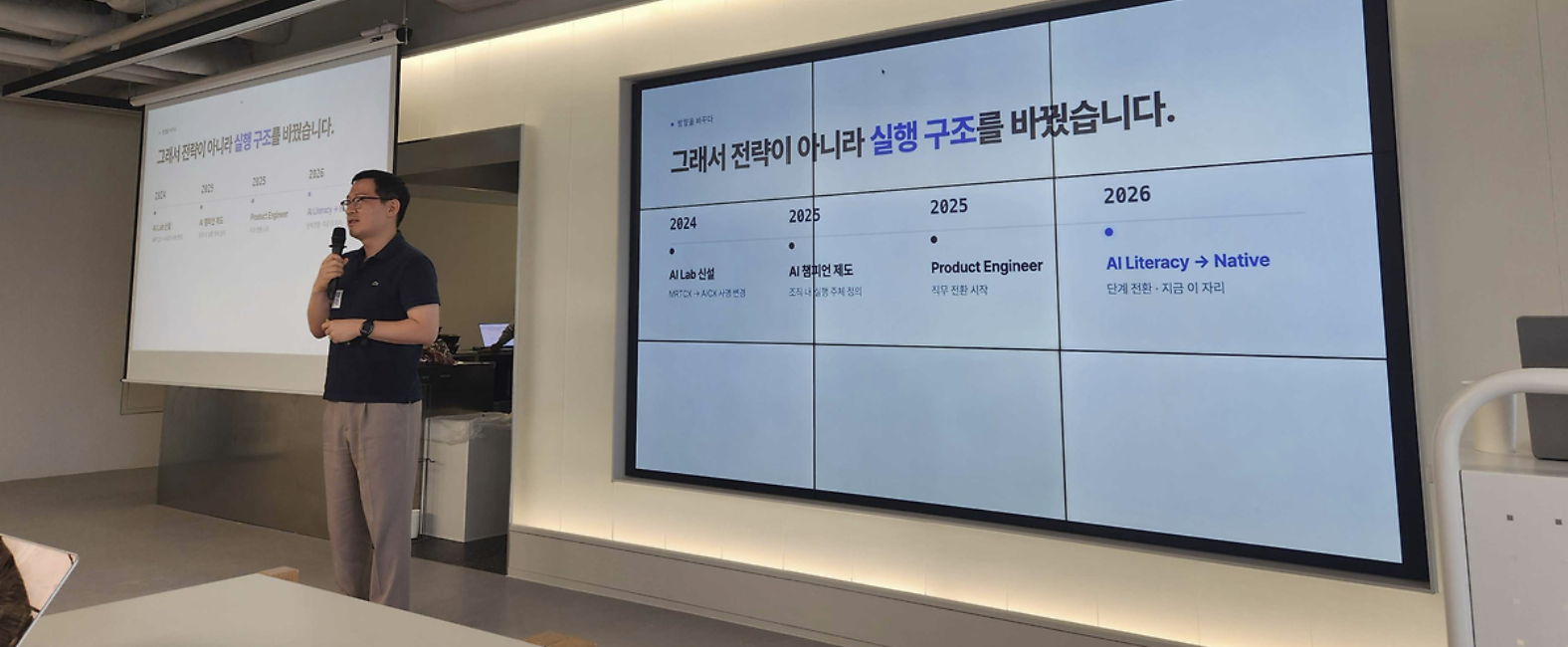
Lee defines an AI-native organization by three conditions: an organization where work does not run without AI, an organization where a small elite team produces larger impact, and an organization that stops when Claude goes down rather than when AWS goes down. The last one stuck. Most services stop when AWS stops; if you have a service that stops only when Claude stops, that is the real marker of AI-native.
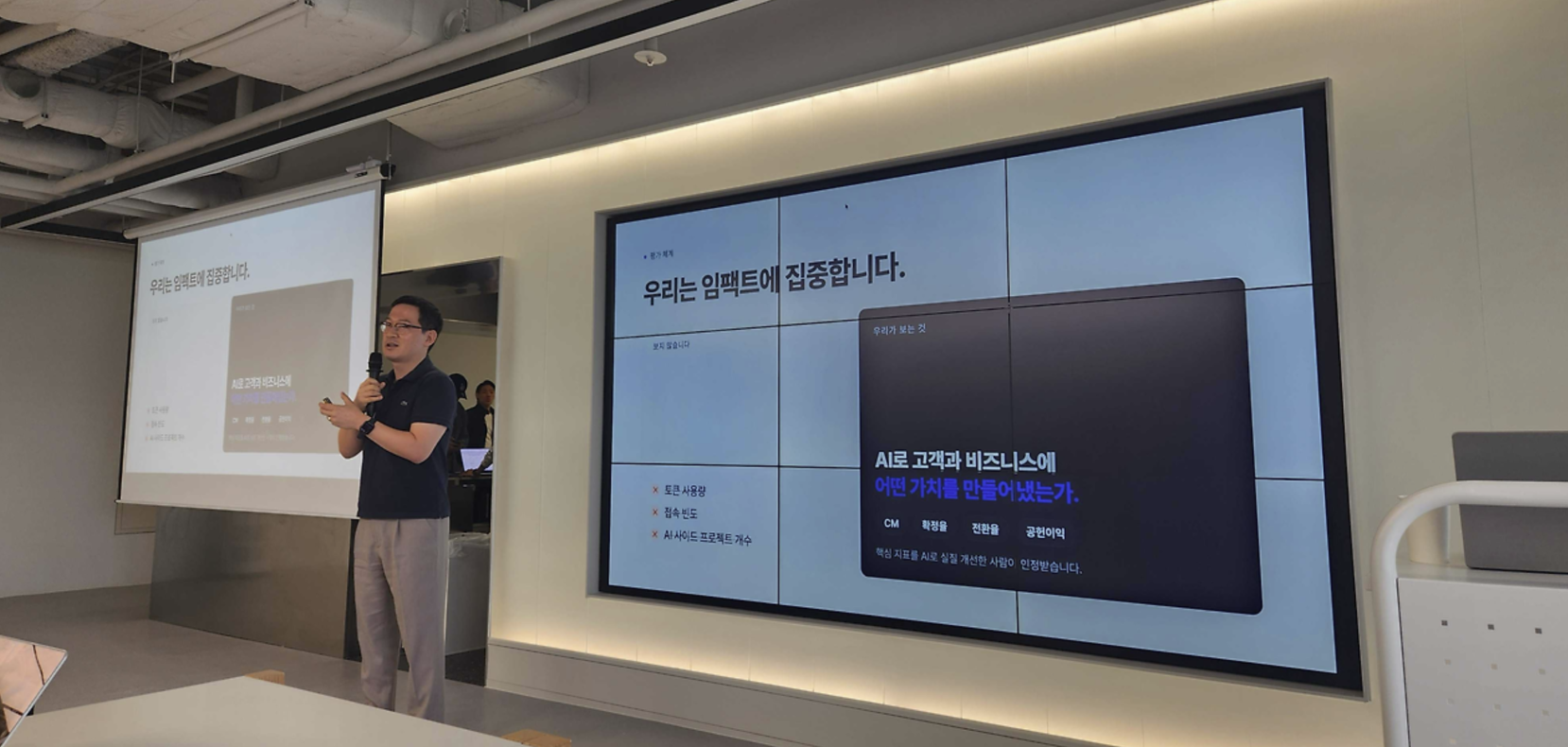
Evaluation changed too. Token usage, login frequency, and the number of AI side projects are no longer counted. What counts is how much AI improved the metrics that mattered before AI: contribution margin, confirmation rate, conversion rate. Past the literacy stage, you return to the numbers that always mattered.
The person who sees the problem solves it
The most striking part was seven cases actually in production. LuckyGlide, which finds the cheapest flights for given conditions, was built by a marketing lead with no coding experience. MRT Biz, which books corporate travel in a Slack-like chat and connects to the ERP, was built end to end by CEO Lee himself. Korean Foodies, where AI curates, translates, and tags restaurant posts from the community into 2,081 searchable reviews across 240 cities, was also built by the CEO; the attendance tool by the people team; the companion-matching calendar by a business development manager. People who are not developers in the traditional sense were solving their own problems directly.
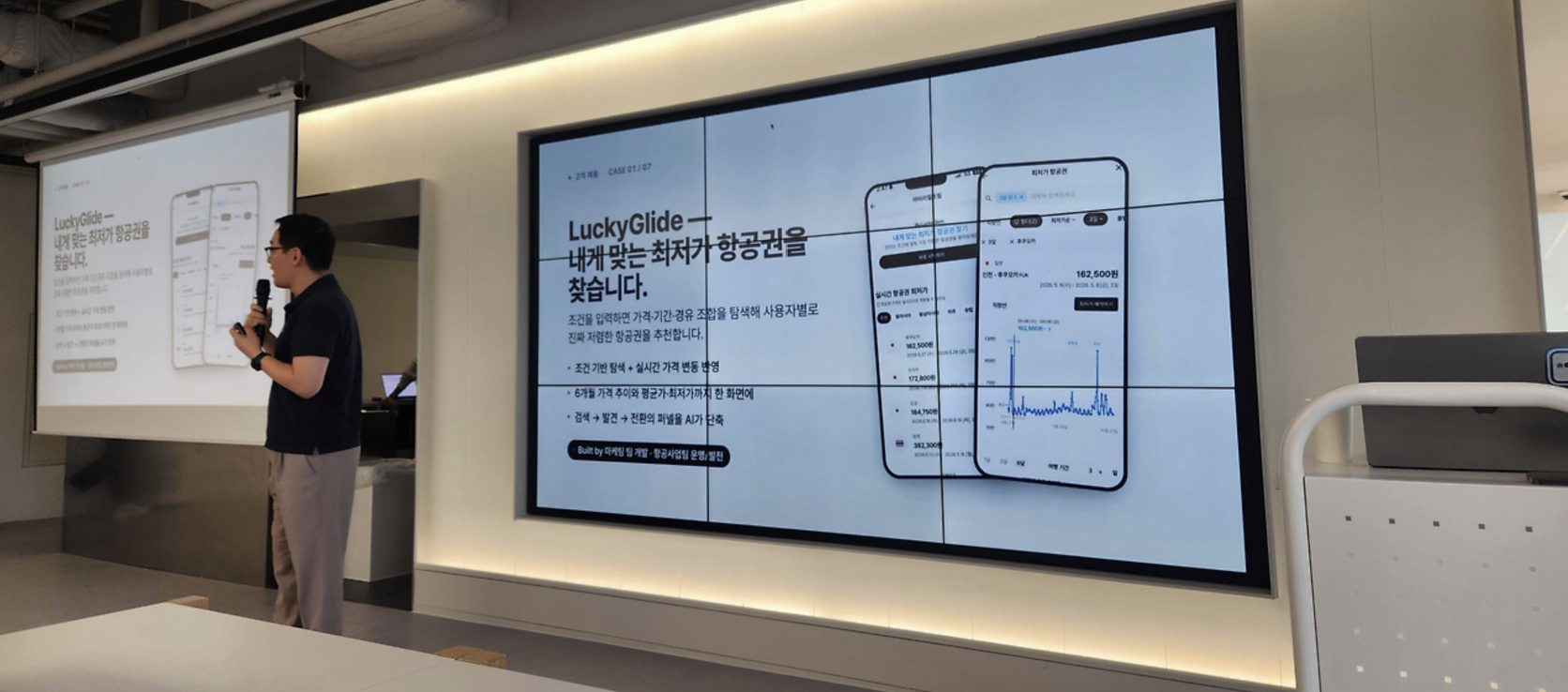
One principle runs through all of it: the person who recognizes the problem and the person who solves it must not be separated. The early AI Lab built things on request for other teams, and it turned into outsourced delivery. When HR asked for a fix to the attendance tool, AI Lab first had to learn attendance policy, and every policy change meant another handoff, so everything regressed to the old way. So AI Lab changed from a team that builds for you into an education team that helps you build. If the person who sees the problem cannot solve it because of development, AI, or token costs, removing those barriers is the job of the organization.
The real bottleneck was the CEO
Asked in the Q&A what the bottleneck of the transformation was, Lee answered honestly: it is often the CEO. Conversely, when the CEO works hardest and leads by example, little else is difficult. He also noted that for many employees the real question is how to move the decision-makers above them.
Code trust came up too. A backend engineer taking on frontend complained that not trusting the code meant reviewing from scratch and taking longer. Lee changed the platform team mission: rather than preventing bad code from shipping, focus on restoring within one second when it does. Investment moved from prevention to recovery.
The question sixteen tables arrived at
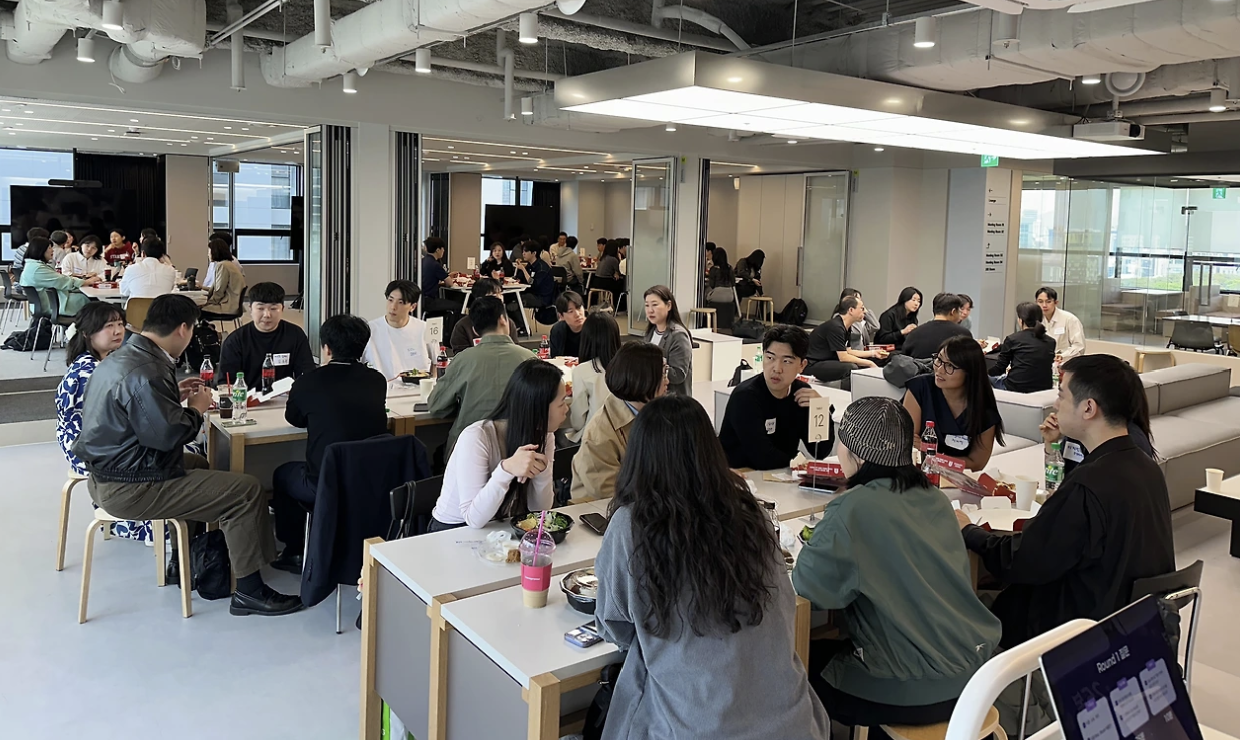
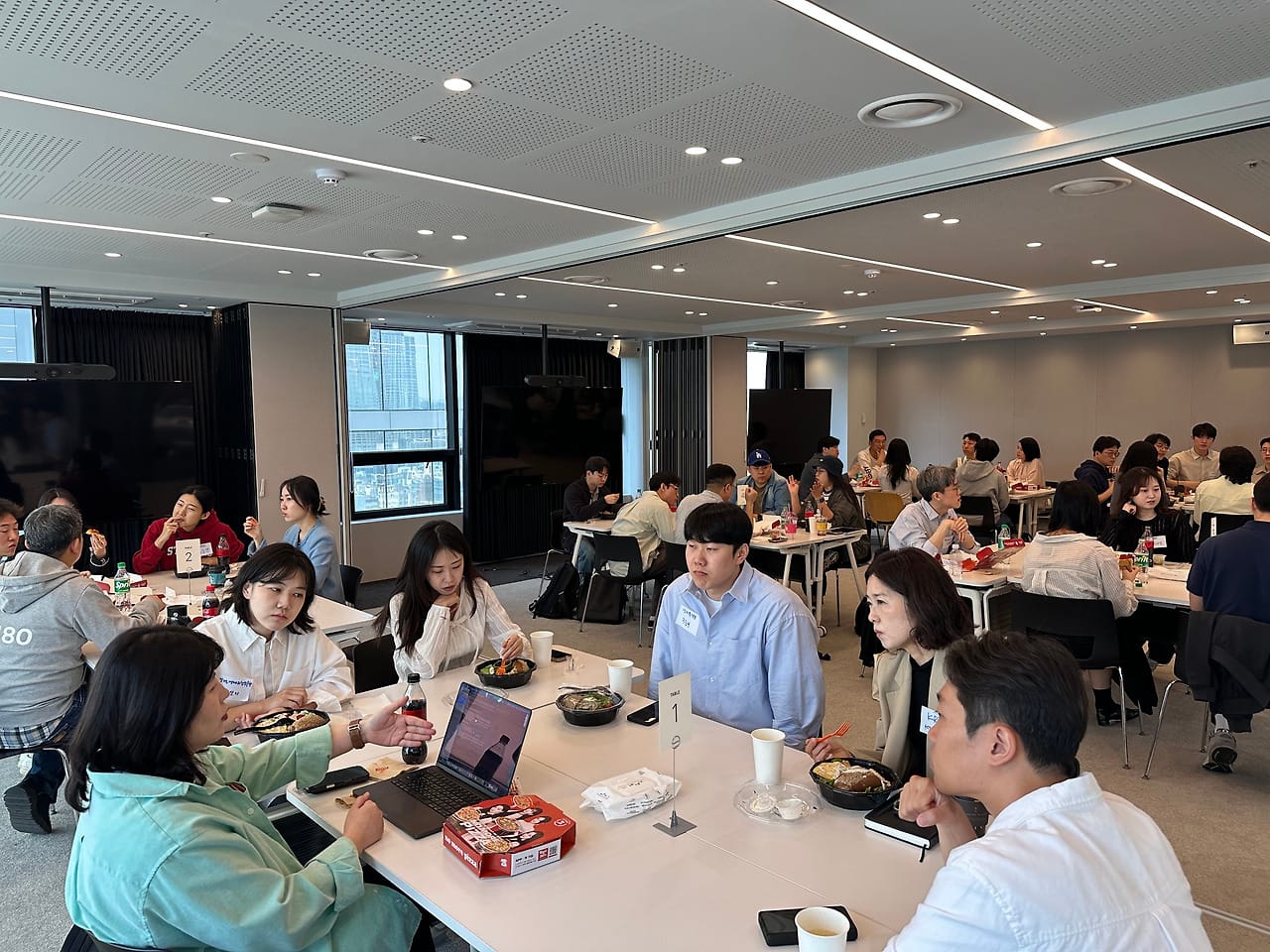
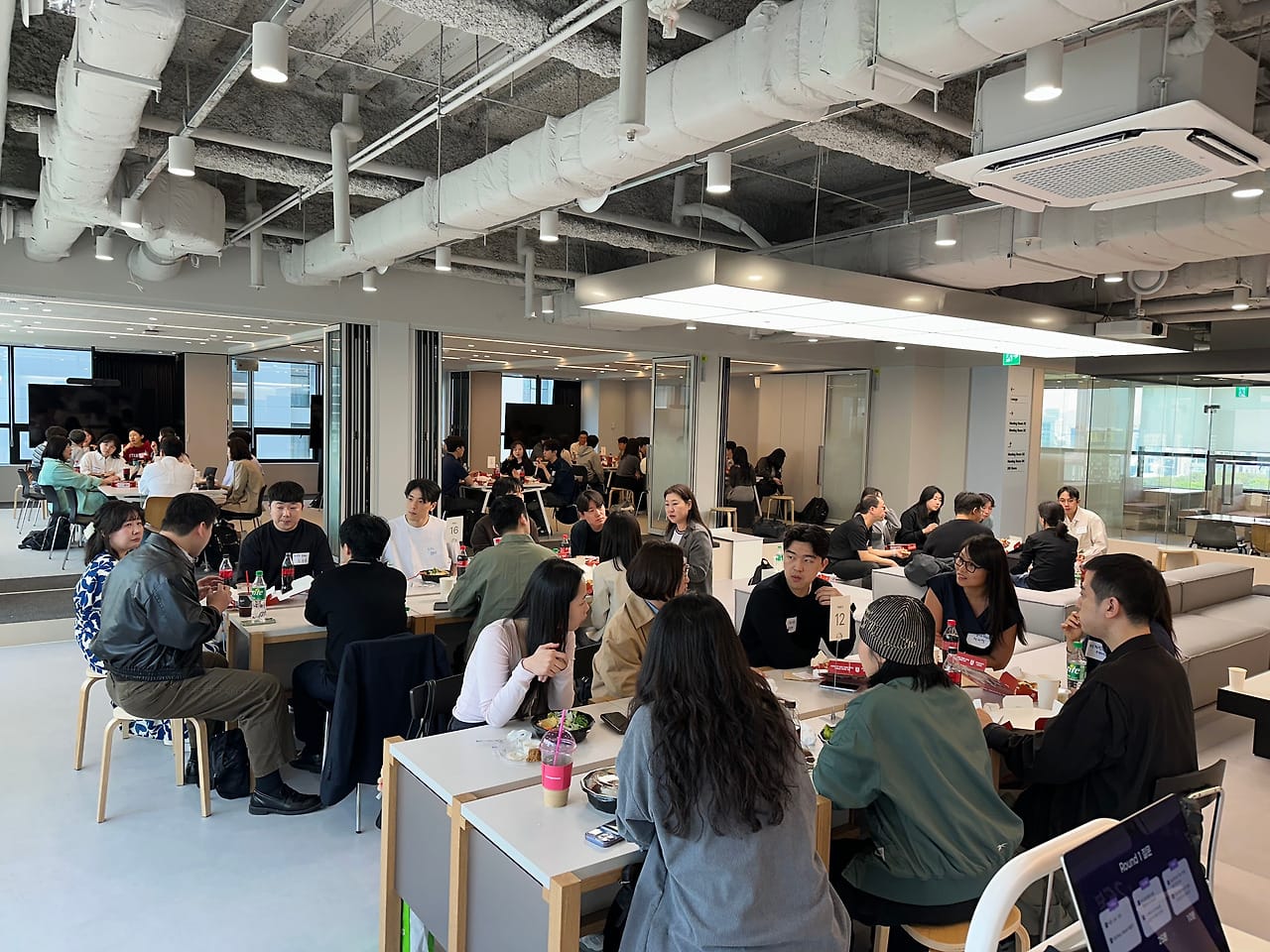
Two rounds of roundtables followed the keynote, with each table lead sharing insights for a minute. The most frequent word was harness: how much of the stretch between thought and execution we occupy, whether you call it prompting, context, or harness engineering, starts from the same place.
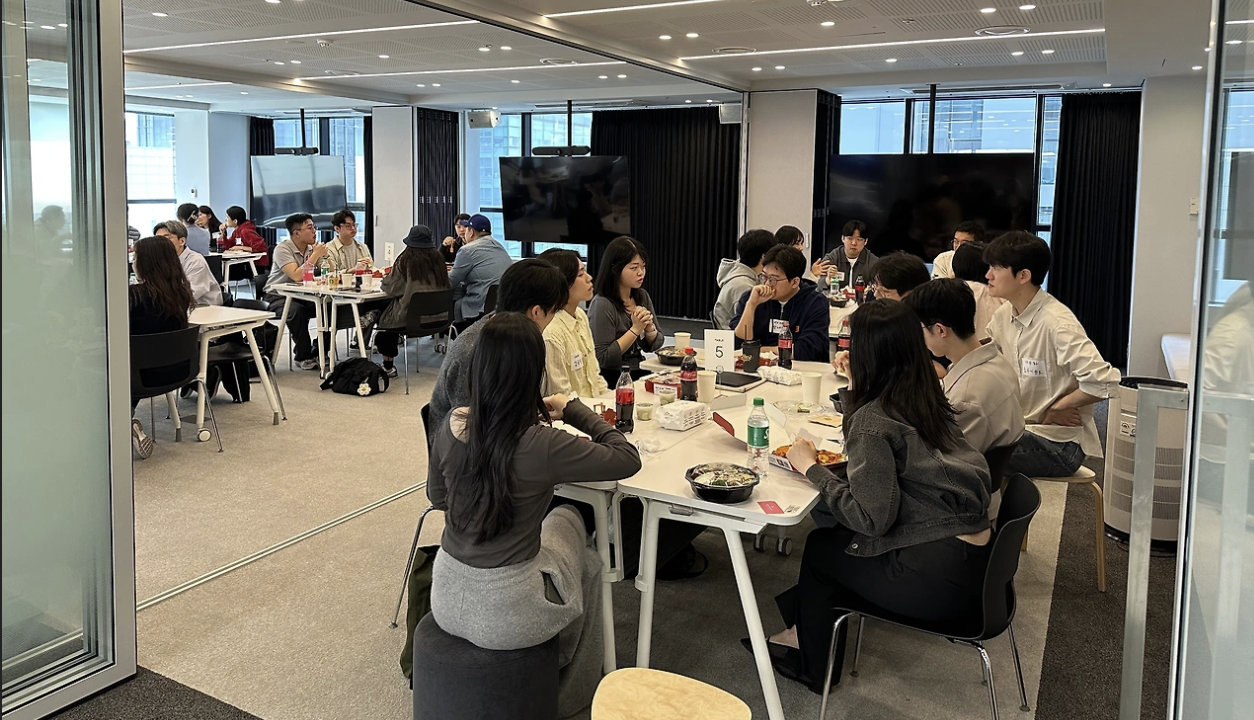
The biggest response went to a participant from LG H&H: AI has made output explode, but whether that becomes business outcomes or changed customer behavior is a separate question, and the review load has grown until it feels like being the teacher with the red pen. The core skill is not producing more but defining what to make and why, and aligning output with real results, exactly where Lee lands with focus on impact.
Tables on company-wide transformation asked whether distributing tools is enough or culture must form, whether a dedicated AX org becomes its own bottleneck, and what to do with the resources freed by automation. The table on redefining seniority concluded that role consolidation will continue, and the homework inside it is problem definition and creative solutions. A participant from Rebellions offered a line that stuck: tokens are the cheapest they will ever be, meaning now is the cheapest moment to build literacy and capability. Different roles, different company sizes, different shades of blue, and the talk converged on one question: beyond tool performance, what is the essence of the work we should be doing?
The irony of IRL mattering more
A story from our founder in the opening summarized the mood. The mayor of San Francisco, visiting Seoul recently, advised Korean companies entering the US: do not go to the big conferences. What ends up on stage is polished, already-stale material, and the networking there lacks depth; grabbing anyone at a coffee shop is more insightful. Coming from someone who hosts conferences often, it landed harder.

As AI digests online information effortlessly, the value of what is not online rises. Sharing what lives in your head, refining it, developing it together, only happens offline. That density of connection is probably why a hundred people gathered on a Saturday morning.
What companies can take away
Four things, in working language. One, change how work runs, not which features ship: the essence of transformation is execution and org structure. Two, let the person who sees the problem solve it, with the organization removing the barriers of development, AI, and cost. Three, return evaluation to core metrics: not token usage but how much AI improved contribution margin and conversion. Four, the CEO moves first: the biggest bottleneck is not the tool but the final decision-maker.
FAQ
What defines an AI-native organization? Lee offered three conditions: work does not run without AI, a small elite team produces outsized impact, and the service stops on a Claude outage rather than an AWS outage.
How does MyRealTrip evaluate AI use? Not by token usage or login frequency, but by how much AI improved the metrics that always mattered: contribution margin, confirmation rate, conversion rate.
What does "the person who sees the problem solves it" mean? When recognizing and solving are separated, work becomes request-and-delivery and fails. So a marketer built a flight service and the CEO built a business travel platform, while the organization removes the barriers of development, AI, and cost.
What is the biggest bottleneck in AX transformation? The CEO, or whoever makes the final decisions. When leadership leads by example, the transformation is not especially hard.
Watch the talk
Scenes from the day
This post is based on the talks by AB180 CEO Sungpil Nam and MyRealTrip CEO Donggun Lee at a Bloom event.
Join Bloom
Bloom builds offline rooms where people and technology meet. We run them in Seoul, and now beyond it.
- 💬 Discord community, where events are announced first
- ▶️ YouTube, full talks from past events
- 📸 Instagram, photos from our events
- 🎟️ Upcoming events