
Playco on AI-Native Hiring and Authenticity

🤝 Bloom × EF × Playco × Tiro
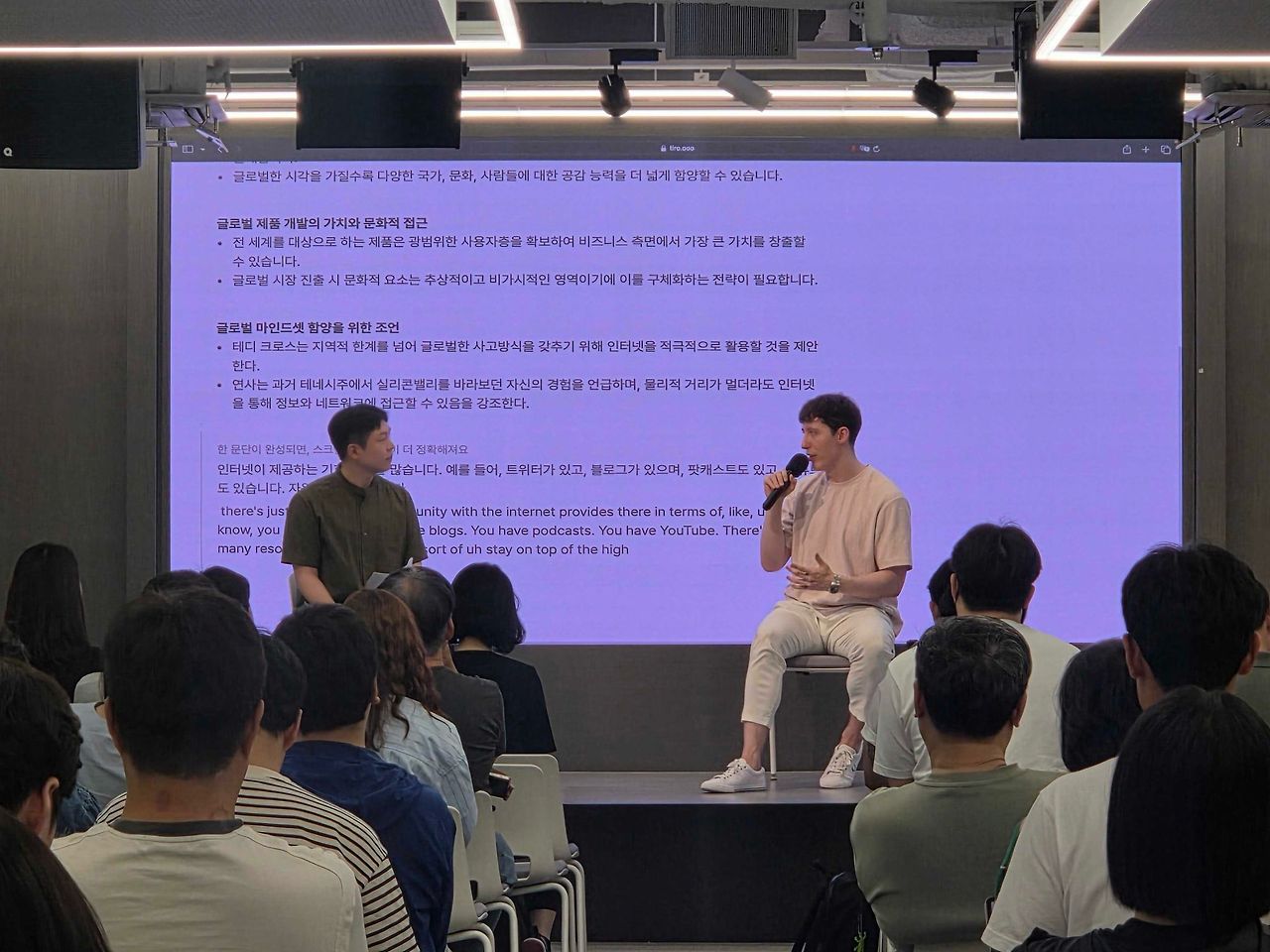
🎤 Teddy Cross, CPO of Playco
Insight is not at the conference
The speaker was Teddy Cross, co-founder of Playco, the global gaming unicorn valued around one trillion KRW with cumulative funding of 230 billion KRW from Sequoia and others. The biggest message he left the community was about where insight comes from. Silicon Valley or Seoul, real insight does not come from conference halls. Content was oversaturated before AI, and mass networking means little. The real thing appears before it ever reaches the internet, in rough conversations between friends in small coffee shops.
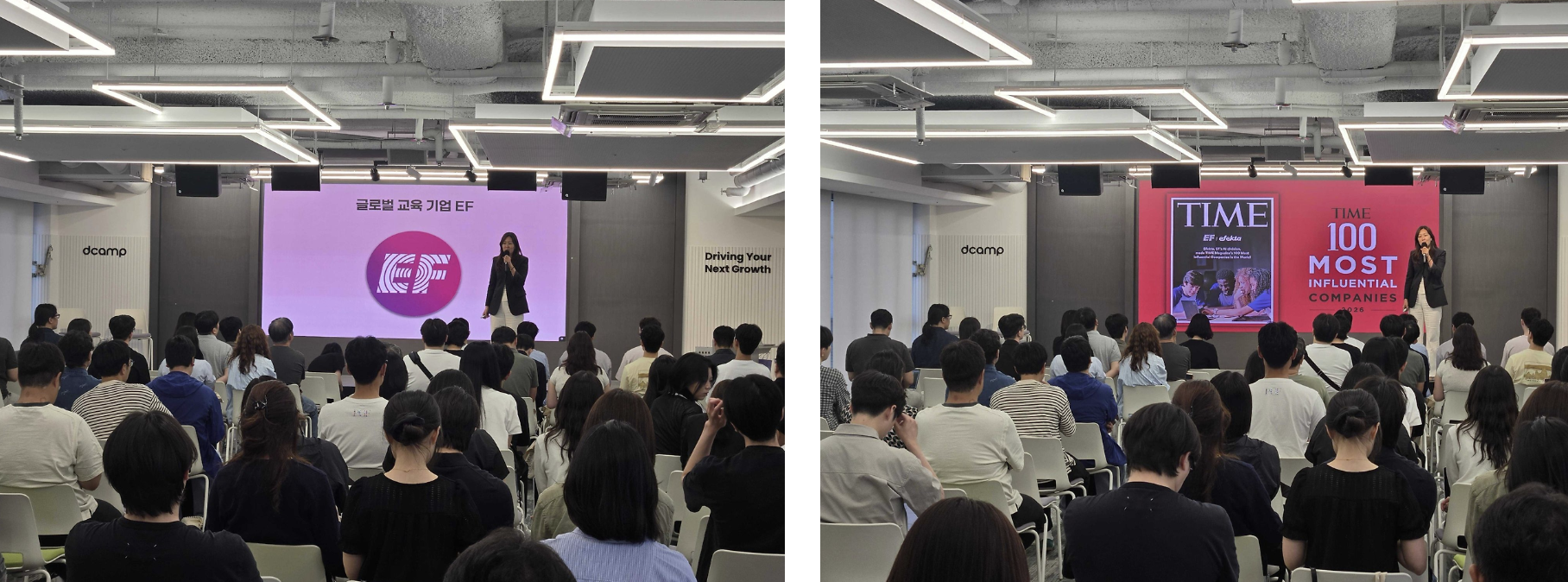
Jaekyung Oh, country head of EF Korea, which sponsored the night, pointed in the same direction. The online learning division of this sixty-year language education company was named among the 100 most influential companies by TIME, alongside Nvidia and Anthropic, not for suddenly inventing technology but for folding sixty years of language education and global experience into AI. His line stuck: language now starts everyone from the same line. Speaking some English is no longer an edge; language is the tool for meeting someone and creating a new opportunity. As barriers dissolve, the experience of going abroad and breathing the same air in the same room only grows in value.
Hiring in the AI era: the coding interview is over
Teddy is hiring product engineers worldwide, and hiring changed completely in six months. Testing engineers with coding is finished, because nobody codes. Coding became a small part of the job; time goes to defining the product, writing specs, researching, talking to customers, building, shipping, testing. So the search is for people who make things end to end, not people who only code.
Then what do you look for? Product taste, the hardest thing to test. The best signal is what someone has built before, ideally alone: the portfolio. Before AI you needed a company to build anything; now a website takes five minutes, so having no portfolio leaves no excuse. His view on management was equally firm: hands-off management is over, engineering managers code with AI, and big tech is thinning middle management. So teams get smaller, and each person in them does far more in both output and scope. The people who excel at this are often not the people who thrived before AI.
Living as an AI-native company
The Playco day starts with the question of how to become more AI-native, and the question never stops. One definition: everything is AI-first. When a problem or task appears, go to AI first; done consistently by everyone, the difference compounds and you stand at the front line. The transition was sequential: the art team has been AI-native for three years, and engineering tried new models weekly until the moment they got good enough, then switched. On the articles saying AI does not translate to revenue, he was blunt: if that is your experience, you are doing it wrong. The art team produces twenty times the content, or ten times at twice the quality, and everyone at the company vibe-codes, the head of marketing and the artists included.
What he ranked most important was zero friction. Playco gives effectively unlimited budget so nobody worries about AI subscriptions, tools, or token costs, down to virtual credit cards when expensing is awkward. Making the friction of switching to AI and trying new tools zero is the single most important way to become an AI-first company. But a token leaderboard is a terrible idea: it invites burning tokens while doing nothing. Open the resources without limit, and never make usage itself the performance metric.
The one thing he will not hand to AI: writing
An interesting exception: he uses AI for nearly everything and never for writing. The reason is authenticity. Anyone who has done marketing long enough knows authenticity is king; UGC, social, every channel that reaches people is about it, and the moment you let AI speak for you, it shatters. It is no longer you. He added that if you edit AI writing carefully enough that it stops sounding like AI, you have effectively written it yourself.
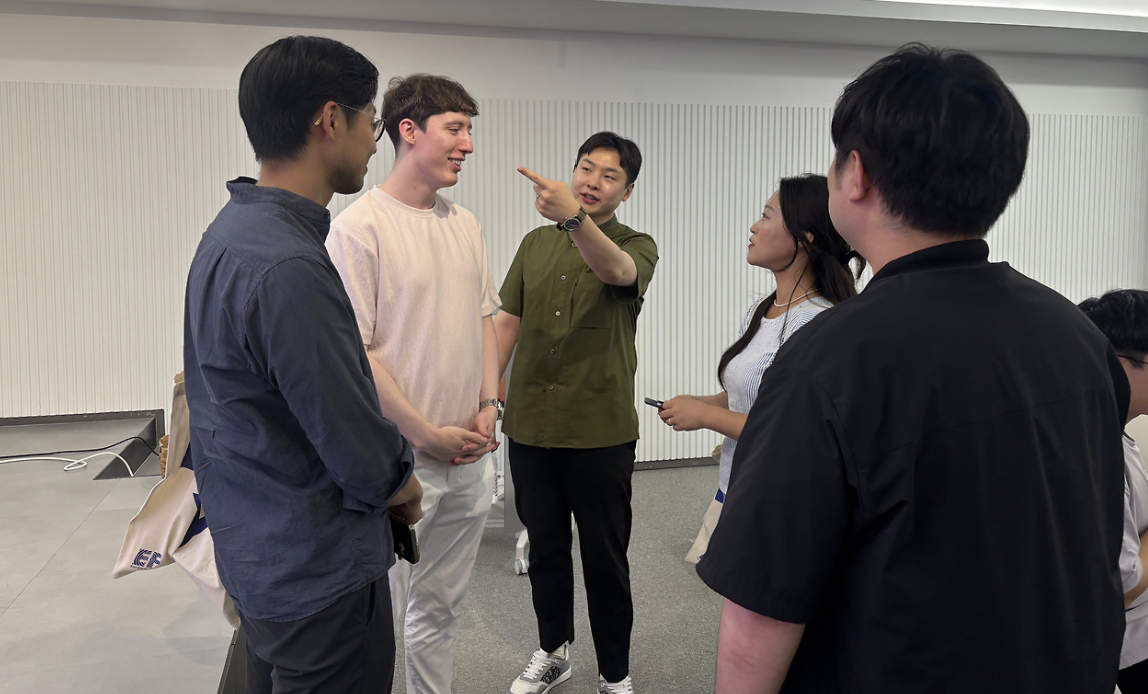
He went further: the way we communicate with AI is all writing anyway. Even speech gets transcribed into text, and writing is the highest-fidelity way a human expresses themselves. Lose that ability and you lose the human sense. He avoids AI in writing not out of grammar anxiety but to remain as human as possible. Asked how to stay connected to the front line, his answer rhymed: everyone is in the same boat, so use the best tools strategically, but listening is not enough; build things yourself and share them with people, online, offline, ideally both.
From the small groups
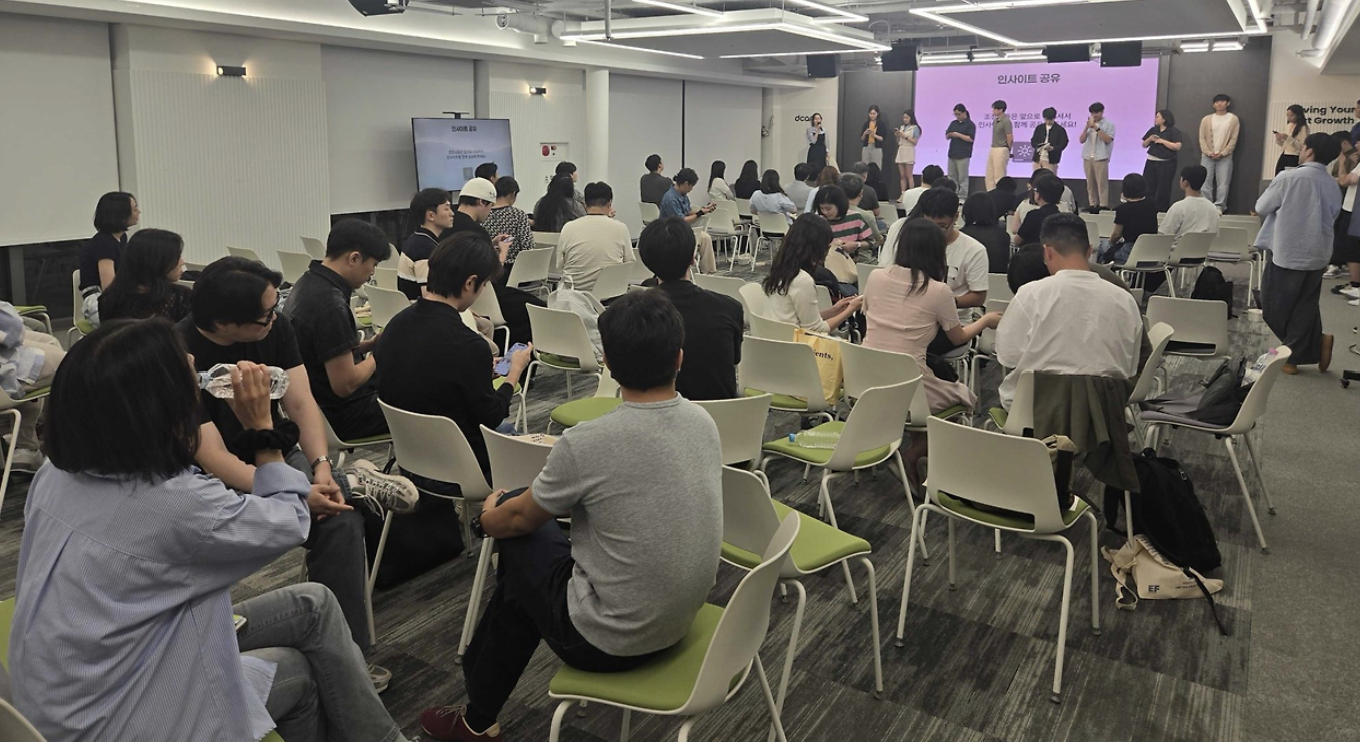
After the fireside, groups discussed the AI trends they follow and how they absorb the information. The most repeated theme was the move from the prompt era to the workflow era. The differentiator is no longer prompt skill but data structure, production process, and pipeline design; writing has been leveled upward, while system design and architecture still separate the models. Harness engineering, AI on a leash, was the phrase at several tables.
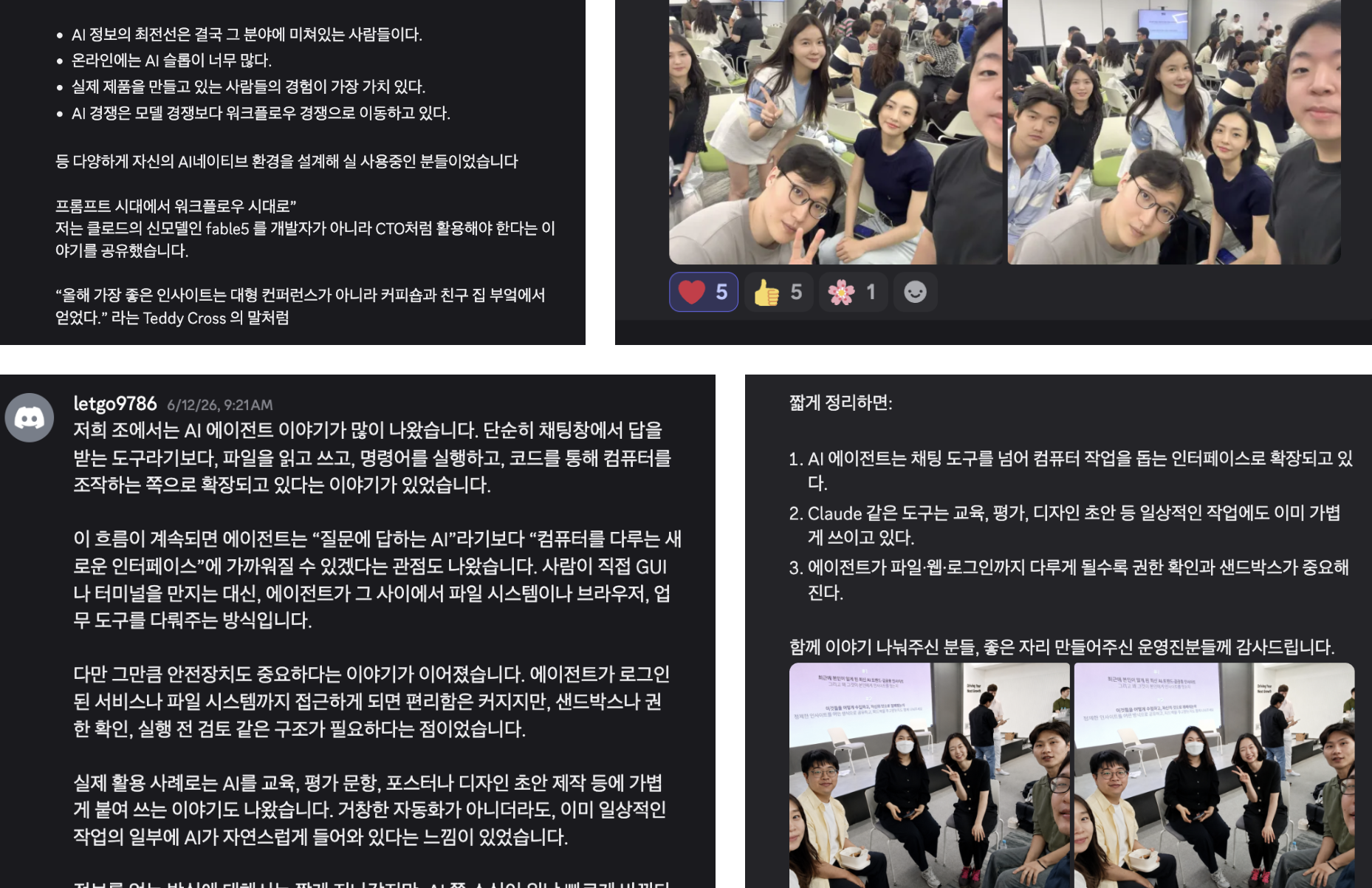
The information problem was shared too: content is endless, saved links reopen as mysteries, and even three-month-old material ages fast. The question is filtering for what is genuinely needed and internalizing it. One participant offered a primitive but reliable method: the more you use AI, the more you risk losing the thinking function, so write down what you understood and share it with people. The startup-minded table reached a matching conclusion: wrestling with which problem to solve with AI eventually forces you offline, to ask users directly what hurts, exactly Teddy's build-and-immerse advice.
What companies can take away
Four things, in working language. One, evaluate taste, not coding: portfolios of things built end to end replace the coding interview. Two, make friction zero: open AI tools and token budgets without worry, and never make usage a KPI. Three, make AI-first a habit: problems go to AI first, as the organizational default, transitioning team by team. Four, keep what is human: writing and communication that demand authenticity, and the field insight that only exists offline.
FAQ
How has engineering hiring changed? The coding interview is effectively over. Coding is now a small slice of the job, and what gets evaluated is product taste and a portfolio of things built end to end.
What makes a company AI-native? Asking daily how to become more AI-native, handling everything AI-first, and driving the friction of tools and token costs to zero, without ever making usage itself the metric.
Is it true AI does not convert to revenue? Teddy Cross says if that is your experience, you are using it wrong: the art team multiplied content production severalfold to twentyfold, and every role in the company vibe-codes.
Why does he refuse AI for writing? Authenticity. The moment AI speaks for you, the writing stops being you, and writing is the highest-fidelity form of human self-expression.
Scenes from the night
Join Bloom
Bloom builds offline rooms where people and technology meet. We run them in Seoul, and now beyond it.
- 💬 Discord community, where events are announced first
- ▶️ YouTube, full talks from past events
- 📸 Instagram, photos from our events
- 🎟️ Upcoming events