MyRealTrip, Jocoding, and the Economics of Automation

MyRealTrip halved its support headcount and scaled product registration from 25 a week to 5,000 a day, by layering a chatbot on top of existing systems instead of replacing them.
Jocoding has run a static service with no servers and no operating costs for five years of monthly revenue, and summed up the era: what remains is not a technology gap but design ability.
🤝 Bloom × MyRealTrip × Jocoding
🎤 Jocoding · Wonjin Heo, CTO of MyRealTrip
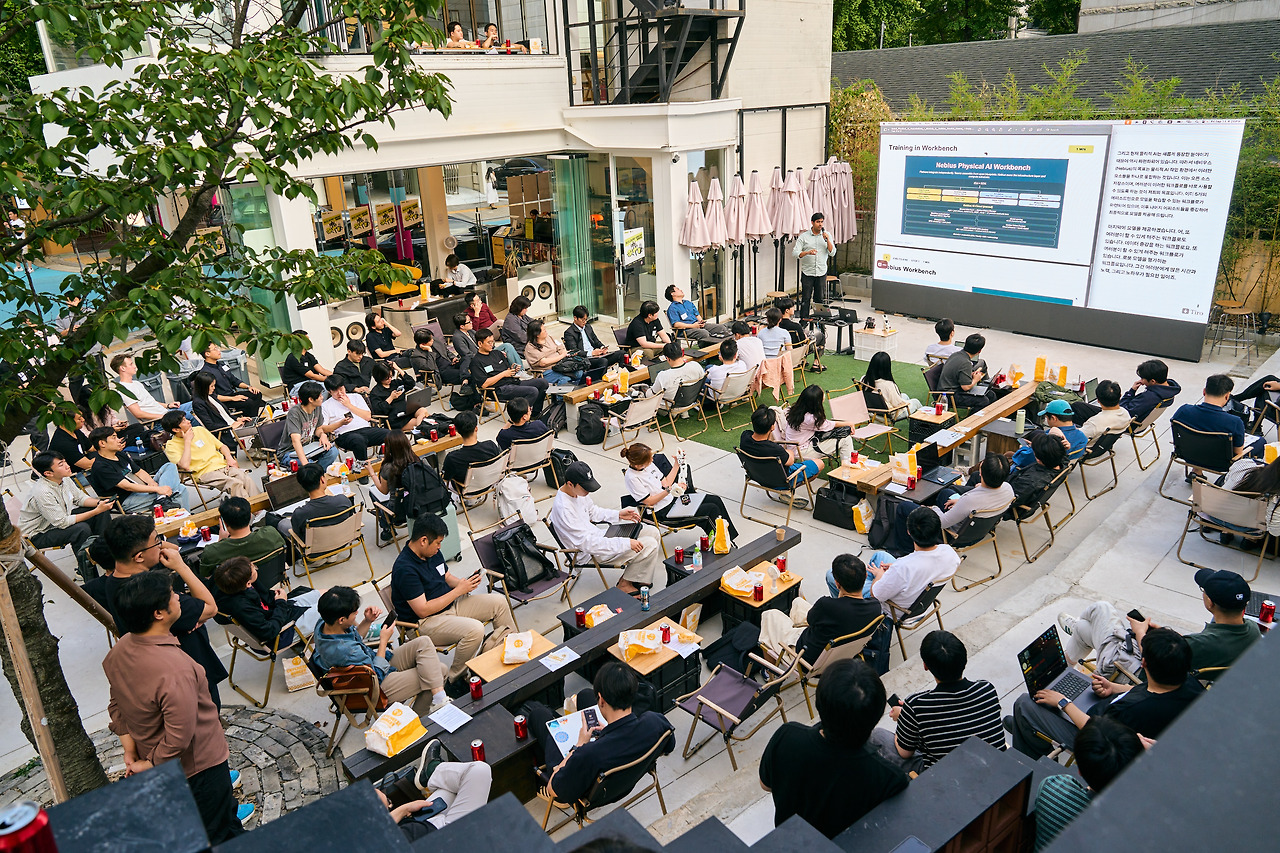
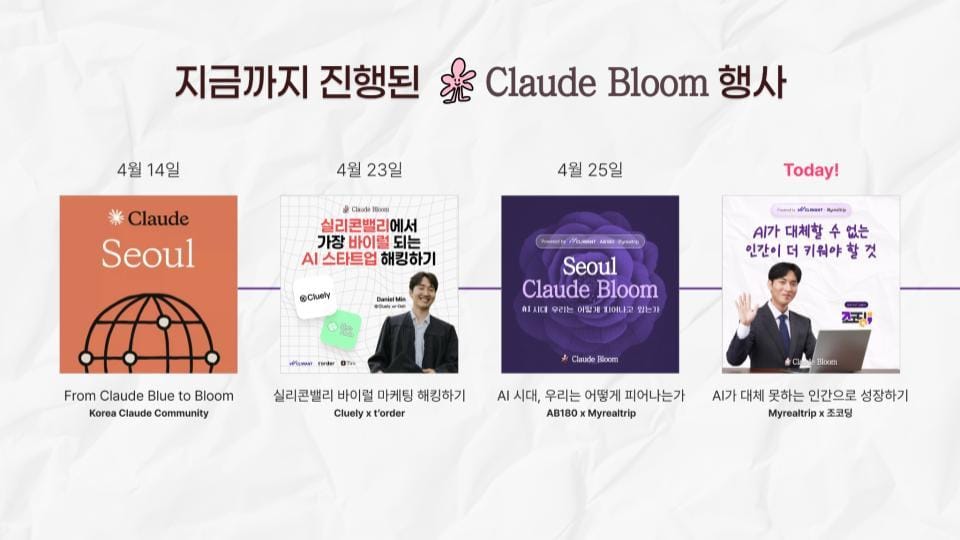
Three days after opening, the first Bloom event had 2,000 sign-ups. Only 200 could attend, leaving 1,800 disappointed, and that disappointment created a series. After presenting at the second event, MyRealTrip reached out first, offering space and catering, and the third event was held at their office. This time, AI coding creator Jocoding, with 730 thousand subscribers, joined as a speaker.
The CS overhaul MyRealTrip waited 15 years for
CTO Wonjin Heo opened with customer support: 75 thousand inquiries a month, half phone and half chat. For fifteen years, volume grew with the platform, and the answer was always hiring more people. Labor costs rose, agent tenure stayed short, and the cycle of turnover, training cost, and degraded customer experience repeated.
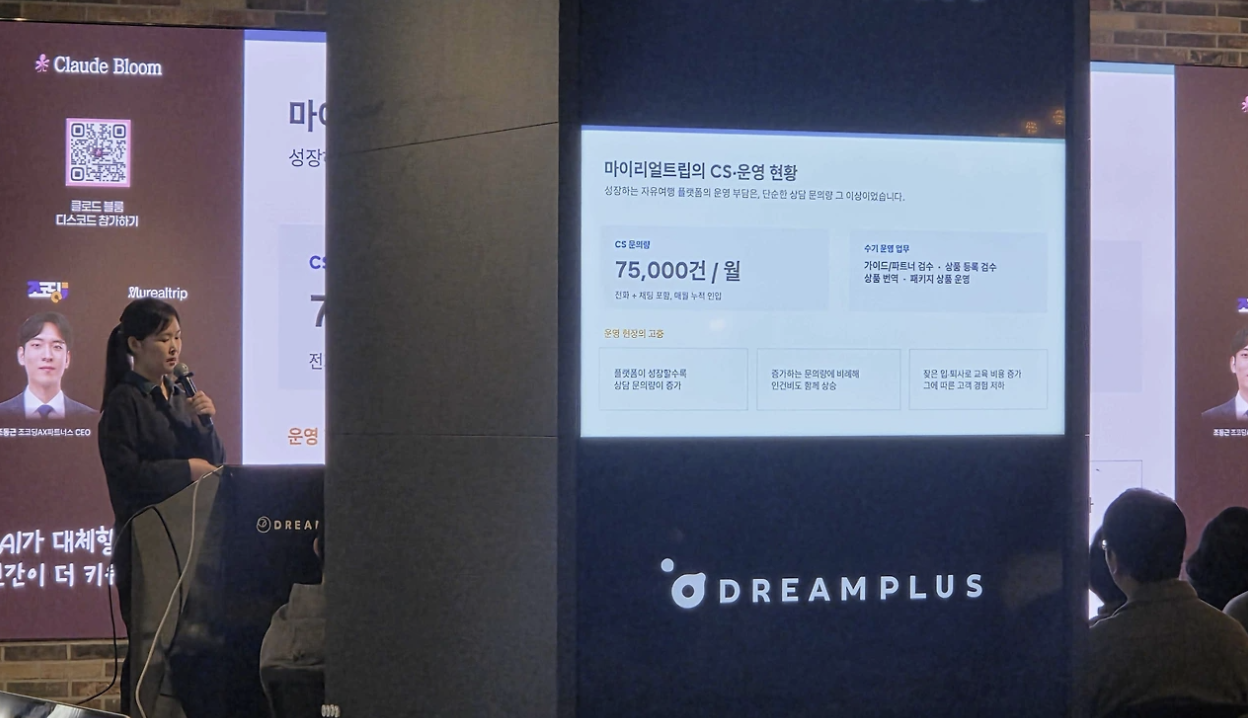
The adoption was deliberately careful. No wholesale replacement: the existing chat tool stayed, and a chatbot was layered only onto simple inquiries answerable from FAQ and policy. Agents had nothing new to learn, and anything the bot could not solve flowed naturally to a human. When results showed, APIs were connected, then the AI agent began taking actions directly, from resending password reset emails to computing refund fees.
The result: simple-support headcount went from 57 to 28, about half. The people who moved were not laid off; they shifted to advanced support handling emotional claims and urgent cases, and AI support quality proved close to human. The part worth studying is not the result but the order: verify narrowly on top of the existing environment, then widen step by step. That is how you push a transformation while keeping floor-level resistance low.
From 25 a week to 5,000 a day
The operations numbers were more dramatic. Importing products from overseas meant translating, mapping categories, and organizing by city, all by hand, capped at 25 products a week.
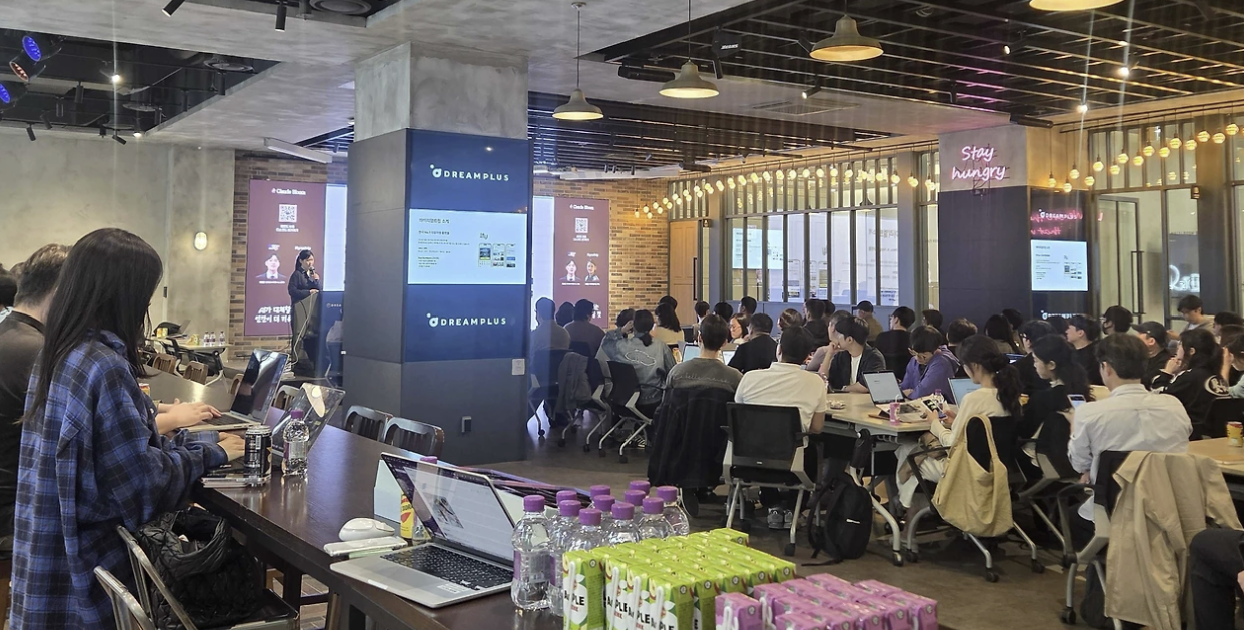
Now you press a button, enter a city, and AI analyzes trends, assigns categories, and registers products automatically at 4 AM, up to 5,000 a day. Cities nobody used to touch, across Africa and the Middle East, started getting inventory, and real revenue arrived from Cairo and Monaco. The long-tail market that sat empty because humans could not cover it turned directly into revenue through automation.
Jocoding, a one-person company with zero operating costs
Jocoding spoke on one-person founding in the AI era. The flagship example is the animal face test from 2020: upload a photo, learn whether you look more like a cat or a dog, and that is the entire feature. It hit number one on Naver real-time search, was shared by 120 thousand people on Instagram stories, and passed 40 million users in the English-speaking world alone.
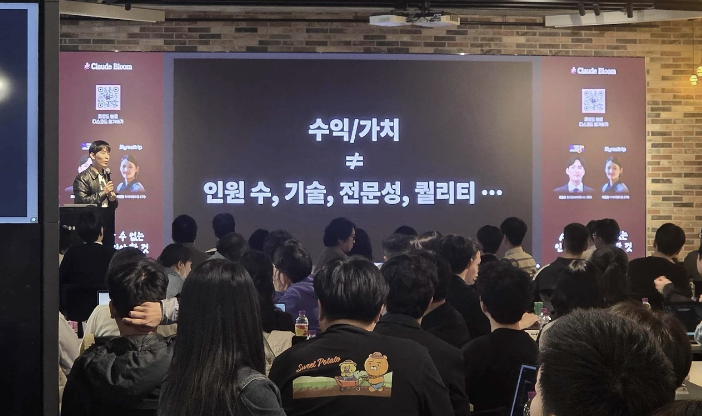
The operating structure is the interesting part. A static site on Cloudflare Pages costs nothing in bandwidth even when the whole world connects at once, and the AI runs on-device in the browser via TensorFlow JS, so there is no server. Beyond the domain fee, operating costs are effectively zero. With the code nearly untouched since 2020, it still earns 650 thousand to 1.2 million KRW every month.
His one regret was monetization timing: no paid product at the viral peak. There was a day AdSense printed 6 million KRW, and it stopped there; payments and report features came late. Views are not revenue, and the conversion machinery has to be ready when traffic surges. His subscribers built services the same way, face-reading tests, first-impression tests, and one personal color test earned 100 million KRW.
Where the technology gap vanishes, design remains
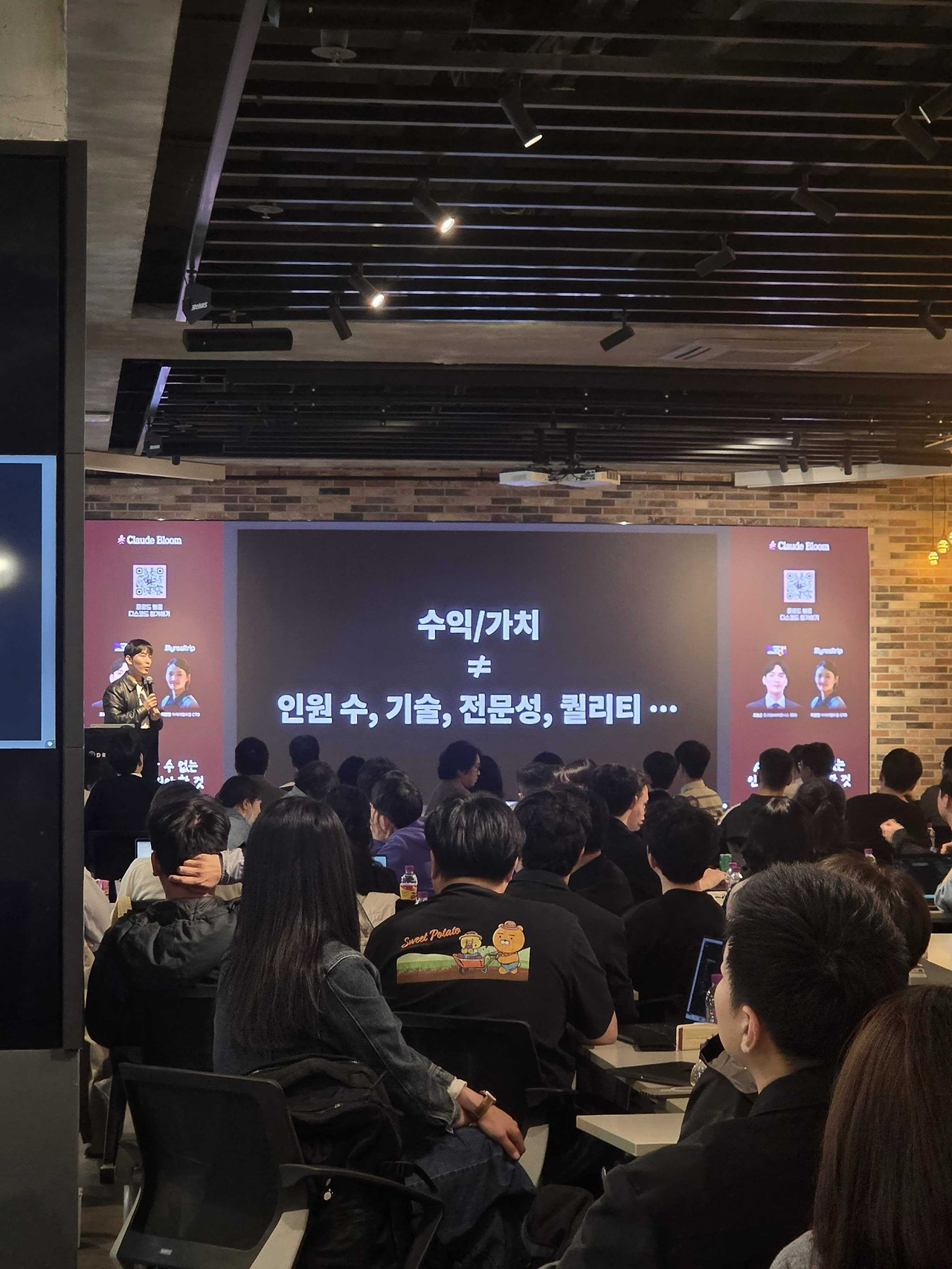
Jocoding believes the one-person unicorn has become genuinely possible. AI coding is old news, and design followed; a single person can now do planning, development, and marketing. The core sentence: technically, a large corporation and a solo founder use the same AI models. Everyone wraps the same models, so the technology gap has effectively disappeared. What remains is the ability to design what to build and how. The more the tools level out, the larger the share of the person who defines problems and shapes structure.
The question sixteen tables arrived at
The roundtables shared one theme: what AI cannot replace, and which organizations must become AI-native. The stories varied: a company that let 60 percent of its dev team go and saw output double, another spending under 100 million KRW on Claude and Codex while cutting labor costs sharply, closed-network companies for whom adoption remains hard, and the worry of not knowing what to do with the hours AI freed.
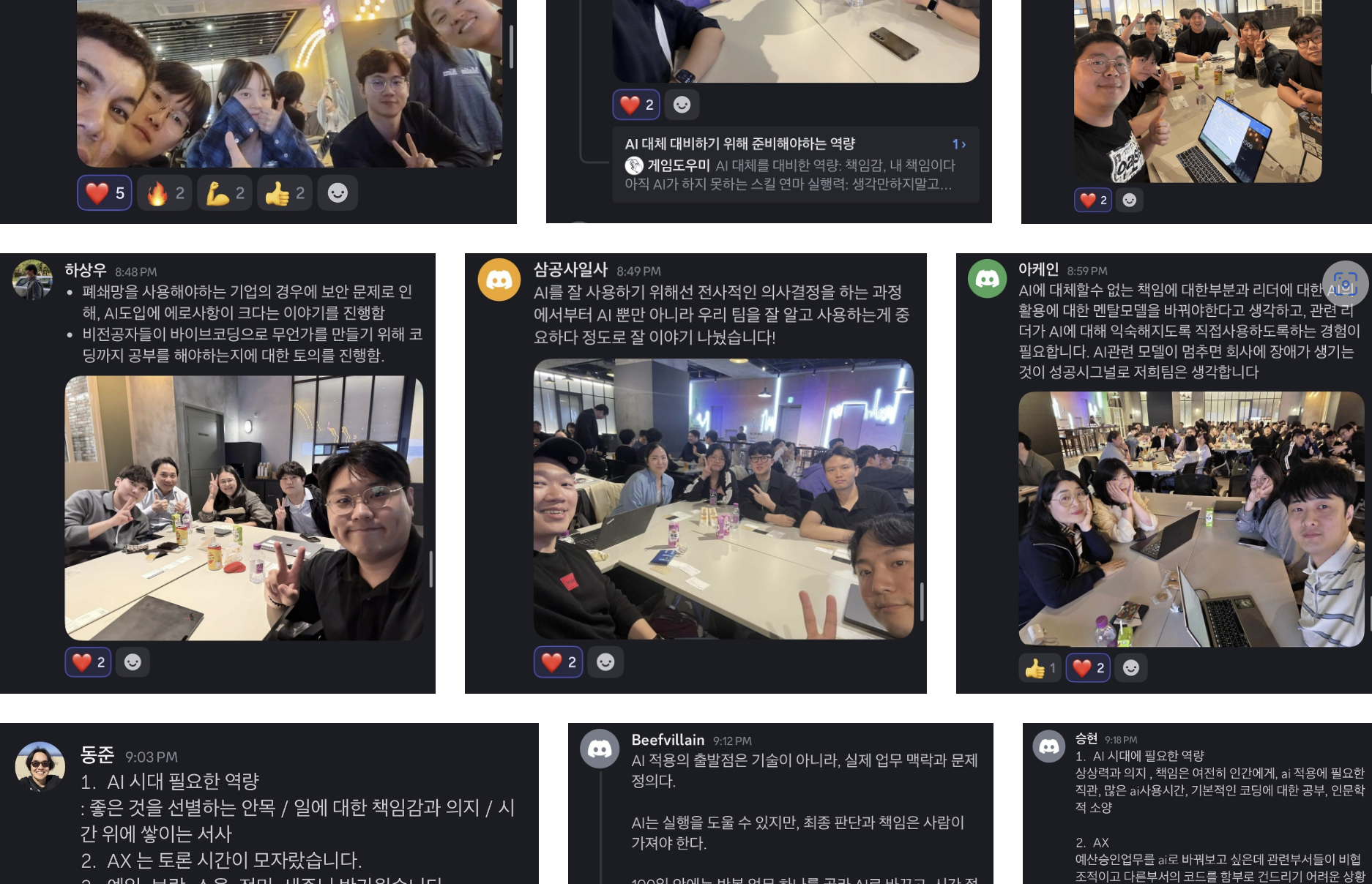
The direction converged: what AI cannot replace is responsibility, judgment, intuition, and communication. A pharmaceutical marketer said AI talks sense most of the time and is wrong at decisive moments, and catching that wrongness is the human role now. Leaders must become AI-native first, because an organization does not change when its decision-makers do not understand AI. Making one from zero, and telling its story, stays with people.
What this community is building
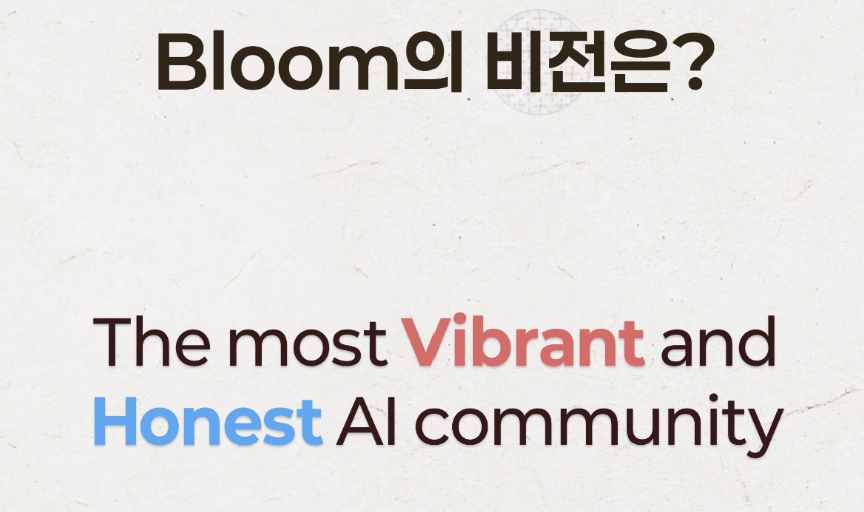
That day our founder defined Bloom as the most active and honest AI community. Active means good people in good spaces at events worth attending; honest means a room for bringing real problems and finding answers together, not for showing off. From the blue of AI to blooming together, exactly as the name says.
There is a company-facing experiment layered on top: a go-to-market foothold for taking strong Korean cases to overseas communities, and a concept for an AX project platform matching large companies with AI companies through transparent competition. About 18 percent of Bloom participants come from enterprises, which is where the adoption demand and the need for validation meet.
What companies can take away
Four things, in working language. One, verify narrowly, then widen: layer on top of the existing environment rather than replacing it. Two, open the long tail with automation: markets left empty for lack of hands become revenue. Three, attach conversion machinery in advance, so views can become sales when traffic surges. Four, invest in design ability: with models leveled, the remaining edge is defining problems and shaping structure.
From Blue to Bloom
An event every week, trust built by seeing each other often. Nobody knows how long a community lasts, but as the saying went that day, we go as far as it reaches, and this blog adds one record every time an event happens. Outdoor hackathons and Han River walking meetups are in preparation. Whatever stories come out, the people in the room hear them first.
FAQ
What did MyRealTrip achieve with CS automation? Simple-support headcount fell from 57 to 28, with the difference moving into advanced support for emotional claims and urgent cases, and AI support quality close to human.
How large is the product registration automation? From a manual cap of 25 products a week to up to 5,000 a day, with AI handling trend analysis and categorization, and new revenue arriving from long-tail cities like Cairo and Monaco.
How does the zero-cost structure of Jocoding work? A static site on Cloudflare Pages carries no bandwidth cost, and TensorFlow JS runs the AI on-device in the browser, so no servers exist. Nothing beyond the domain fee.
What can AI not replace? Responsibility, judgment, intuition, and communication, especially the judgment that catches AI at the decisive moments when it is wrong, and the ability to make one from zero and tell its story.
Watch the talk
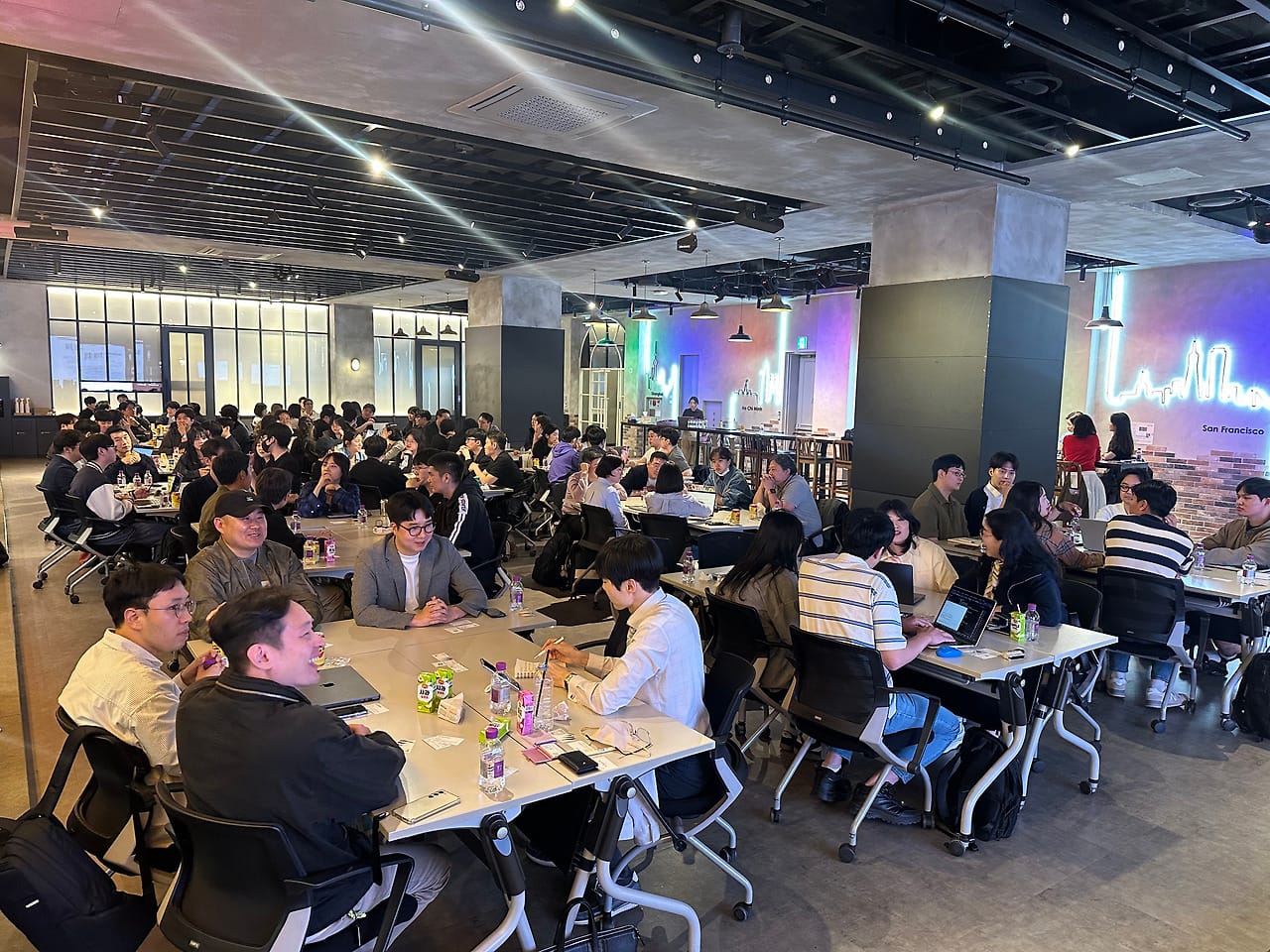
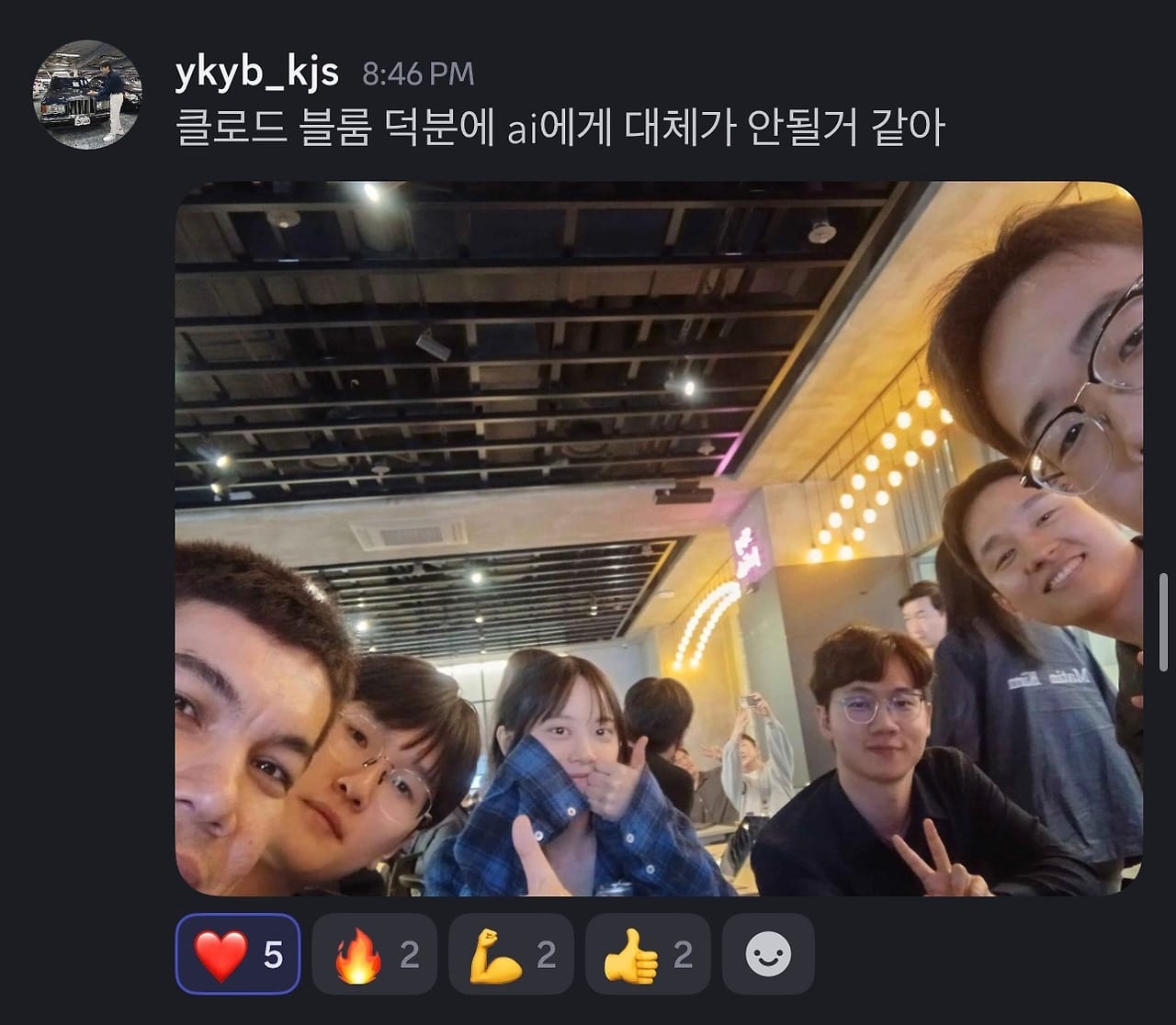
Scenes from the day
Join Bloom
Bloom builds offline rooms where people and technology meet. We run them in Seoul, and now beyond it.
- 💬 Discord community, where events are announced first
- ▶️ YouTube, full talks from past events
- 📸 Instagram, photos from our events
- 🎟️ Upcoming events