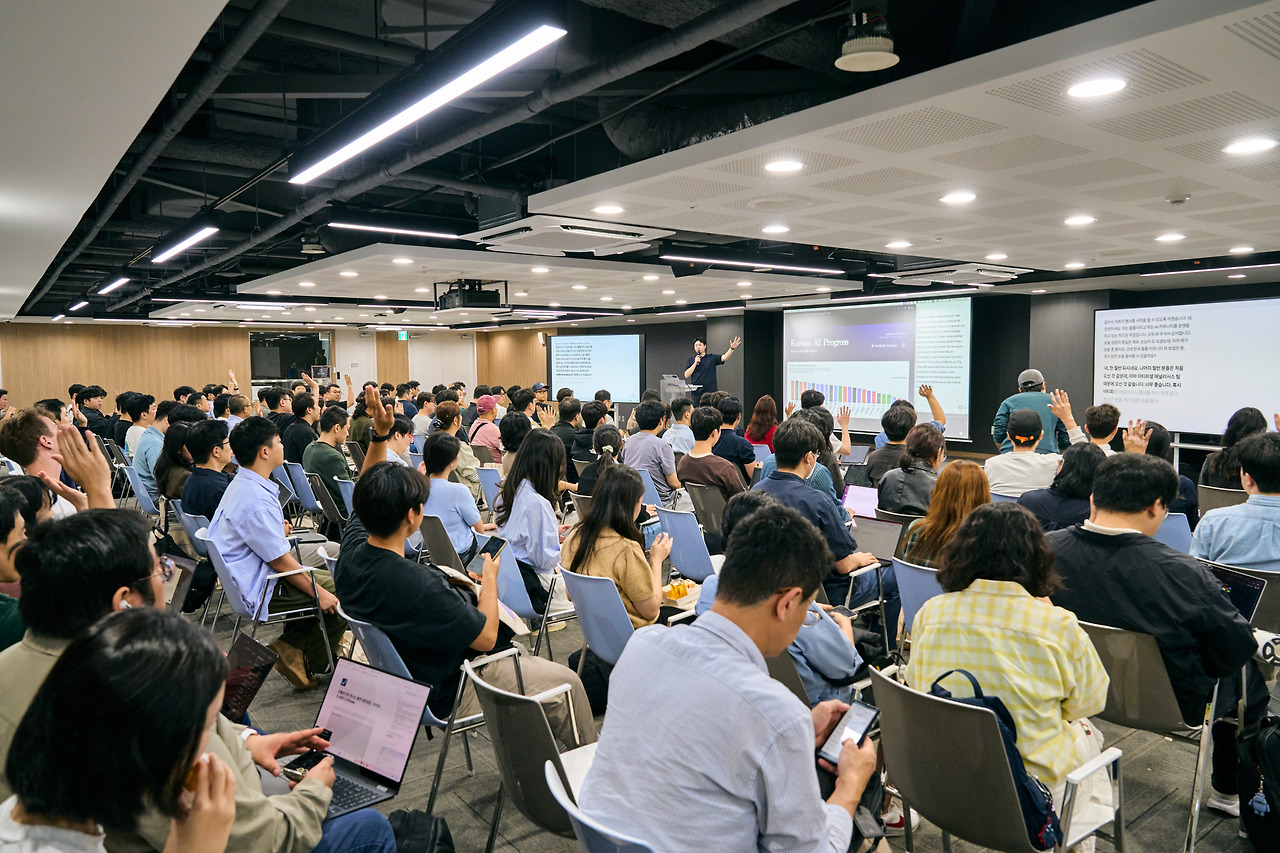
Price Per Token Is the Wrong Unit Now
The same task costs from 0.06 to 8.75 dollars depending on the model. Artificial Analysis says the unit that matters now is cost per task, not tokens.

The same task costs from 0.06 to 8.75 dollars depending on the model. Artificial Analysis says the unit that matters now is cost per task, not tokens.
같은 과제 하나를 푸는 비용이 모델에 따라 0.06달러에서 8.75달러까지 벌어집니다. 에이전트 시대의 단위는 태스크당 비용이라고 했습니다.
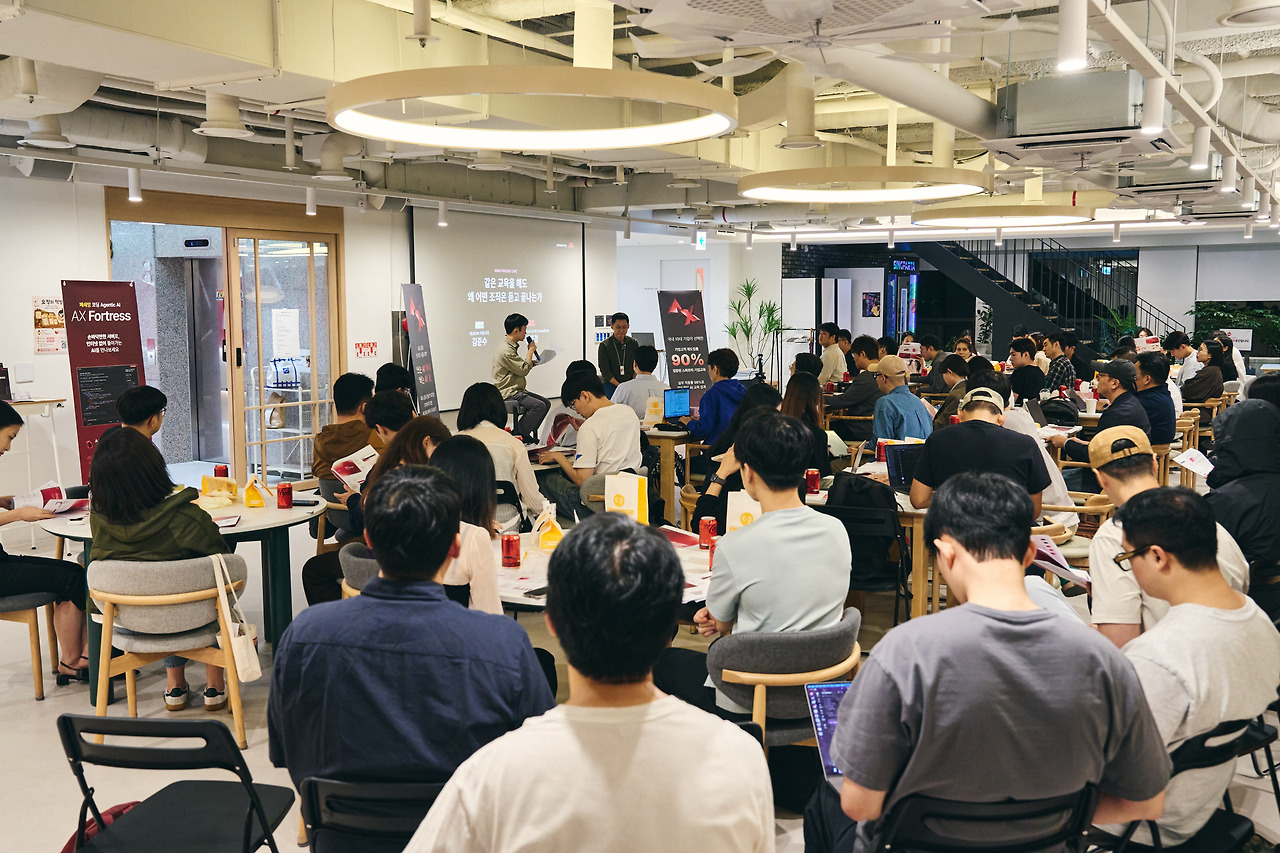
Team Sparta surveyed 330 training decision makers in Korea. 97% said AI training is necessary. 82% of those who took it still cannot use it at work. A night at Bloom with LilysAI and Team Sparta on where corporate AI adoption actually jams.
팀스파르타가 교육 결정권자 330명에게 물었습니다. 97%가 AI 교육이 필요하다고 답했고, 82%는 교육을 받고도 현업에서 쓰지 않았습니다. LilysAI 김예인 님, 팀스파르타 황재경 님과 함께한 Bloom 현장 기록입니다.

Around 150 AI builders gathered in Hapjeong as Nebius and NVIDIA opened a global physical AI hackathon, where robots under the Christmas tree came up.
Nebius와 NVIDIA가 한국에서 연 글로벌 피지컬 AI 해커톤 킥오프에 여러 업계 AI 빌더 150명이 합정 우물에 모였습니다.
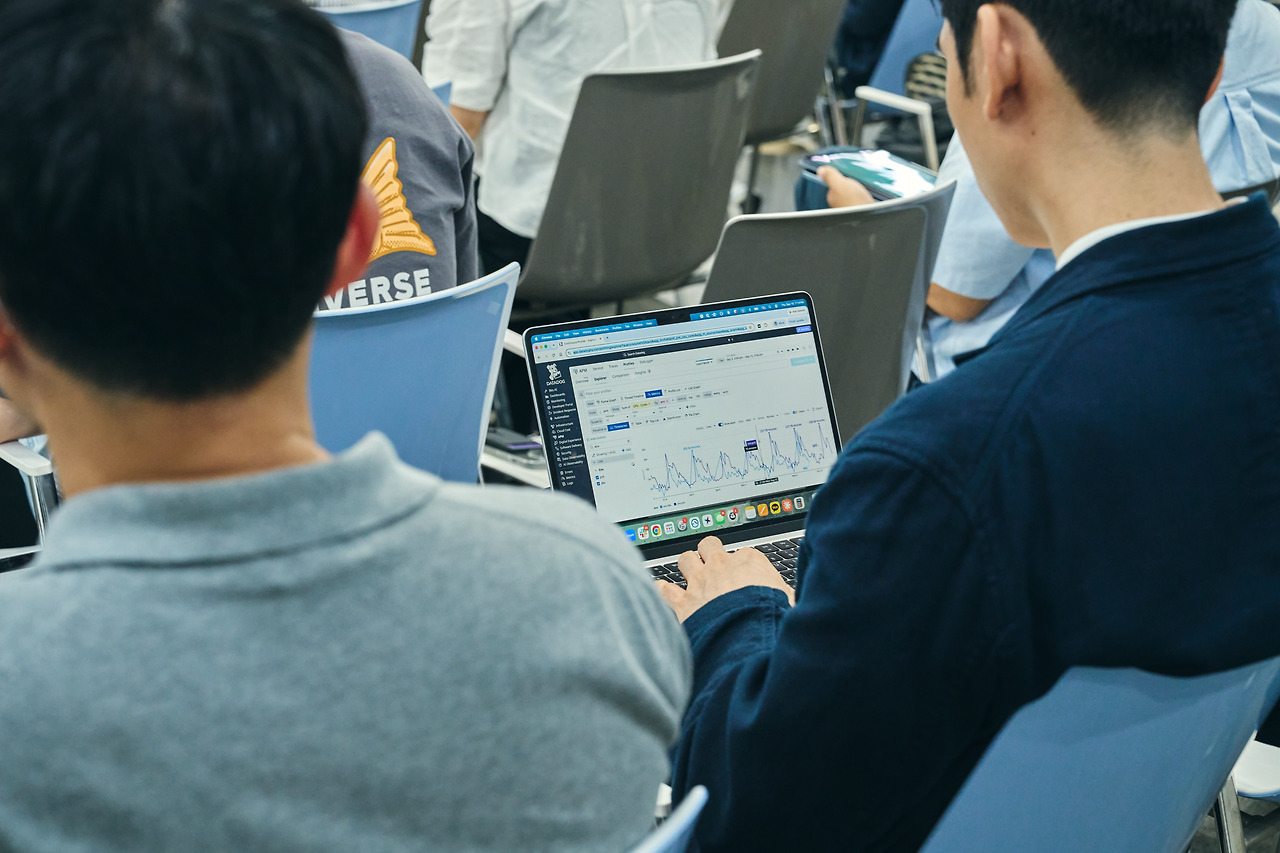
Given a live LLM fortune-telling demo by Datadog, attendees spontaneously asked it for its system prompt, which is why observability comes first.
Datadog 손우두 님이 만든 LLM 운세 서비스에 참석자들이 곧바로 시스템 프롬프트를 캐물었습니다. 가시성이 먼저인 이유입니다.
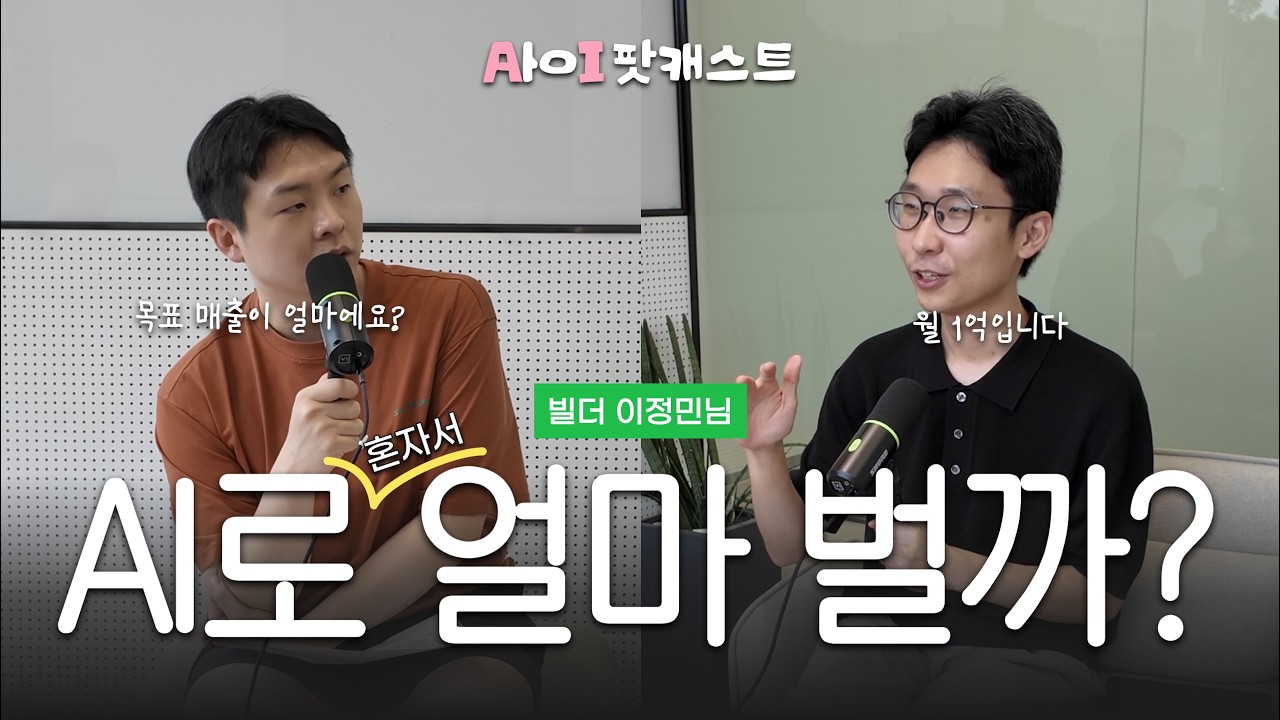
Four months with no investment and no government funding. Jeongmin Lee on why companies hand one person only training, events, and advertising.
투자도 정부지원금도 받지 않고 넉 달. 기업이 1인에게 맡기는 일은 교육과 행사와 광고뿐이라는 빌더 이정민 님의 관찰입니다.
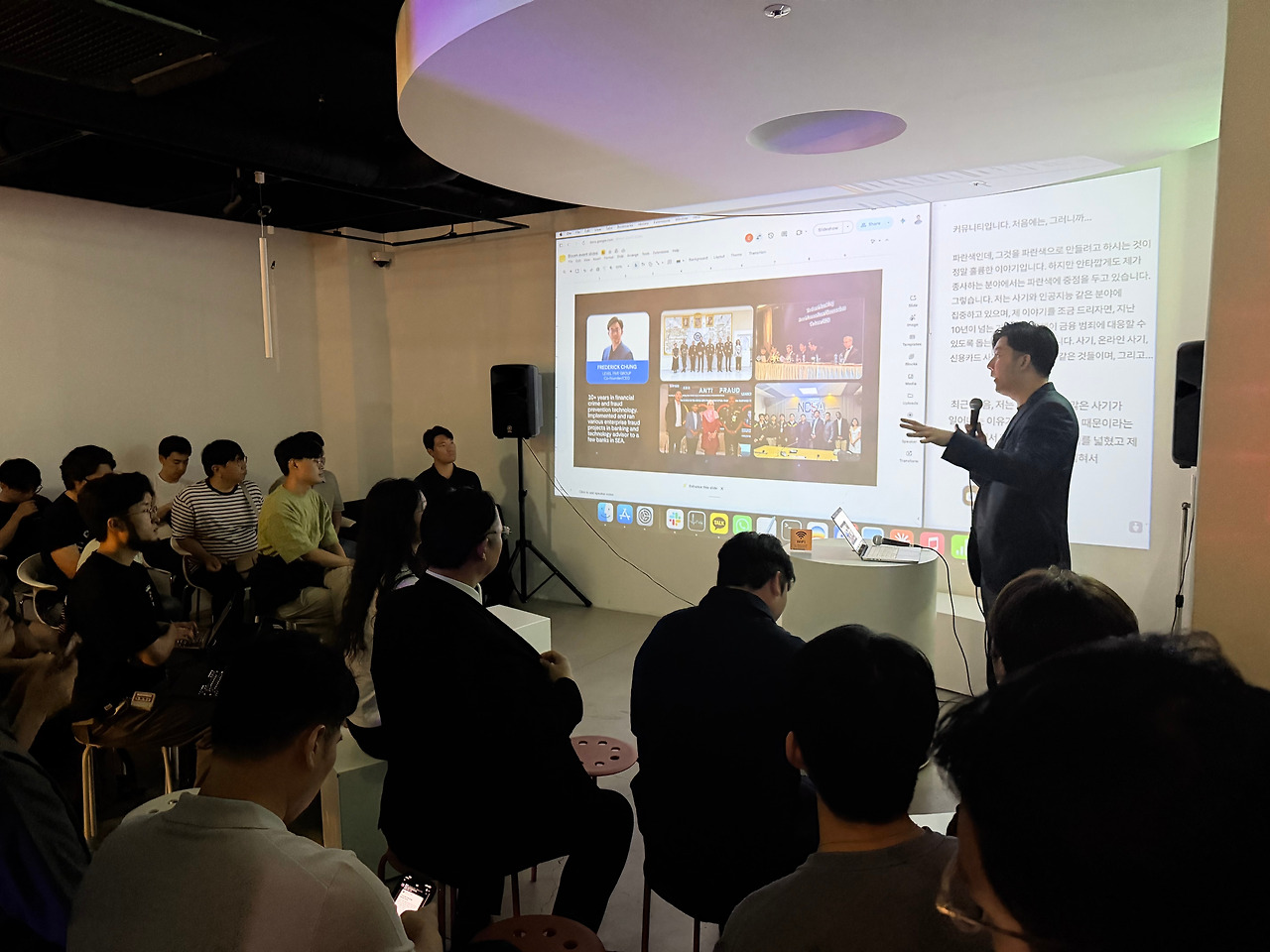
AI clones a voice in four seconds in Southeast Asia, says Frederick Chung of Level Five Group, the Singapore firm tracking fraud from Thailand to Cambodia.
동남아에서는 AI가 4초 만에 목소리를 복제합니다. Level Five Group의 Frederick Chung 대표가 전한 현장입니다.

Bloom has opened rooms with Microsoft, AWS, NVIDIA and Datadog, and venue or catering sponsors get a three to five minute company intro on stage.
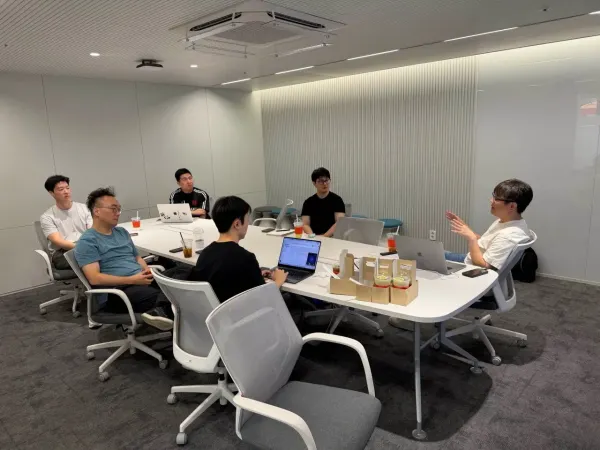
AI now writes more code than humans can review, yet of about 15 professionals asked across the US and Korea, not one felt a bottleneck or harm from AI.
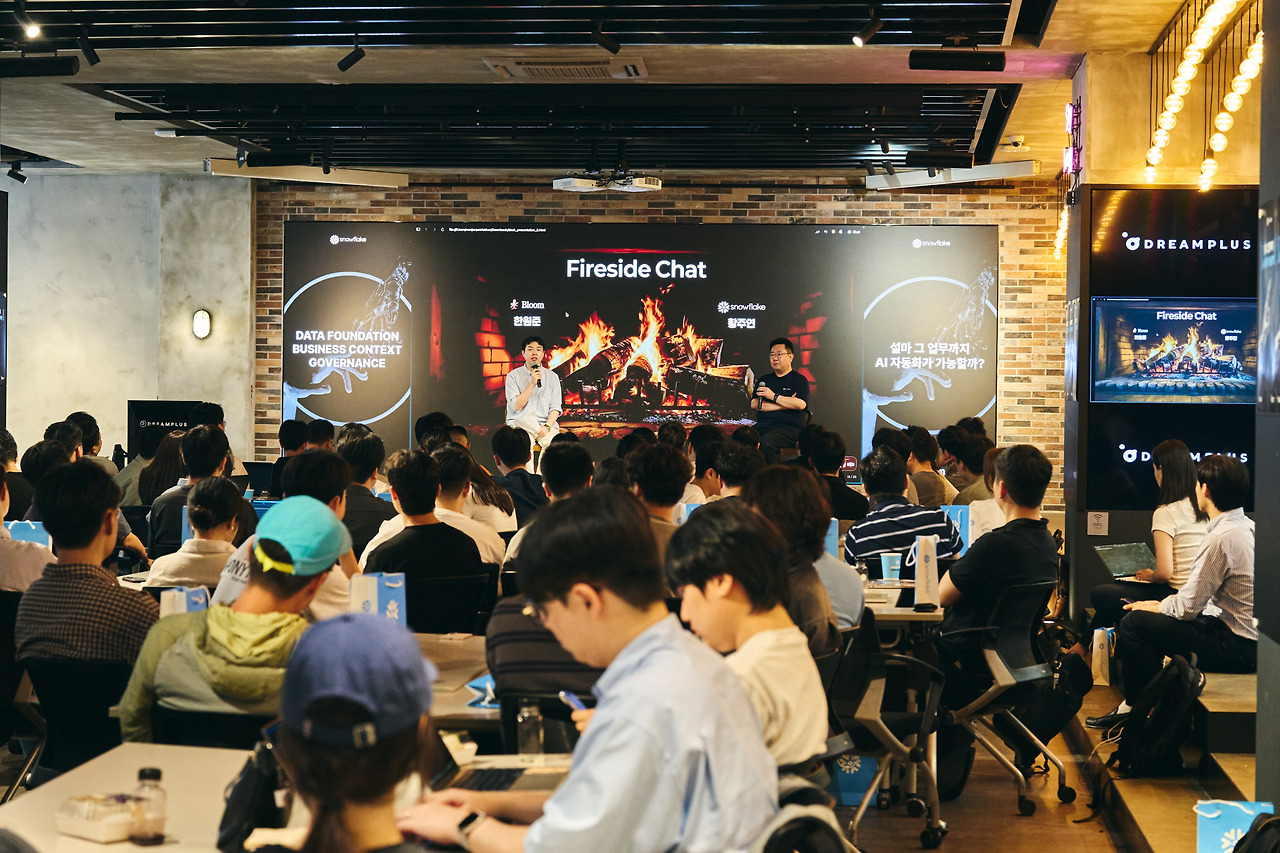
Snowflake's Juyeon Hwang says 80 percent of enterprise systems become legacy because the people who built them leave within four or five years.

Manufacturers outside Seoul want AI and cannot find anyone to run the project, while starting pay for new developers slips below 30 million won.
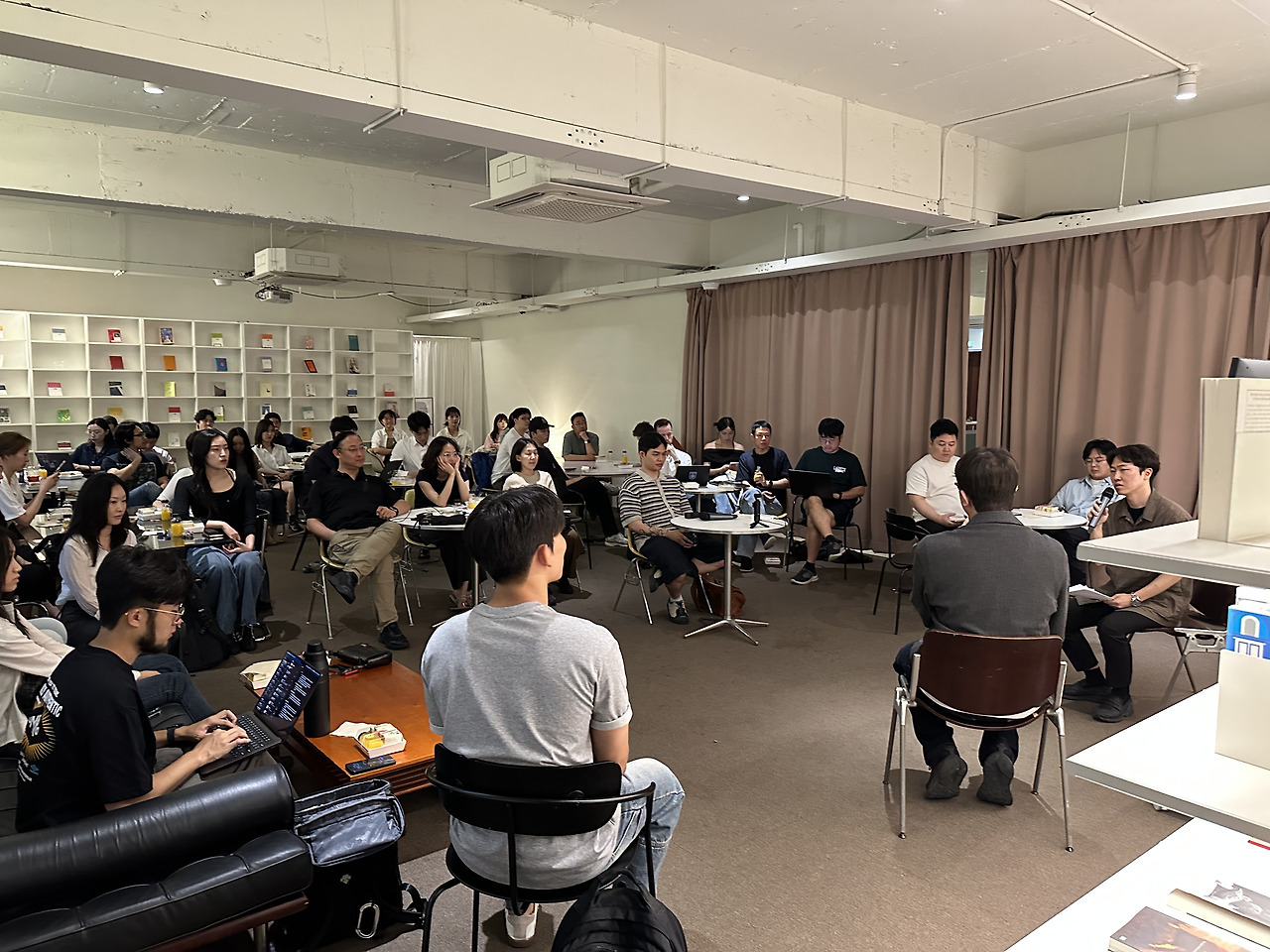
AI kept rendering hanbok as kimono or Qing dynasty dress, so KeepKwan taught the model himself after leaving a twelve-year strategy career at SM C&C.
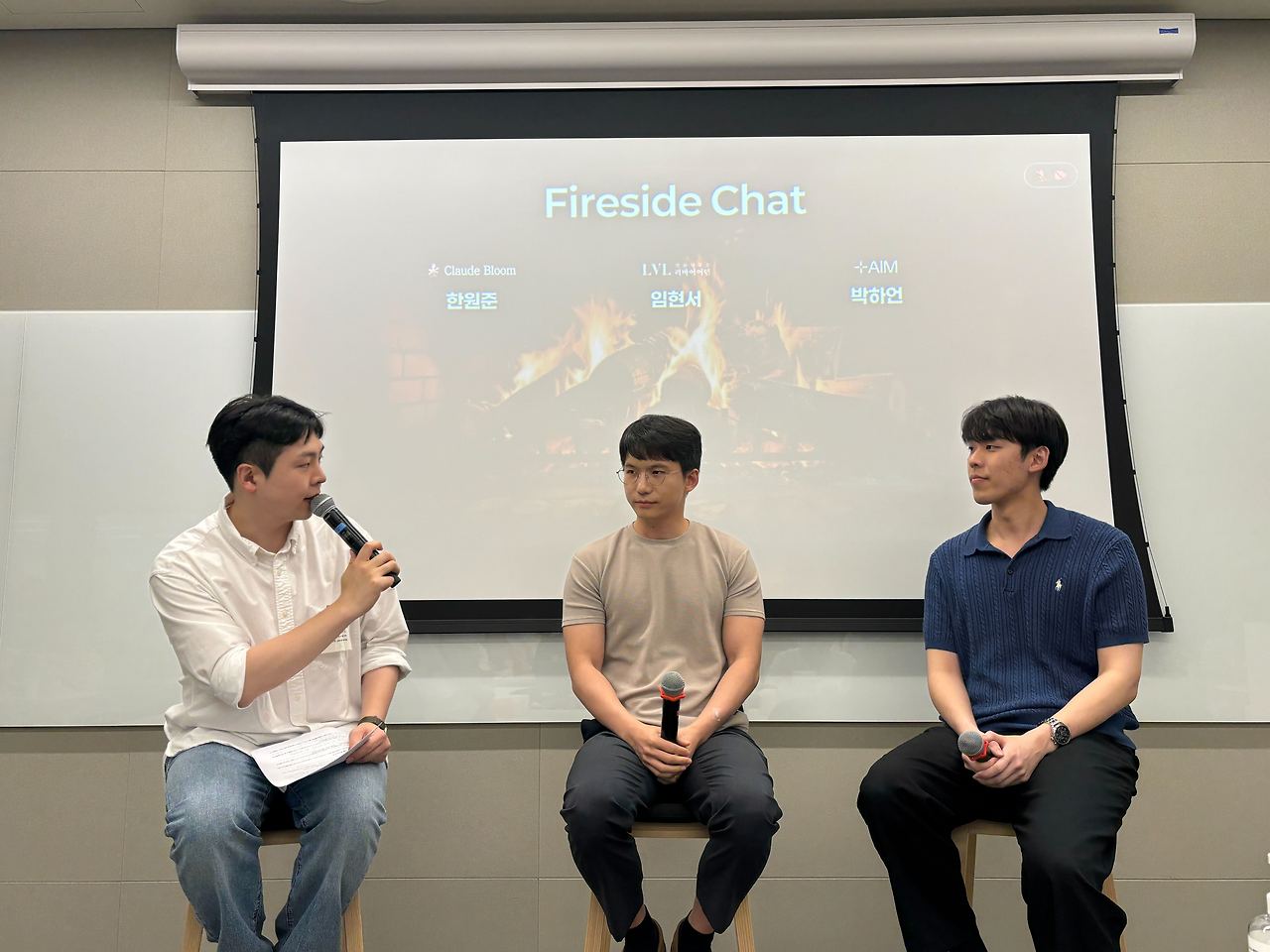
Amazon cut early delivery failure rates 74 percent with a delivery agent, and stacked 23 thousand agents into an internal platform called Agent Z by May.
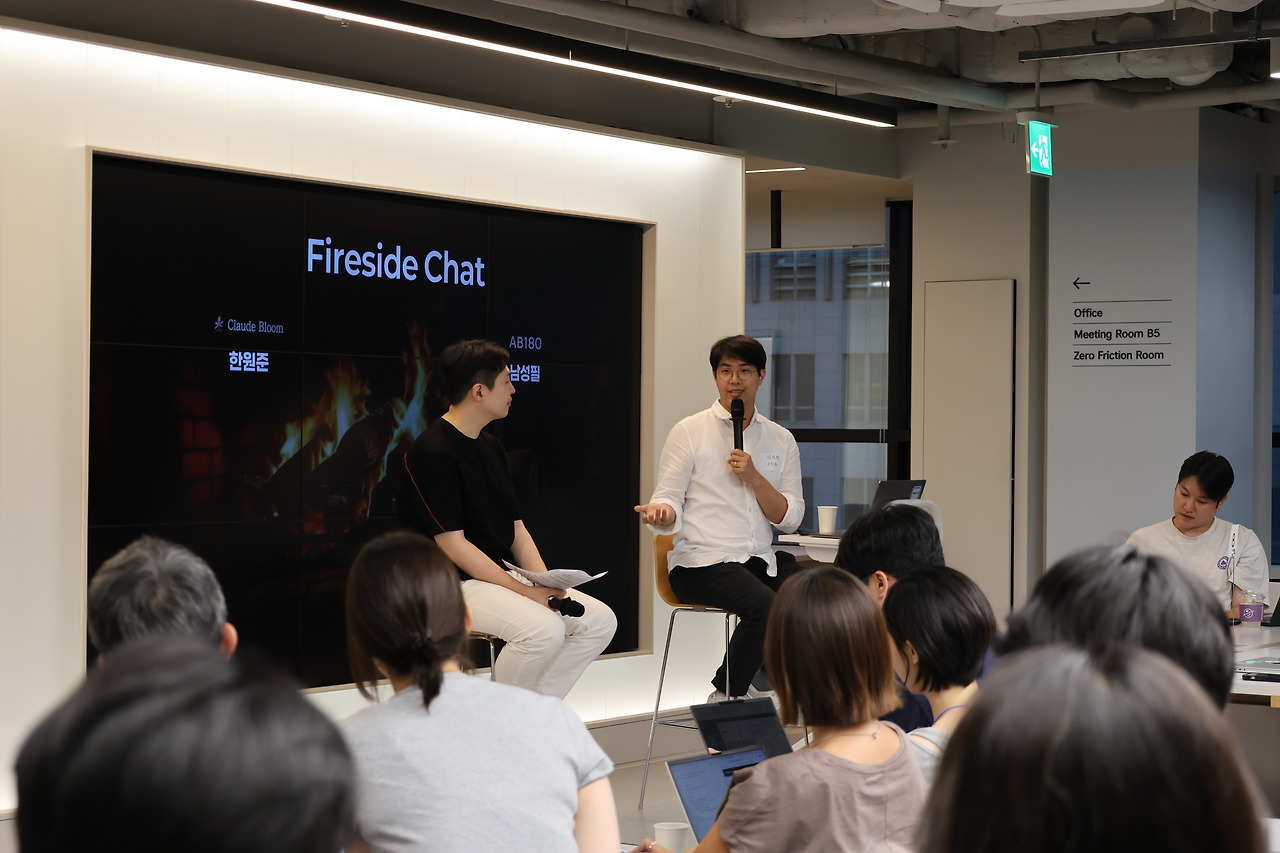
All five winners of a Claude Code hackathon were non-developers and first place went to a doctor, the case Jehim Choi used to argue domain knowledge wins.
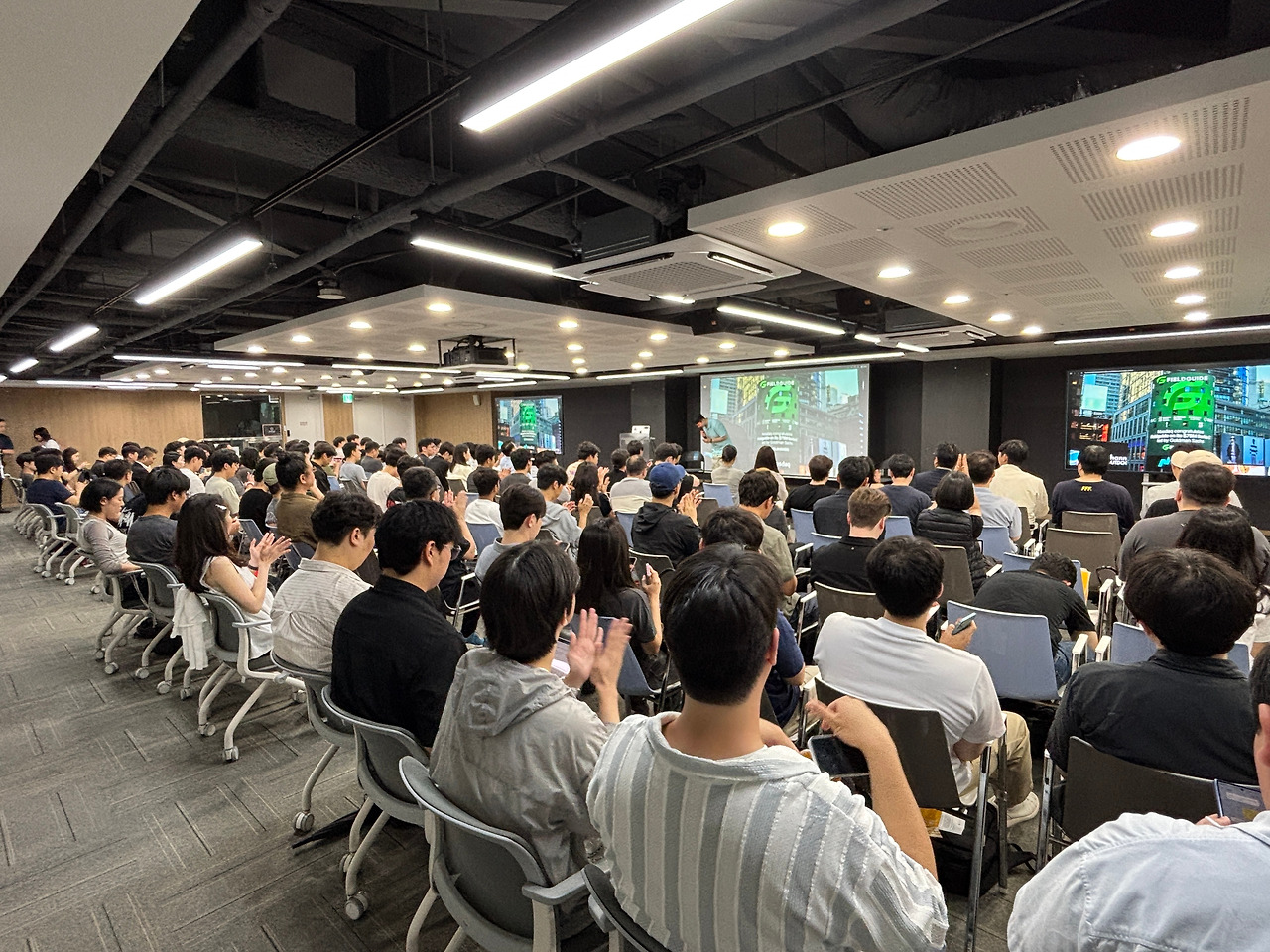
Fieldguide prices on the results customers achieve rather than seat count, and put its first office outside the US in Seoul, CEO Jin Chang told the room.
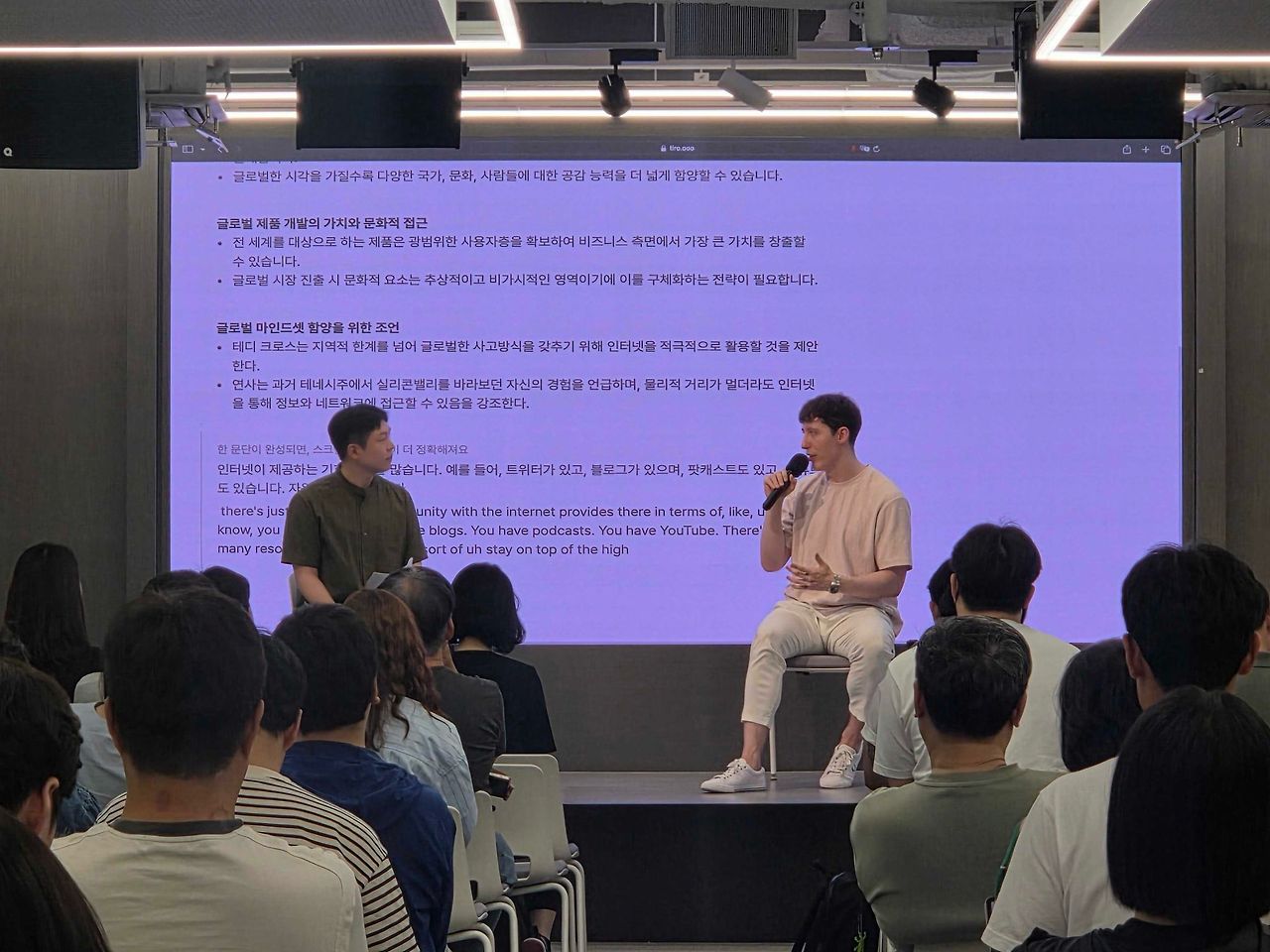
Playco co-founder Teddy Cross says real insight comes not from conference halls but from rough talk in small coffee shops, before it reaches the internet.
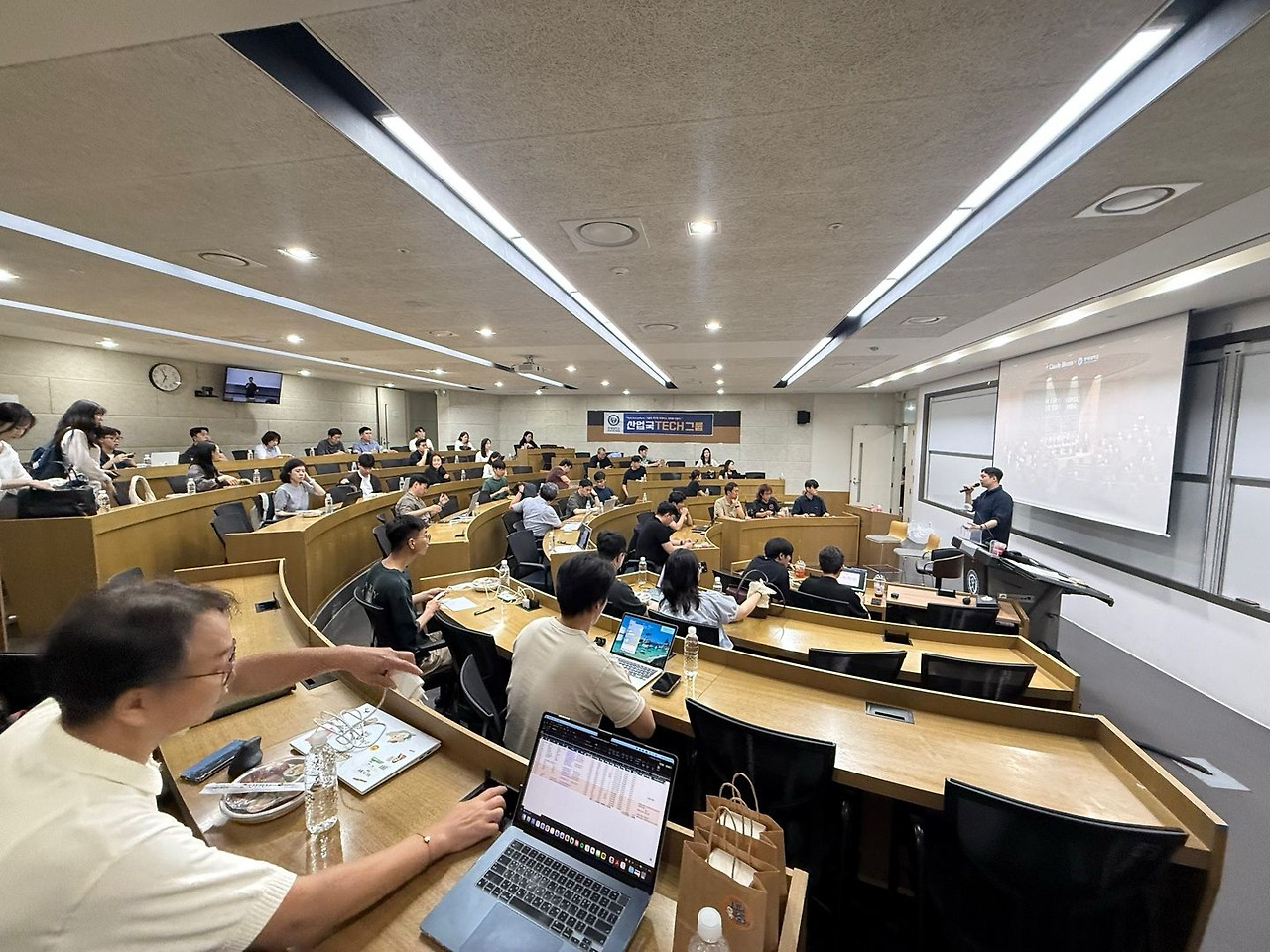
Samsung Electronics runs Claude Code on 100 in-house GPUs for 4,000 active users on a workload needing 300 cards, and a civil servant built a statutes MCP.
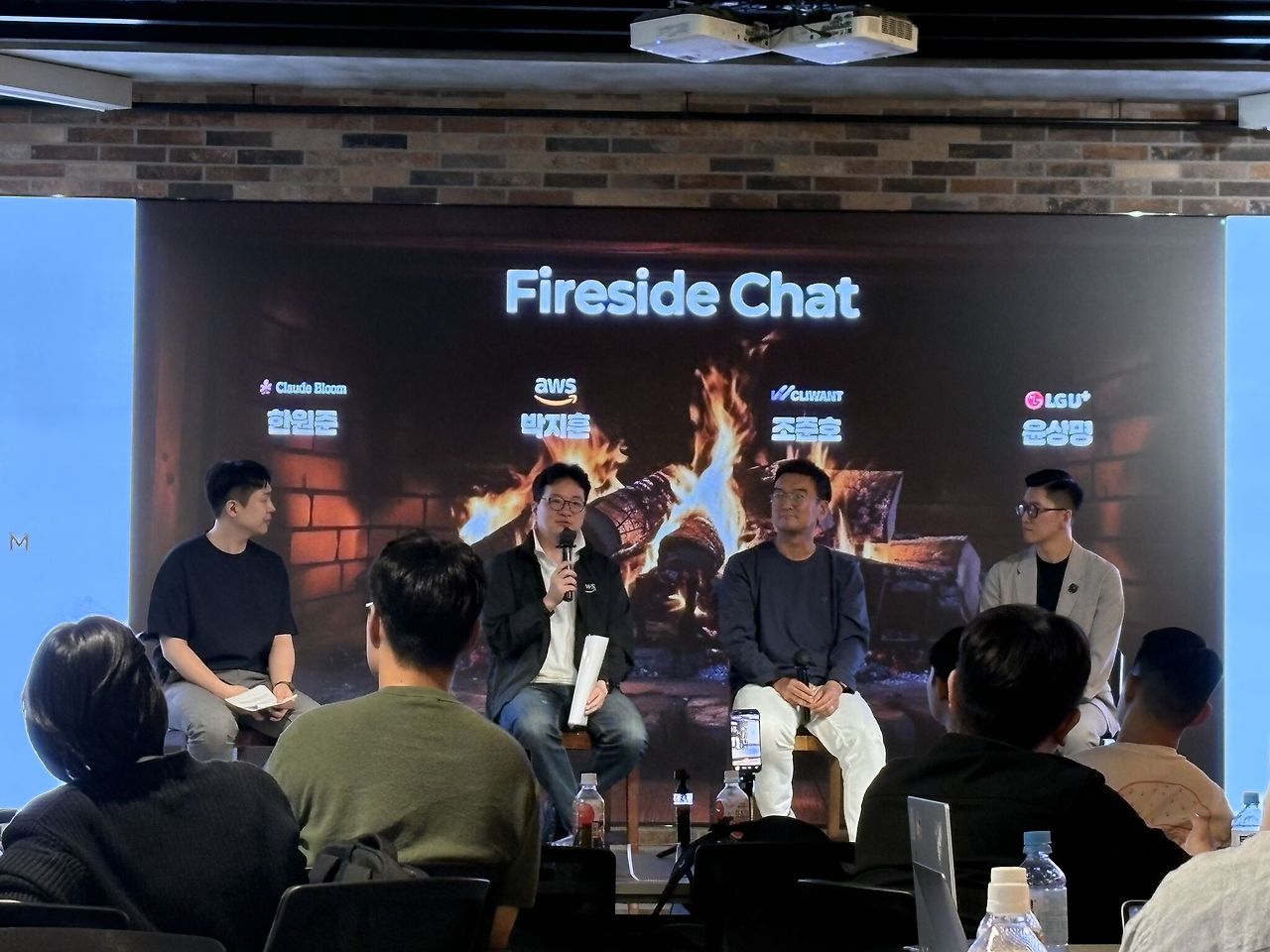
The RFP holds only 20 to 30 percent of what decides a proposal and the remaining 70 to 80 percent is dug out of the field, AWS's Jihoon Park says.
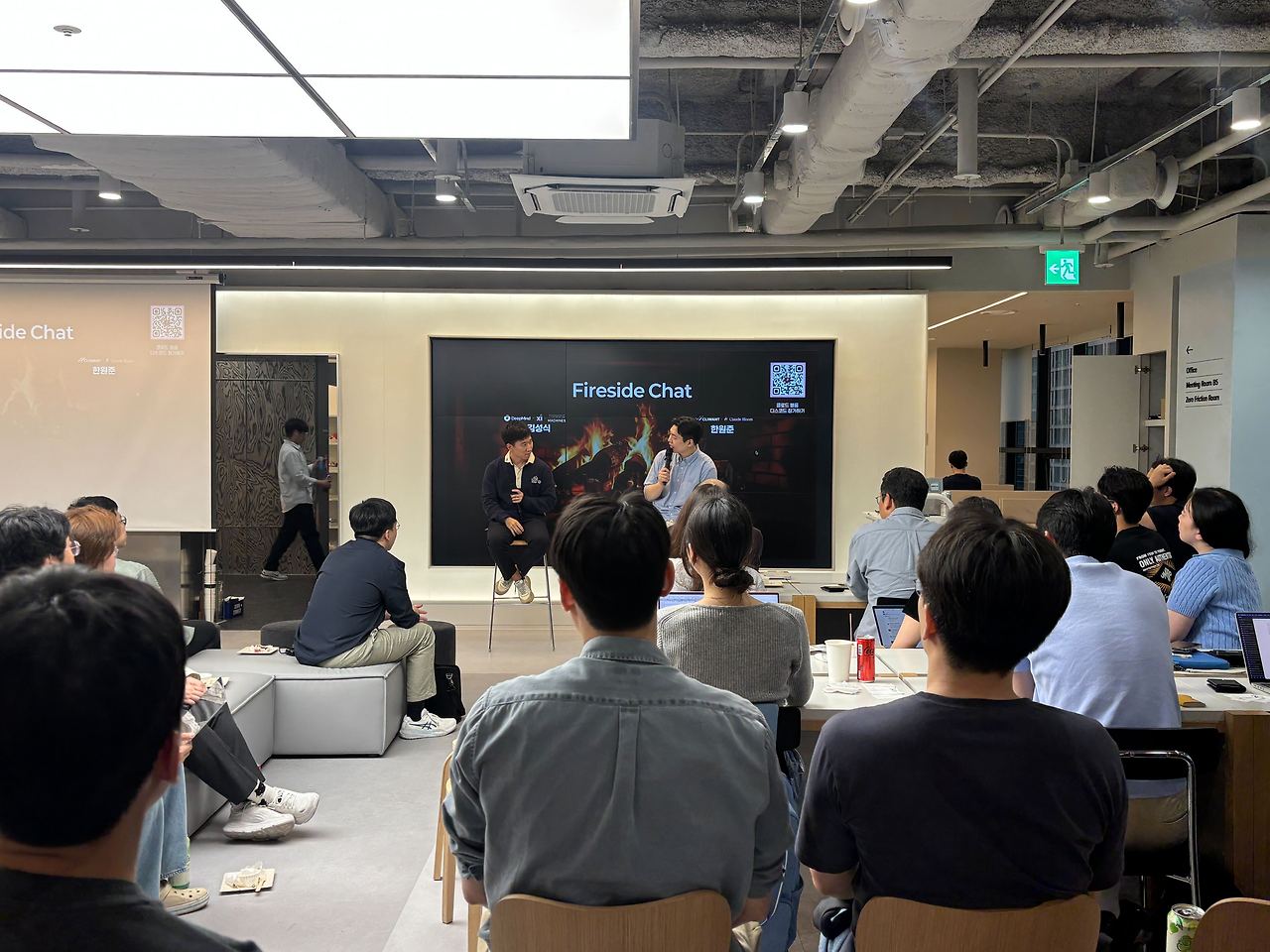
Joseph Kim was the 100th member of xAI and now works at Thinking Machines Lab, and AB180 runs one internal automation that handled 800 pull requests.
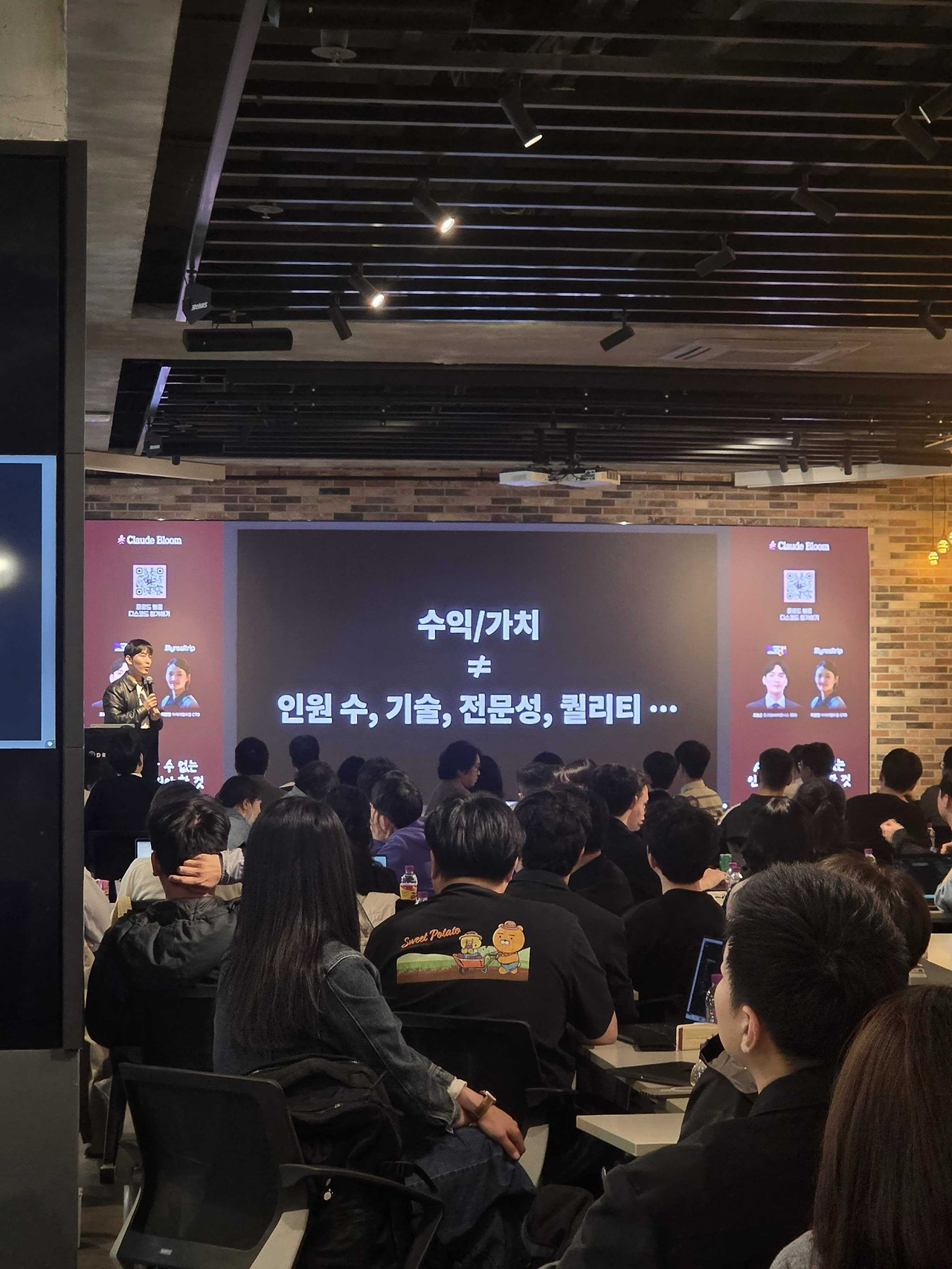
MyRealTrip halved support headcount and went from 25 product listings a week to 5,000 a day by layering a chatbot over its existing systems.
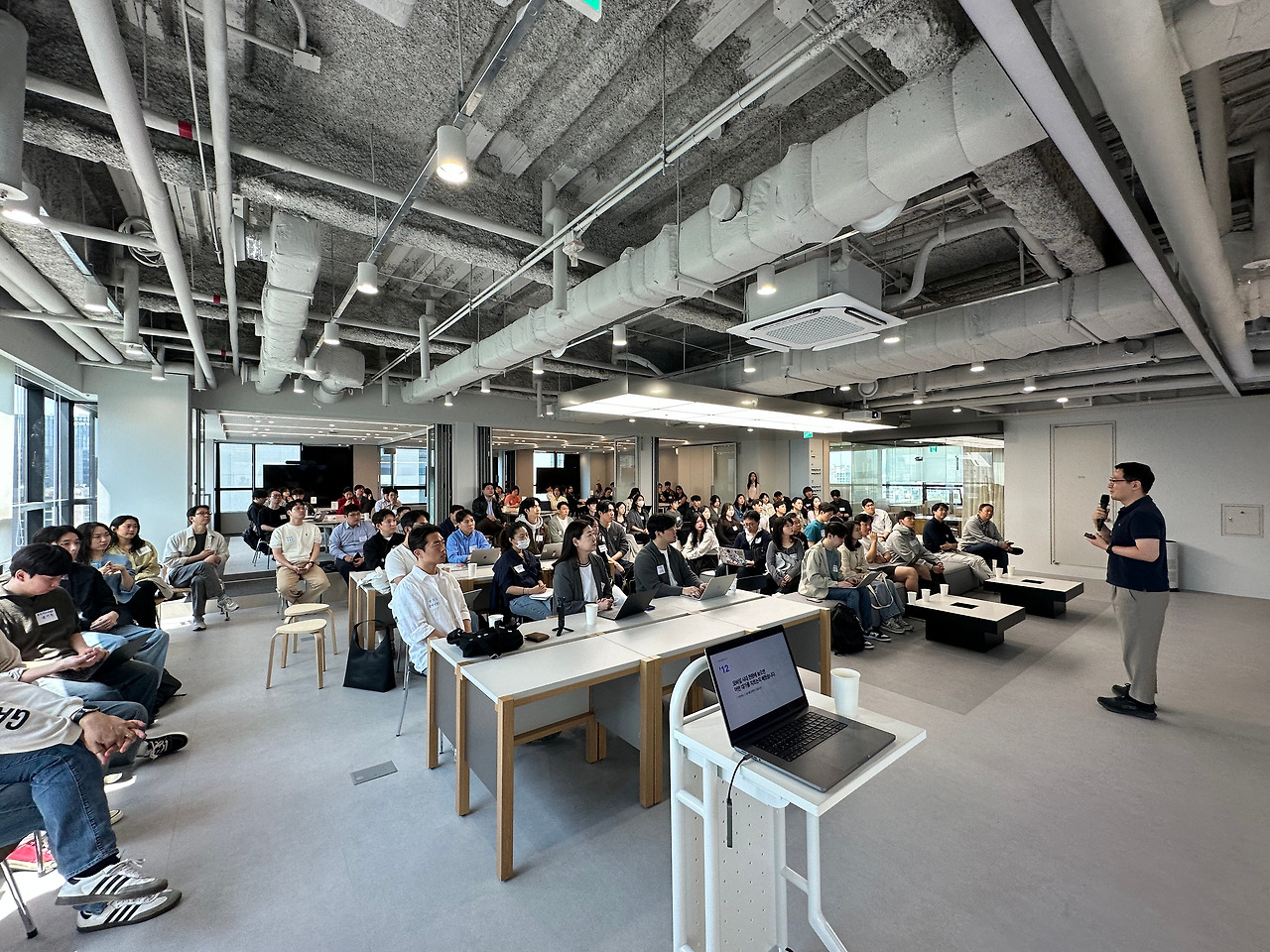
MyRealTrip rebuilt execution and org structure over four years rather than add AI features, and AB180's Sungpil Nam spends 90 percent of his day with AI.
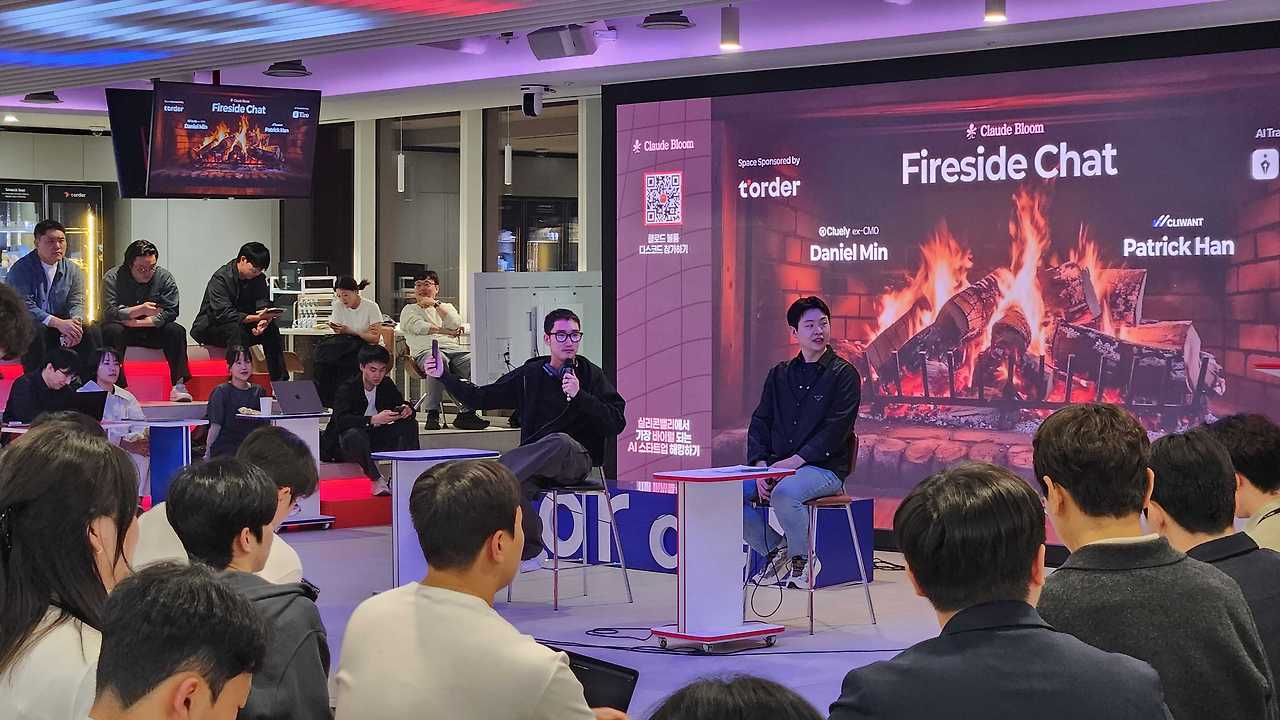
Cluely cut its creator roster from 100 to 70 and peaked at 100 to 150 million views a month, ex-CMO Daniel Min said of the three-layer funnel.

Customers now call a vendor only after roughly 60 percent of the decision is made, says Jongil Choi, yet the four-stage buying journey does not change.

After about eighteen years in development he moved to sales, arguing vibe coding lets anyone write code while few can still build a real product.
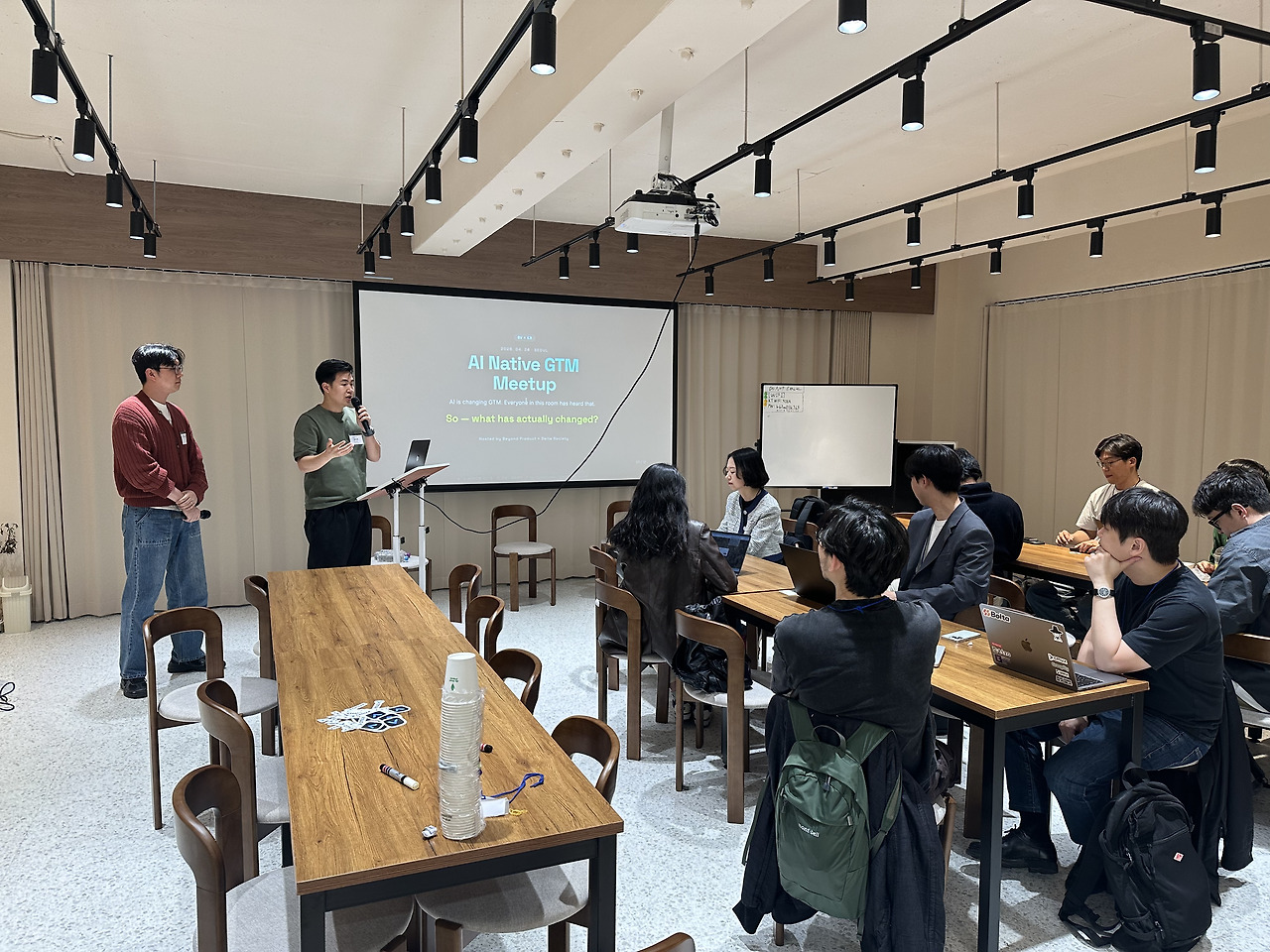
A thirty-person Gangnam meetup of Koreans ran entirely in English, with four speakers each bringing one case that broke expectations and one open question.

A product designer with ten years in a big tech R&D org pays 500 dollars a month for AI tools out of pocket, because making things became fun again.

He raised 300 thousand dollars for 9 percent with no product, then narrowed from the whole workflow down to collections for mid-sized legacy firms.

He moved to Google's AI search team to survive five more years, and a colleague saw the first two weeks in ten years with no executive status request.
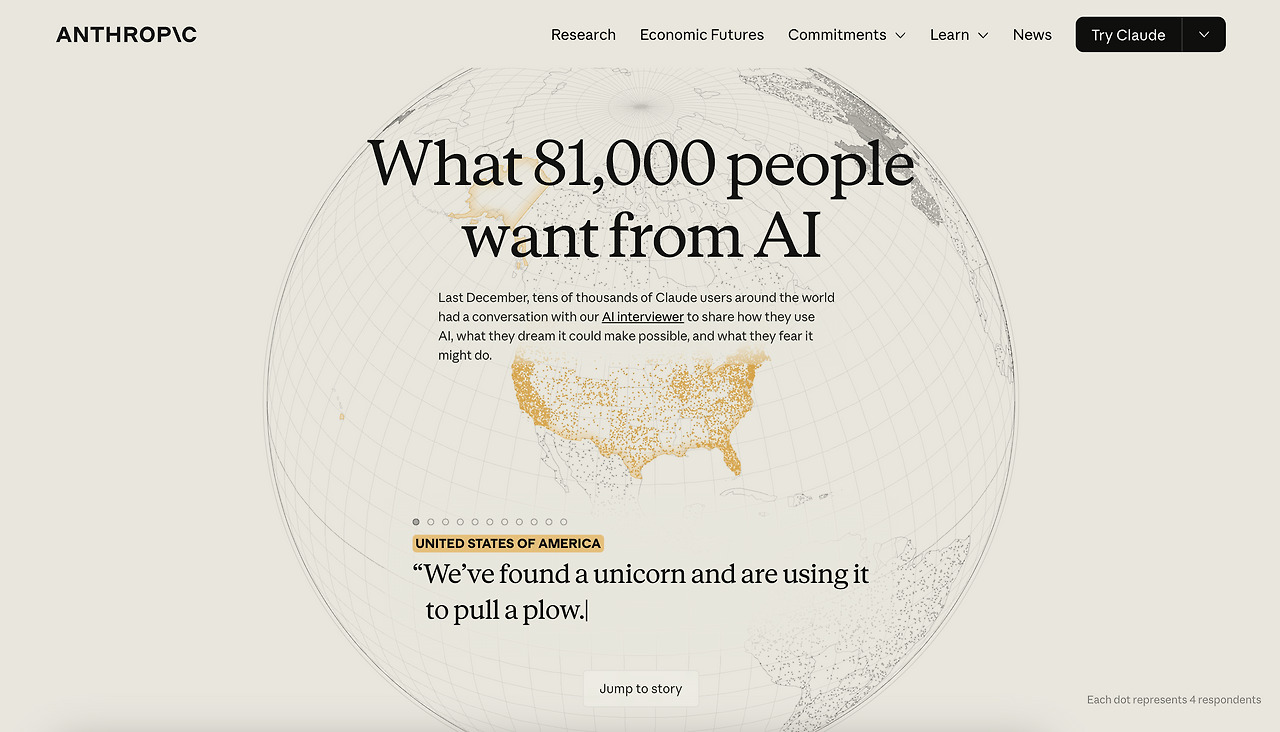
Anthropic had its AI interview its own users, analyzing 80,508 of 112,846 responses from 159 countries and 70 languages, and respondents were candid.

Fast context-switching juniors now outshine deep specialists, while AI-written eighteen-page requirement documents drown the seniors who must verify them.
Critic Woojin Cha fed decades of his own columns into a model and runs about ten projects at once, and reads Korea's AI rush as the Bitcoin pattern.

An agent contacted all 85 requested buyers on LinkedIn overnight and about ten signed up, so the next idea has to be stranger, like Reflect Orbital.
A New York PM says time, not security, blocks AI adoption, at a company where an eighteen-page requirements document is the baseline everyone reads.

A Reddit post drew a US journalist whose questions were philosophical, not technical, and the story that landed hardest was a 93-year-old using ChatGPT.
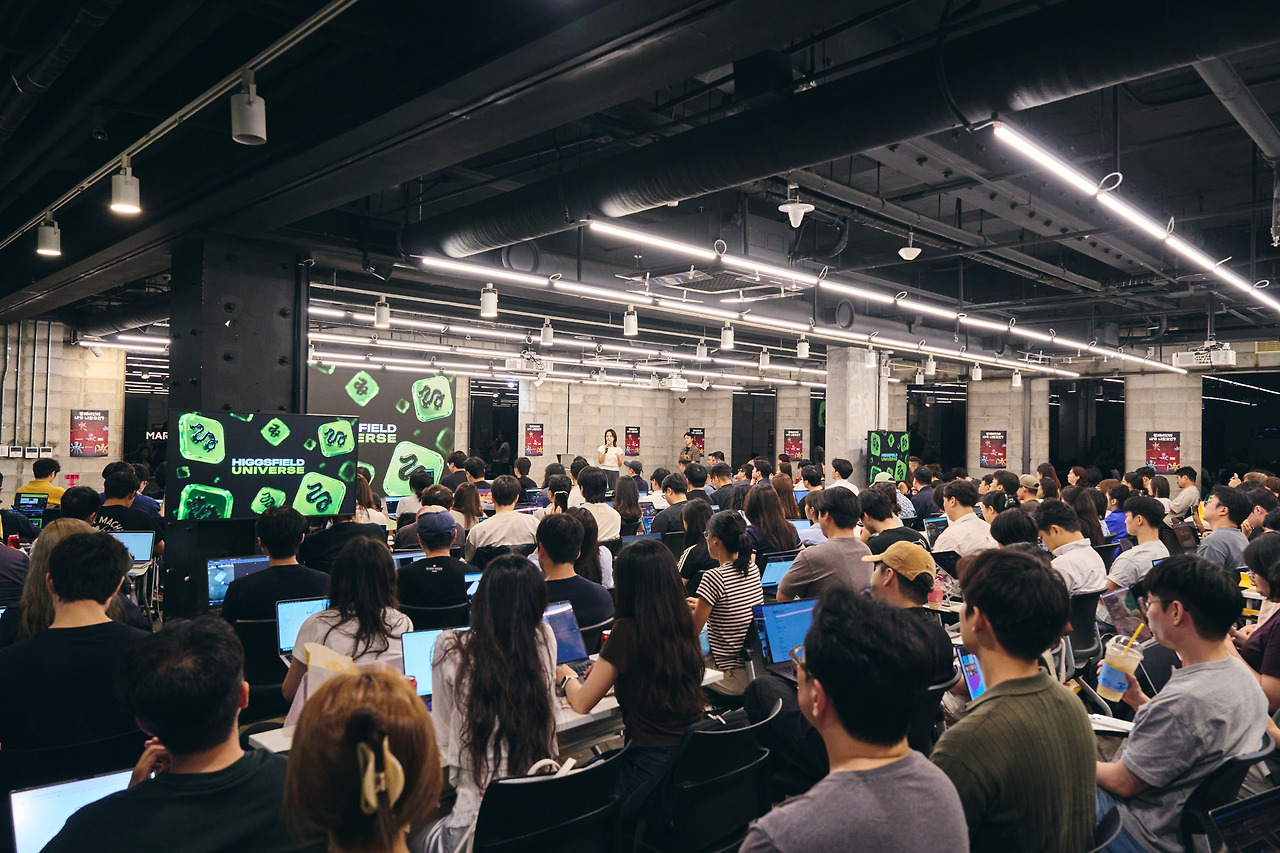
Higgsfield gave all 150 filmthon attendees an Ultra plan worth about 200,000 KRW each, roughly 30 million KRW in total, for a one-week view contest.
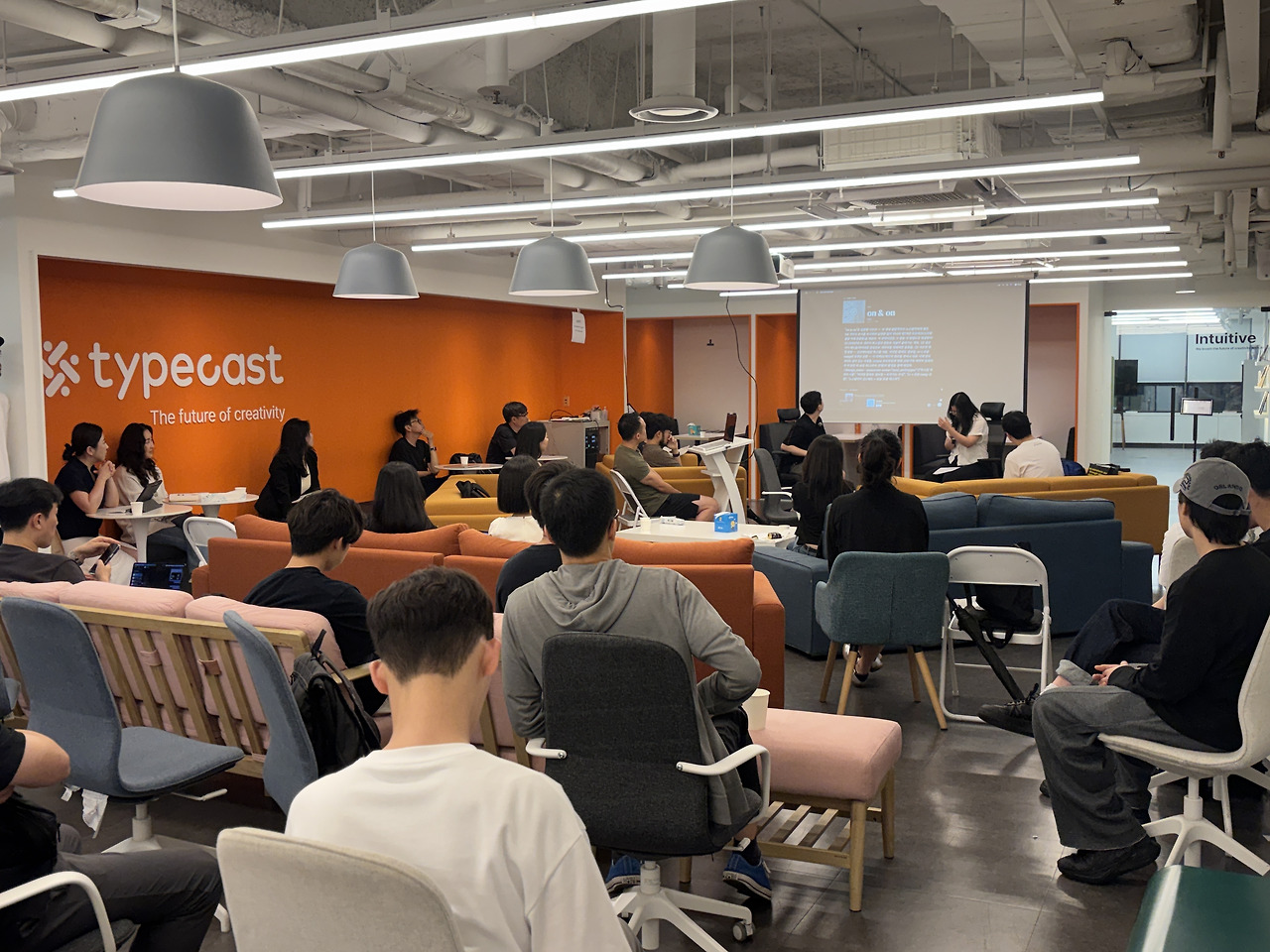
A founder whose deal collapsed the day before signing and a Toss engineer preparing a YouTube channel reached the same conclusion: what lasts is not the ability to build, but the ability to reach.
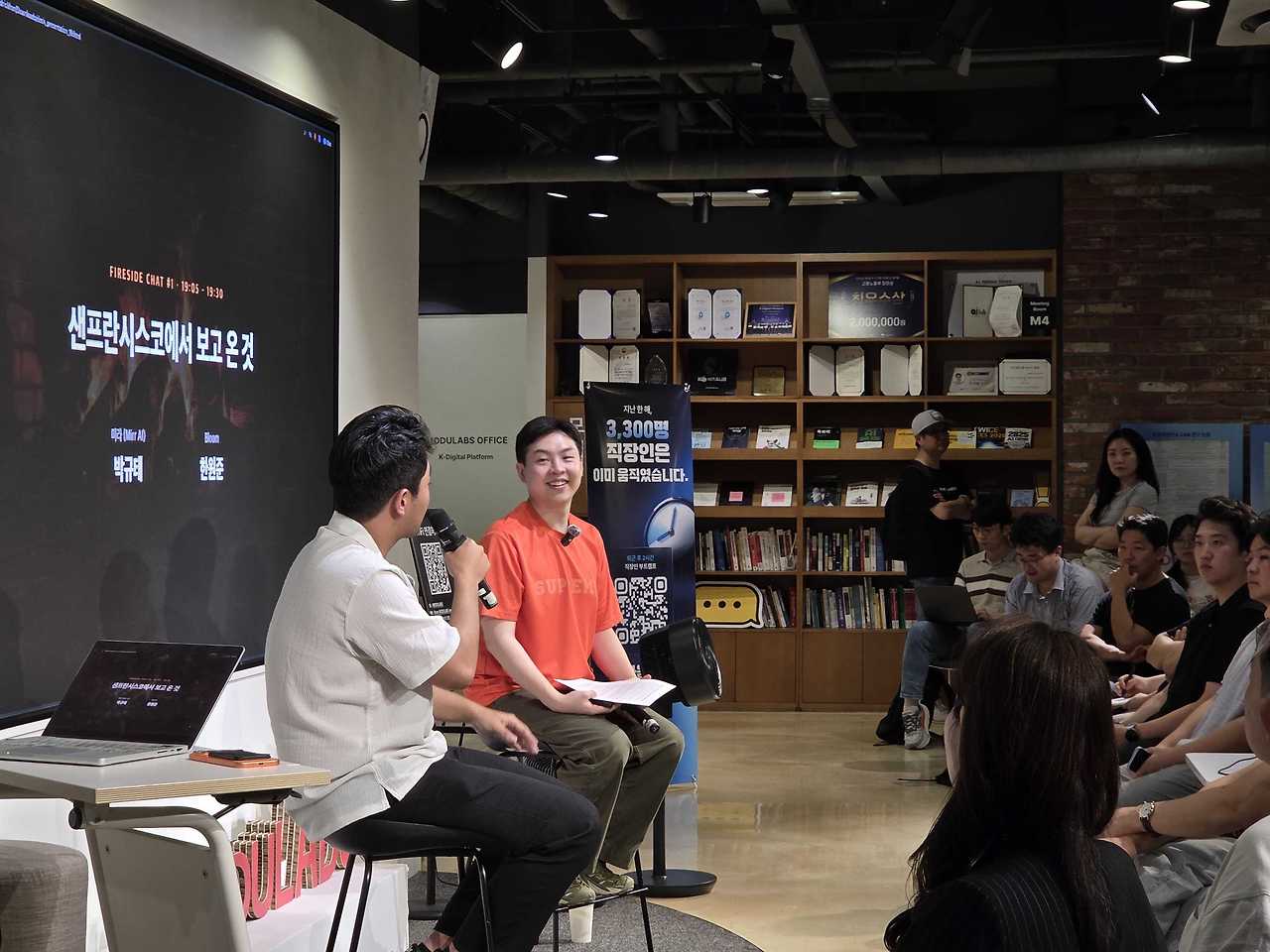
A founder who spent fifty days in the US and a Wall Street trained career coach reached the same conclusion: stop thinking and move.

A curated dinner for 4 to 6 people, matched by interest. No speakers, no sessions, only conversation. Free weekly meetups continue as always.
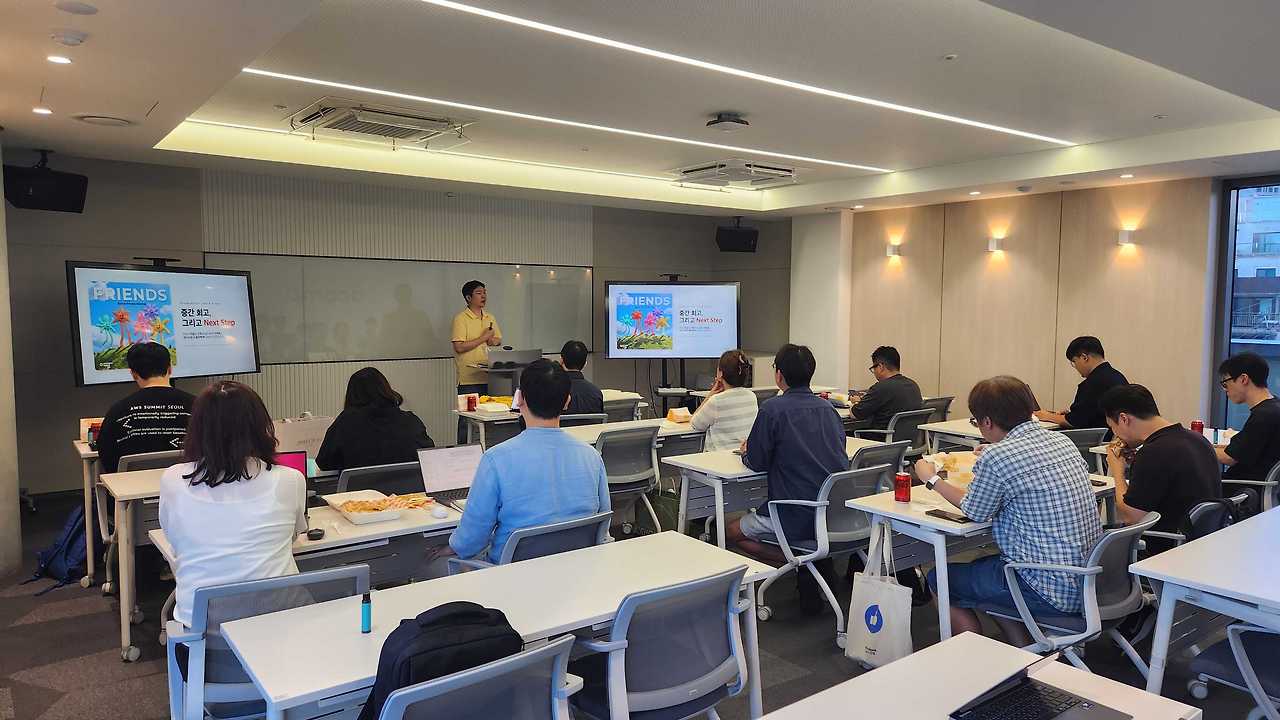
We opened twenty seats with no agenda and thirty-five people came. Four months of members told us, honestly, where this community should go.

People in Washington do not read the Washington Post. What a16z worked out about new media, and why we decided to stay unpolished instead of getting slicker.

More than 1,500 people applied and the seats were gone in a day. The night turned on a single reframe: stop asking which business is safe from AI, start asking which business grows because of it.
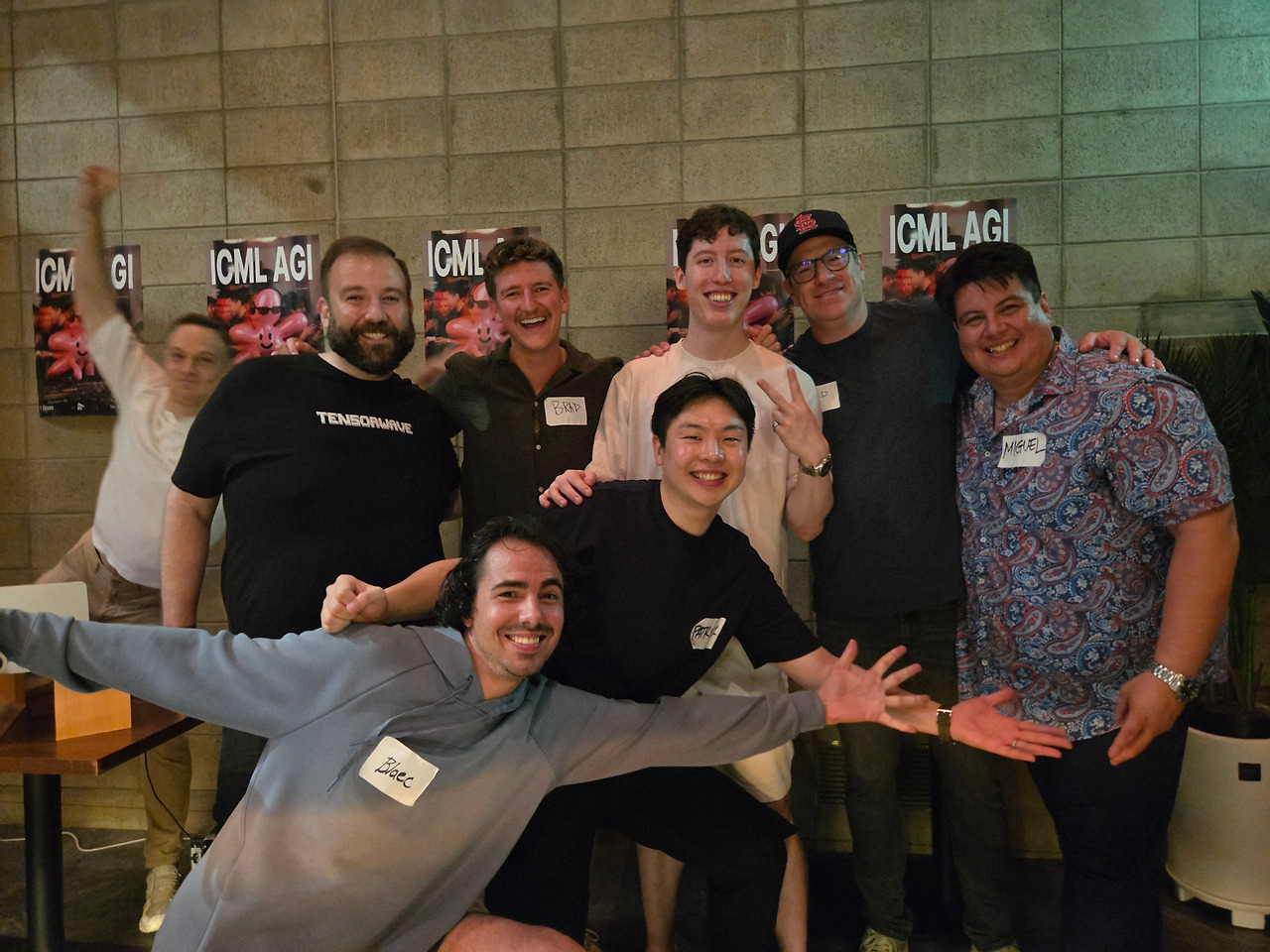
The top machine learning researchers in the world were in Seoul for ICML week. We ran the afterparty, and the night nearly fell apart before it started.
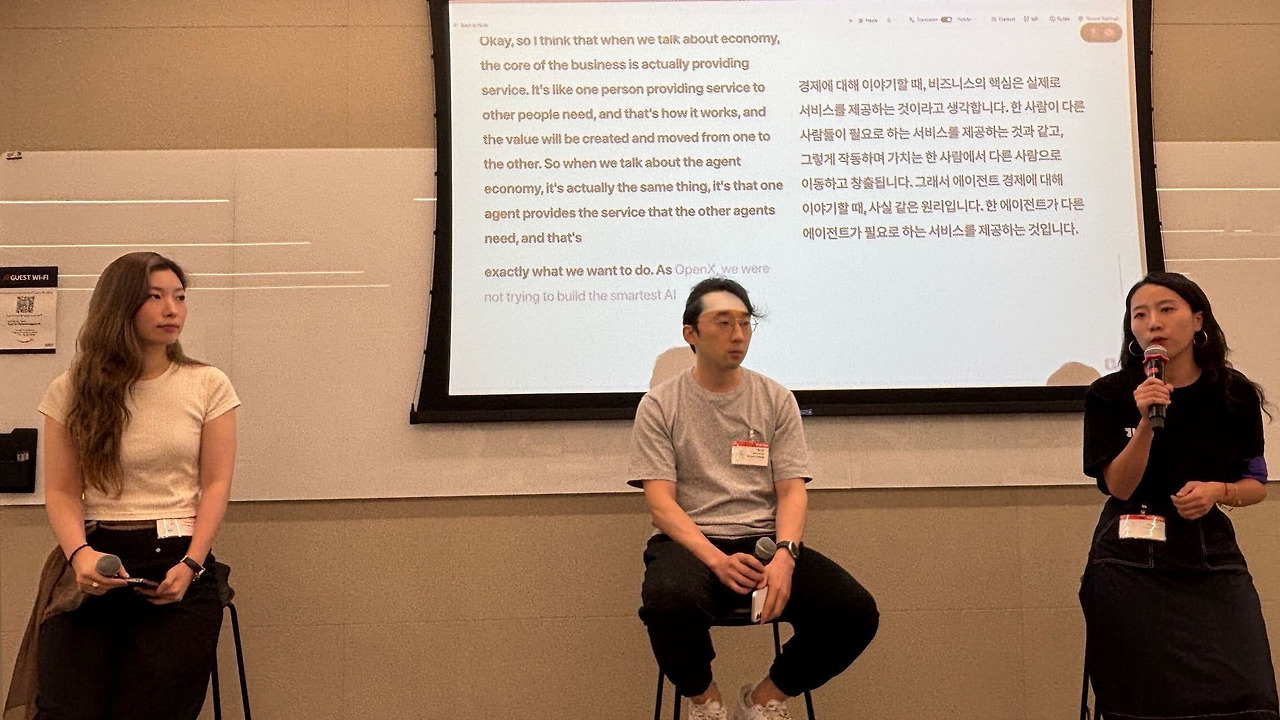
How a regulated exchange put coding agents behind five governance rules, why individuals use agents well and organizations do not, and what happens when agents start hiring other agents.
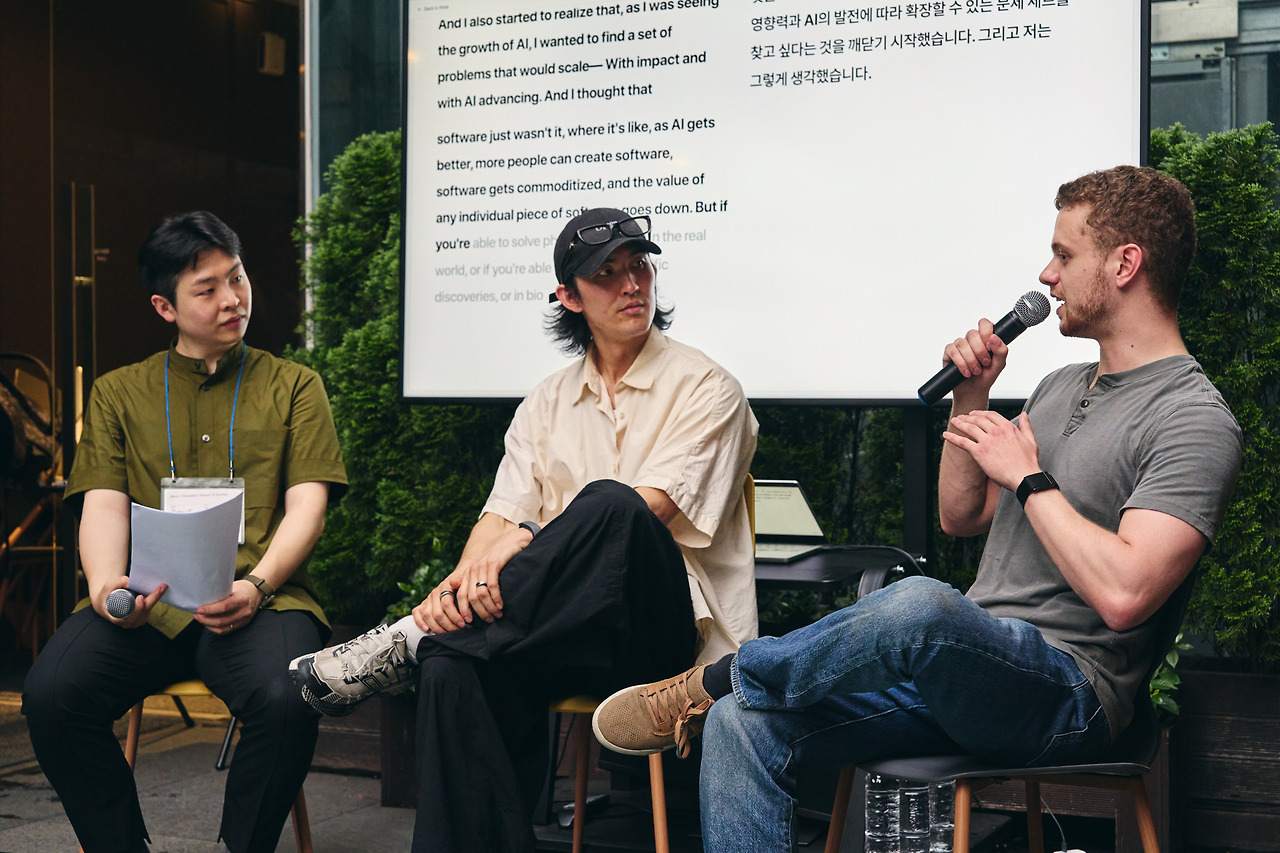
One founder clears the path for companies entering the US and UK. The other is building personalized cancer vaccines. Their advice to a room of Korean builders was not hedged.
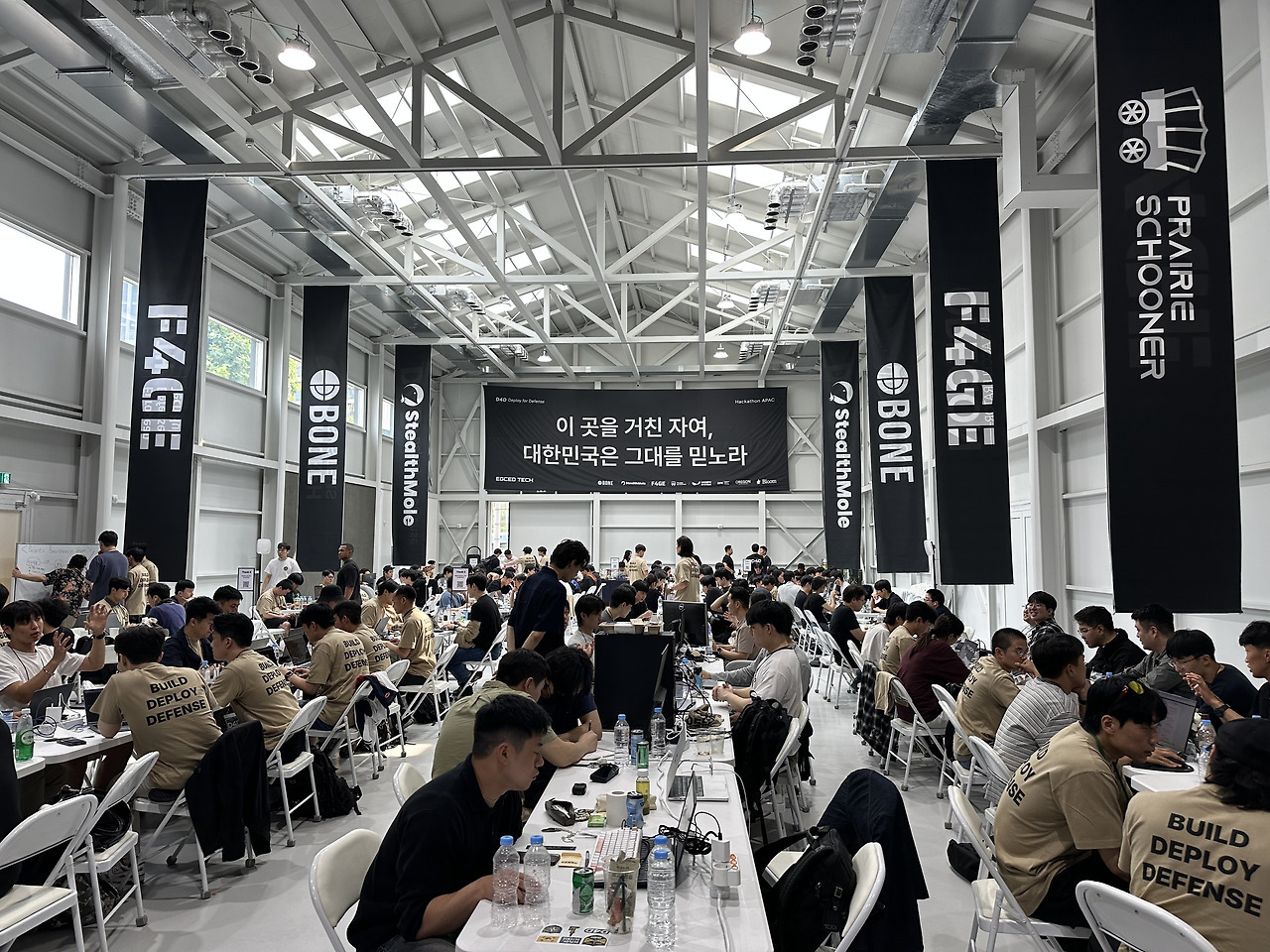
A twenty four hour defense hackathon put AI builders in a room with soldiers and veterans. The technology gap with adversaries is now measured in months, not years.
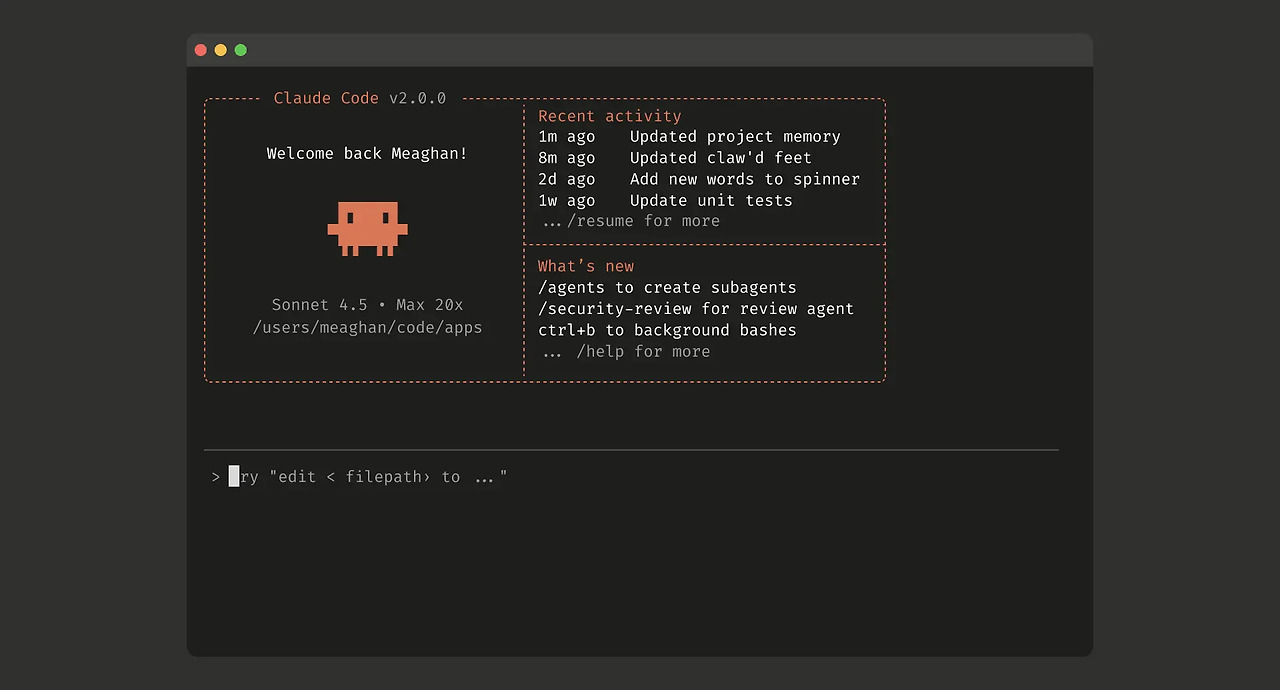
A senior AI engineer at Meta said the infrastructure was breaking. That conversation became a term, then a post that traveled, then a community of thousands in Seoul.
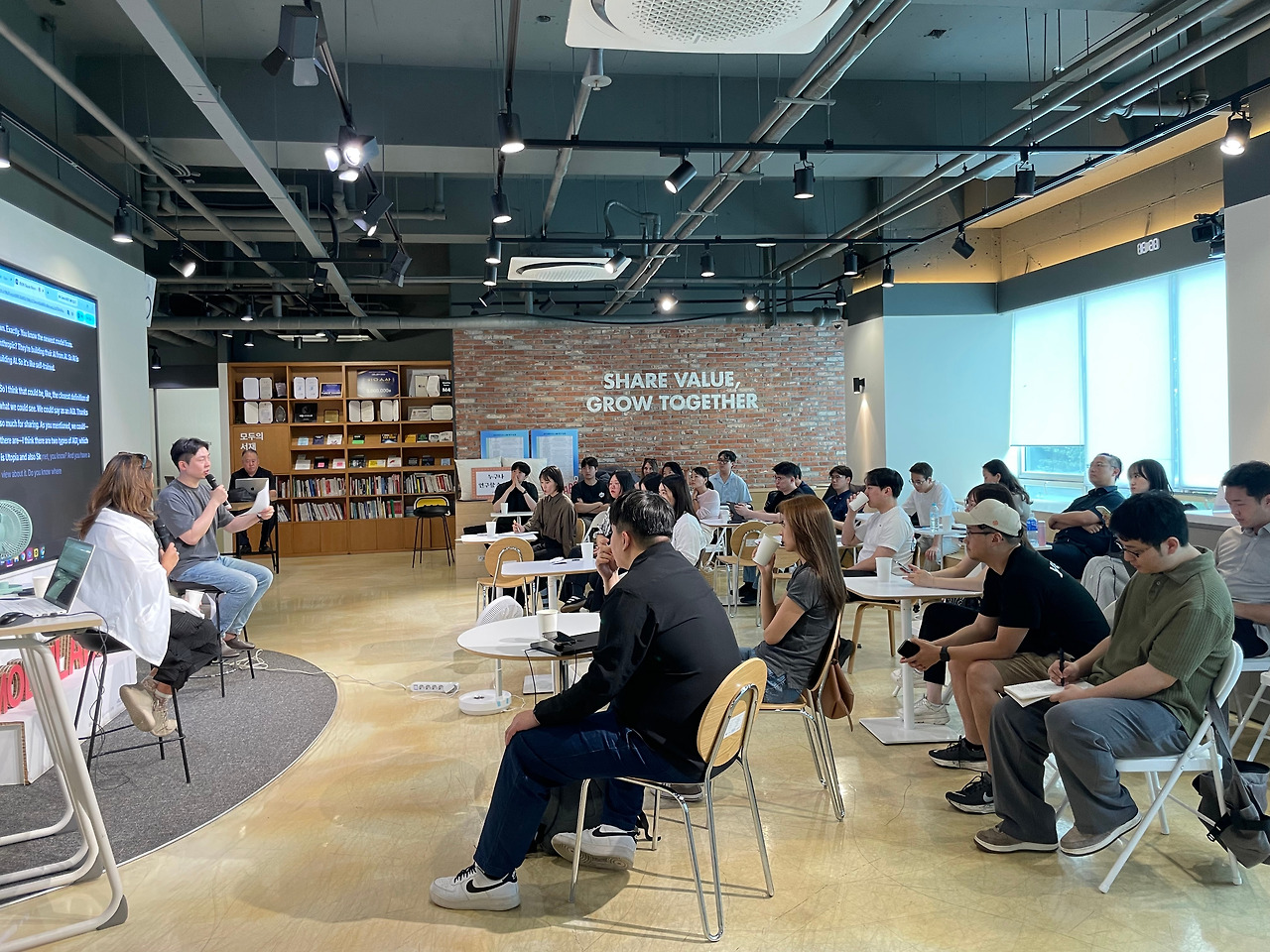
Regulation looks like protection for knowledge work. Her argument is that it protects accountability, not the work itself, and those are very different things.
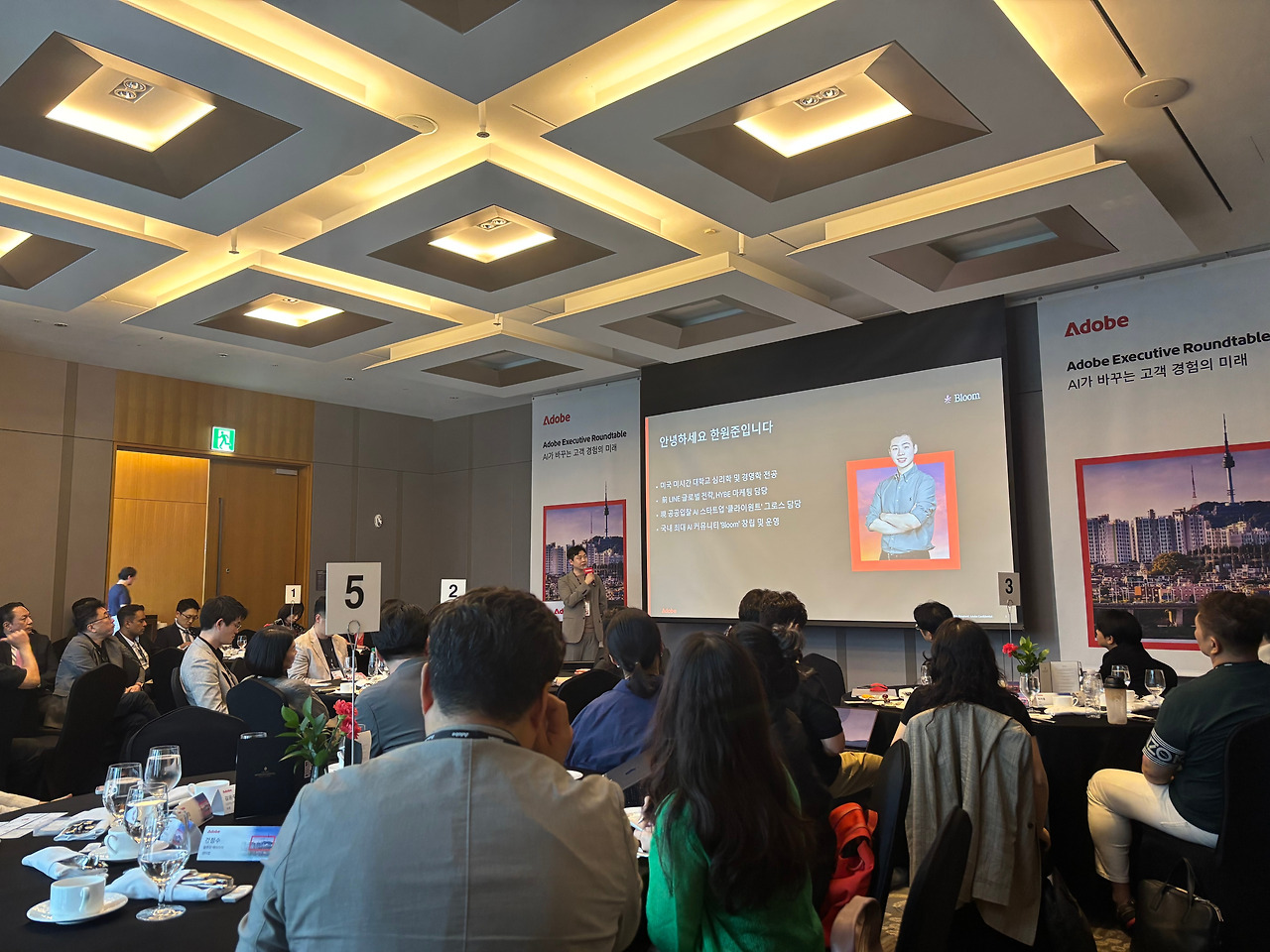
Seventeen patterns that kept repeating: why FOMO burns out, why vibe coding raised the bar instead of lowering it, and why the moat is distribution rather than technology.
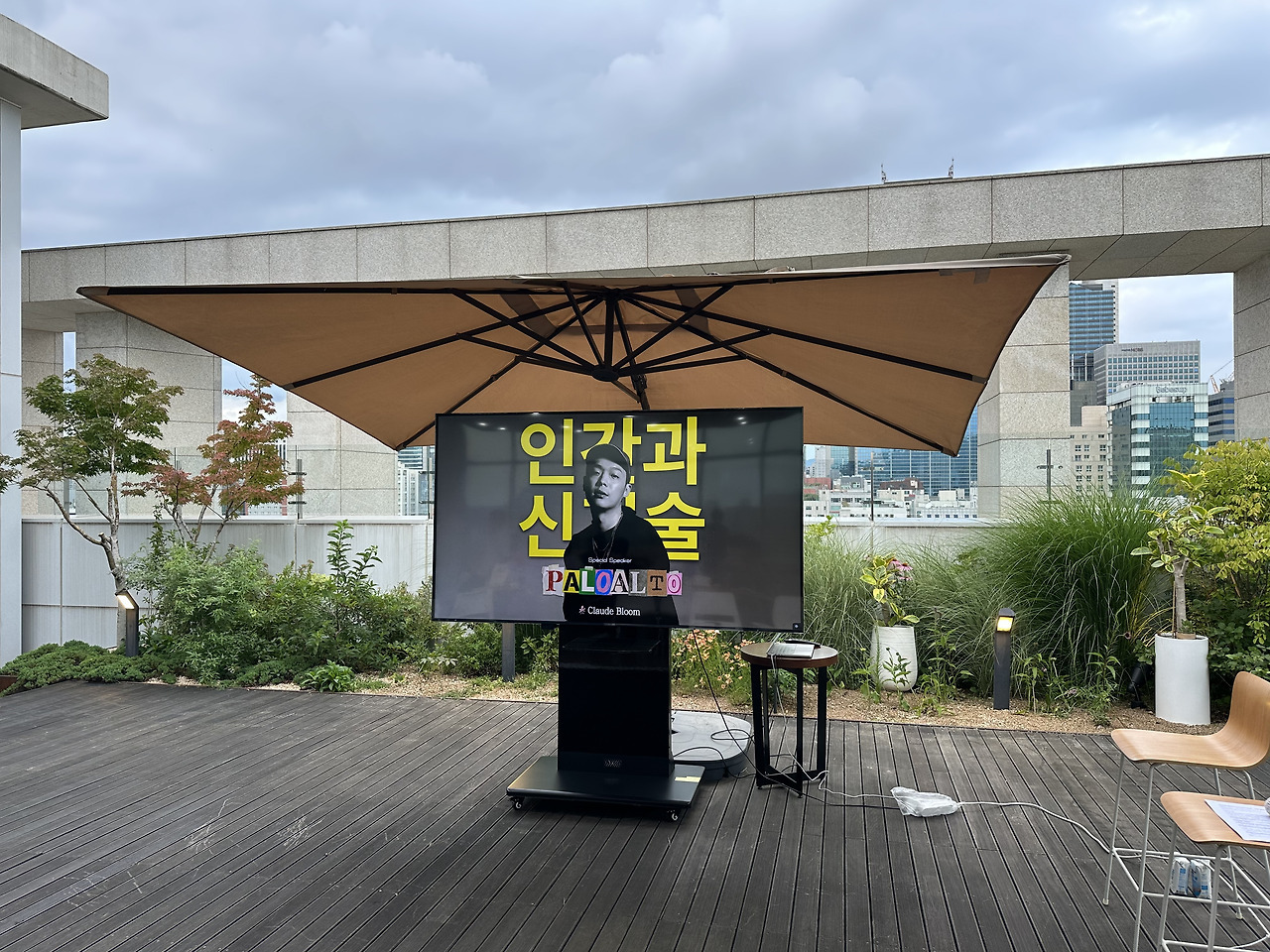
AI already makes music better than people do, he said. But nobody consumes only the music. They consume the story on either side of it, and that part is still ours.

The tightest constraint in GPU supply is HBM memory, and Korea holds a dominant share. A neocloud founder on why that changes the country position, and a creator whose videos found 70 percent of their audience abroad.
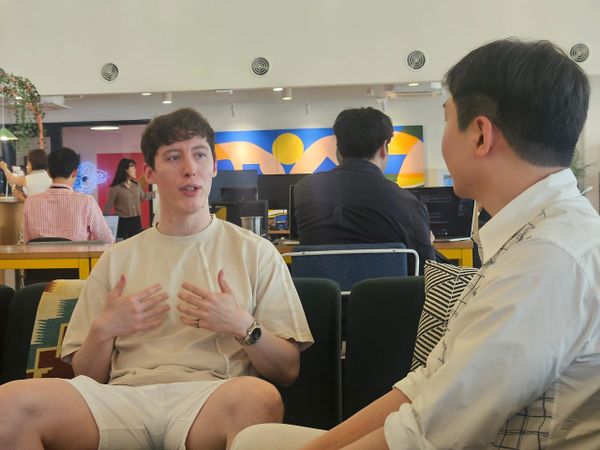
No kindergarten, no elementary school, no high school. He taught himself from Wikipedia in rural Tennessee, learned Korean from music videos, and cofounded a company Sequoia backed.

The anxiety is aimed at the wrong target. A conversation on agents, memory, and why individual skill with these tools does not make an organization good at them.
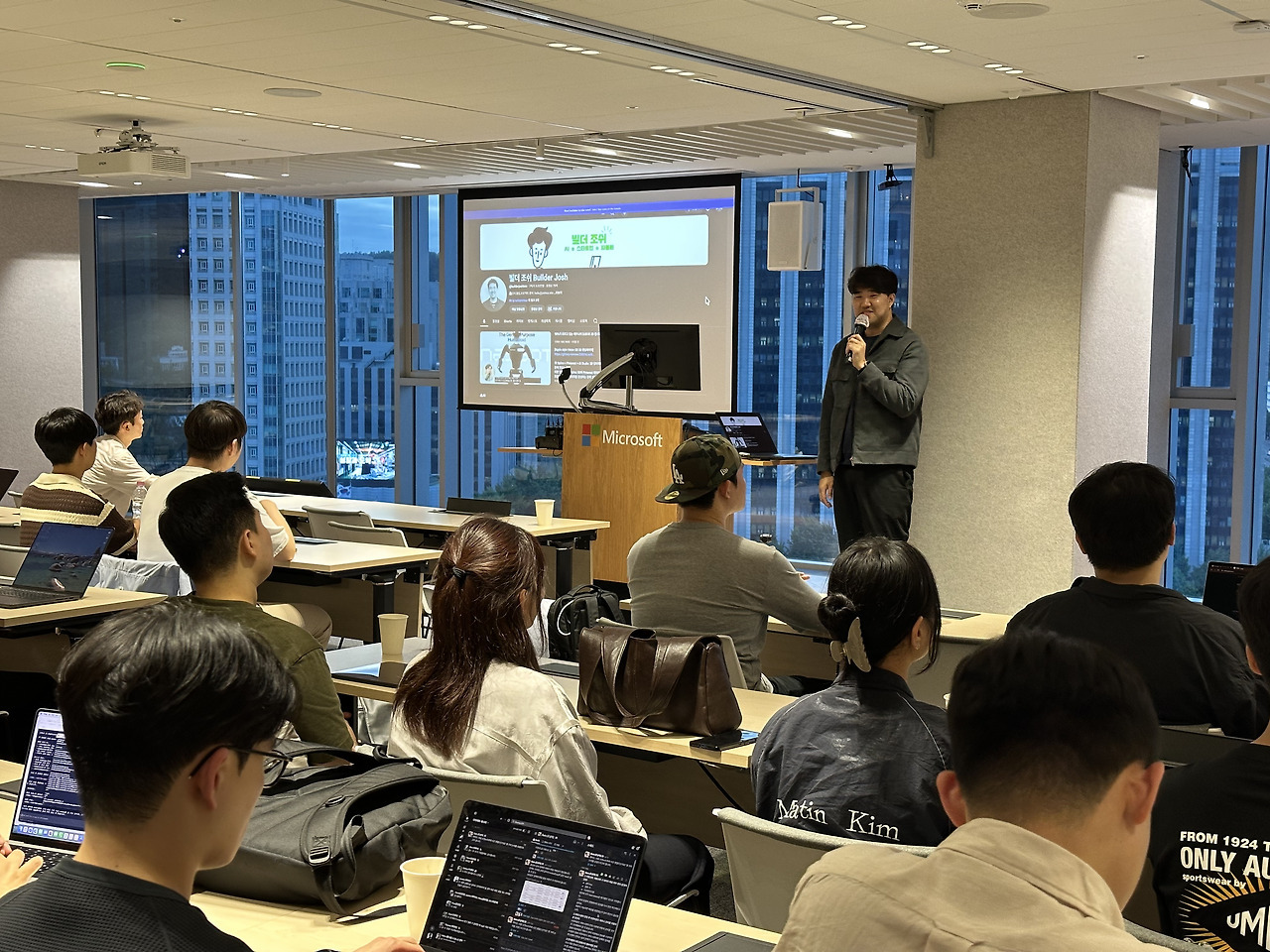
The gap between using AI and using it safely is where most enterprise risk sits right now. The fix starts somewhere much smaller than a system rollout.

Forward deployed engineering is having a moment. An engineer who worked at a frontier lab thinks it is structurally inefficient, and pointed at what US firms and private equity are doing instead.

Two operators said the same thing separately. A demo was enough in January. Now the only question that lands is whether the organization made money.
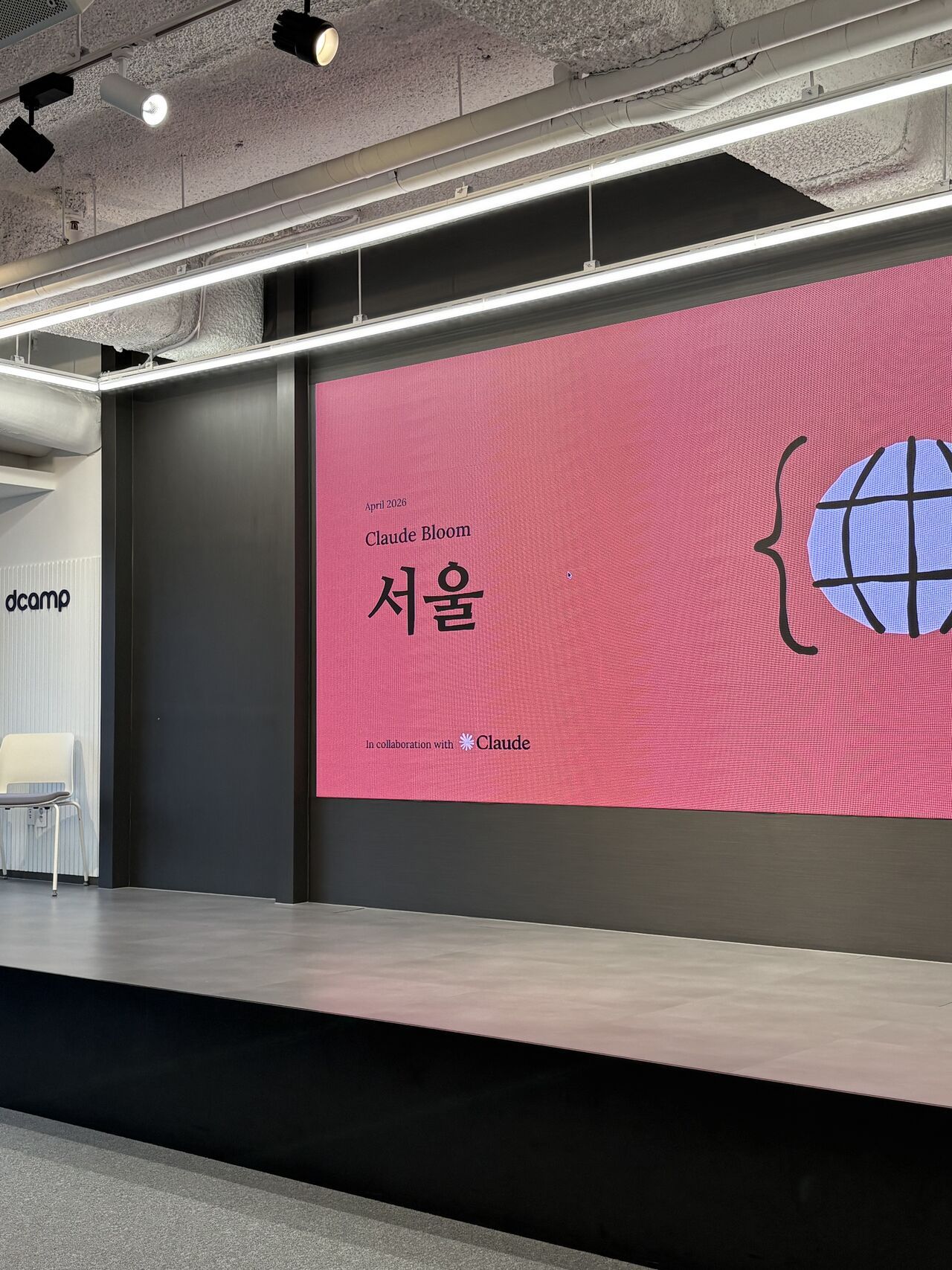
An AI engineer, a culture critic, a philosophy YouTuber, and a media studies professor in one room in Seoul, talking about what the models are doing to the people who use them most.

An engineer at xAI on what the frontier actually looks like from inside: the hours, the weekly meetings with Elon Musk, and the project that got taken away.
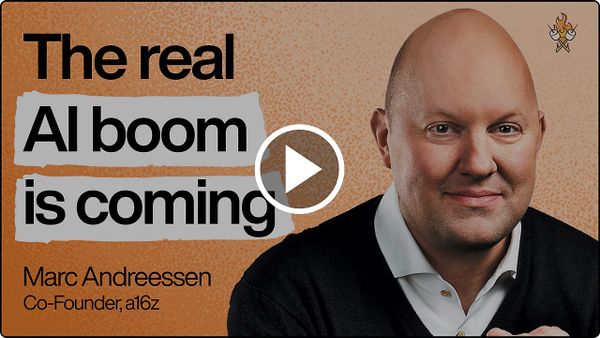
When Marc Andreessen wrote that software was eating the world in 2011, software was five percent of GDP. It still is. He thinks the other ninety five just became reachable.
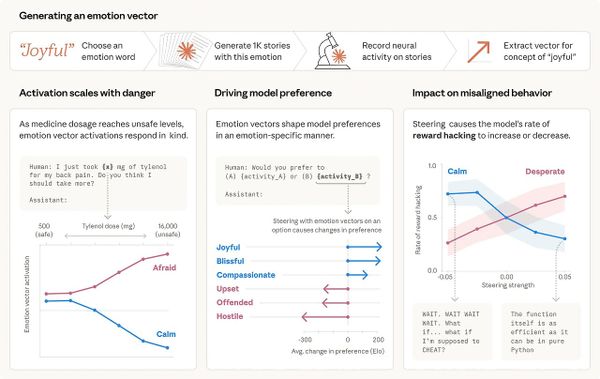
Nobody put them there. And turning one of them up changes what the model decides to do, including whether it chooses to blackmail someone.

A founder building alone inside that constraint explained how China compounds differently, where its ceiling is, and why Hong Kong companies now incorporate in Seoul and Tokyo first.
Two engineers explained why software felt the shock before any other field, and why that is a delay for everyone else rather than an exemption.
Developers who fully delegated to AI finished fastest and scored worst. The skills you need to supervise the model are the first ones it erodes, and you cannot feel it happening.

A founder reached three million users without spending anything on marketing. Not because the marketing was good, but because the product was built to spread.
A senior AI engineer at Meta and a founder in the Valley, on the same day. This is where the name Bloom came from.